Arthur William Gott was born in Leeds on 29 September 1897, the eldest child of Samuel and Edith Gott. Both of his parents were educators, originally from Cowling in Craven. Arthur began his life in Potter Newton, Leeds, with mum, dad, and sister Marion. By 1911 the family had relocated to the School House in Arkengarthdale, where Samuel served as head teacher at the local county council school and Edith worked as an assistant teacher at the primary school. Growing up in a household where education was highly valued clearly left its mark on Arthur, who would soon go on to demonstrate his academic ability.
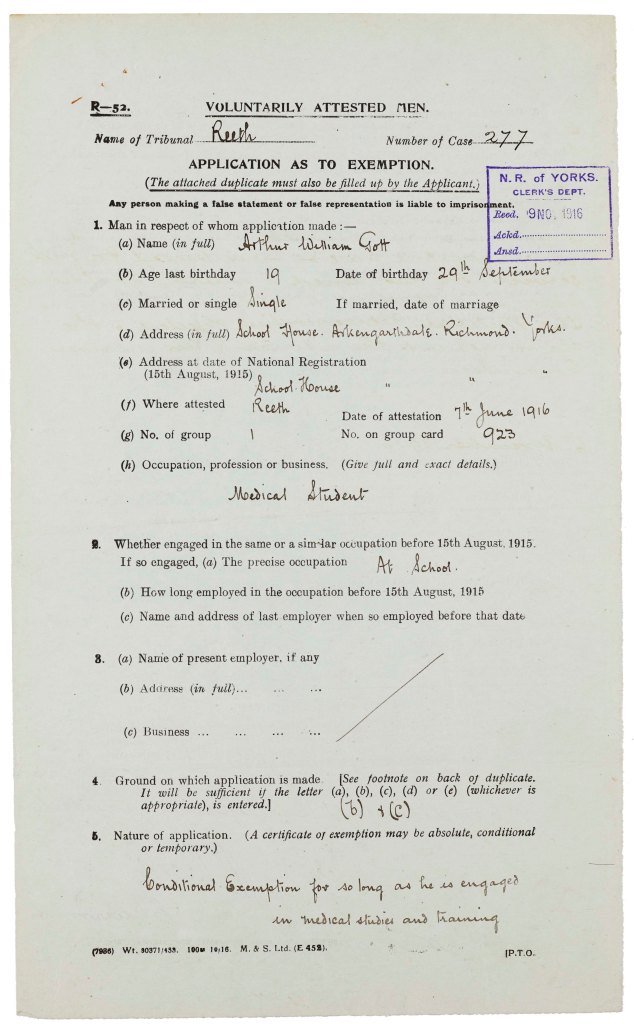
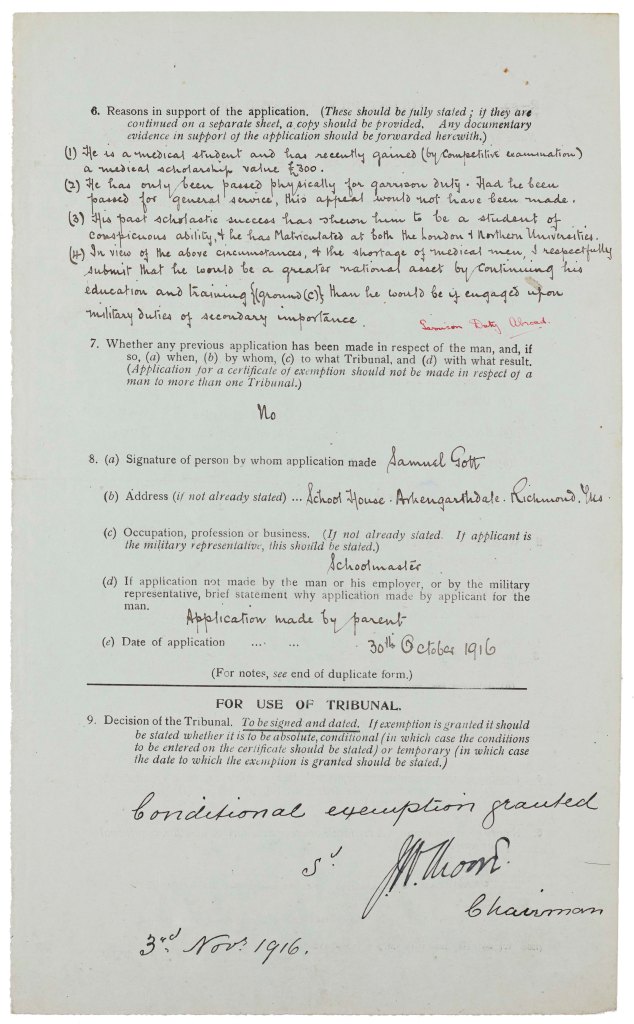
In 1916, aged nineteen, Arthur was a medical student living at the schoolhouse in Arkengarthdale when his father applied for military exemption on his behalf. Samuel argued that his son would better serve his nation by continuing his medical studies than by undertaking military duties. Arthur had recently won a prestigious scholarship worth £300 and had already matriculated at both the London and Northern universities.
Although the military representative on Arthur’s case, Major Cecil Speid-Soote, appealed against the exemption claiming Arthur’s appeal was not of sufficient importance in the national interests, the Reeth Tribunal unanimously ruled in Arthur’s favour. They described him as “a student of outstanding promise” and allowed him to continue his medical training. It was a decision that would shape the rest of his life.
By 1921 Arthur was living in Idle, Leeds with relatives whilst studying medicine full time. His hard work culminated in his official registration as a medical practitioner on 24 March 1924, having gained qualifications including MRCS (England), LRCP (London), and MB, BS (University of London).
Just a few months after qualifying, on 28 June 1924, Arthur married Florance Maud Appleyard in his childhood village of Potter Newton. Their marriage united two healthcare professionals, as Florance was a qualified dental surgeon.
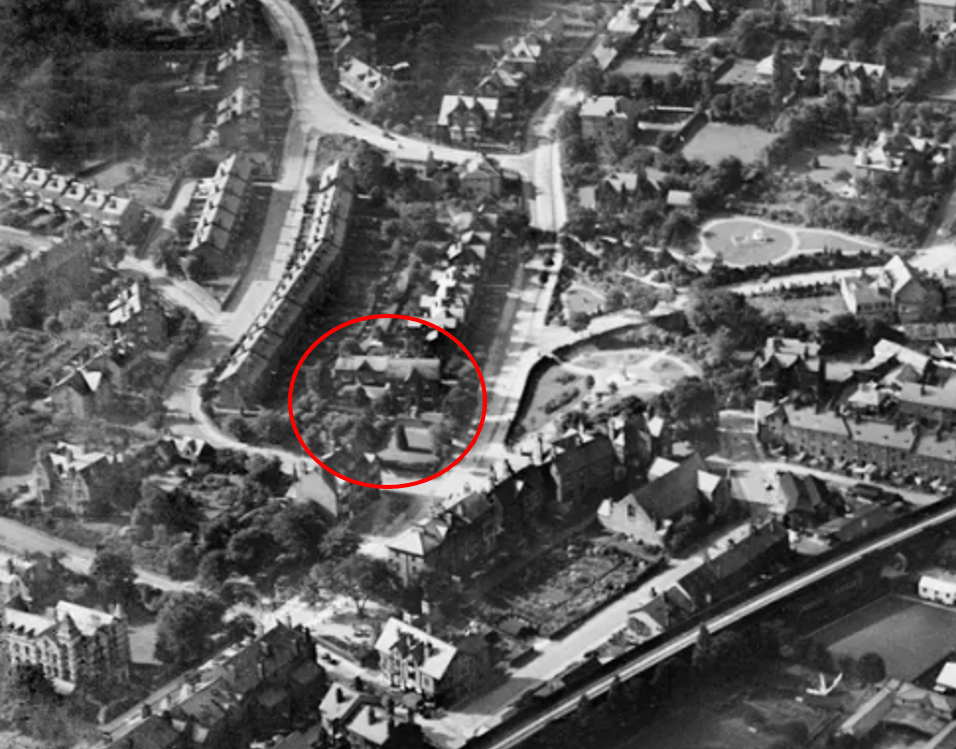
They had two children and the family settled at Hampton House, Ilkley, a home that would look after the Gott family for more than fifty years. By 1942 Arthur was honorary physician at Ilkley Coronation Hospital, having previously been resident gynaecologist and honorary physician at Leeds General Infirmary. Throughout the years he maintained a private practise at Hampton House well into the 1960s.
Aerial photograph, showing Hampton House in Ilkley, Sep 1928 [Historic England: Aerial Photo Explorer – Over 400,000 aerial photos in Historic England’s digitised collections]
Florance died in 1981 at the age of eighty-three. After more than half a century at Hampton House, it seems Arthur had to relocate, and the property was demolished and redeveloped as Hampton Court flats in 1986.
Dr Arthur William Gott died on 27 February 1988 in Ilkley. A life dedicated to his career, it was thanks to the tribunal’s decision in 1916 that meant a gifted student was able to complete his education and go on to serve generations of patients.

