by Jo Faulkner, Archives Assistant
Striding over the clifftops and clambering between rocks, Martin Simpson was a familiar figure on the North Yorkshire coast in the nineteenth century. Dressed in a frock coat and top-hat and carrying an umbrella and the carpet bag which held his measuring instruments, he braved the elements in pursuit of his scientific endeavours.
Simpson’s particular interest was studying and recording the Yorkshire Lias, a fossil rich sequence of Lower Jurassic marine sedimentary rocks along the North Yorkshire coast. He became a pioneer in this field and was considered the foremost authority on the ammonites found here. In his books, Simpson listed hundreds of species of ammonites, many of which had not been previously identified. The Jurassic coast of North Yorkshire gained prominence as a focus for geological study thanks to him.
An exhibition of related archive material originally formed part of our 2026 Archives Discovery Day, ‘North Yorkshire: A Living Landscape’ and is on display at North Yorkshire Archives from 1 September to 27 November 2026.
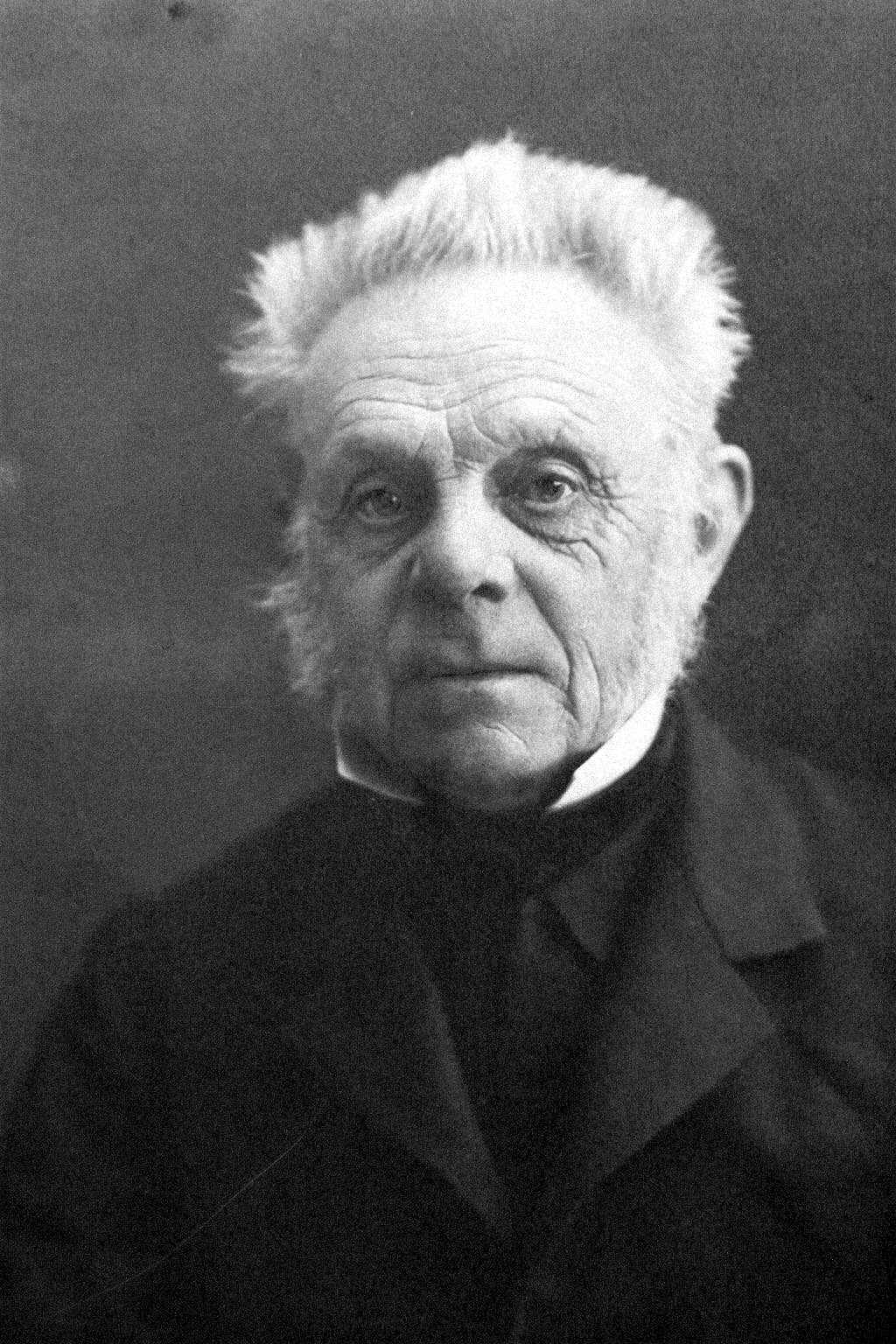
Portrait of Martin Simpson courtesy of the Whitby Literary & Philosophical Society (Whitby Museum)
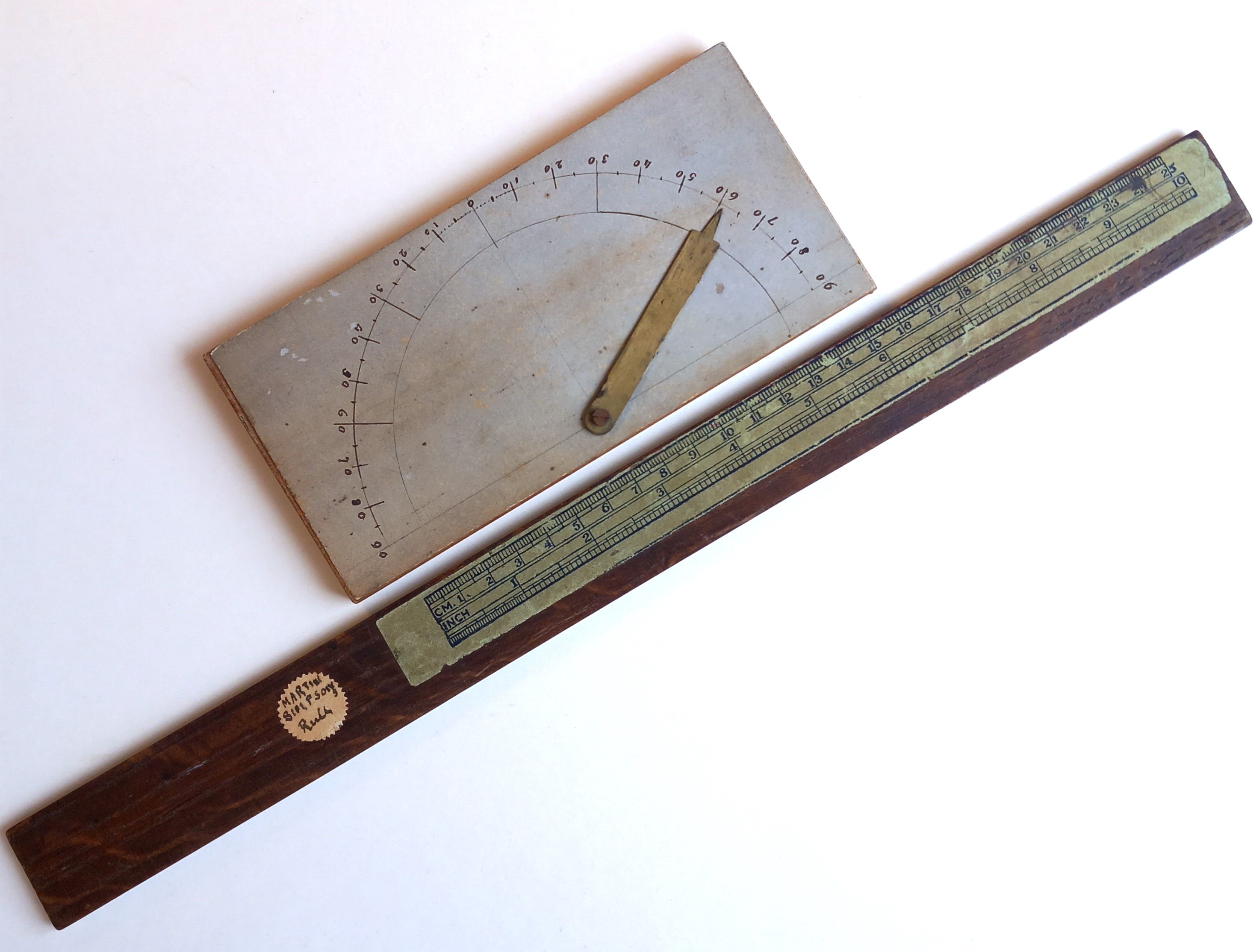
Measuring instruments, Martin Simpson’s ruler and protractor [ZW]
While many 19th century geologists and surveyors used brass or ivory instruments for the mapping of geological strata, Simpson’s were basic tools made from wood and paper.
Although Simpson is best known for his work on the Lias, he applied his genius to several subjects. Born in 1800, he was the son of John Simpson, a mariner of Stainsacre and his wife Jane. Apprenticed to a cabinet maker at the age of 13 he gained the attention of Whitby historian and geologist Dr Young. At the age of 16 Simpson left North Yorkshire to study at Edinburgh University. Following his studies and despite his intellect, Simpson appeared to find it difficult to find a secure means of earning a living. In the 1830s he was lecturing in astronomy and was secretary to the Wakefield Literary and Philosophical Society. In 1837, he became Lecturer and Keeper at Whitby Museum until they realised that they were too financially stretched to pay him a salary.
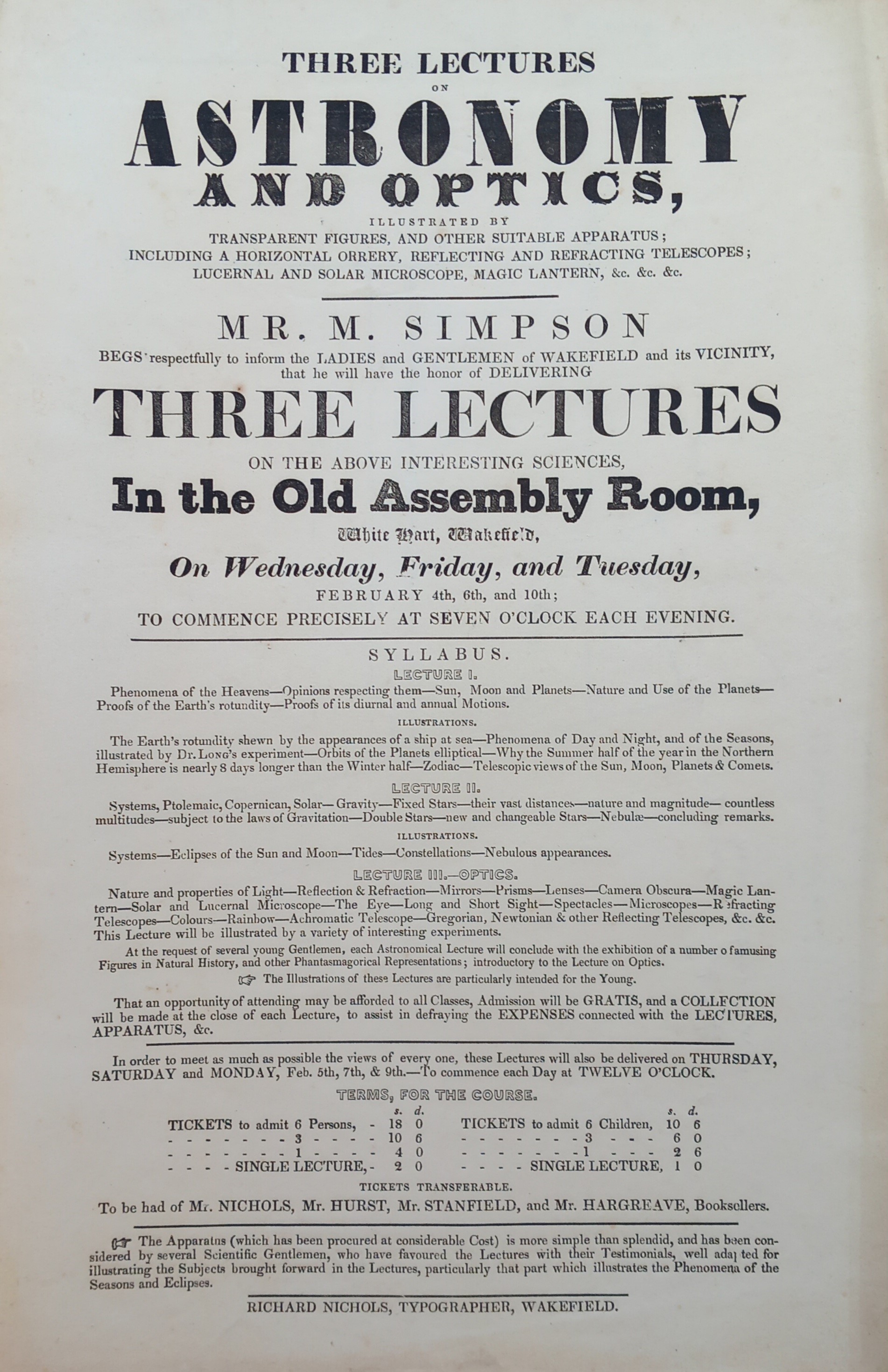
Advertisement for lecture on astronomy by Martin Simpson at Wakefield [ZW VII 3/4]
From the 1840s Simpson worked for the Whitby Museum unpaid. After a brief spell back at Wakefield, Simpson had returned to a smallholding he inherited at Newholm. During this period the failure of a Whitby bank is said to have further contributed to his financial struggles. In 1861 he was appointed Curator, with a small annual salary, topped up by selling small Whitby Guides, fossils and mounted specimens of seaweed. As an elderly man he wrote on the History of England alongside his work studying the Lias. An award from the Geological Society funded a second edition of his ‘Fossils of the Yorkshire Lias’ in 1884.
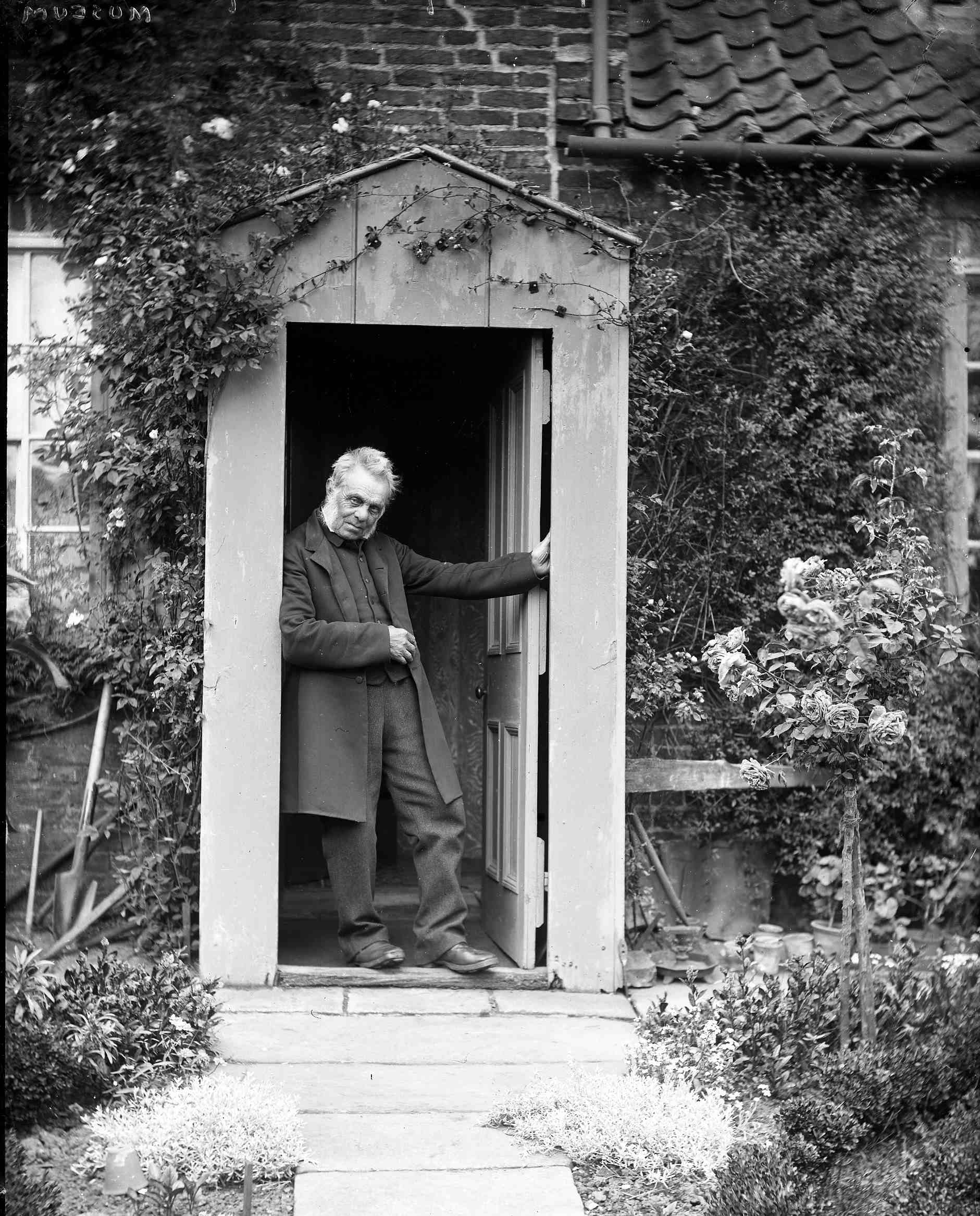
Photograph of Martin Simpson standing in a doorway courtesy of the Whitby Literary & Philosophical Society (Whitby Museum)
Working tirelessly up until his death aged 92, Simpson was described in one obituary as a poor and embittered old man. Many aspects of his life had been challenging, from the loss of his father at sea in his youth, to his continuing financial embarrassment. He did not marry or have his own family. The Whitby Gazette described him as ‘a man of sturdy, rugged independence of character and of an almost primitive simplicity of life and manners’. Historian HB Browne called Simpson ‘ a pioneer, who will be always admired, respected and honoured’. In the 1950s, in describing the great geologists of Whitby, photographer Frank Meadow Sutcliffe said Simpson ‘was undoubtedly the greatest genius’.
Martin Simpson was buried close to his home in the parish church at Sneaton, his grave is unmarked. His legacy is the contribution he made to our knowledge of the Yorkshire Lias. His passion for this work is reflected in the eager notes crammed onto every space of his notebooks and the large vibrant drawings he made.
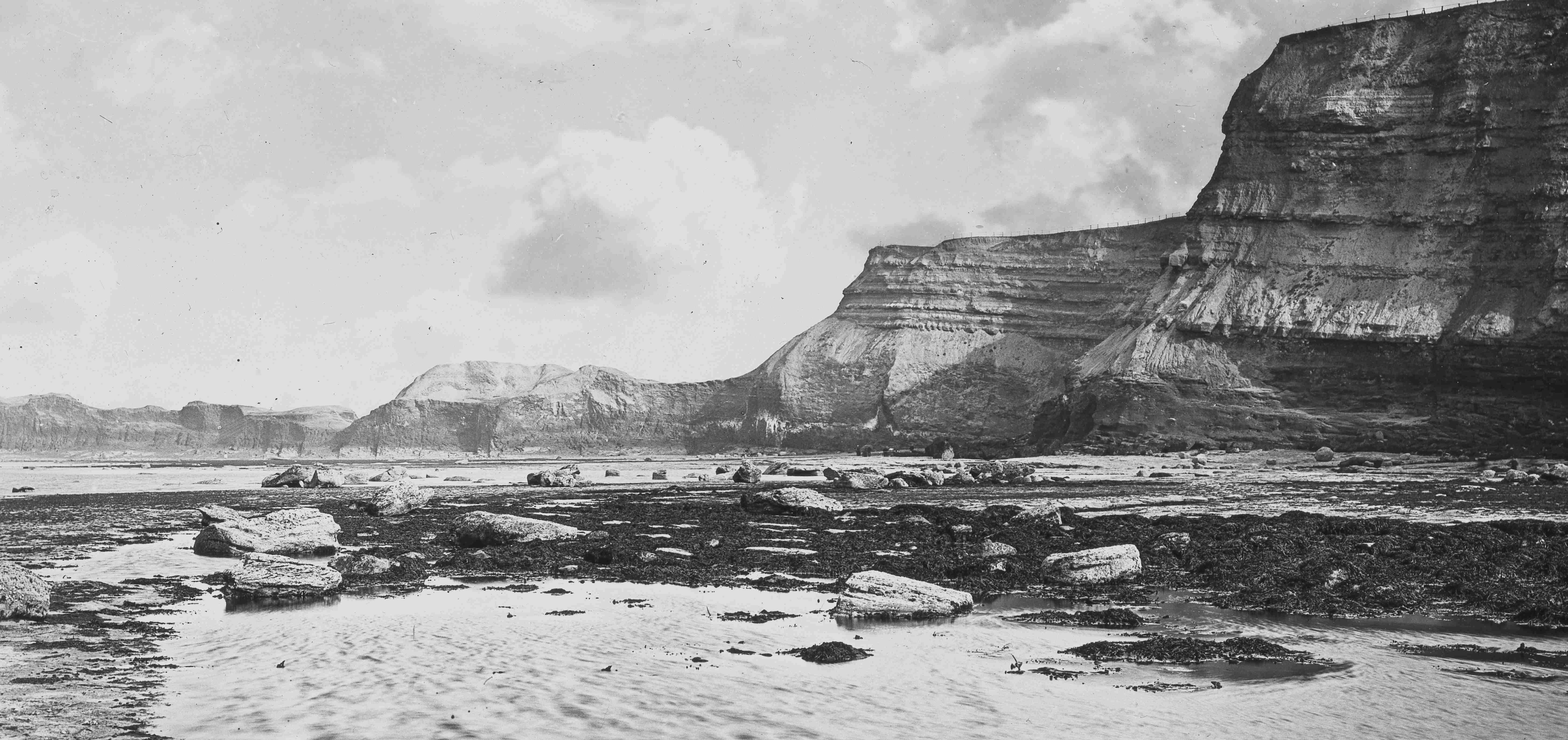
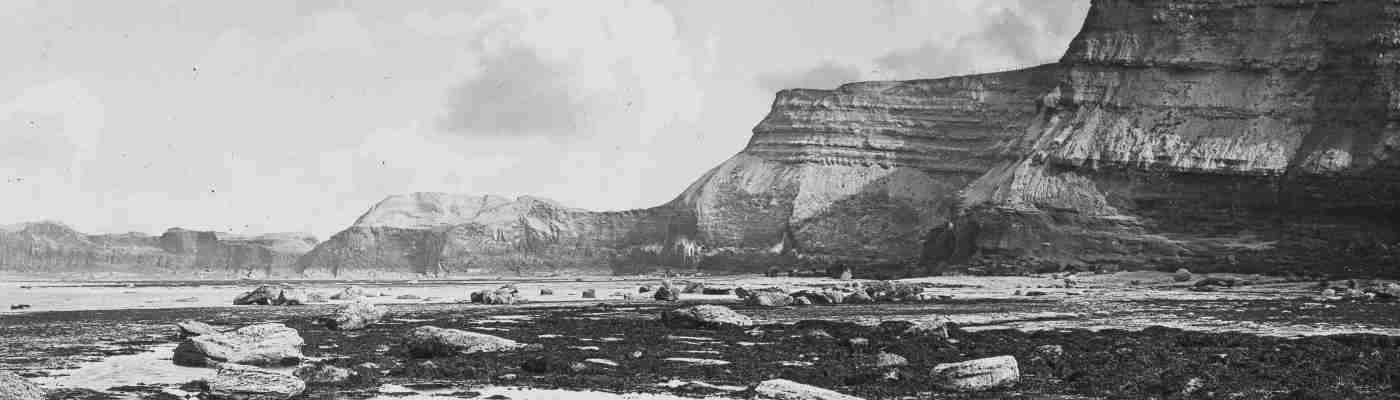
Photograph of the cliffs at Whitby on the Yorkshire coast [EF451/036]
The Martin Simpson collection
The collection relating to Martin Simpson is part of the Whitby Museum manuscript archive (reference ZW). Simpson’s colourful illustrations include several species of fish and other forms of marine life, beetles, plant fossils and skeletal fossils. The large size of several of these colourful paintings suggests that Simpson may have used them to illustrate his lectures.
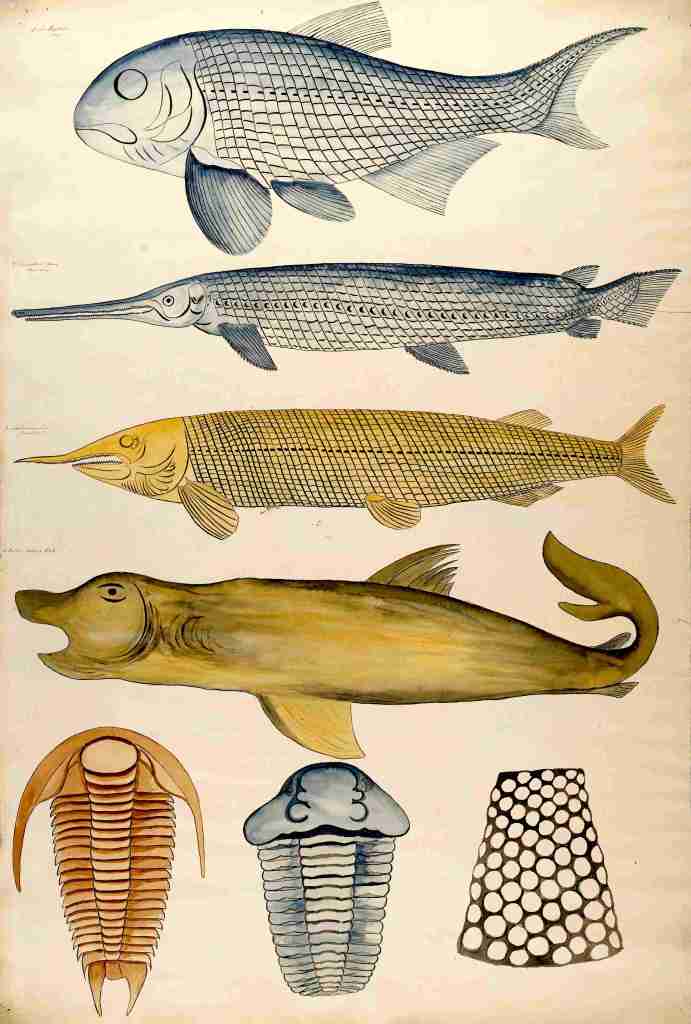
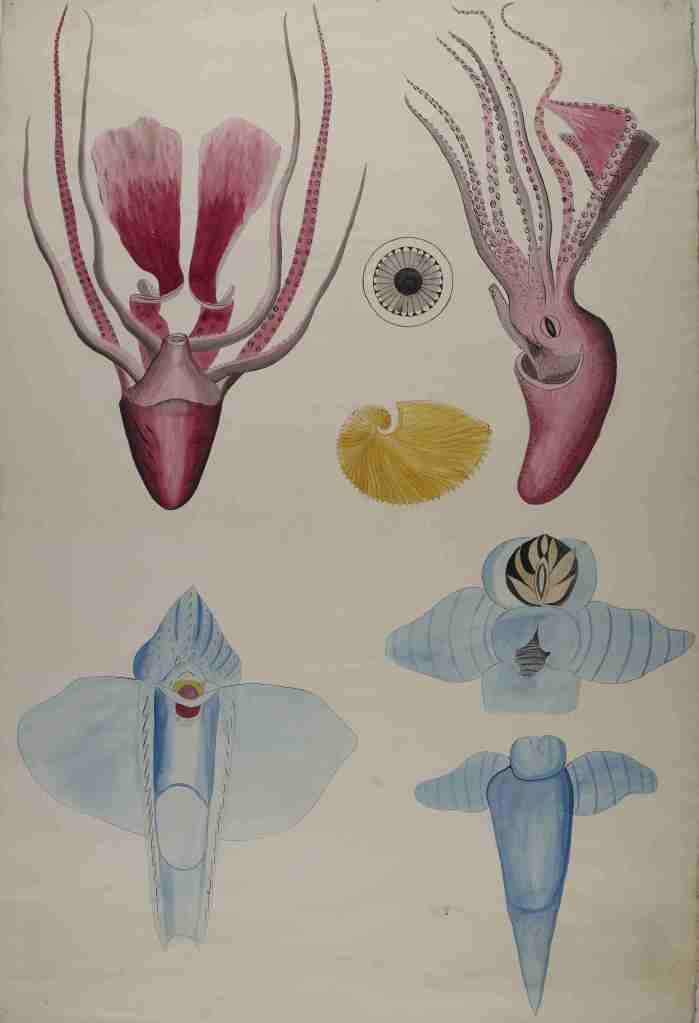
Marine life [ZW VII 3/3/2 and ZW VII 3/3/4]
Some of the notes on the illustrations identify the species and layer in which they were found. The above selection of drawings of marine life includes the Orodus, a shark-like fast-swimming fish and an Aspidorhynchus, a type of fish known for their slender bodies and elongated upper jaw that formed a spike-like snout [ZW VII 3/3/2]. He also shows types of Trilobites, they were arthropods, the animal group that today includes insects, centipedes, crustaceans and scorpions. The squid-like creatures are Belemnites, types of Cephalopods [ZW VII 3/3/4].
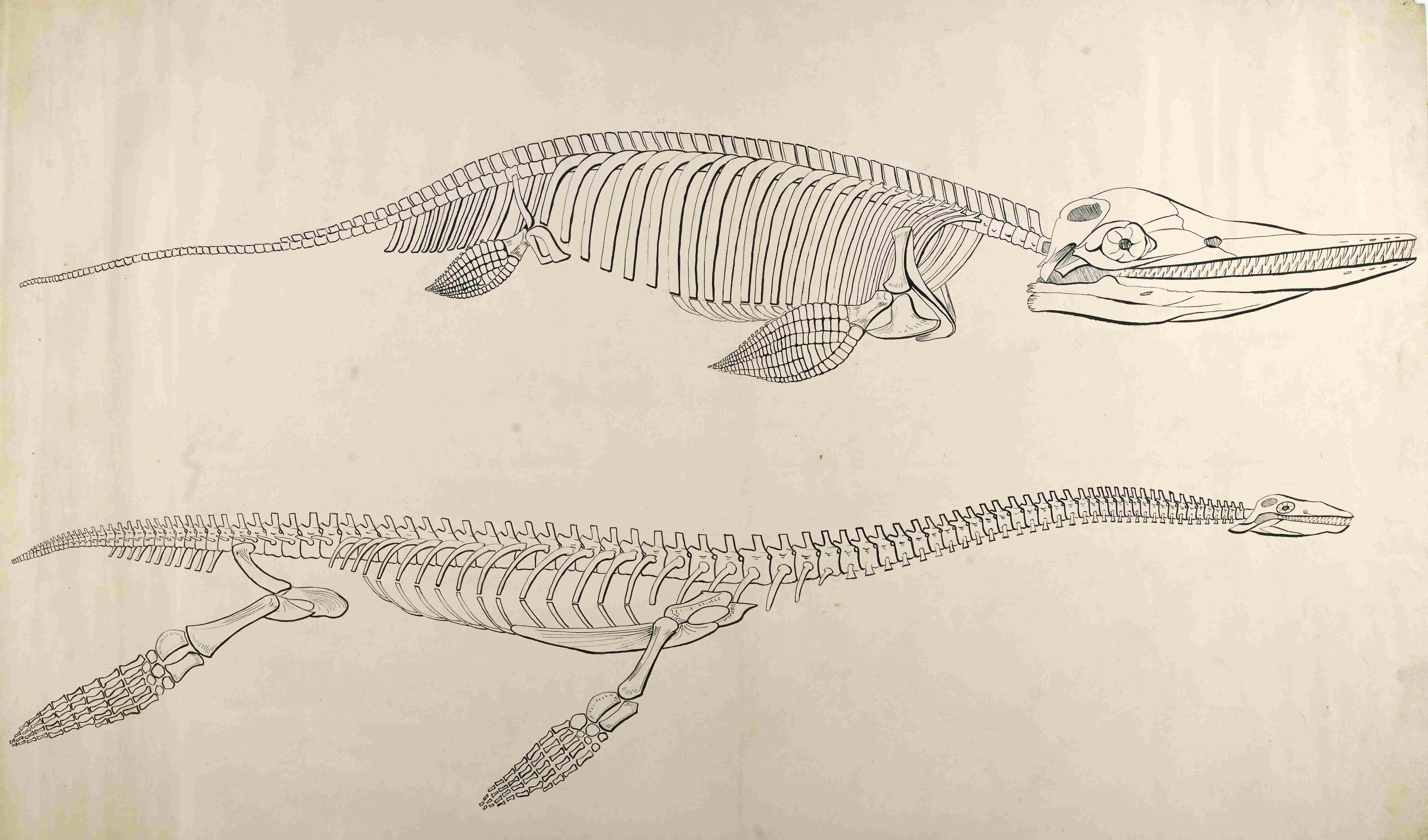
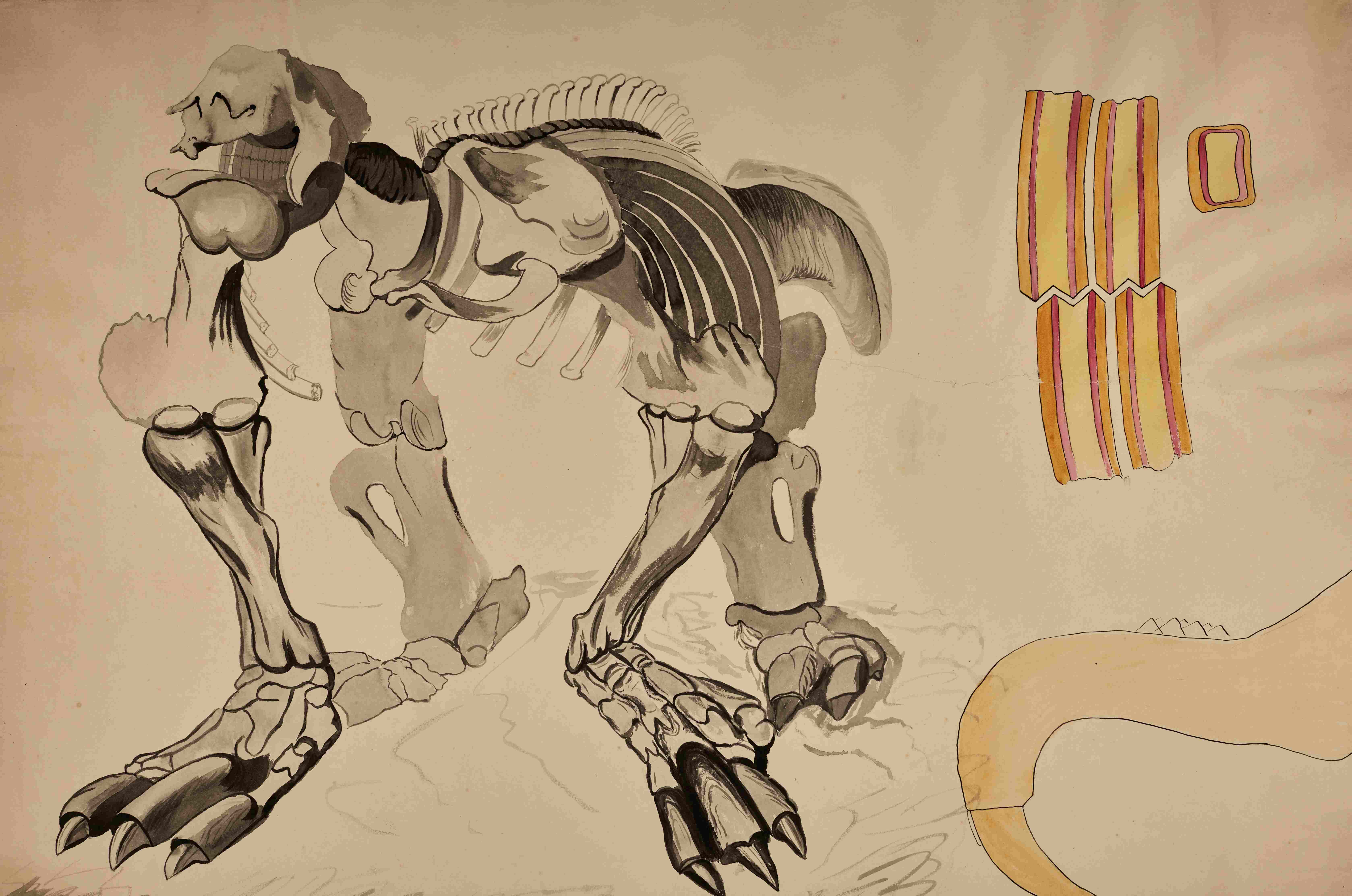
Ichthyosaur [ZW VII/3/3/1]
Some of Simpson’s illustrations represent his reconstructions of how species may have appeared based on his studies and observations of the fossils he found or had sight of. In some instances, he may have imagined how individual bones found separately could have connected to form whole creatures.
The above drawings of an Ichthyosaur record the remains in detail [ZW VII/3/3/1]. There were many species of Ichthyosaurs, which were marine reptiles living during the Jurassic period. One of the largest Ichthyosaur fossils found in Britain (at around 8 meters in length) was found by men quarrying alum near Whitby.
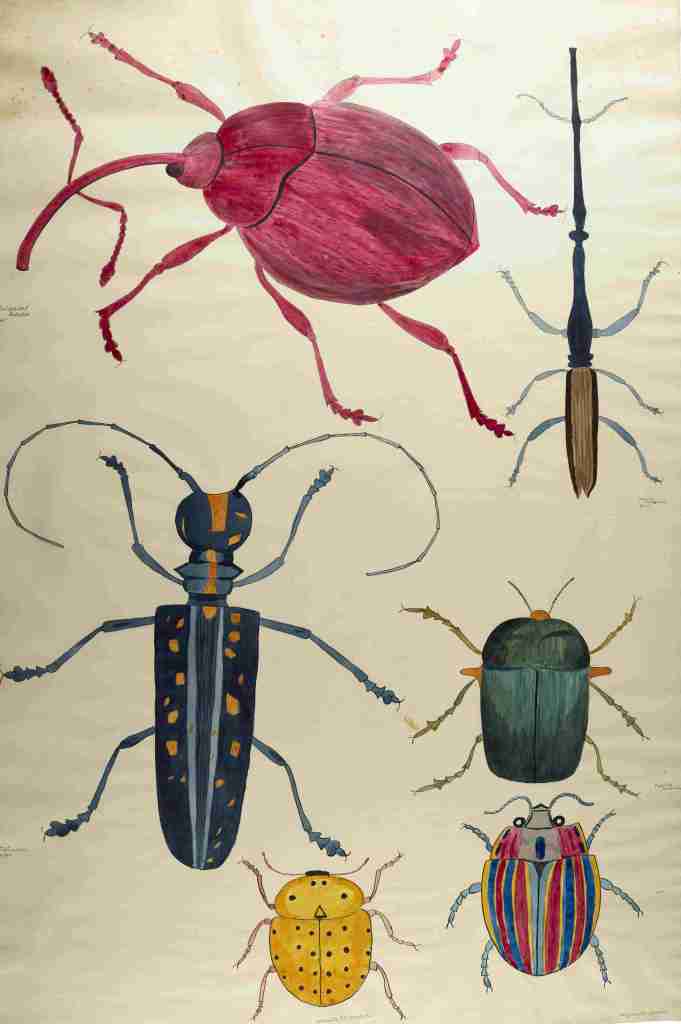
Beetles [ZW VII/3/3/3(iv)]
The collection includes drawings showing several very colourful types of beetles and include species of weevils such as Balaninus Betulae, and Brentus Anchorago (known as jousting weevils). The striped beetle is Chrysolina Cerealis known as the rainbow leaf beetle and Coccinella Punctata is the 22-spot ladybird. Though fossils from these families have been found, these specific varieties are modern. It is possible that Simpson was studying these beetles to compare to fossilized remains.
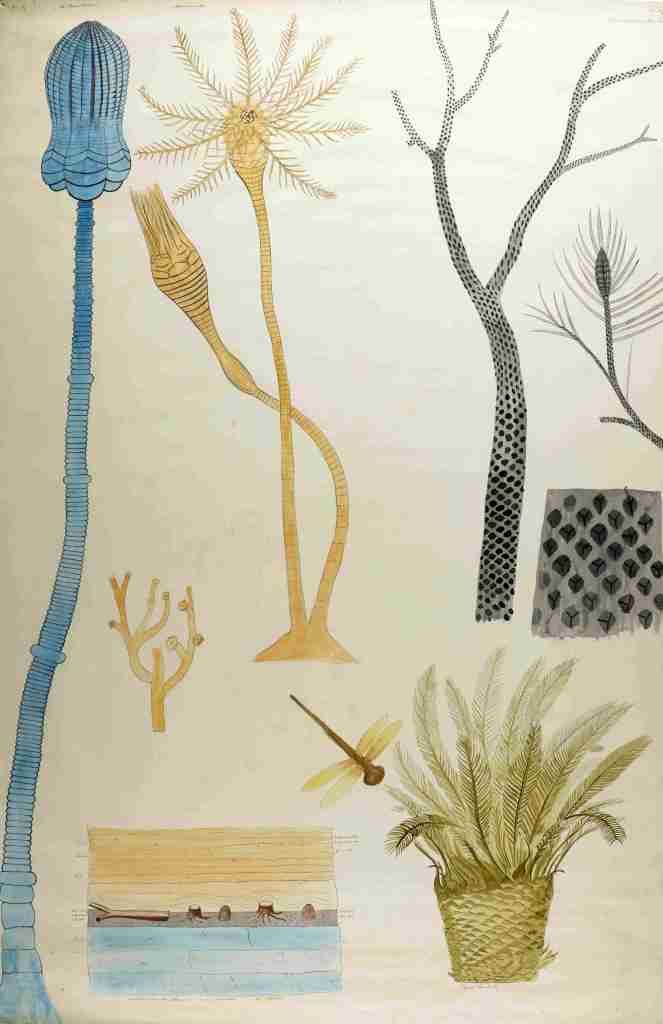
Lepidodendron [ZW VII 3/3/4(i)]
The studies of fossils also includes fossils of plants found on the North Yorkshire Coast. Lepidodendron was a large, prehistoric spore-bearing plant that existed around 300 million years ago. They could reach over 50 meters in height. In his drawings, Simpson shows details from bark impressions and fossilised remains of plants found in a black layer or dirt bed of pebbles, with the strata above and below. Lepidodendron forests were a primary source of coal deposits. One of his plant drawings is captioned ‘Moniliformis’ (Latin for ‘necklace-like’) which is used to describe the specific, fossil structure.
Simpson made extensive notes and sketches of the geological strata. Larger, brightly coloured diagrams were used in lectures to explain the rock layers and cross-sections, using colour-coding to distinguish between rock types, ages, and compositions. Loose notes and papers are crammed with sketches and writing.
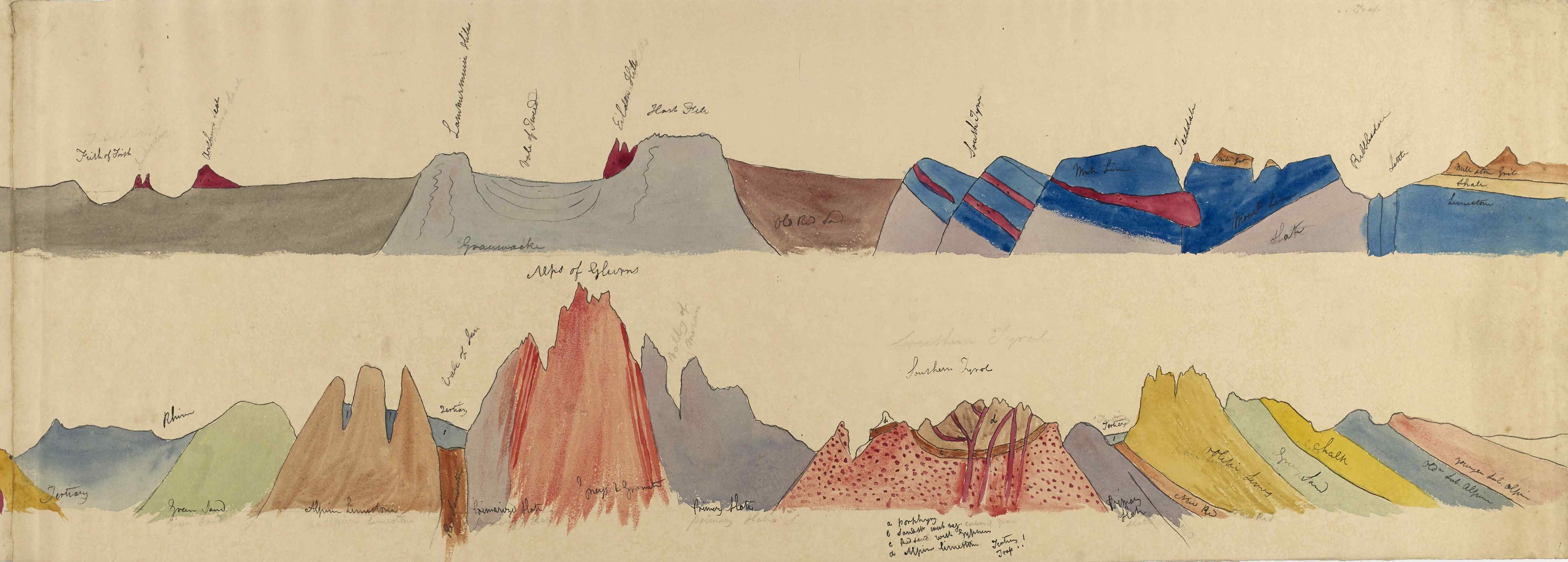
Coloured strata [ZW VII 3/1/3]
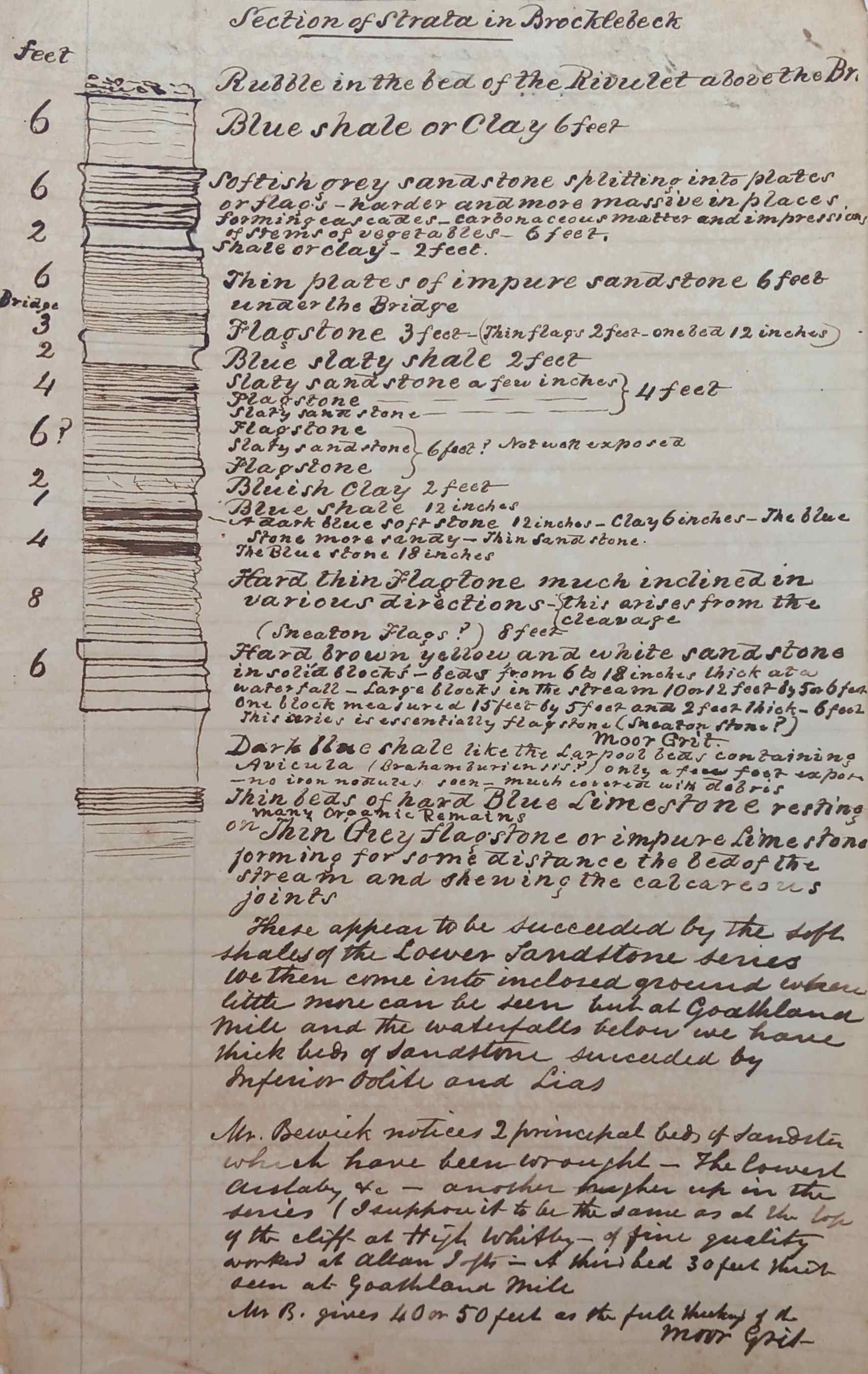
Notes & strata at Brocklebeck [ZW VII 3/1/7]


Fascinating. I love this Blog. My grandmother was born in Whitby in 1889 and collected many ammonites which I used to play with when I was a child. Brought back fond memories!
Sally