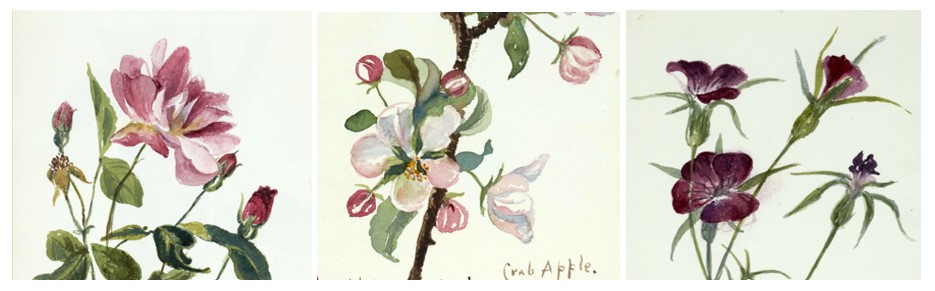
by Gwyneth Endersby, Archives Assistant
Introduction
This blog post explores records in North Yorkshire Archives reflecting the popularity of natural history and floriography in the 19th and 20th centuries. During this period, amateur collectors were generally inspired by museum natural history collections and by published academic studies.
An exhibition of related archive material originally formed part of our 2026 Archives Discovery Day, ‘North Yorkshire: A Living Landscape’ and is on display at North Yorkshire Archives from 1 September to 27 November 2026.
Archive examples we hold include a stand-alone botanical collection, along with several small sub-collections and single items from within private and estate archives – including an herbarium.
The level of detail present in the records varies across the collections. Some amateur works have clearly followed established scientific principles regarding collecting and recording methods, while others are much more informal in nature – suggesting a gentle hobby rather than serious study.
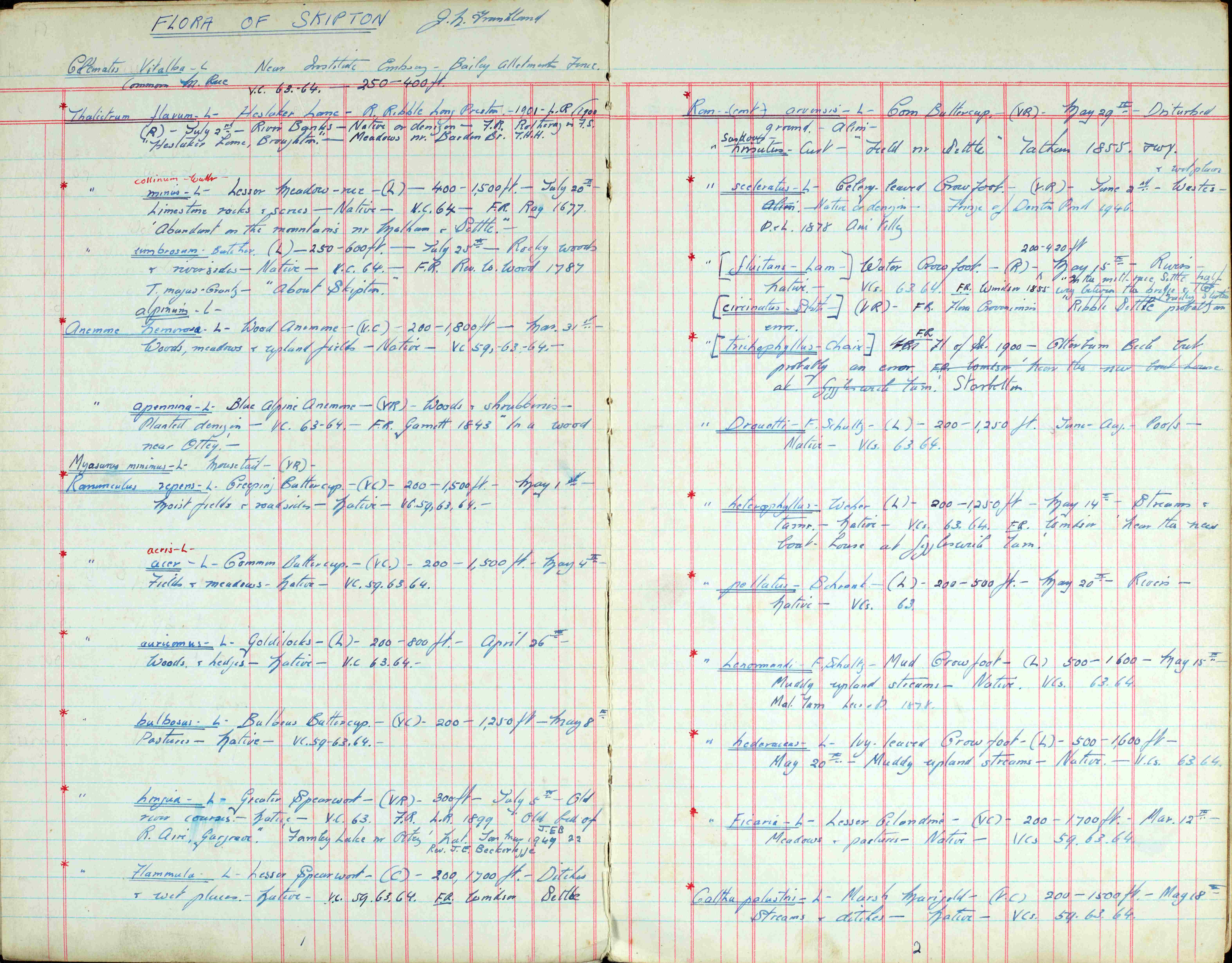
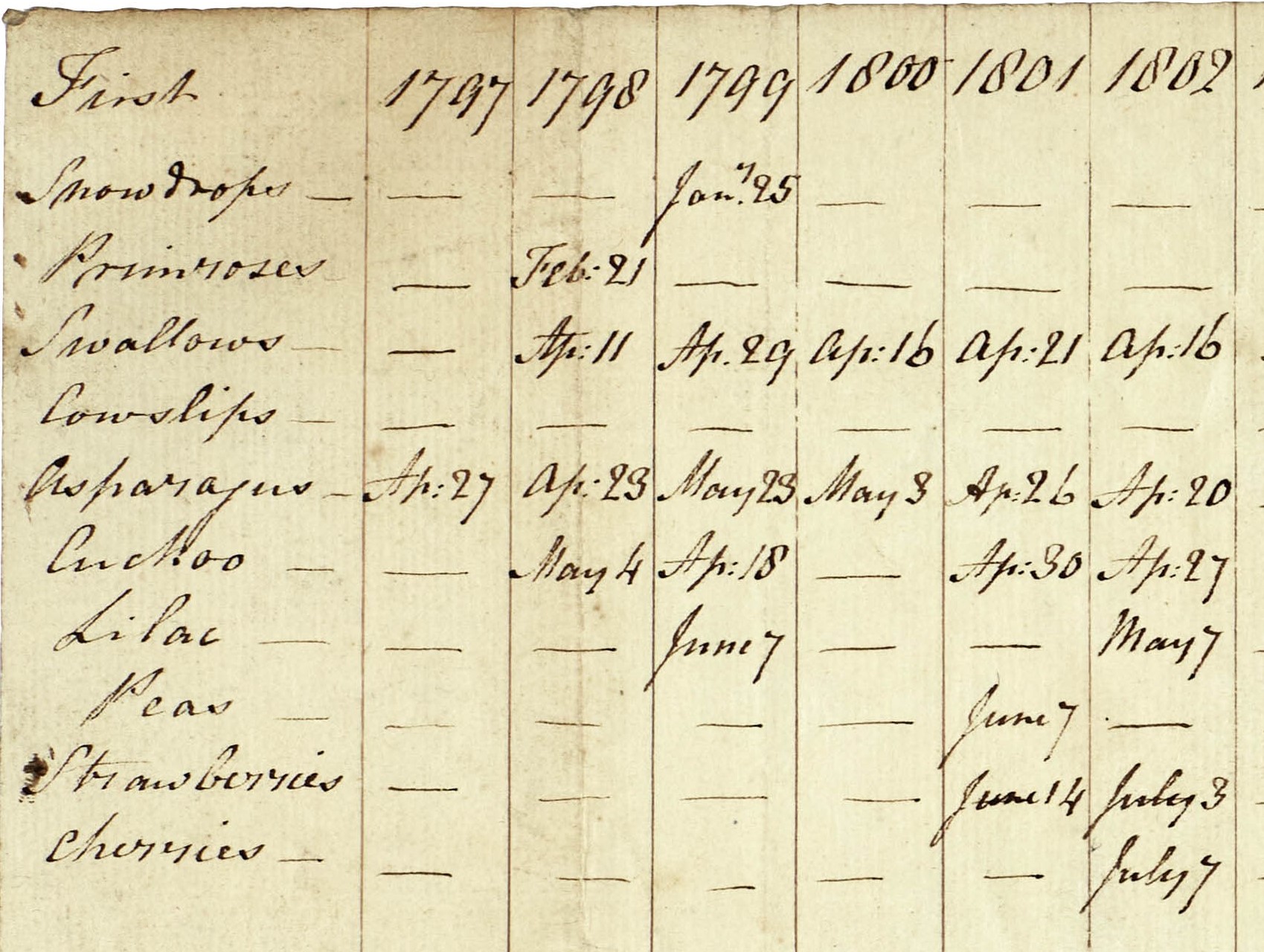
Left: A page from Norman Frankland’s botanical notebook ‘The Flora of Skipton’, undated [ZNF 4] and Right: Detail from an observational nature chart compiled by Francis Cholmeley between 1797-1822 [ZQG XII 12/2/16]
The focus of certain botanical-related records is artistic representation, while others highlight plant usage, or are concerned with flower symbolism. All these elements are combined in floriography – the secret language of flowers – which was immensely popular during the Victorian era as a way of conveying messages without speaking openly. Some of the more prominent records are explored in more detail below.
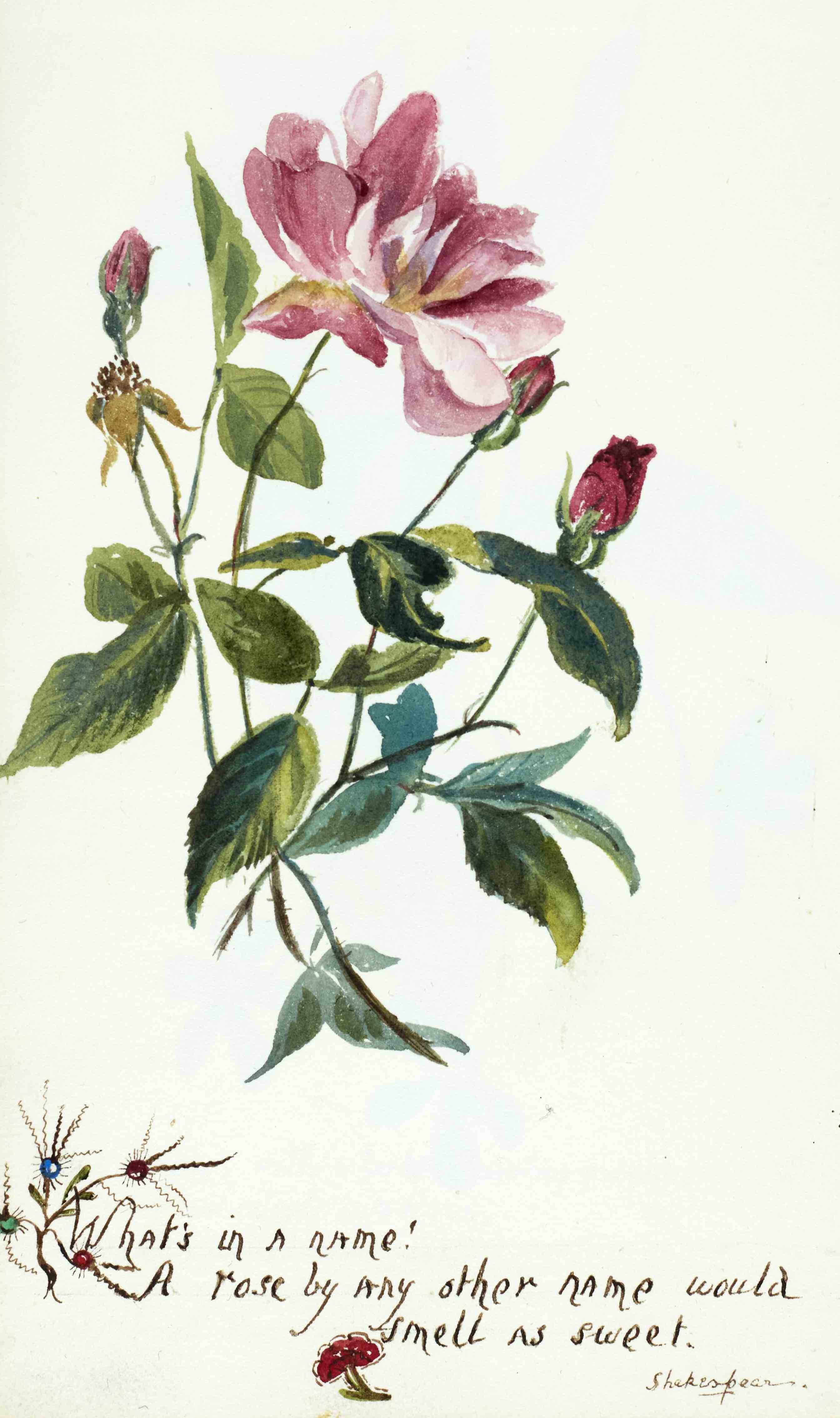
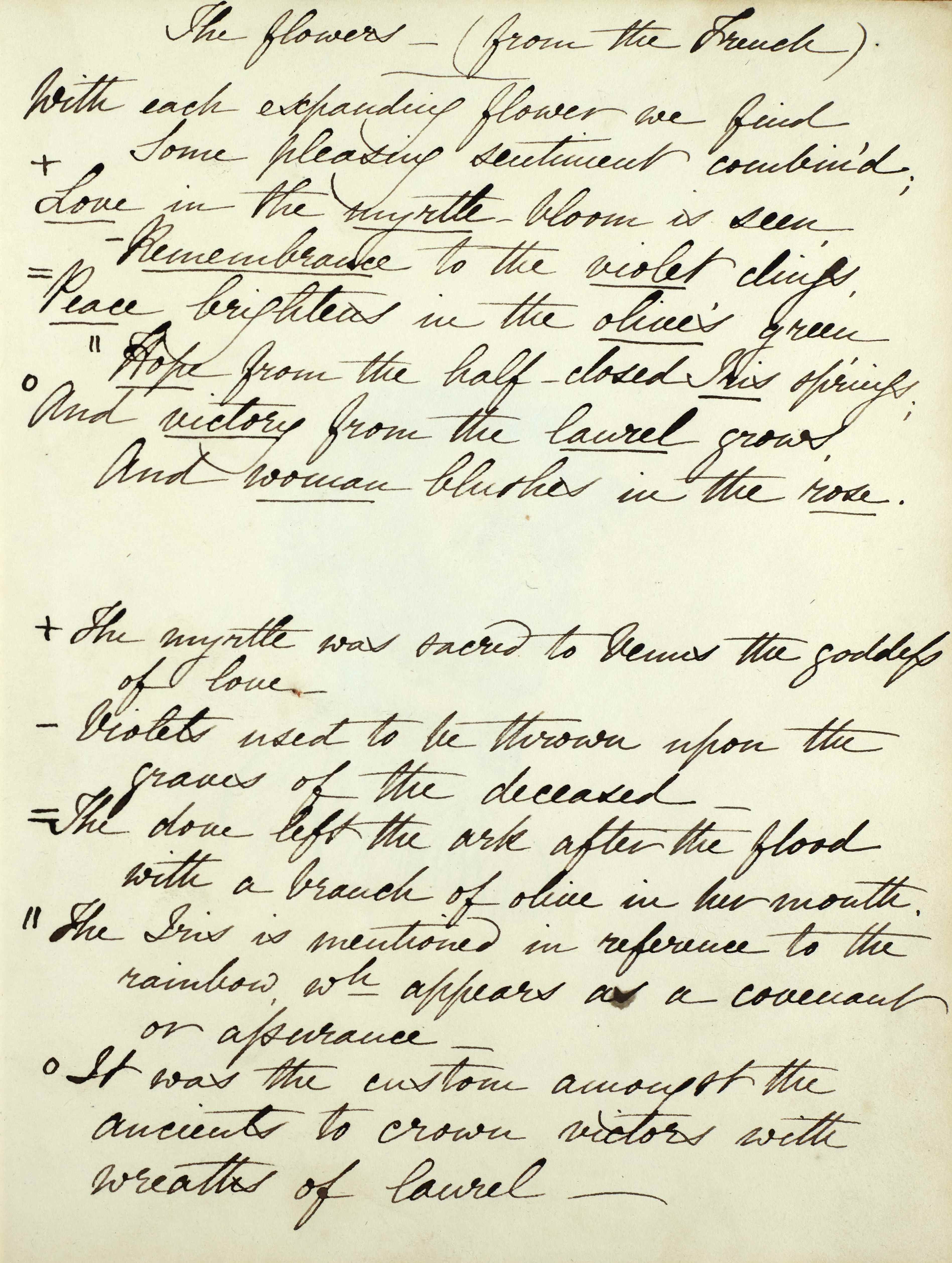
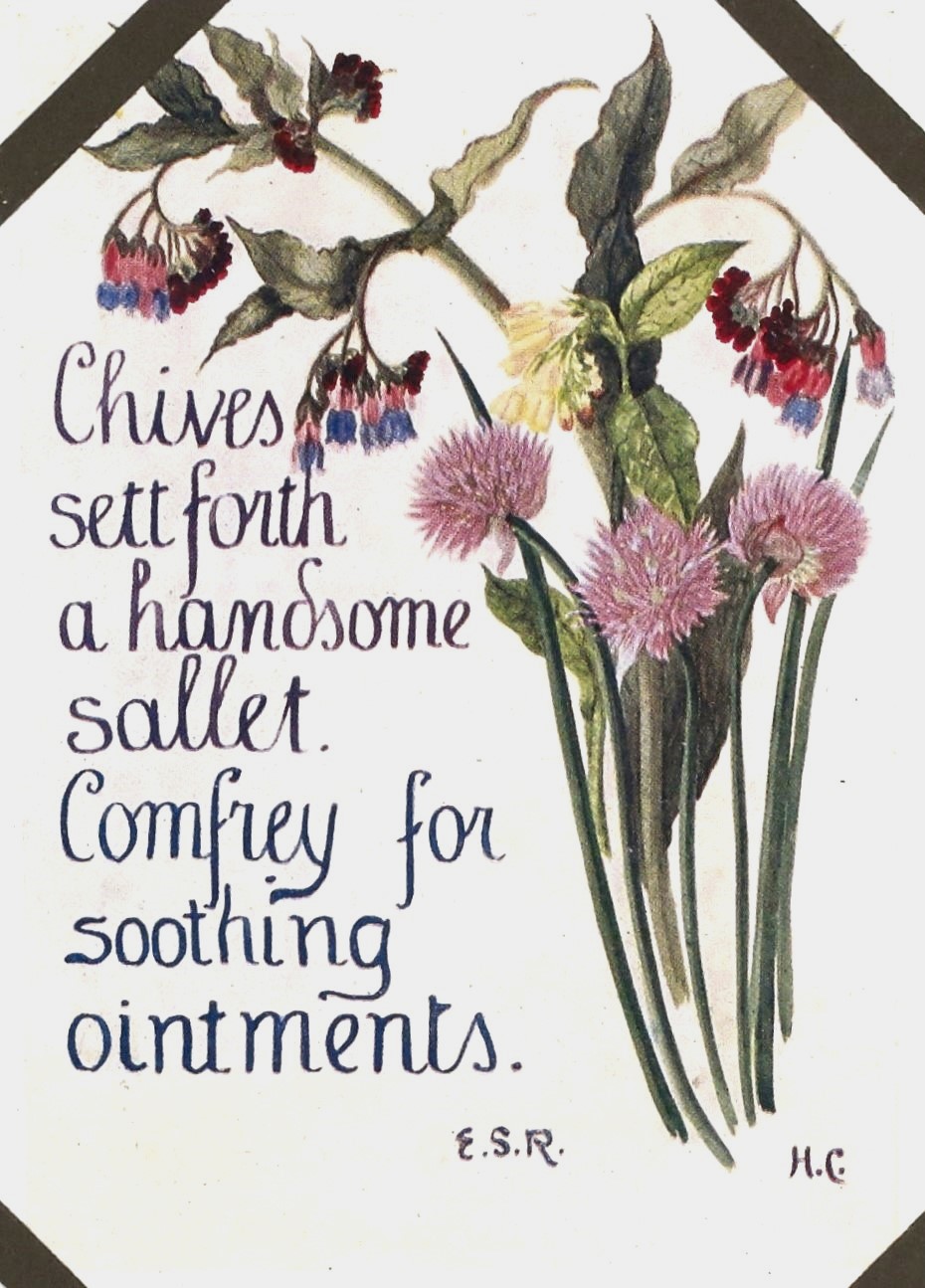
Examples of floriography: Left: A rose from Frances Fisher’s pocket sketchbook, 1894 [ZMZ 164 Book 1 [008]] Middle: Flowers and their meanings, from a family notebook among the Frances Fisher collection, 19th-century [ZMZ 164] and Right: An example from a set of postcards depicting herbs and flowers and their meanings and uses, undated [ZW 4/19/3].
Joseph Norman Frankland, naturalist and botanist (1904-1995)
We hold the papers of Joseph Norman Frankland (preferring to be known as Norman), a keen amateur botanist from the Craven area of North Yorkshire and a founder member of Craven Naturalists at Skipton (collection reference ZNF).
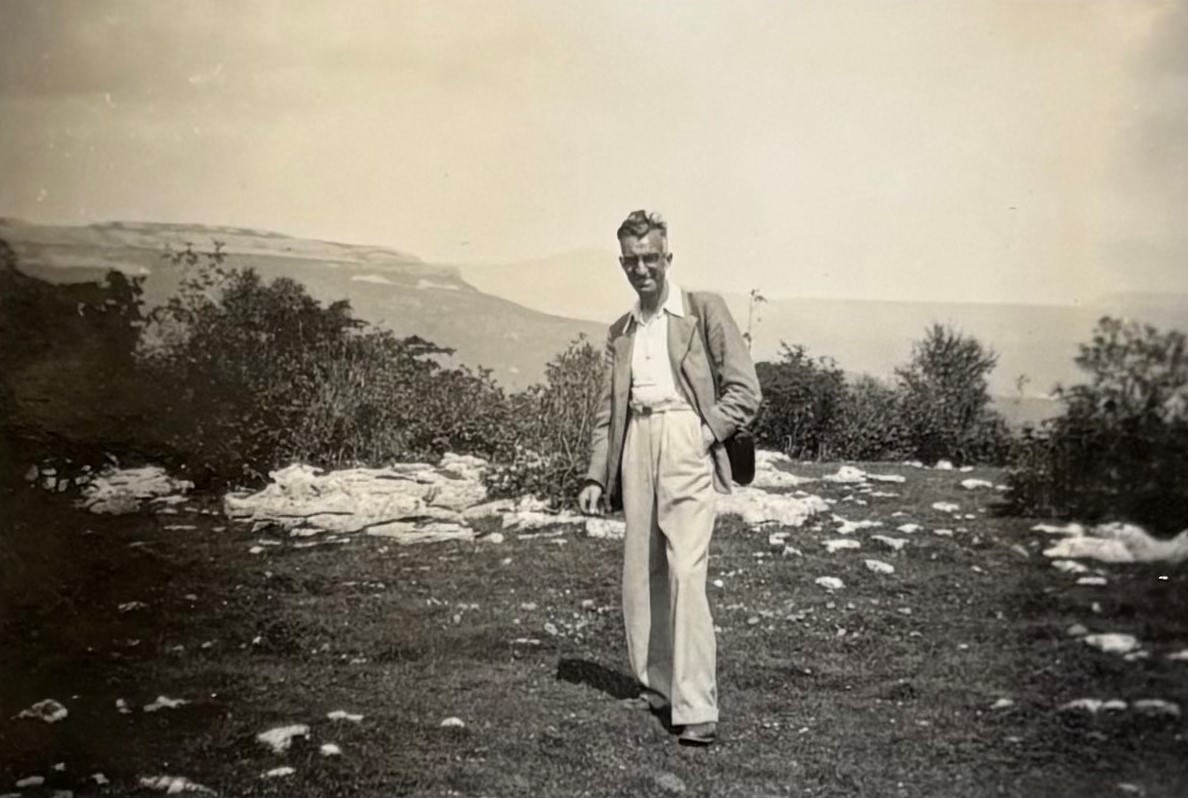
Norman Frankland at Wharfe Wood, 1939 [ZNF 2]
The collection spans 1928-1944 and comprises manuscript (unbound) diaries, field-study notebooks, and bound volumes of essays. His associated herbarium, however, is deposited at the World Museum, Liverpool. Several manuscripts are written in conjunction with his close friend Fred Holder, noted Southport naturalist (1891-1963). Their writings on botanical topics are interwoven with personal details, social observations and Norman’s poetry. Over the years, Fred and Norman embarked on numerous field-study trips – some leading to the production of bound manuscripts: Norman’s ‘A Week on the West Coast, Volumes I and II (1929) [ZNF 6] and Fred’s ‘A Week in Craven’ (1928) [ZNF 7].
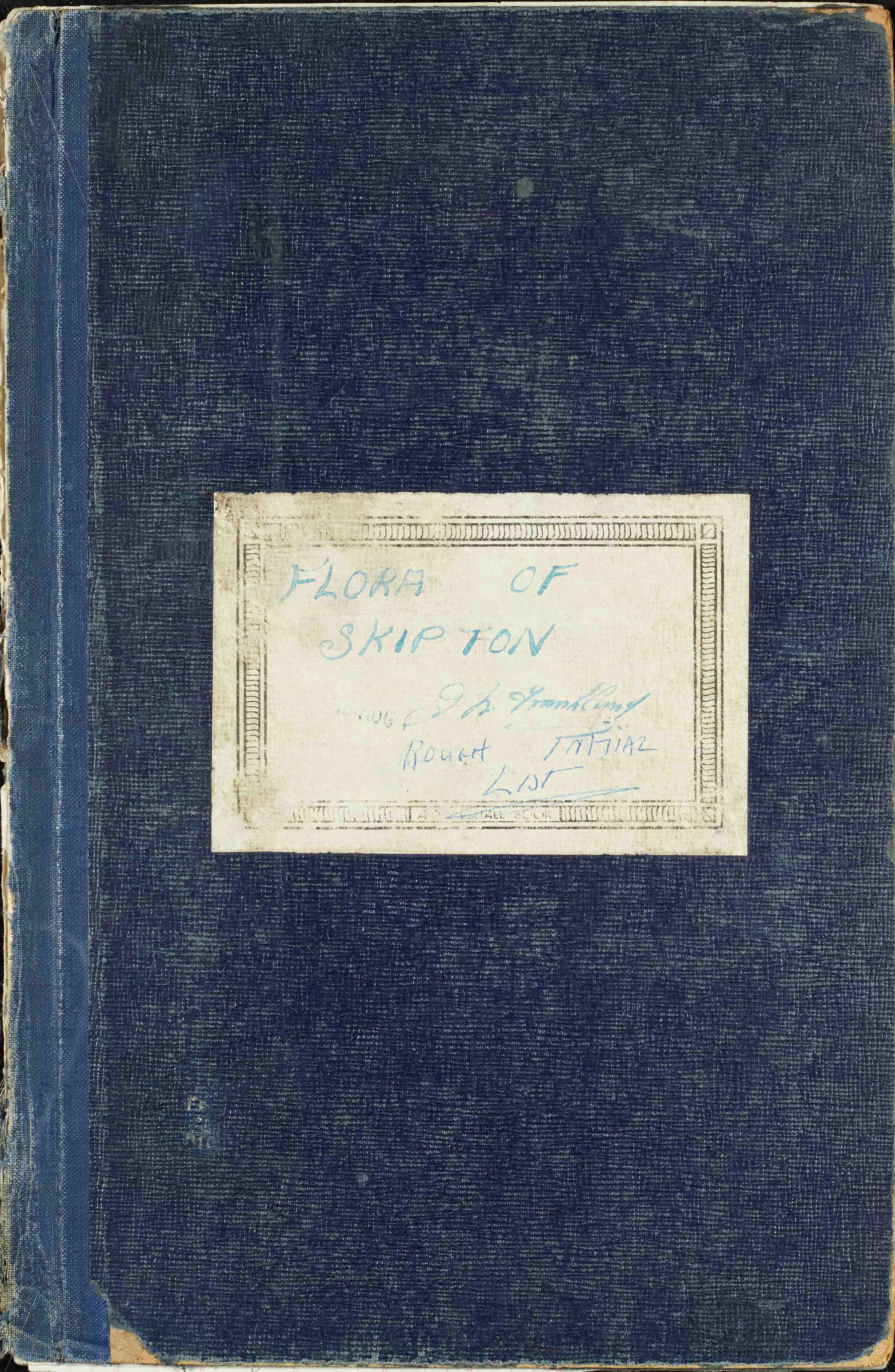
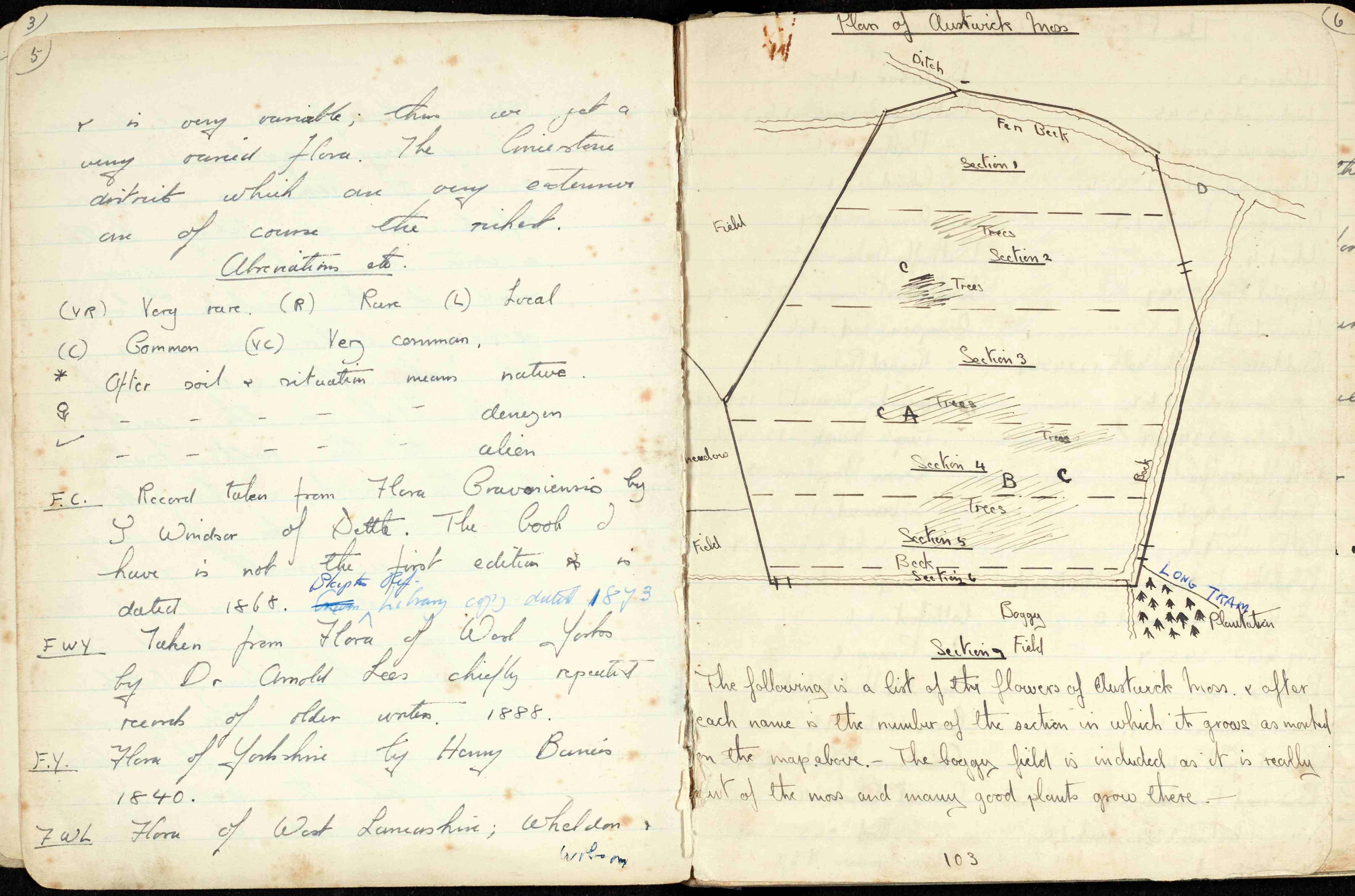
Botanical notebooks of Norman Frankland recording the flora of Skipton and of Austwick Moss, Craven, undated [ZNF 4]
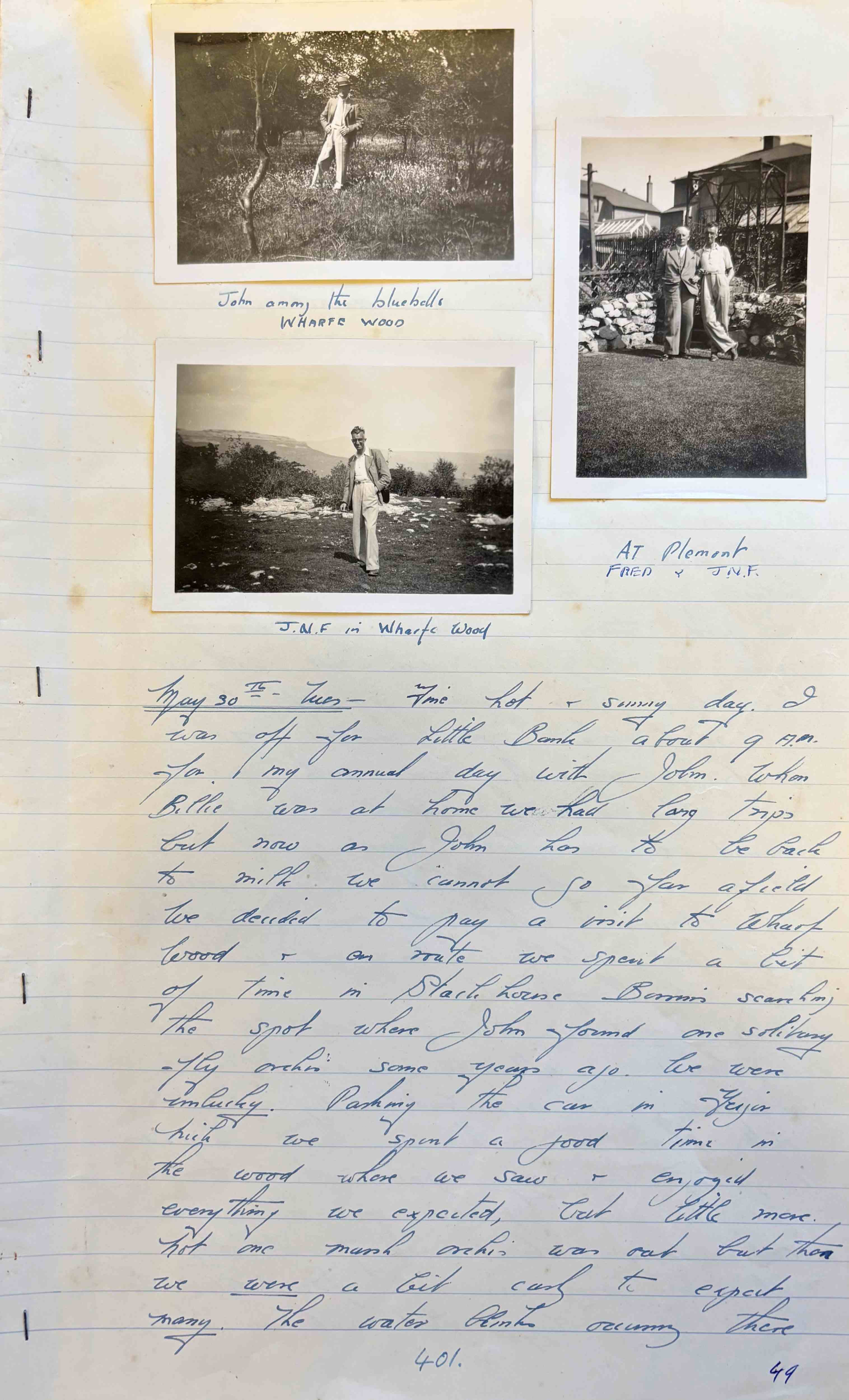
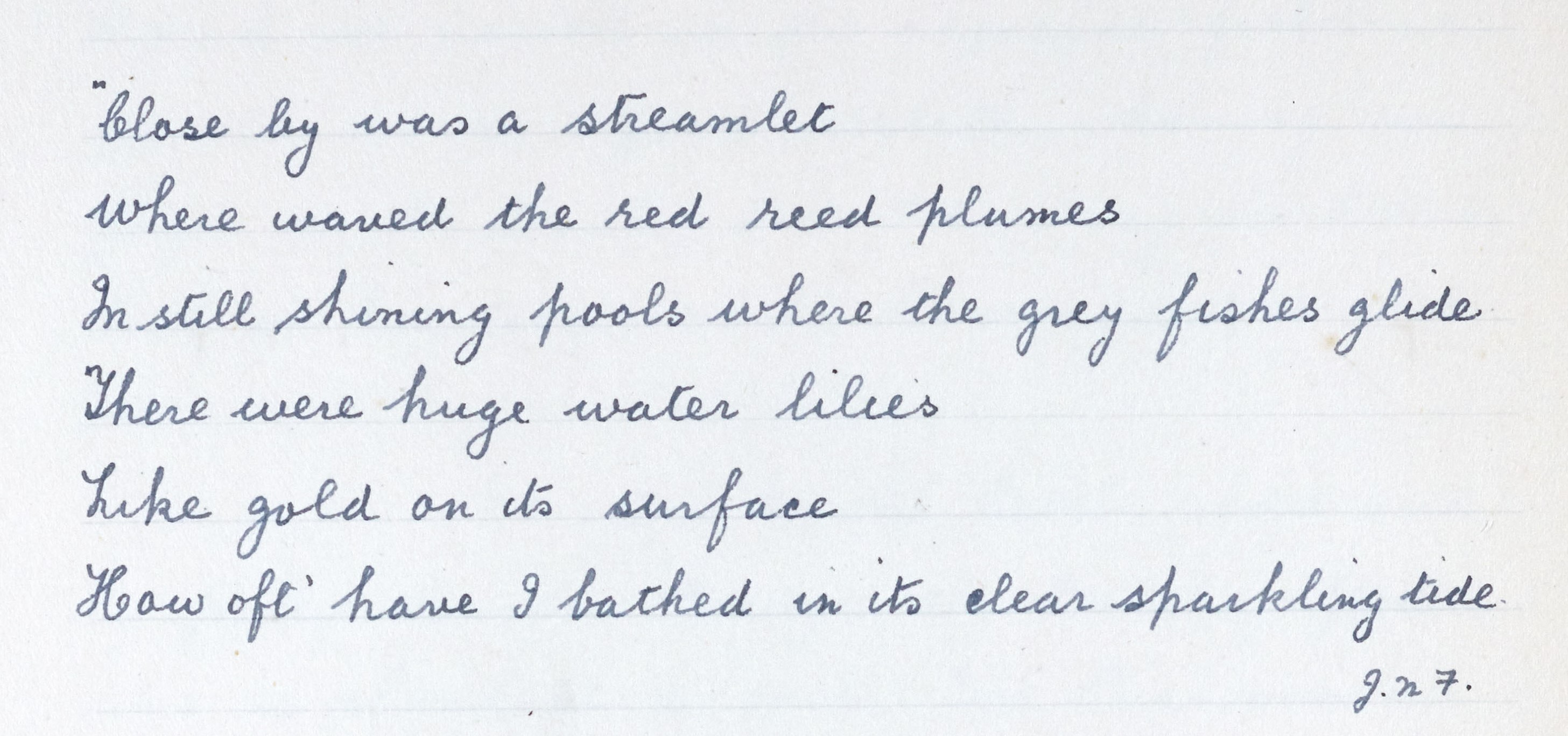
Left: An example of Norman’s poetry, from Fred Holder’s ‘A Week in Craven’, page 61, 1928 [ZNF 7] and Right: The front page of Norman’s manuscript diary for May 1939, forming part of a series of unbound volumes covering 1938-1944 [ZNF 2]
The manuscripts are peppered with many photographs of the authors and their friends and family. Artist friend Trissie Miller – Miss B. Miller, described in their writings as ‘The Painter of Flowers’ – produced beautiful watercolour illustrations of the pressed botanical specimens Norman and Fred posted to her in Southport.
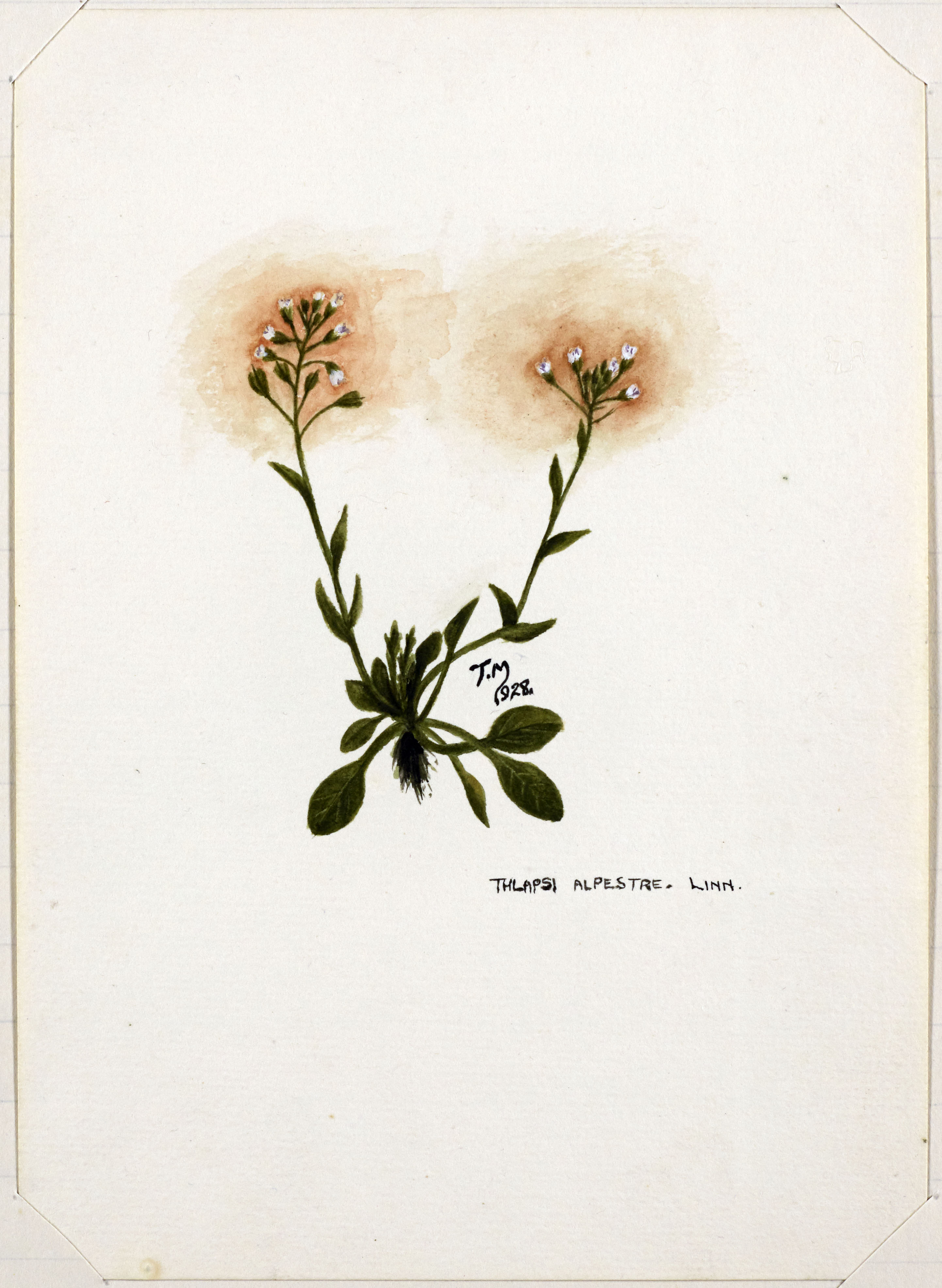
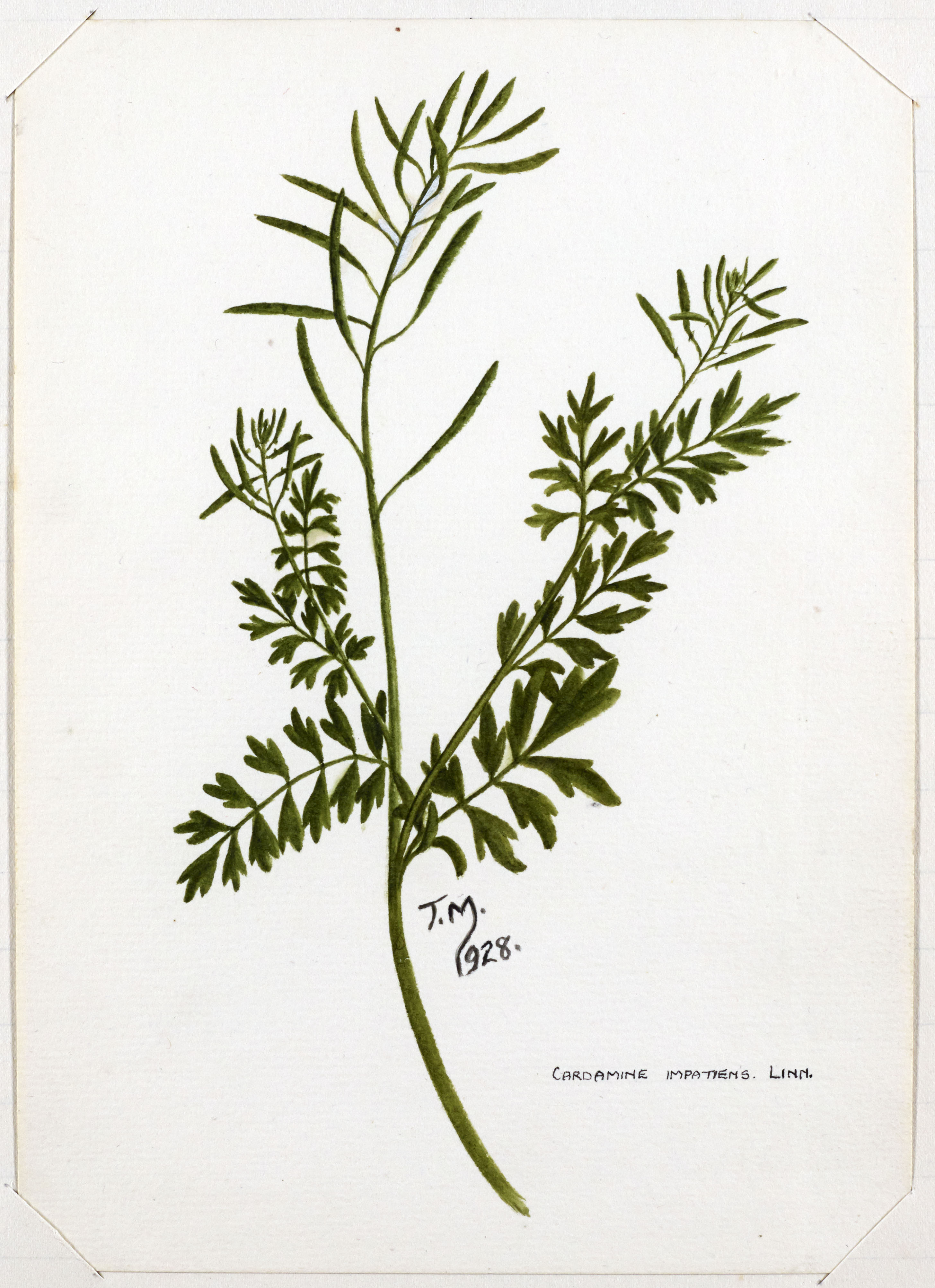
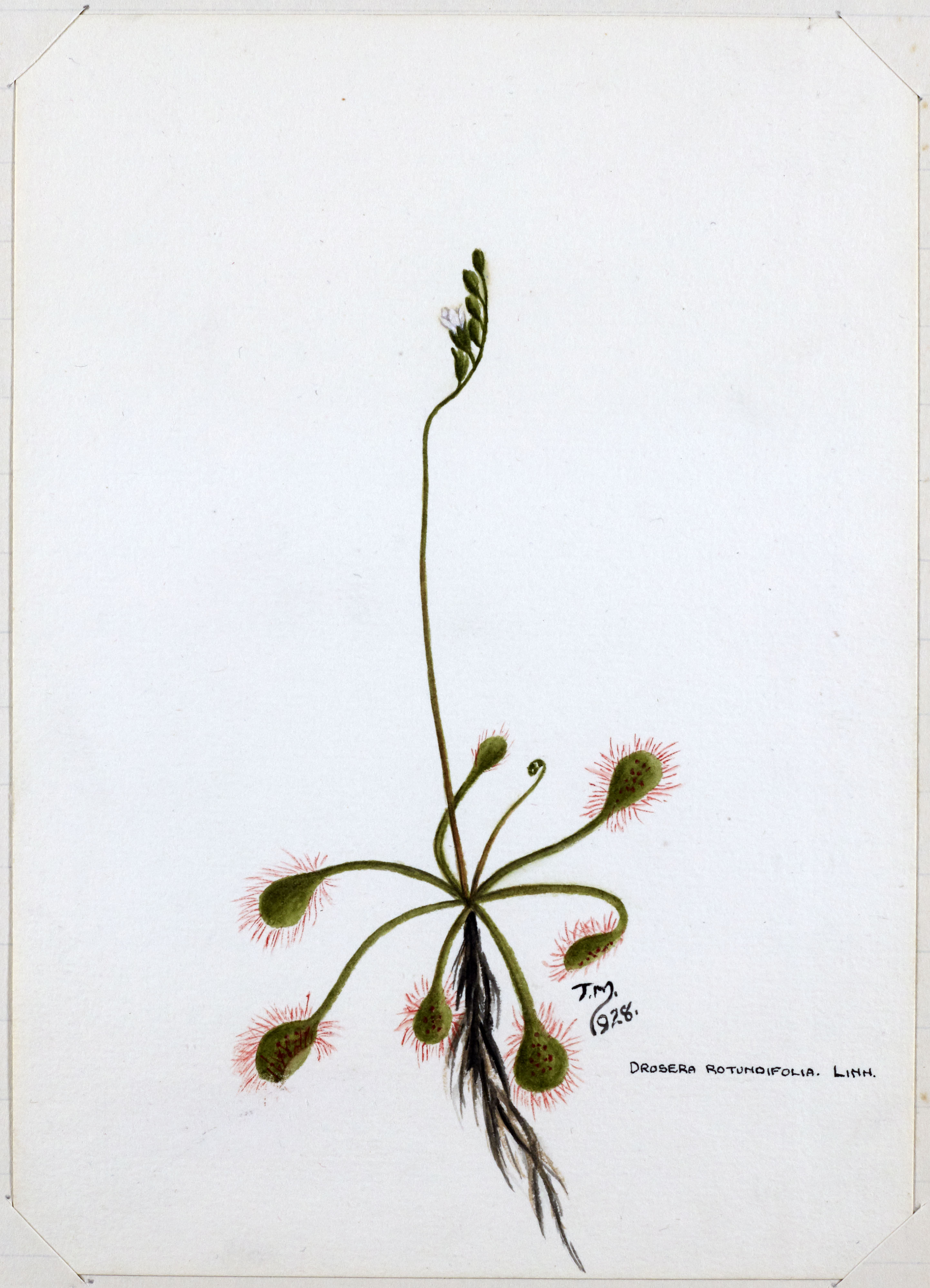
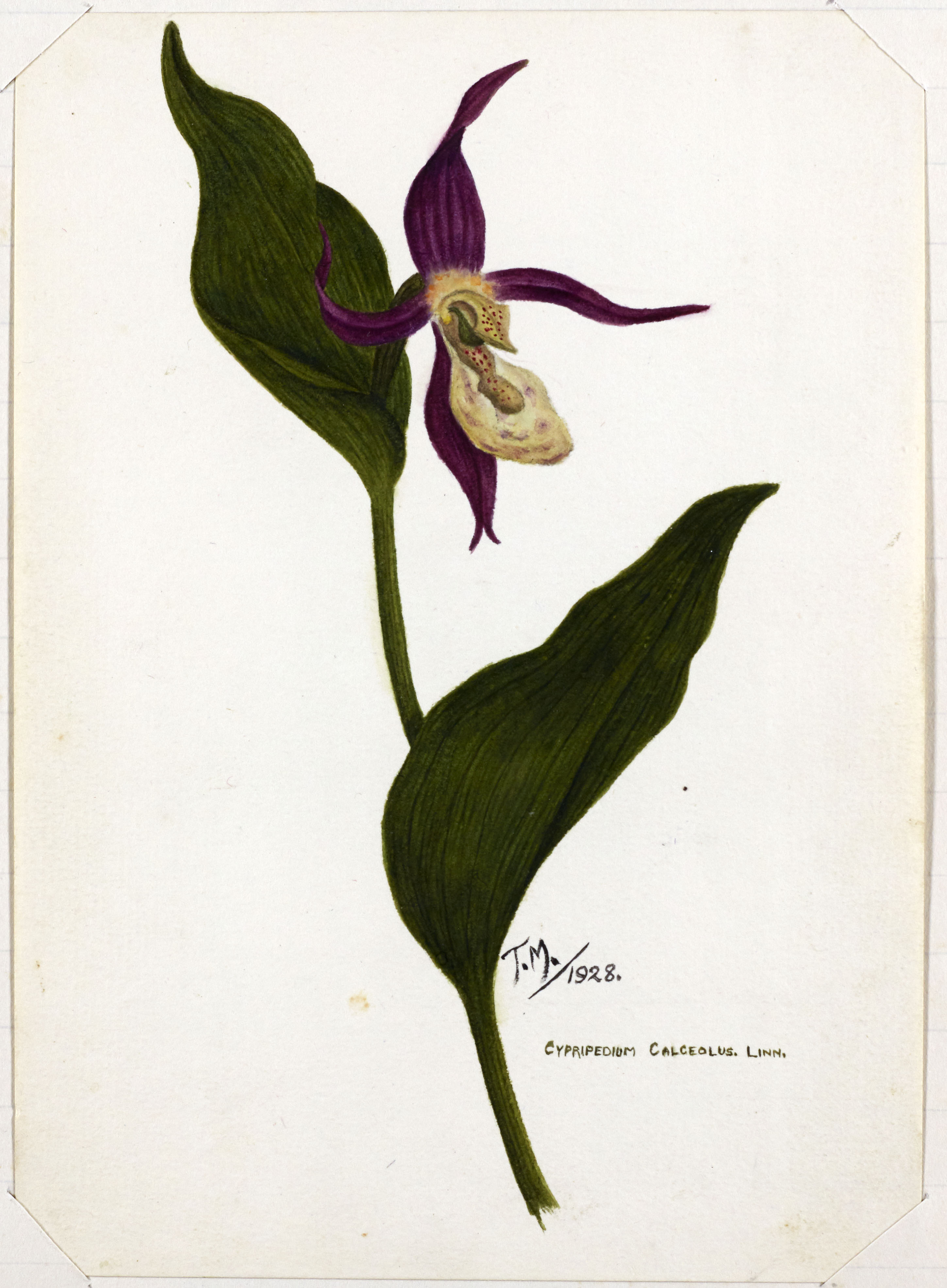
Examples from a range of original botanical watercolours by Trissie Miller, illustrating Fred Holder’s ‘A Week in Craven’ , 1928 [ZNF 7]
Norman Frankland was born in Hellifield and lived at various places in the Craven area of North Yorkshire throughout his life. He left school aged 14 and began his working life as a woodworker with an apprenticeship at Ingleton. In his spare time, he travelled the countryside, recording and mounting botanical specimens. He also read widely and corresponded with experts to increase his botanical knowledge.
In 1926, Norman’s visit to the Airedale Dunes at Southport resulted in a chance meeting with noted local naturalist Fred Holder. They were to become life-long friends, visiting each other regularly over the years, sharing information and writing a series of bound manuscript books together. In these books, Norman is nicknamed ‘The Poet’ and Fred is ‘The Scribe’.
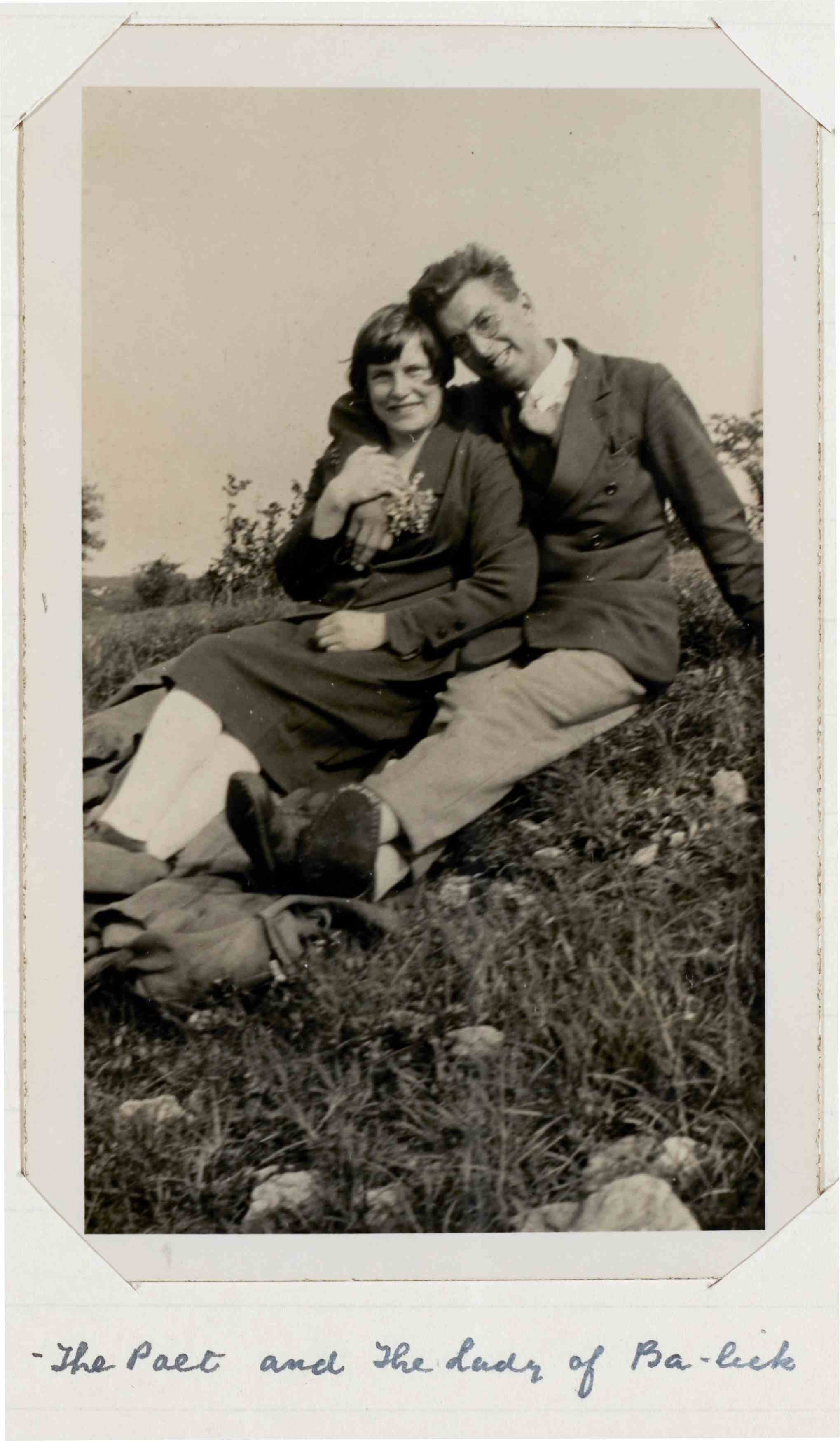
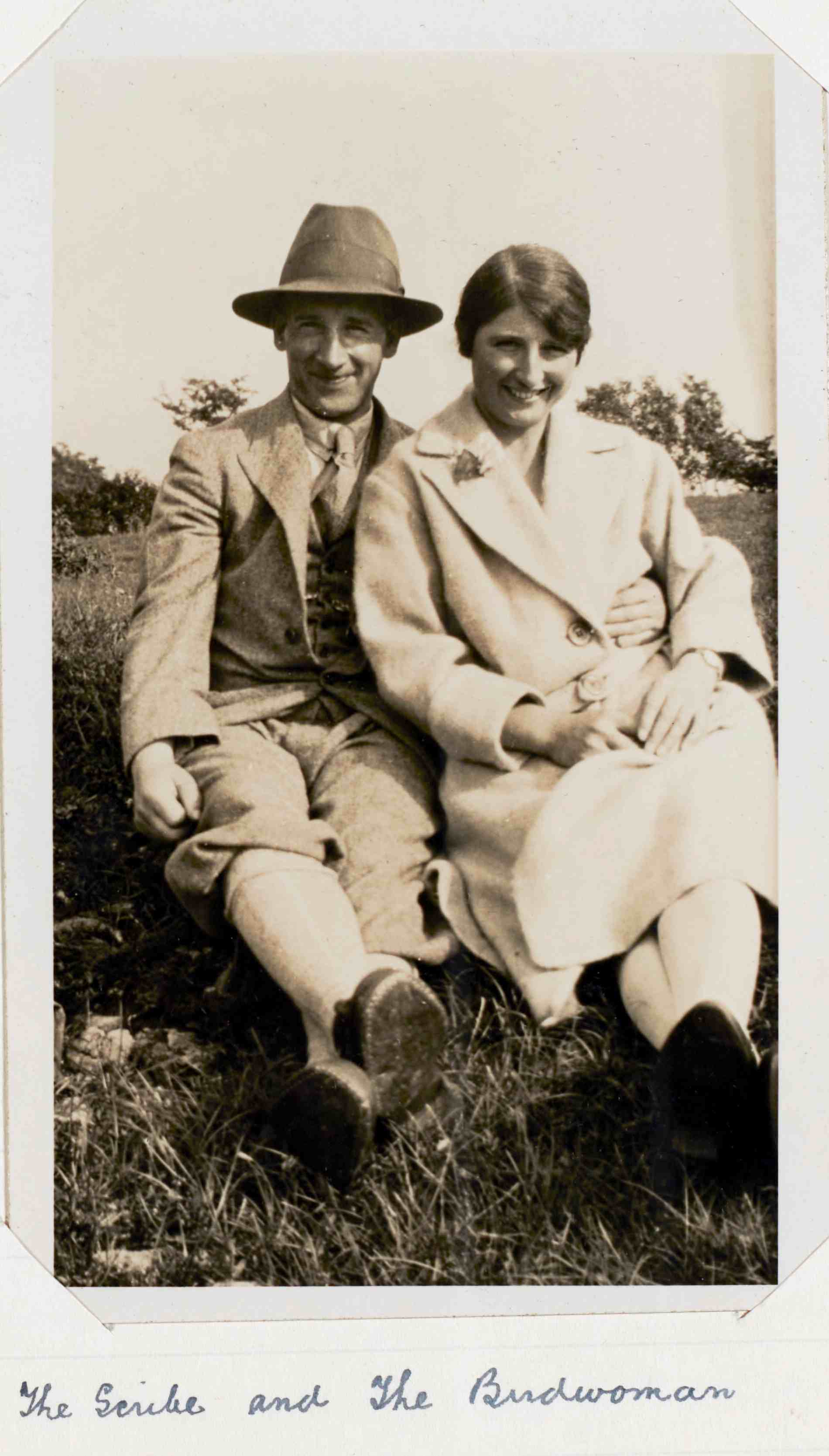
Left: The Poet & the Lady of Ba’lick (Barnoldswick) and Right: The Scribe & The Birdwoman, 1928 [ZNF 7]
Their botanical excursions and holidays included Norman’s wife, Maude – ‘The Lady of Ba’lick’ (Barnoldswick in local dialect) and Fred’s wife, Gertrude – ‘The Birdwoman’ (a keen ornithologist). During their week in Craven in 1928, long days spent exploring on foot or bicycle usually concluded with “plate after plate of bread and butter, cakes, lemon cheese, and pots of ice cream”!
Frances Fisher, botanical and landscape artist (1876-1968)
The early sketchbooks and journals of Frances form part of the North Riding County Council Members’ Library collection (ZMZ 164). Her small collection comprises sketchbooks, travel journals and autograph albums of verses and sketches. Some contain exquisite botanical watercolours of specimens observed during holidays and with her family during the 1890s.
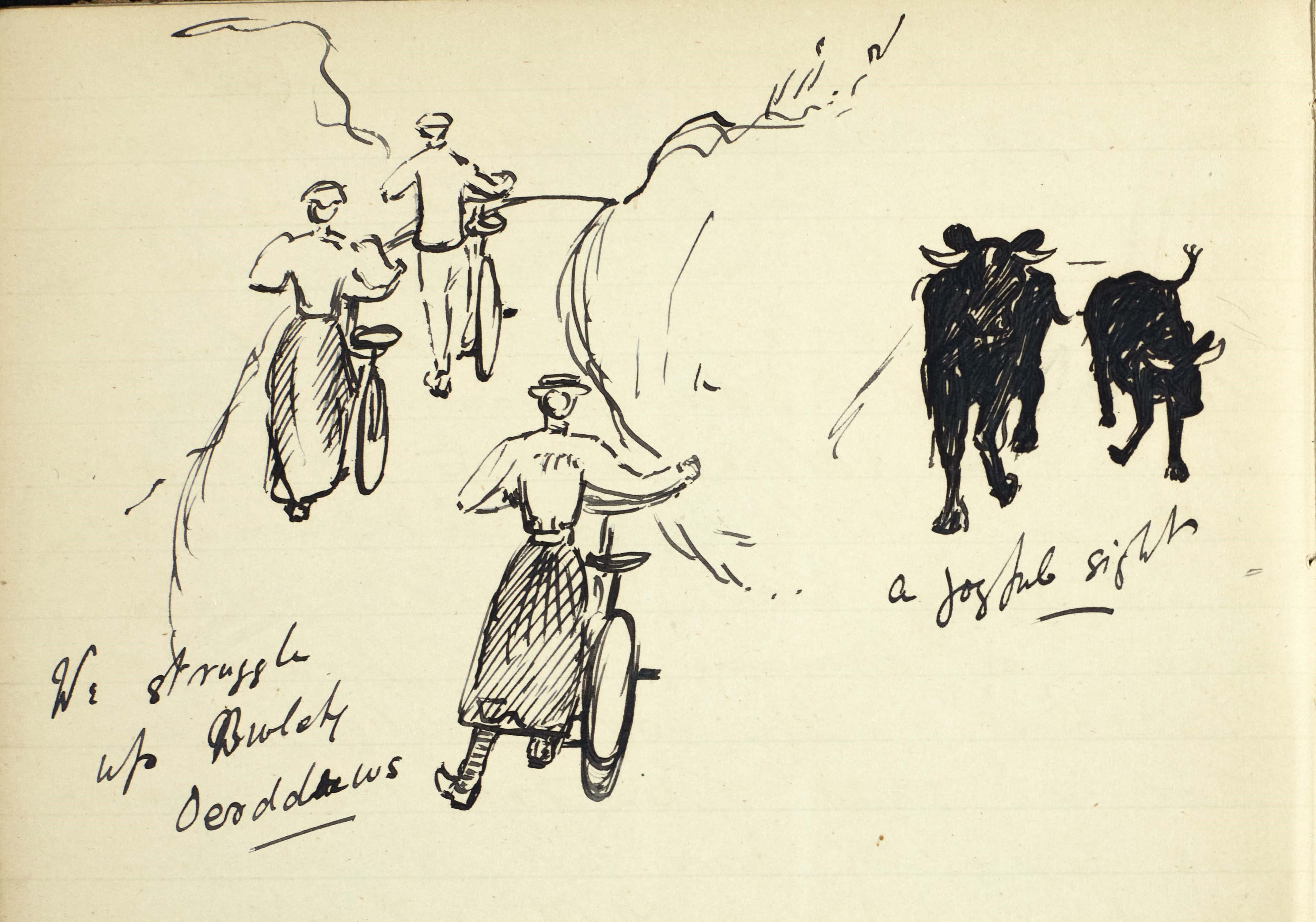
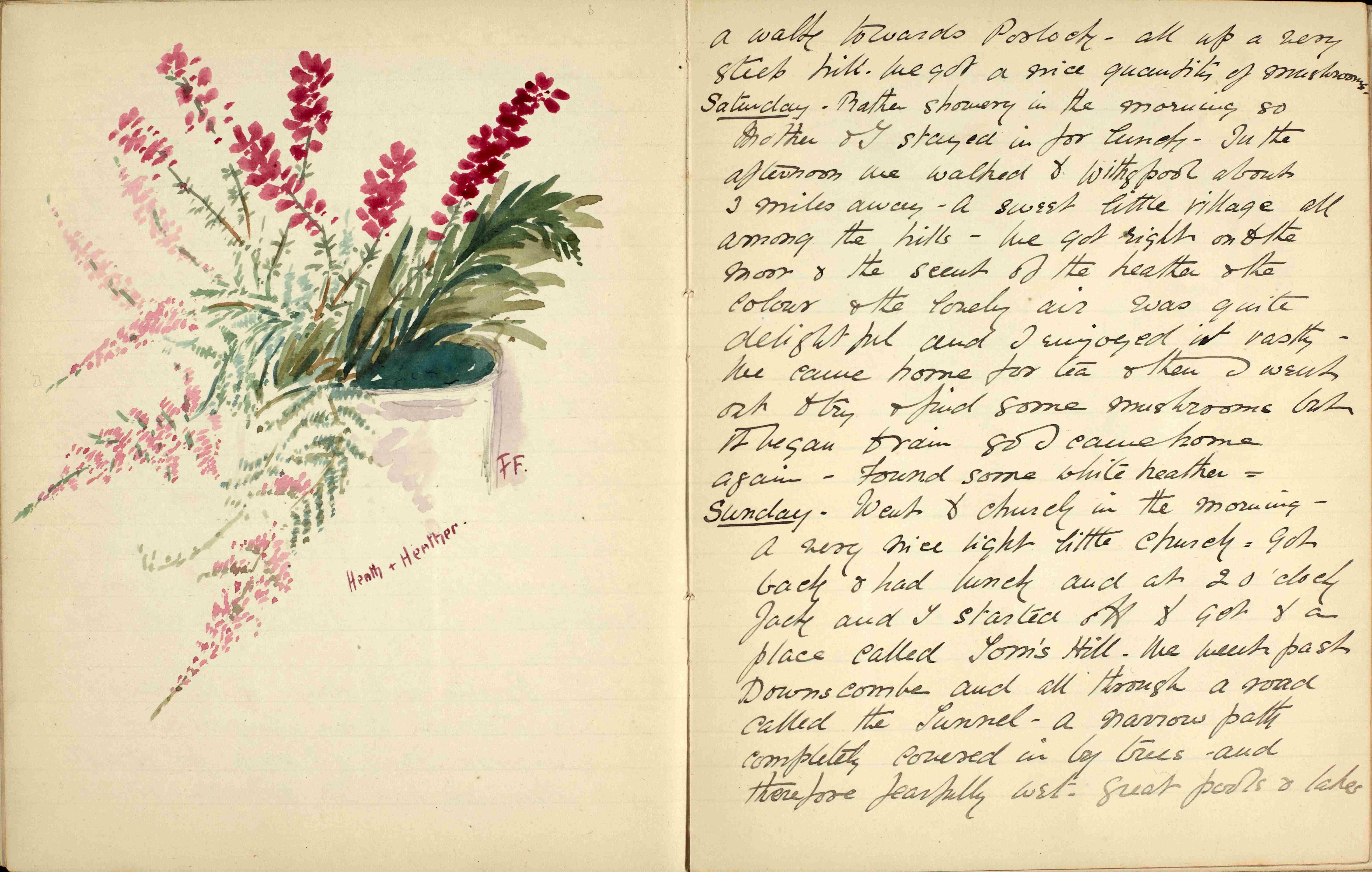
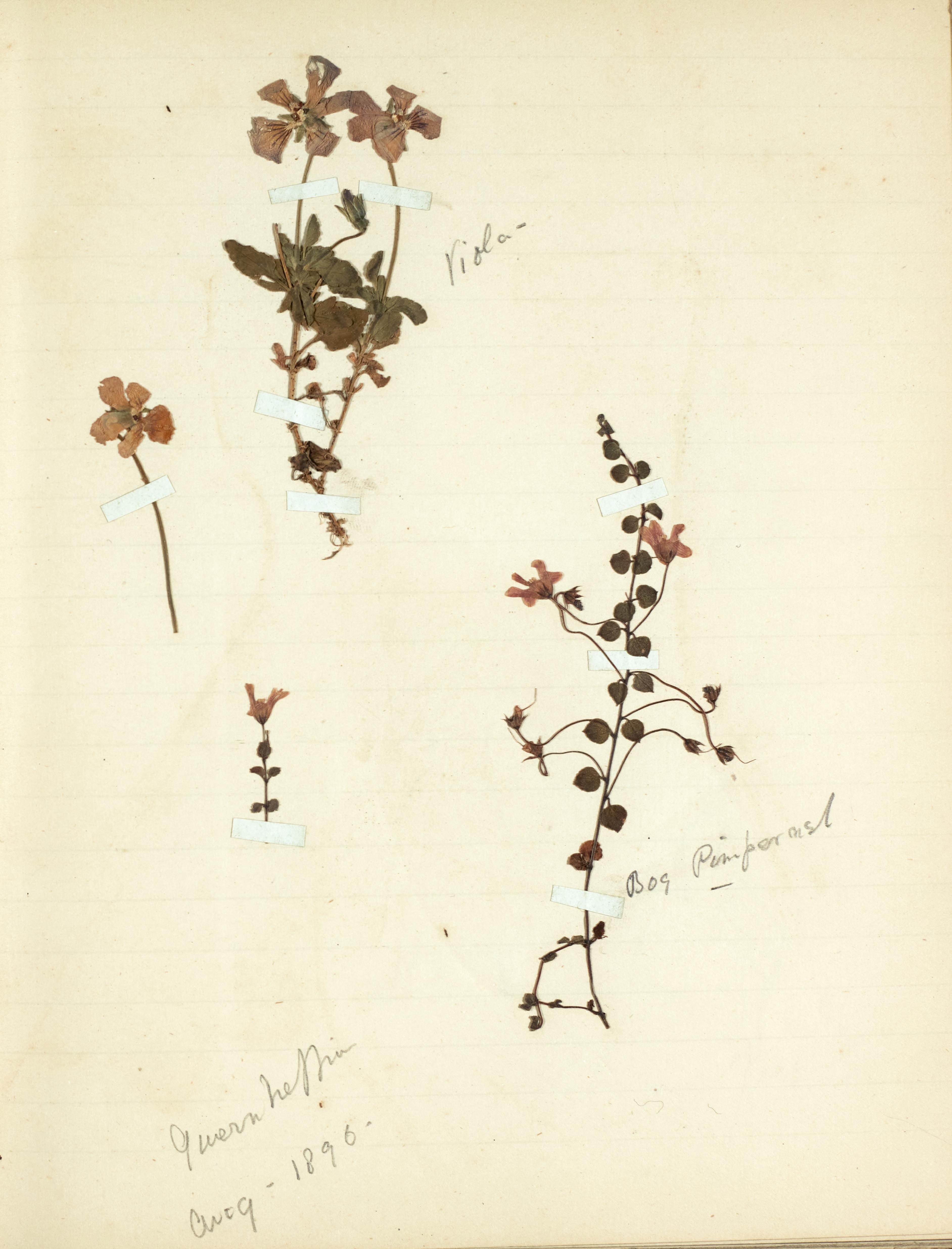
Pages from pages of a journal of Frances Fisher recording a family holiday to Wales, 1896 [ZMZ 164]
Frances attended Scarborough School of Art and Westminster School of Art, exhibiting regularly during the 1930s. Her love of botany was perhaps influenced by her father’s keen interest in the subject: Reverend Robert Fisher’s two published books on British flowers were illustrated by Frances.
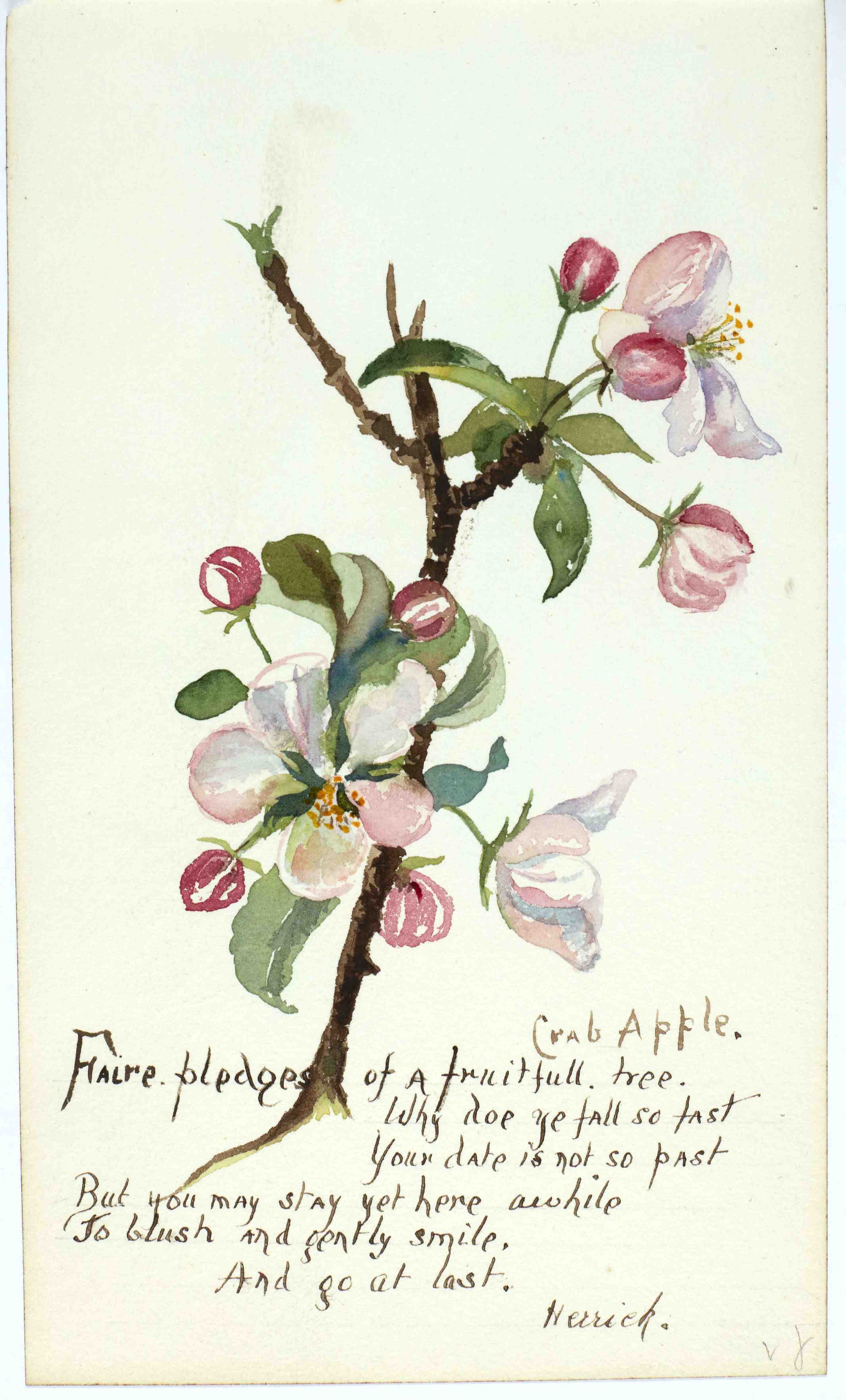
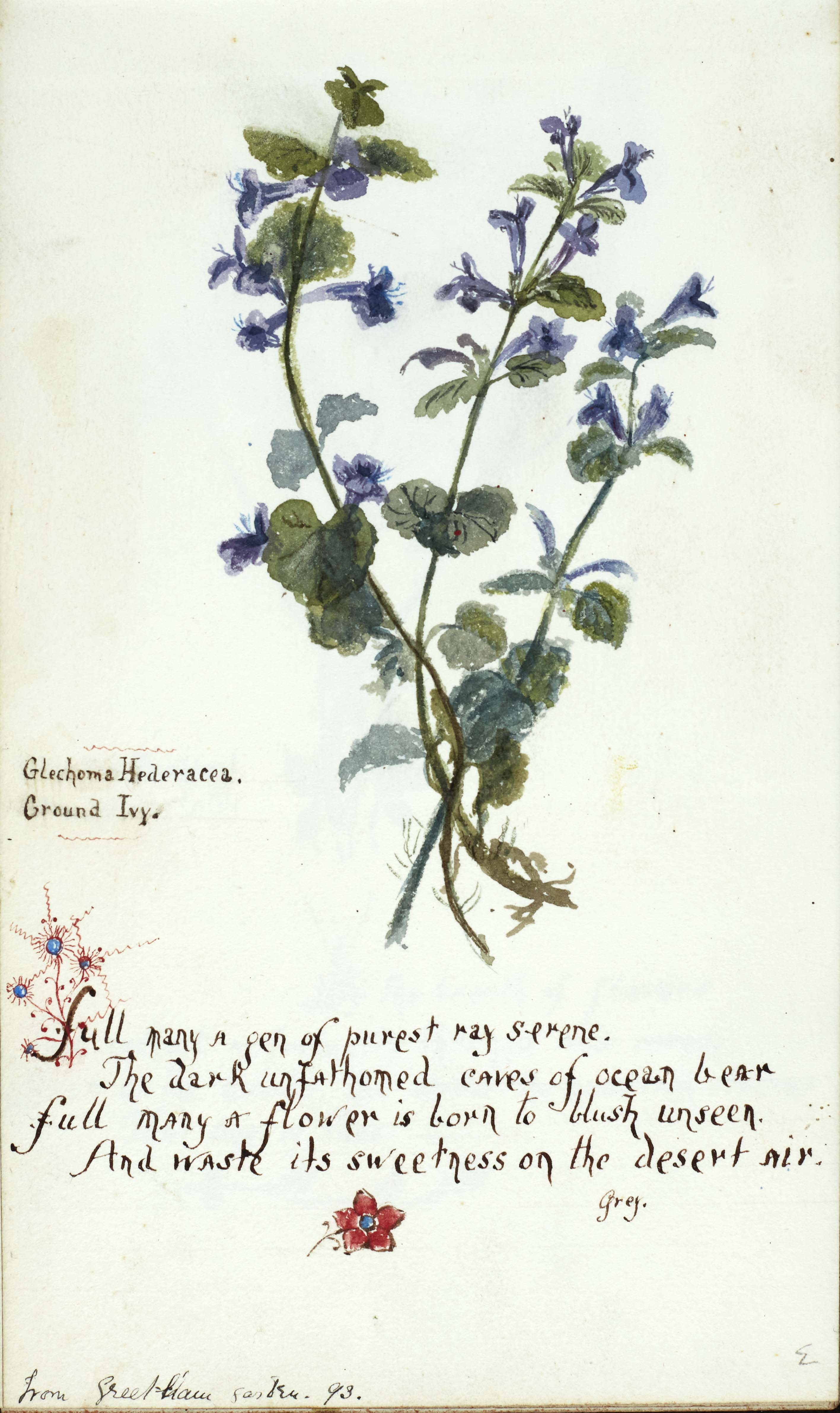
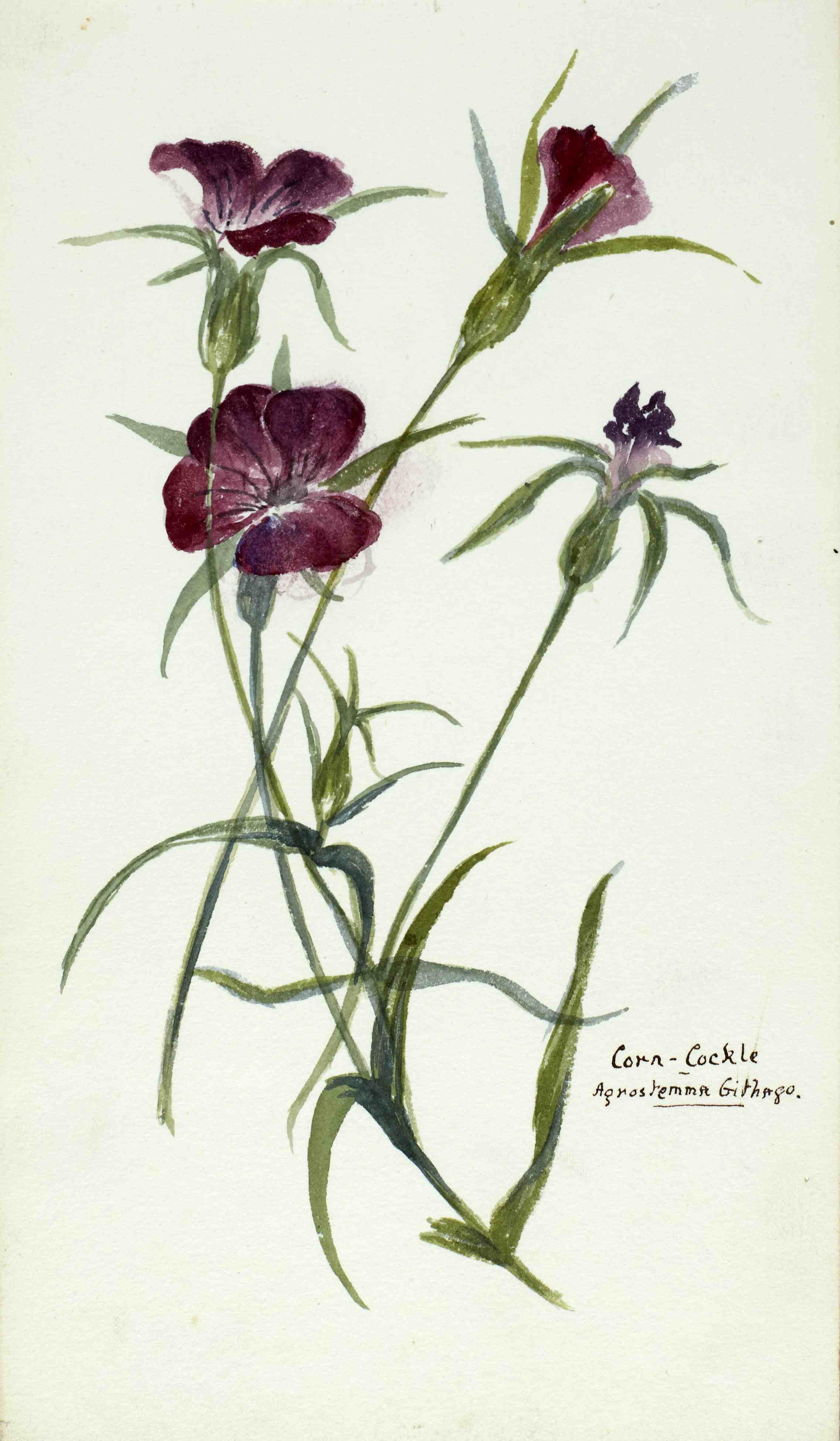
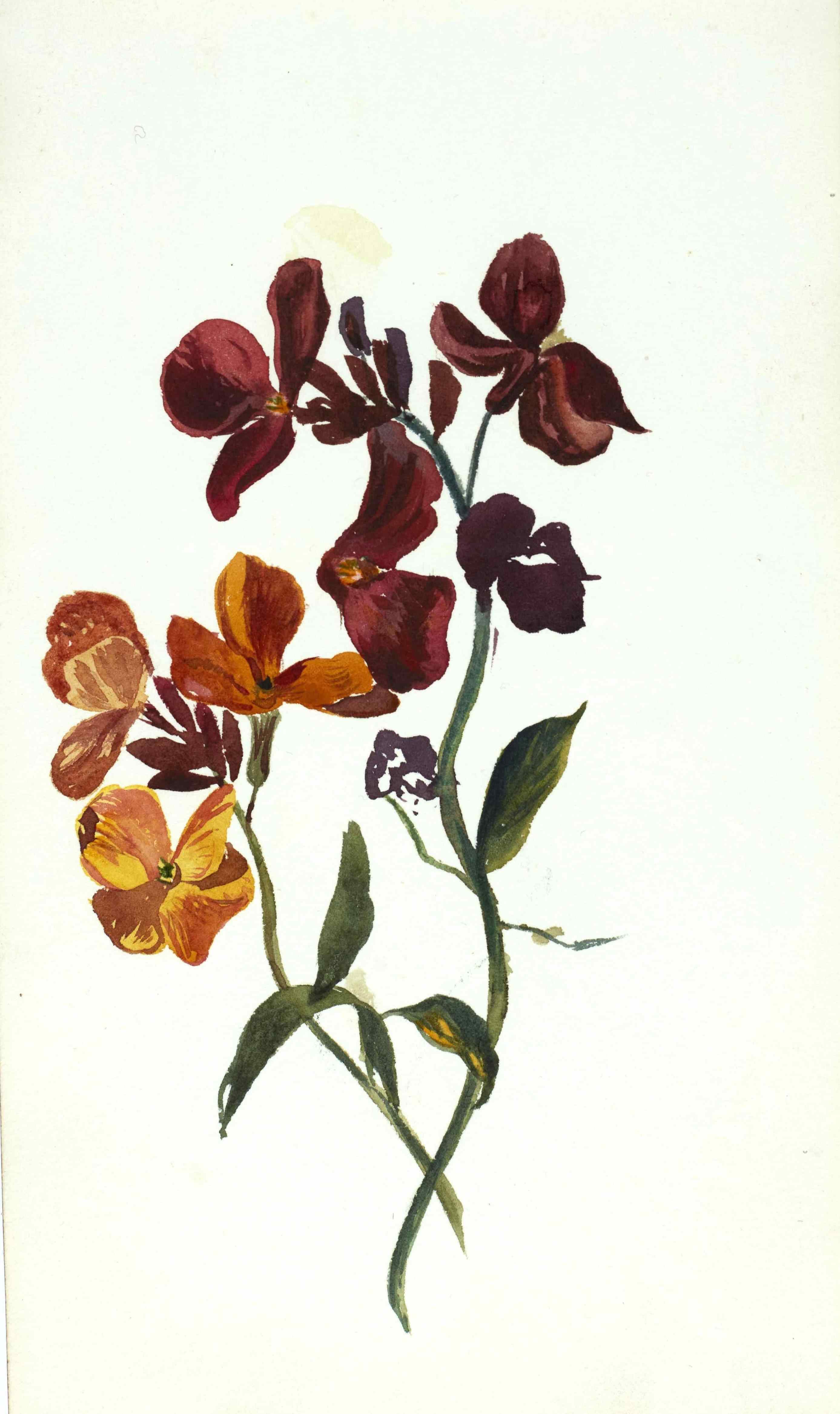
Some watercolour portrayals in a pocket sketchbook of wild and garden flowers, observed by Frances Fisher during a visit to Leicestershire in 1894 [ZMZ 164]
Married first to a stockbroker, then to a medical doctor, Frances’ third husband was a fellow artist – notable Staithes group artist Lionel Townsend Crawshaw (1864-1949). Together they lived and worked in various parts of the country, including Whitby, before settling in Devon.
Frances’ son by her first marriage, Robert Mountjoy Kettlewell, was vicar of Great Ayton from 1932-1939. Robert included his mother’s journals in his donation of books to the North Riding County Council members’ library (known as ‘the Kettlewell bequest’).
More examples from the Archives
Personal papers within the Scrope family archive (ZPT), include an herbarium containing 50 pressed flowers and leaves, annotated with their scientific (Latin) name, collection date and location (c.1832-1853), as well as an indexed notebook of botanical specimens observed in locations such as Danby and Wensleydale (1862-1890) [ZPT 5/24/1-2].
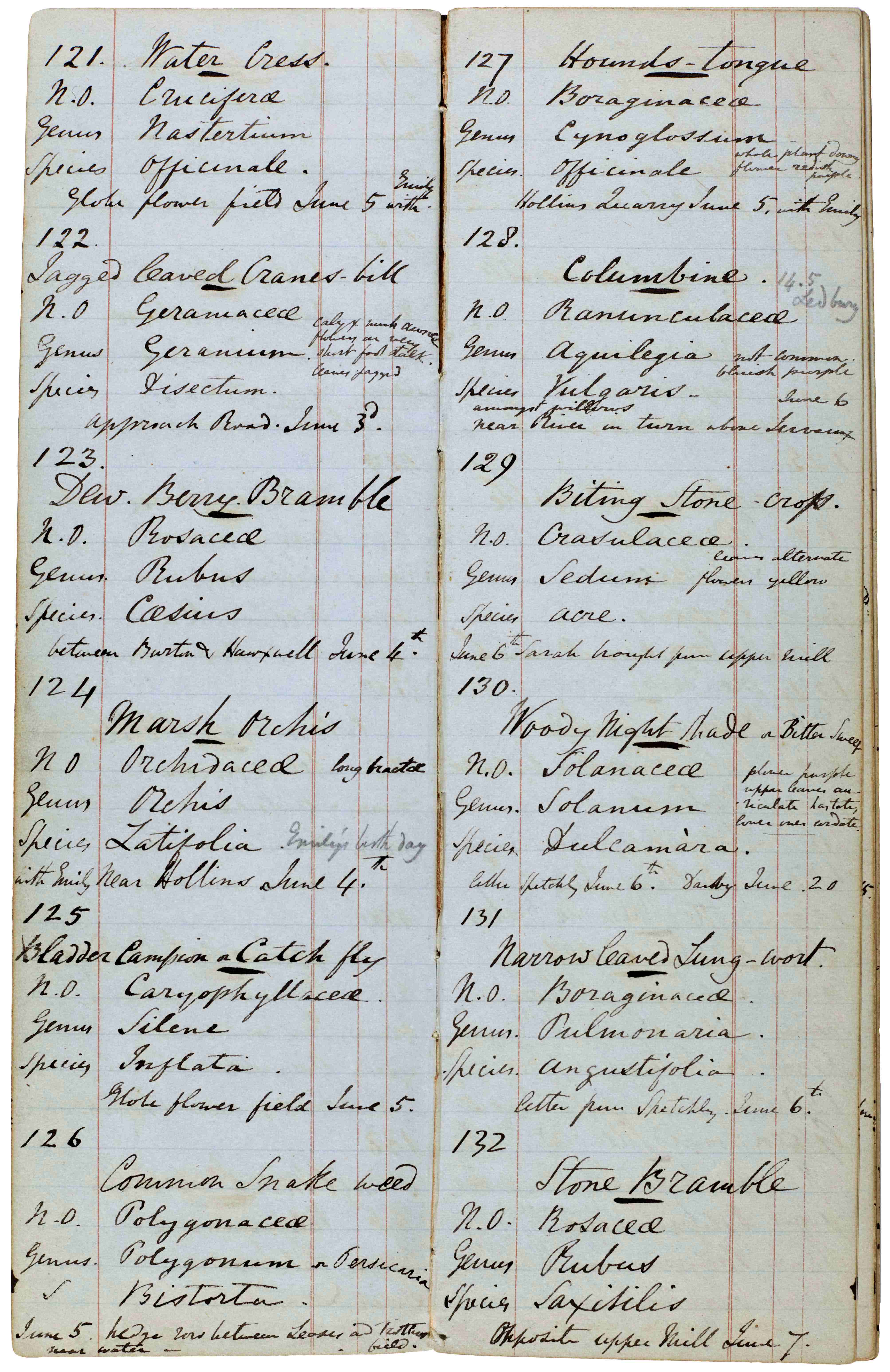
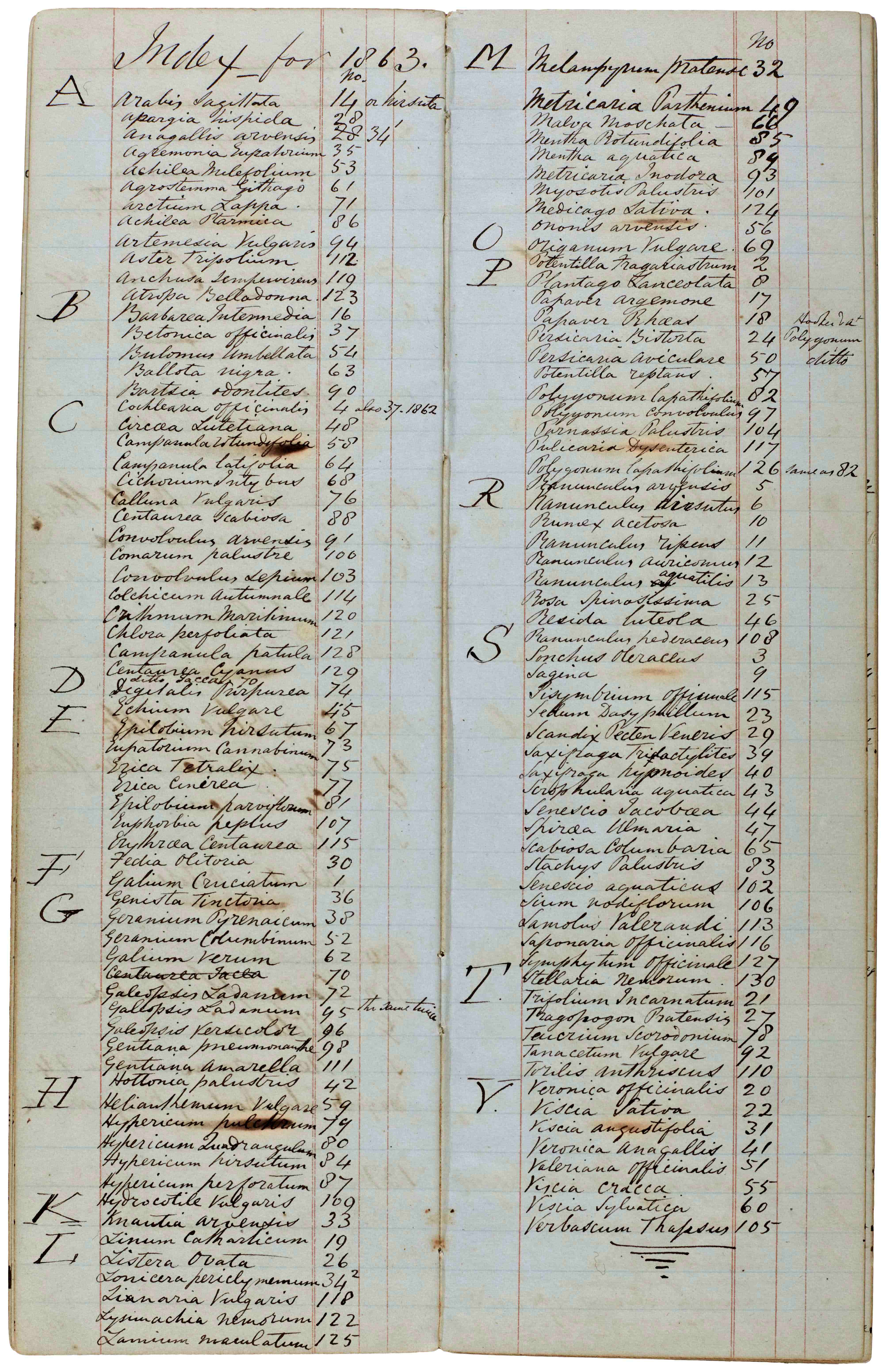
Pages from an indexed notebook of botanical specimens observed in locations such as Danby and Wensleydale, 1862-1890 [ZPT 5/24/2]
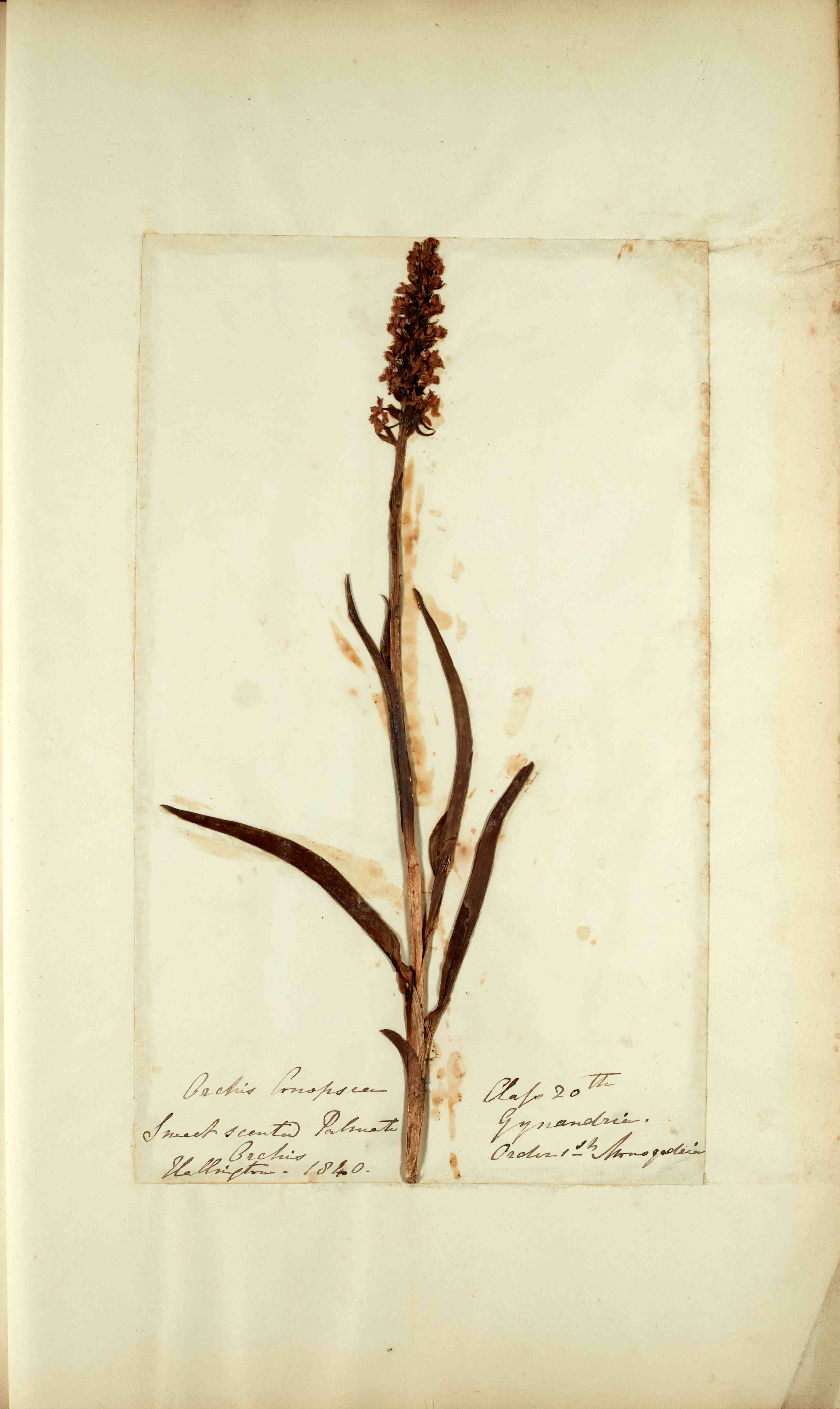
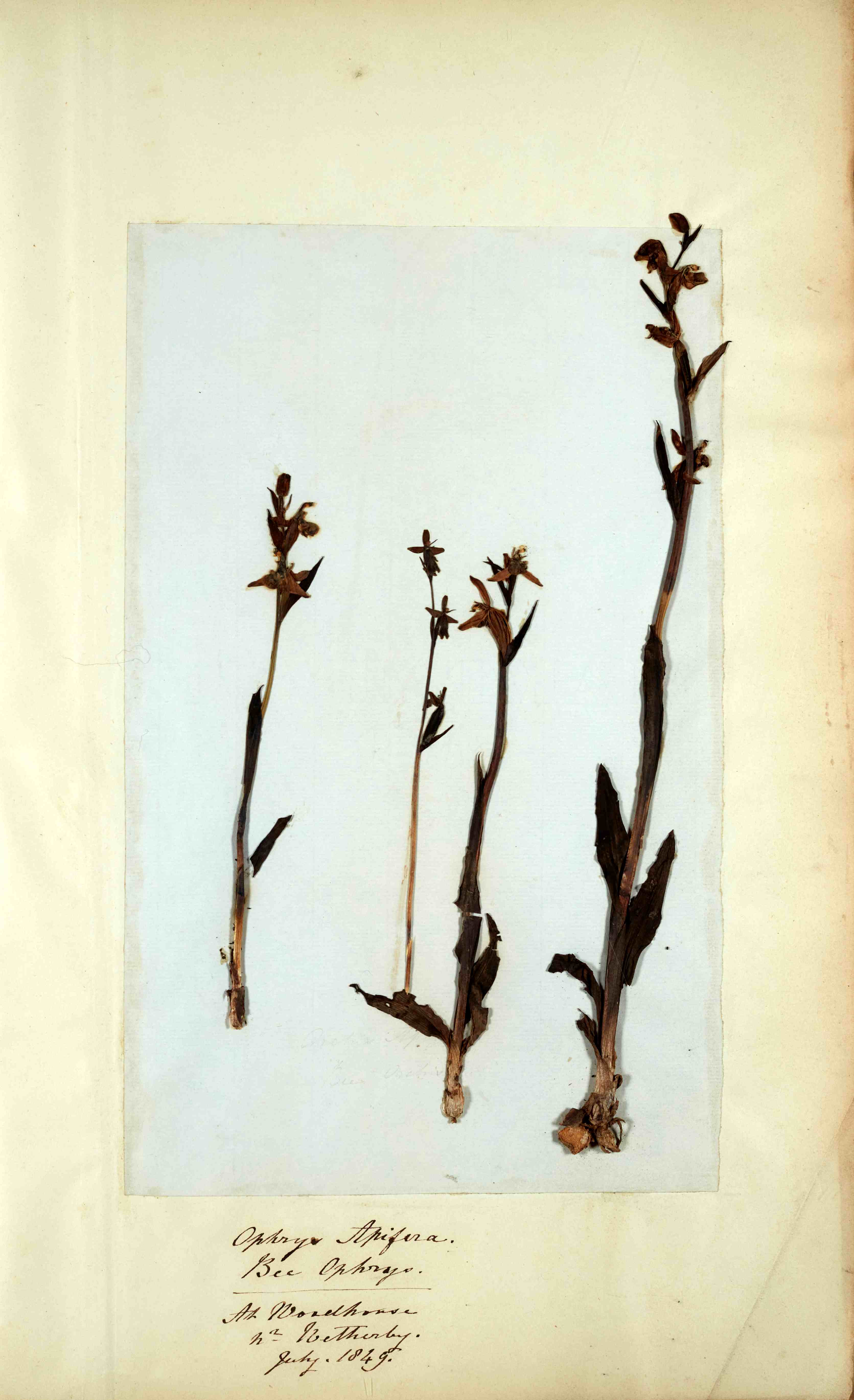
Common Fragrant Orchid and Bee Orchid pressed specimens. From an herbarium containing 50 pressed flowers and leaves, annotated with their scientific (Latin) name, collection date and location, c.1832-1853 [ZPT 5/24/1]
The Cholmeley of Brandsby archive
The personal papers of Francis Cholmeley (1783-1854), within the Cholmeley of Brandsby archive, contain an observational nature chart. It records flora and fauna first spotted in his locality in spring and early summer, spanning the years 1797 to 1822.
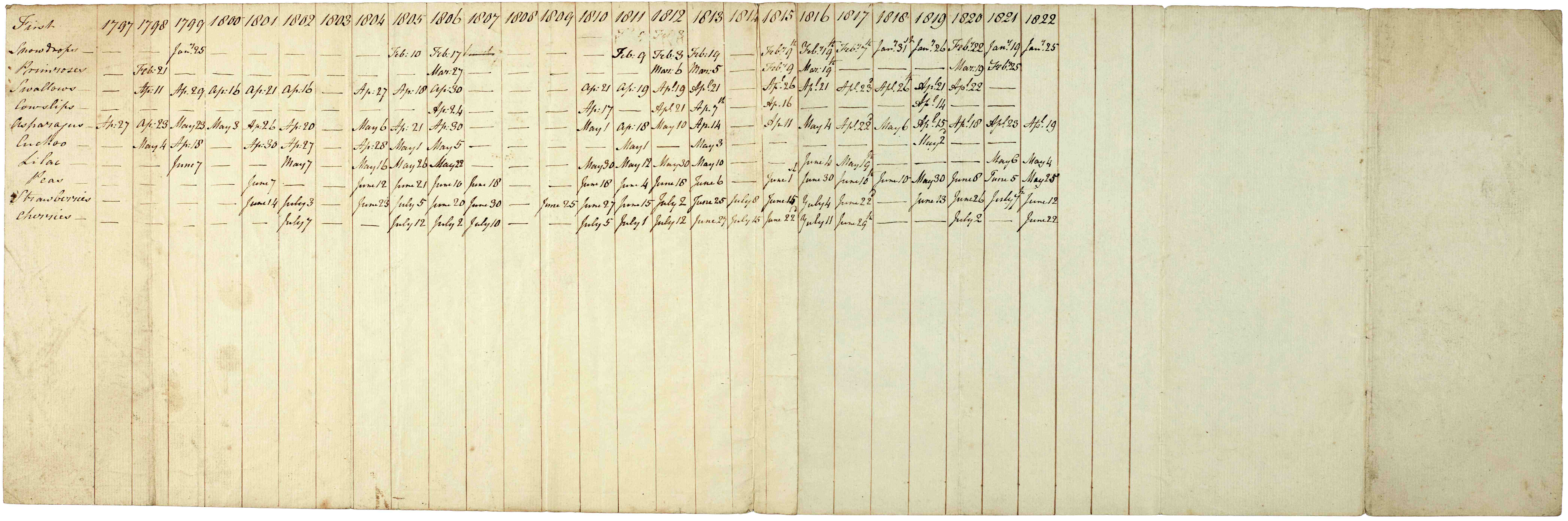
Observational nature chart [ZQG XII 12/2/16]
The Whitby Museum Manuscripts
Within the Whitby Naturalists’ Club papers (c.1932-1953) – forming part of the Whitby Museum Manuscripts’ collection [ZW] – is an undated photograph album containing a set of illustrated postcards of herbs and flowers, with their associated meanings and their uses.
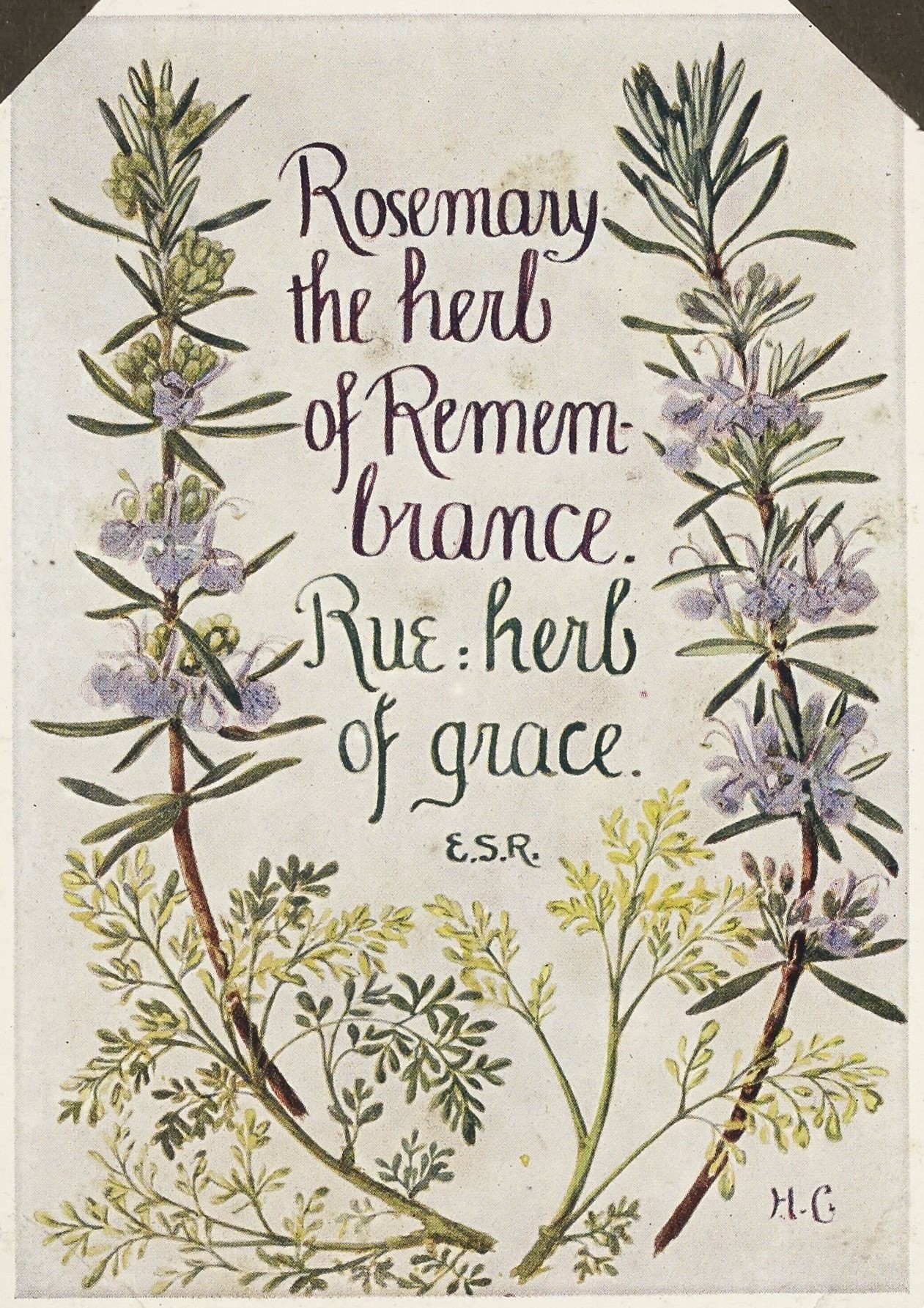
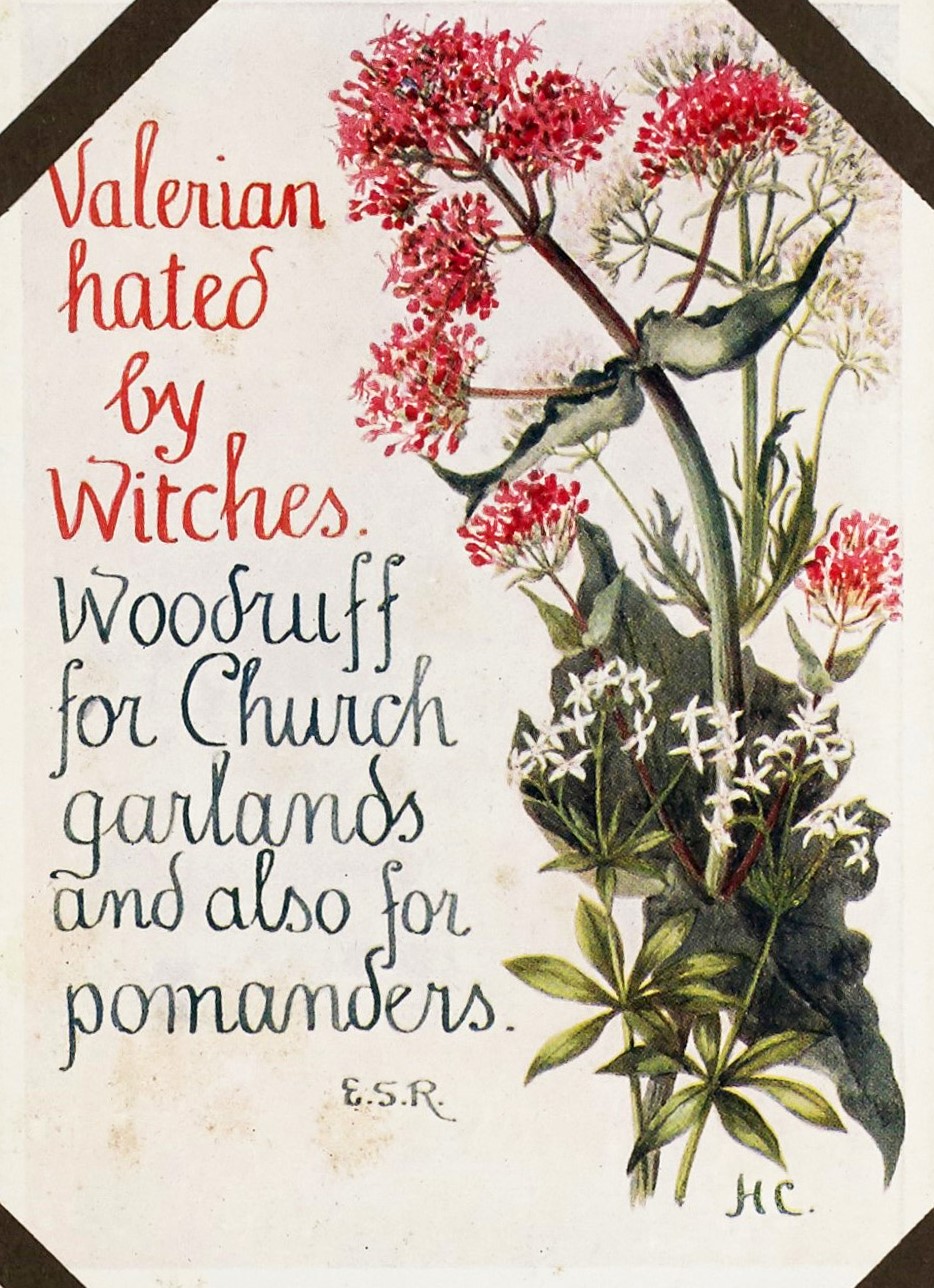
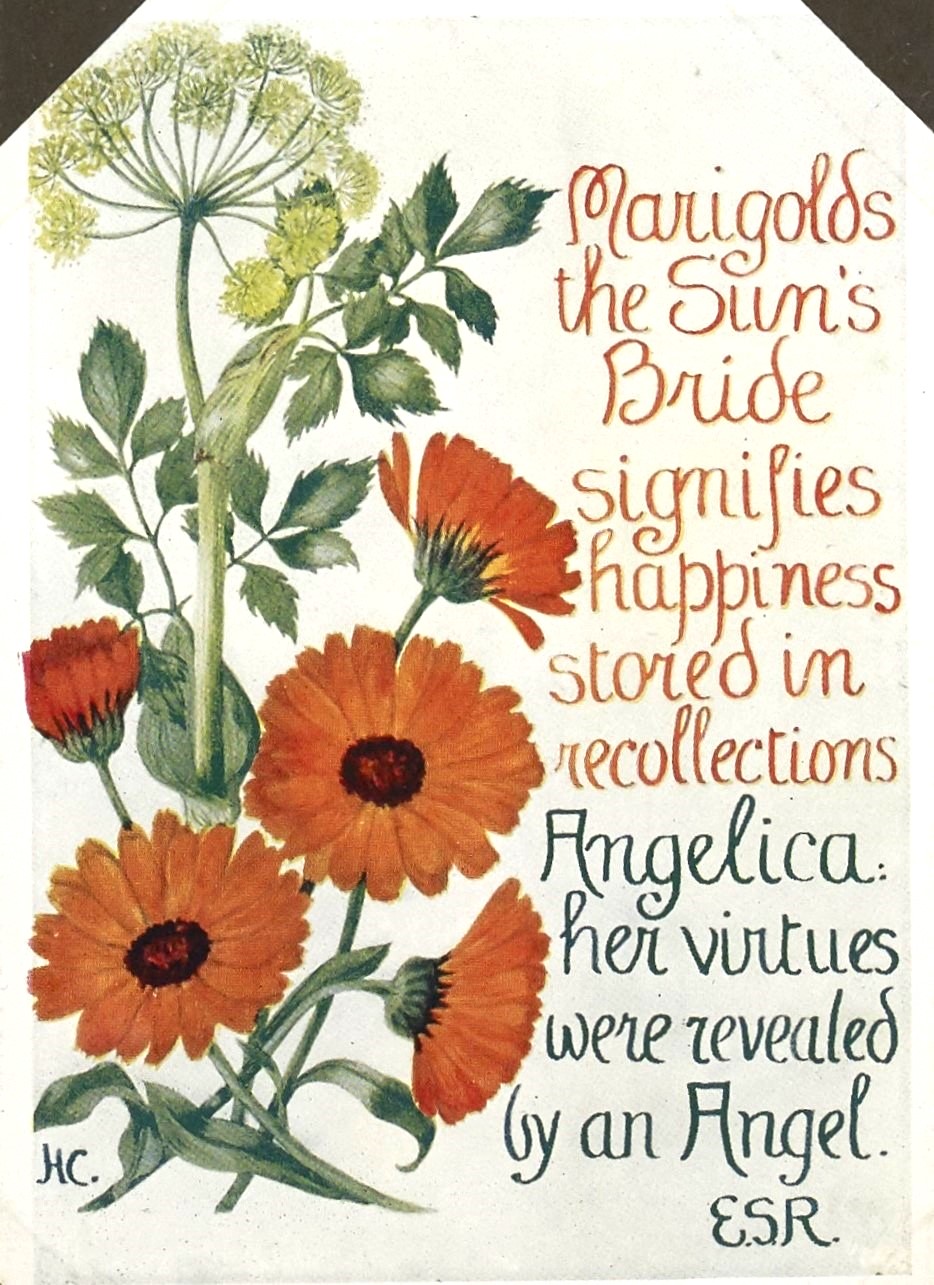
Examples from an album of illustrated postcards, undated [ZW 4/19/3]
Further reading:
The Diaries of Joseph Norman Frankland by Elizabeth Shorrock, in North Craven Heritage Trust Journal, 1998, page 6.
The Scribe, The Poet and The Artist by Elizabeth Shorrock, in North Craven Heritage Trust Journal, 2015, page 25.

