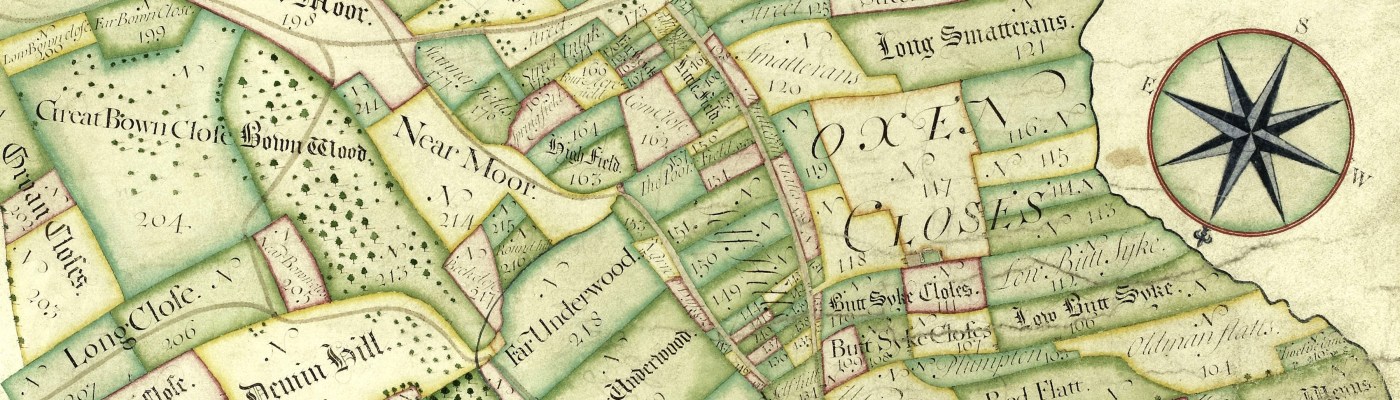
Long before detailed maps existed, every furlong and field would have been identified by a name, passed down through the generations. Many of these names are recorded in medieval documents, preserving some of the earliest written evidence for the organisation of the landscape
Field names can provide clues as to how land was used, its physical character such as size, shape or location, or natural features such as woodland, streams, hills or marshy ground. Some may record the names of former tenants or owners, others refer to farming practices, clearance or enclosure.
Historic names may contain words derived from Old English, Norse, Latin or Norman French, reflecting changing cultural influences through time. Even where the landscape has now changed, older names may still be used preserving traces of earlier layers of history.
The name Langthwaite, for example, contains Old Norse elements: langr (long) + þveit (woodland clearing/meadow), showing influence from Viking settlement in the area in the 9th and 10th centuries.
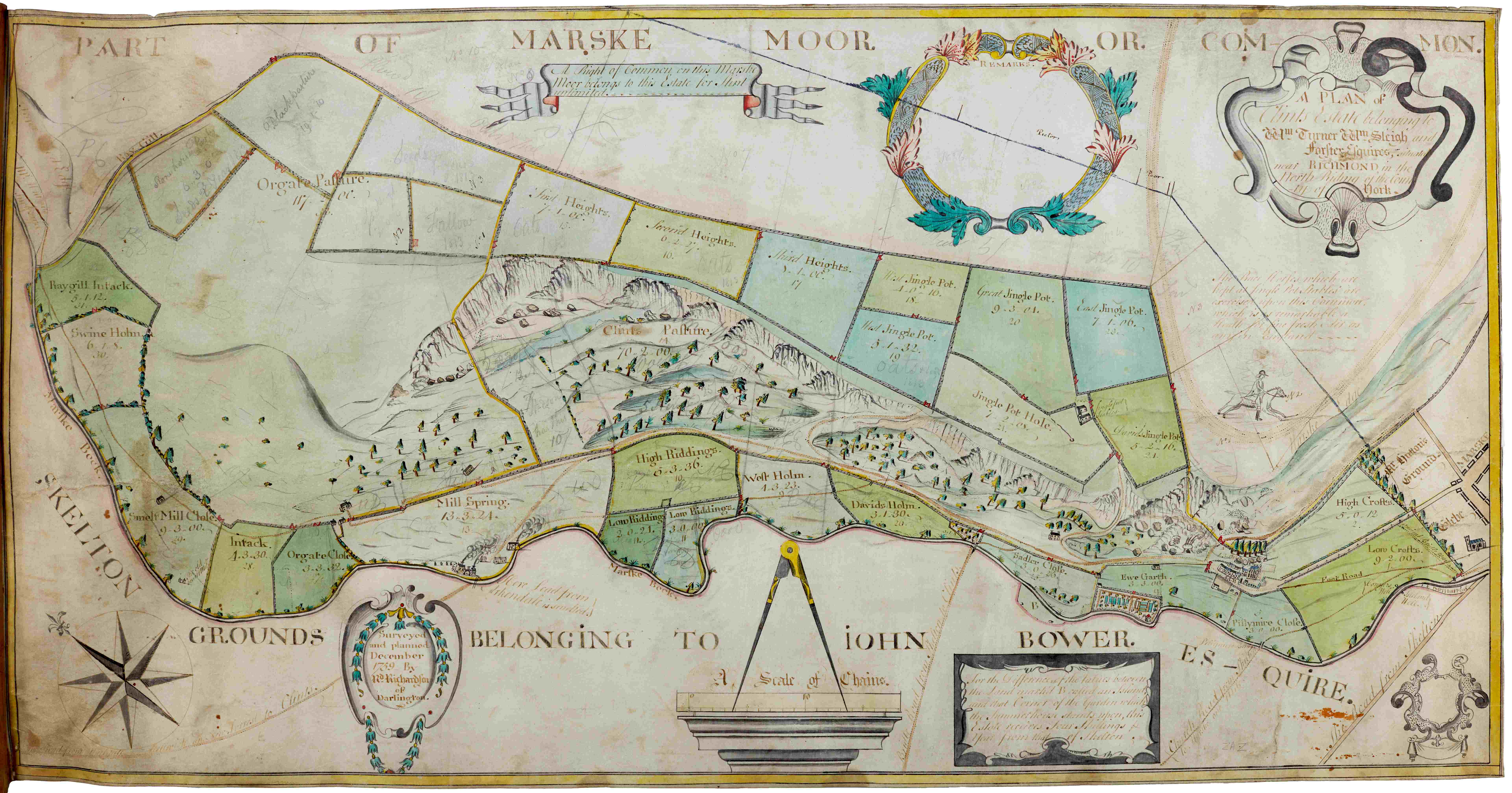
A plan of Clints Estate near Richmond, North Riding, by Richard Richardson, 1759 [ZAZ M3]
By the 18th century, field names often reflect enclosure, including elements as recorded on the map above such as:
Intack: piece of land taken in from moorland or waste
Holm: low-lying water meadow near a river or stream
Garth: small enclosed piece of land adjacent to a house
Close: land enclosed by a fence, hedge or wall
Riddings: man-made clearing in a wooded area
Jingle Pot: may refer to a nearby natural limestone hole or cave where falling water creates a jingling sound.
Names including swine and ewe indicate pigs and sheep; high and low, east and west, first and second, distinguish relative locations; black may refer to dark soil or vegetation heights to elevated land or a ridge; and references to smelt mill close and mill springs indicate nearby industrial activity.
Further reading:
A History of English Field Names (Approaches To Local History) by John Field, Routledge, 1993
A New Dictionary of English Field-Names by Paul Cavill, English Place-Name Society, 2018
University of Nottingham, Institute of Name Studies webpage: Finding medieval landscape names

