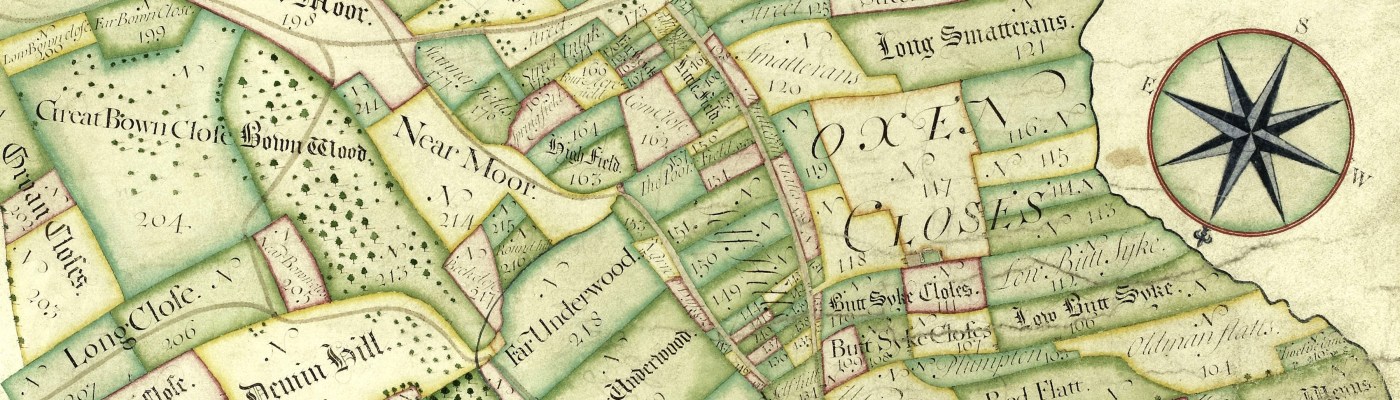
Medieval farming was a communal system; each village was surrounded by two to four large, open fields, each divided into blocks of long narrow strips known as ‘furlongs’
This system was managed according to the rules of the manor court. Tenant farmers were allocated several strips of land to cultivate, which were spread across different fields to ensure a fair mix of good and poor soil. The crops grown in each furlong would rotate each year: one year for spring-sown oats, barley, peas or beans, one for winter-sown wheat or rye and one left fallow for grazing. After each harvest, animals were allowed to graze on the stubble, their manure maintaining soil fertility. Livestock numbers were limited by ‘stints’ to prevent overgrazing.
Each manor was a self-sufficient economic and social unit, supporting the lord and his tenants. In addition to open fields, the lord held the manor farm or ‘demesne’; there was glebe land to support the parish priest; common pasture for cattle, sheep and oxen; meadows to produce hay for winter feed; woodland providing building materials and pannage (grazing for pigs); as well as uncultivated waste land used for foraging and gathering fuel.
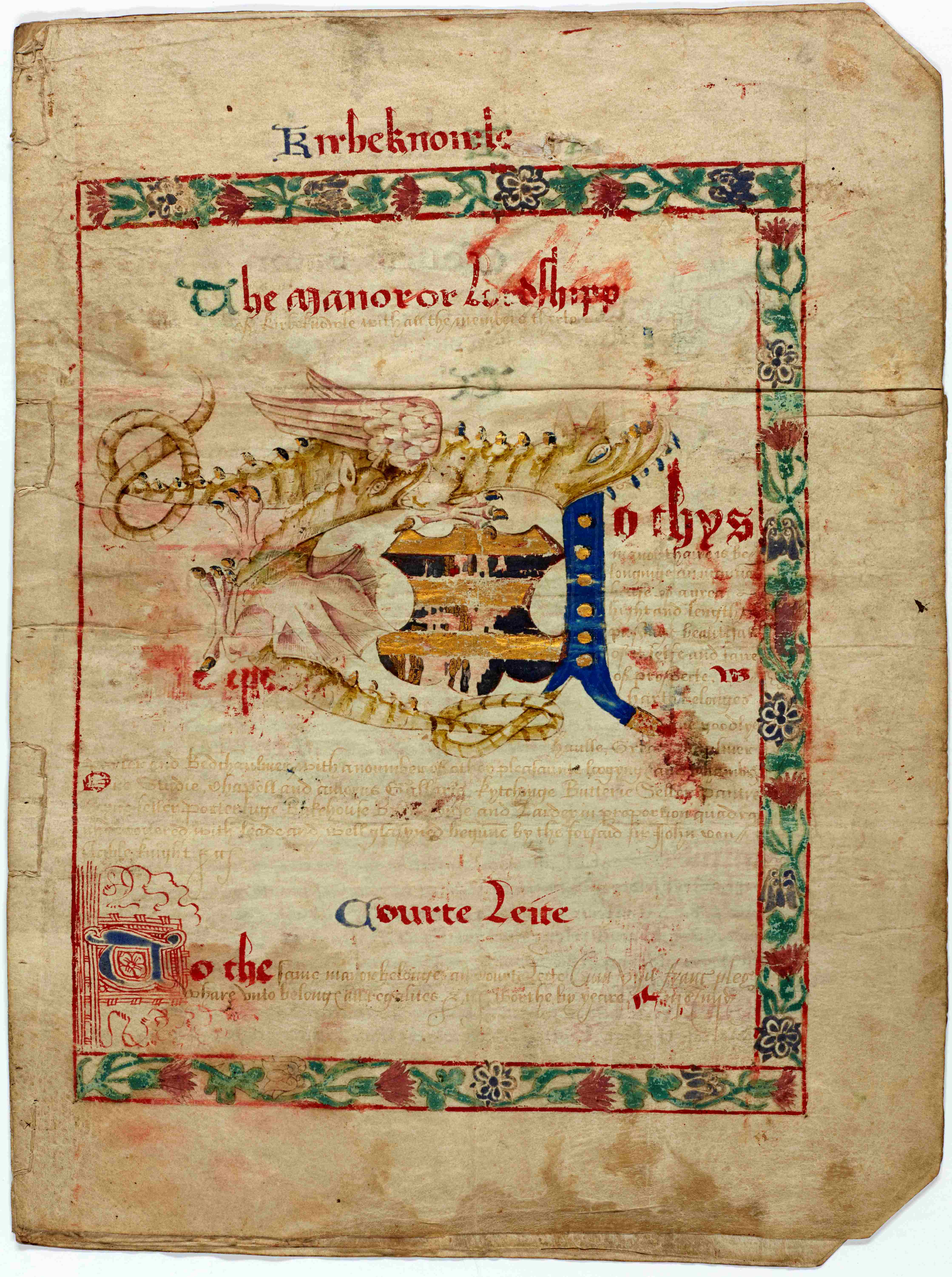
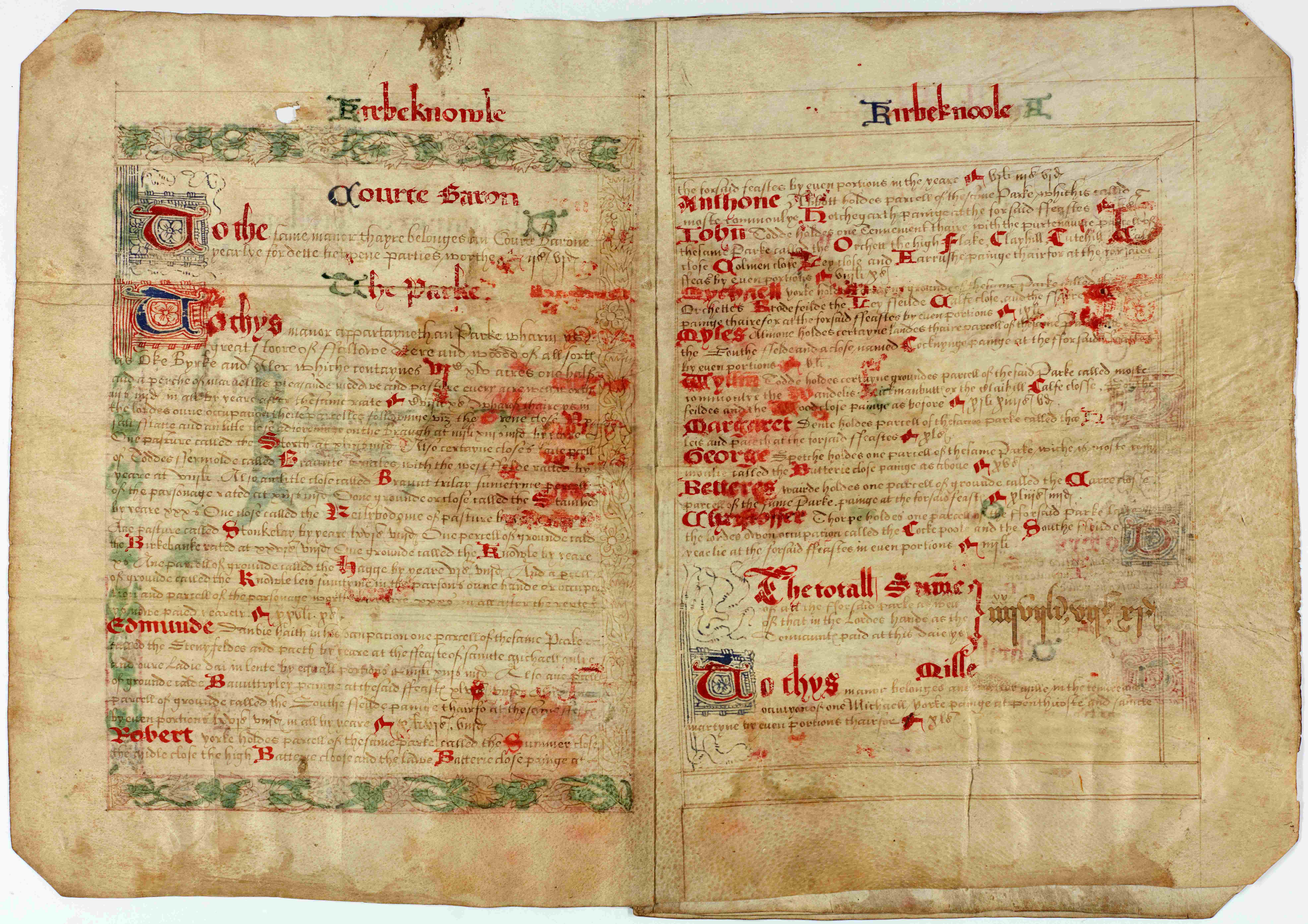
Cover and inside pages from a survey of Kirby Knowle lordship (manorial extent), undated (c.1570) [Z.911]
The above document is a detailed survey and valuation of the manor of Kirby Knowle, owned by Sir John Constable (1526-1579) of Burton Constable in the East Riding. It is decorated with a shield and two dragons, and a border of flowers and leaves entwined. The survey records the property and rights of the manor and the income it generated for the lord. The manor house is described along with land kept for the lord’s use, including arable, meadows, pasture, woodland, water mill, parsonage, glebe and tithes, orchards and park. Description of the boundaries of the manor in relation to hedges, ditches, park pale and topographic features.
Tenants are named along with specific land they hold and the rents they paid; every parcel of land is named, including Hotchegarth, Hawlegarth, Cocknynge, Rickmanbuttes, the Duchettes, Brodefeilds, Birkebank, Calfe Close, Gelding Close, Clayhill, the Riddings and Colmen Close, Stonkelay and Coneygrounde (coney indicating rabbits).
Manor courts and the open fields
Manor courts were overseen by the lord of the manor or his steward, assisted by a jury of twelve elected local men. The court baron met every three weeks and the court leet twice a year. They dealt with manorial offences, transfers of land, maintenance of hedges and ditches, and settling disputes. The court records, known as rolls, were usually written in Latin until 1733. They contain details of the everyday life of ordinary people, for example fines for those who broke the rules by allowing their animals to stray onto another tenant’s land.
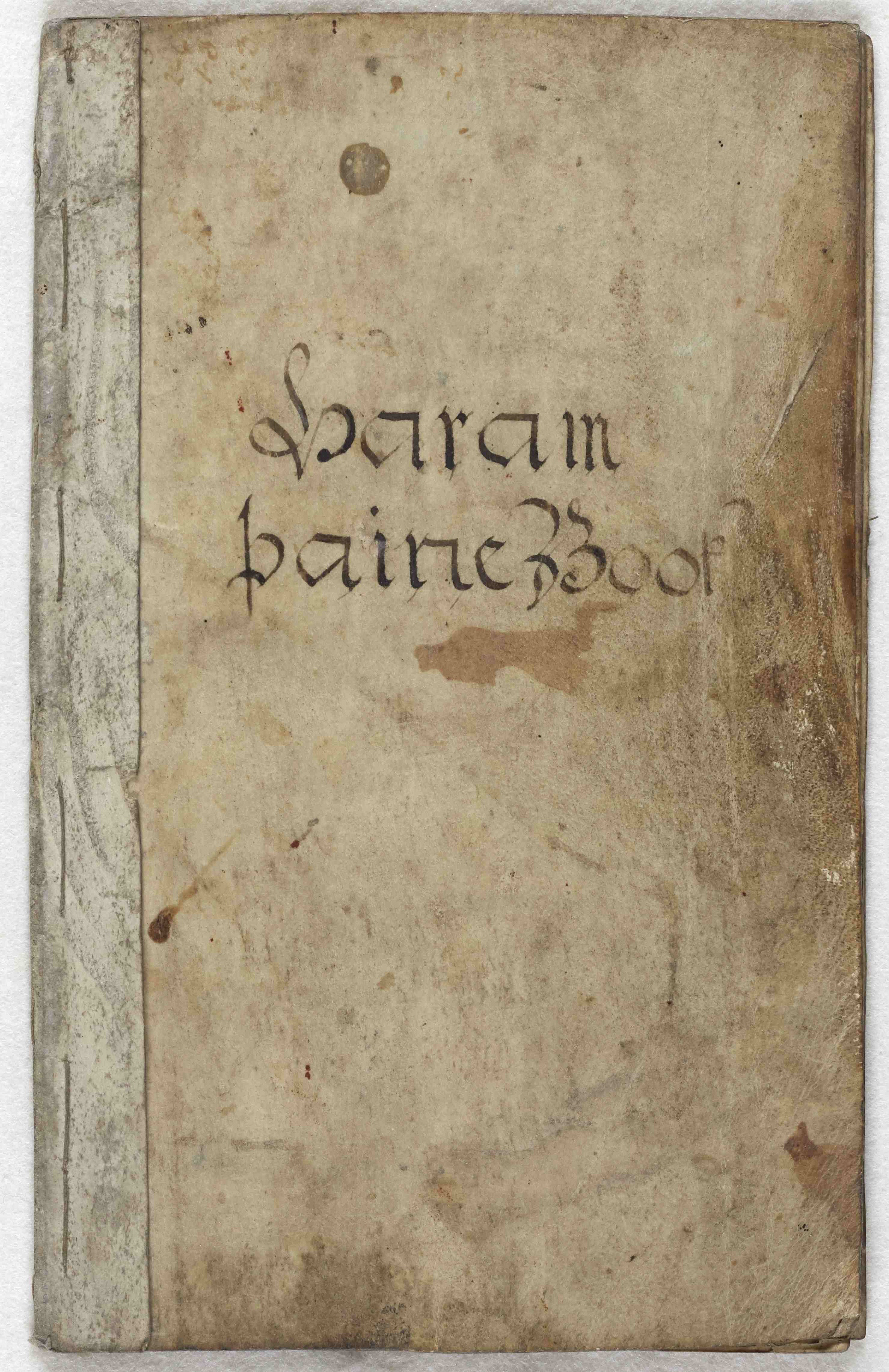
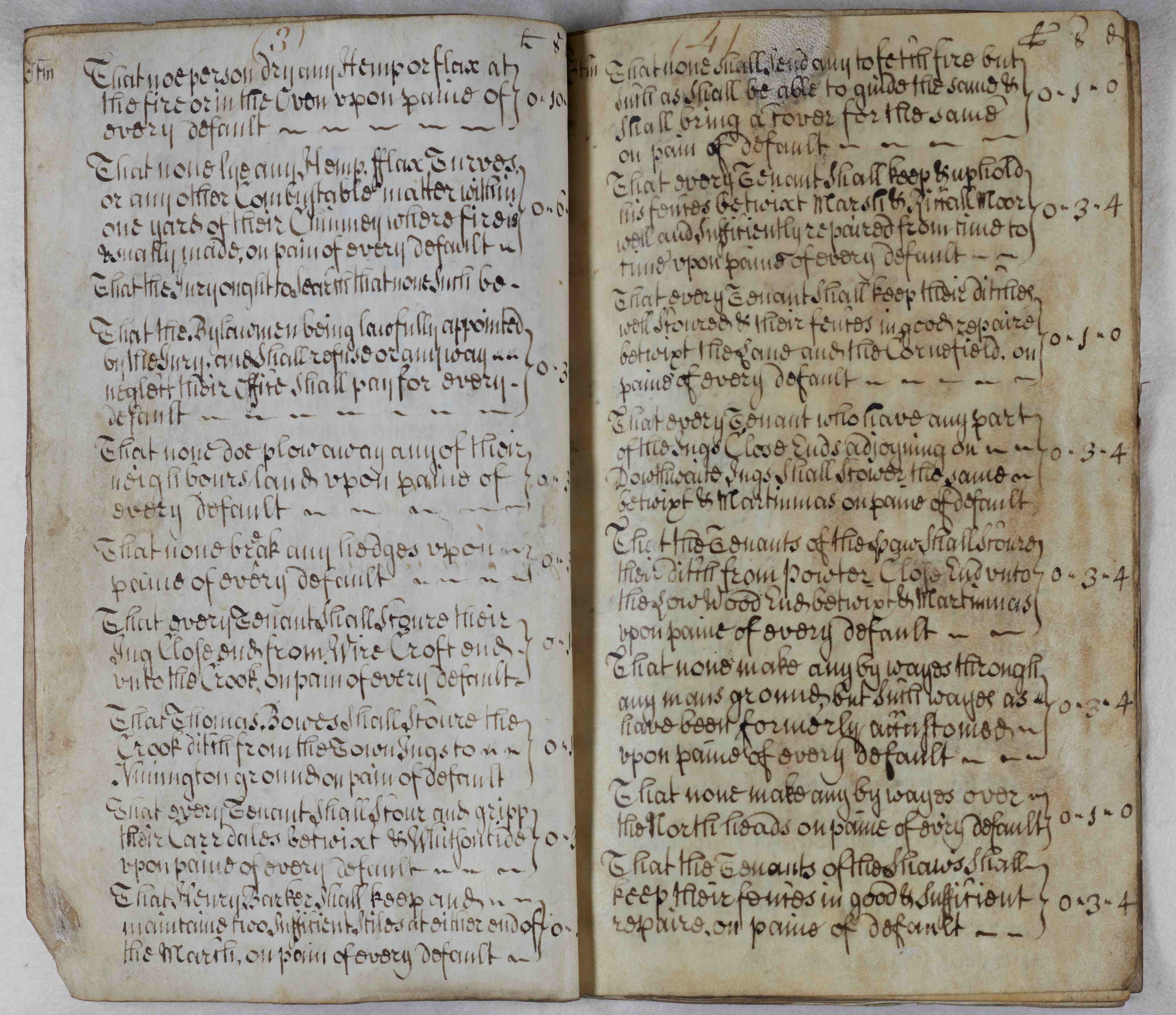
Cover and inside pages from the pains book recording the rules of the manor of Harome, near Helmsley, undated (18th century) [Z.1353]
The pains book is a written record of the rules, orders, and byelaws – known as ‘pains’ – of the manor of Harome. The name comes from the phrase ‘under pain of’ as each rule explicitly states the financial penalty (the ‘pain’) that would be imposed by the manor court if a rule was broken.
Rules include:
- That none do plough away any of their neighbours’ land upon paine of every default – 3s 4d
- That none break any hedges upon paine of every default – 3s 4d
- That every tenant shall keep their ditches well scoured & fences in good repair betwixt the Lane and the Cornefield on paine of every default – 10s
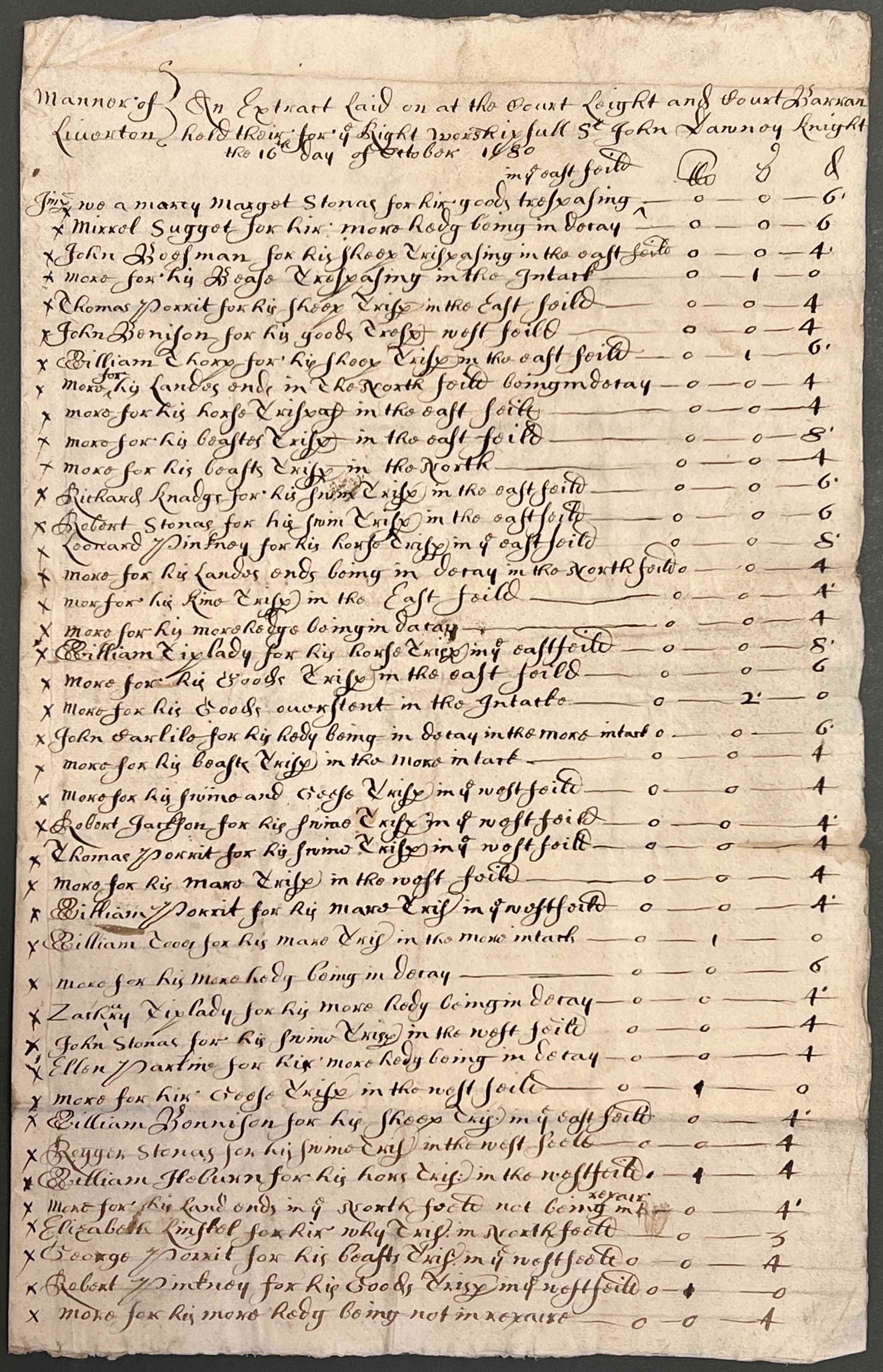
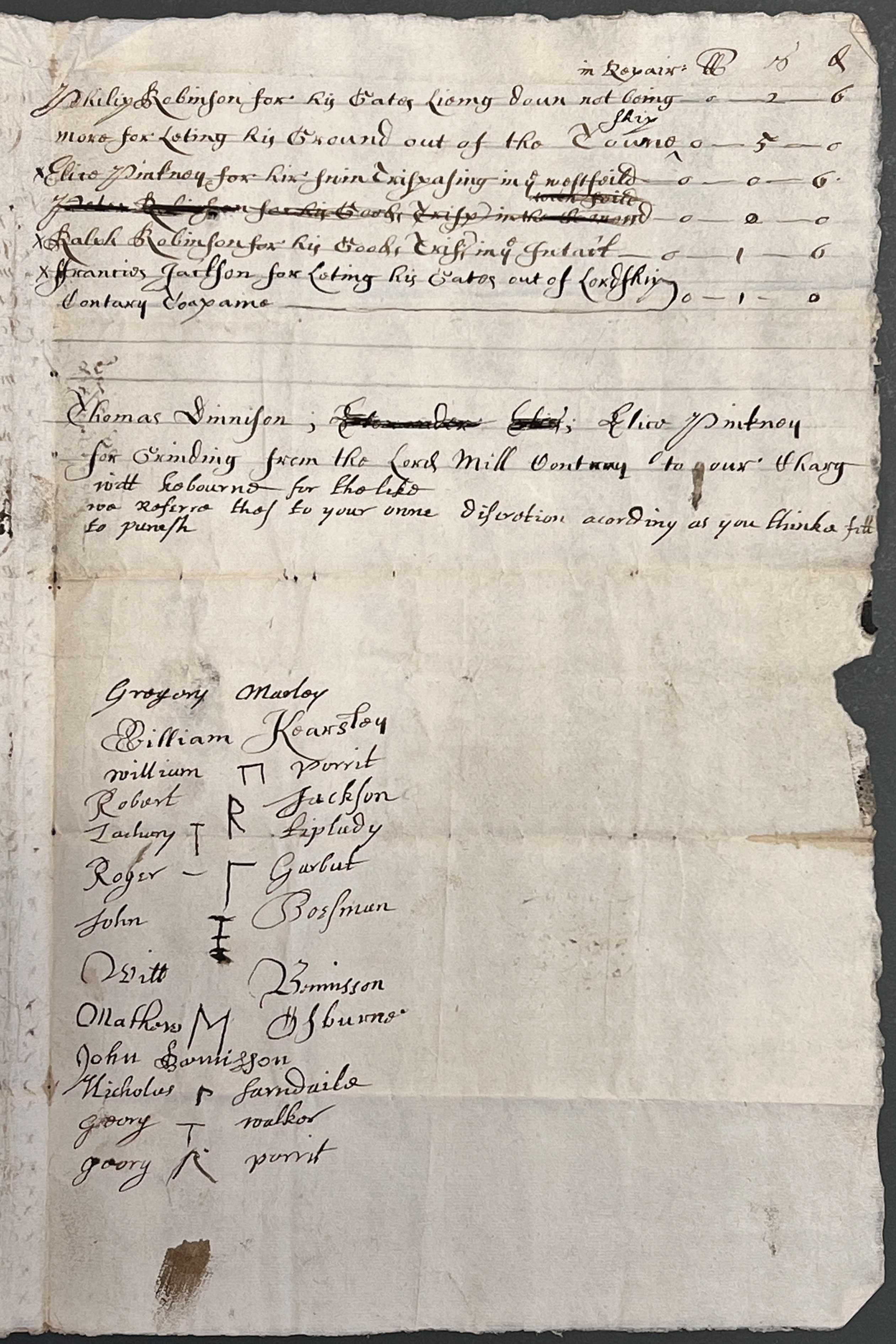
Extract of fines imposed by the Court Leet and Court Baron of the manor of Liverton, near Loftus, for breaking the rules of the manor, from the records of the Dawnay family, 16 October 1680 [ZDS III 1/6/1]
Also known as an estreat of fines, this extract is a list of the fines or ‘amercements’ imposed by the manor court on tenants who had broken the rules of the manor. It was copied from the manor court records or ‘rolls’ and used by the court bailiff responsible for collecting the fines, which range from 4 pence up to 2 shillings.
Offences include:
- Allowing your livestock – horses, swine, sheep and geese, also described as beasts and ‘goods’, to trespass in the open fields – named as North Field, East Field and West Field.
- Letting your hedges fall into decay or repair – i.e. allowing a gap to form through which animals could pass.
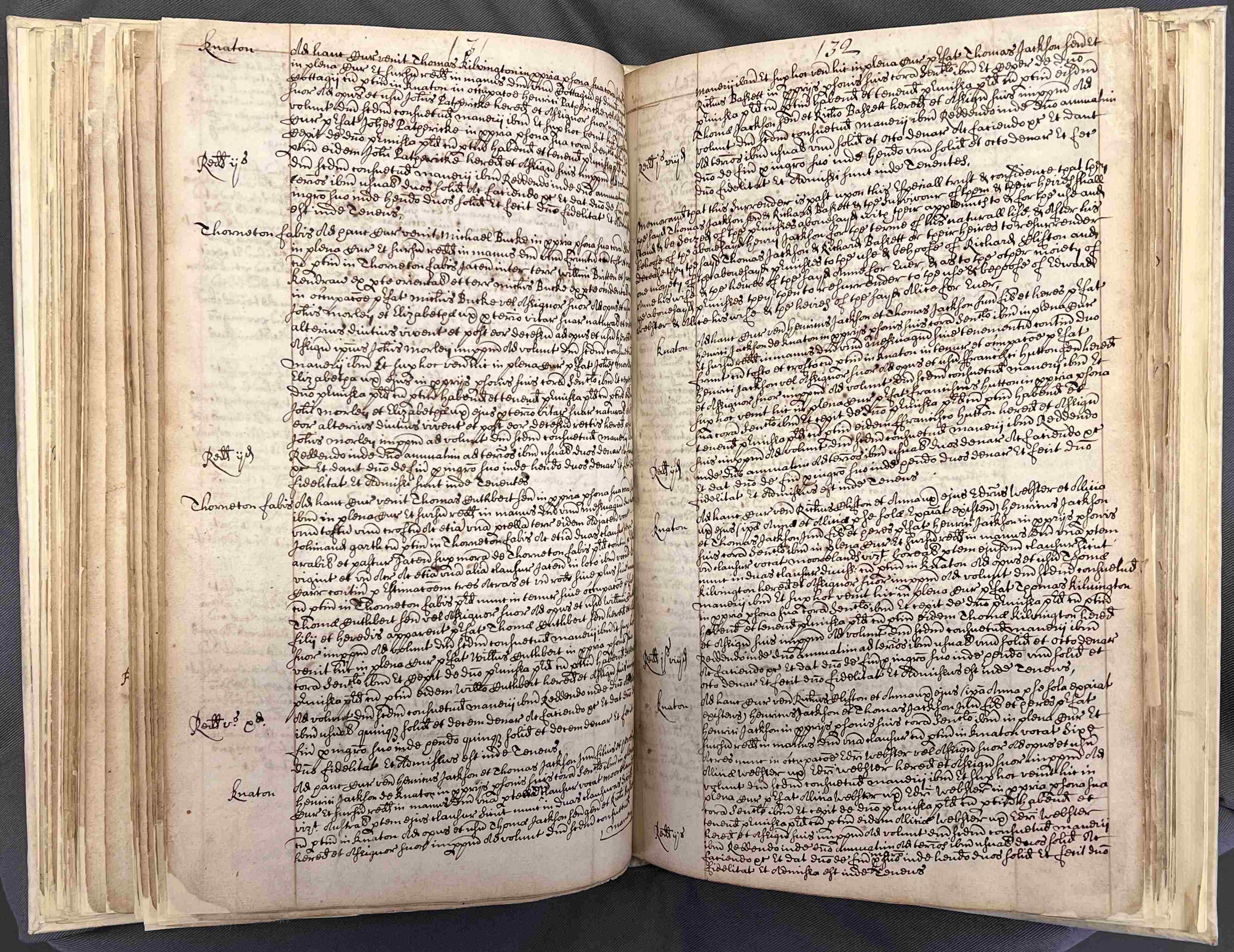
Northallerton manor court book recording land-transfers and administrative business, from the records of the manor of Northallerton, 1663, Latin and English [ZBD 2/3]
The entry at the top of the right-hand page of the manor court book above records the admittance of Thomas Jackson to four closes in Knayton called Hallmoore, Scoorbroth, Middleflatt and Halmarr. This means that he was formally recognised as the new tenant of those fields, which were owned by the lord of the manor.
Further reading:
Image of a fictional plan of a medieval manor showing the strips of the open-field system and other resources.
University of Nottingham Manuscripts and Special Collections’ Laxton Medieval Village Learning Resource webpages.

