Feoffment, manor of Norton Conyers, 1404
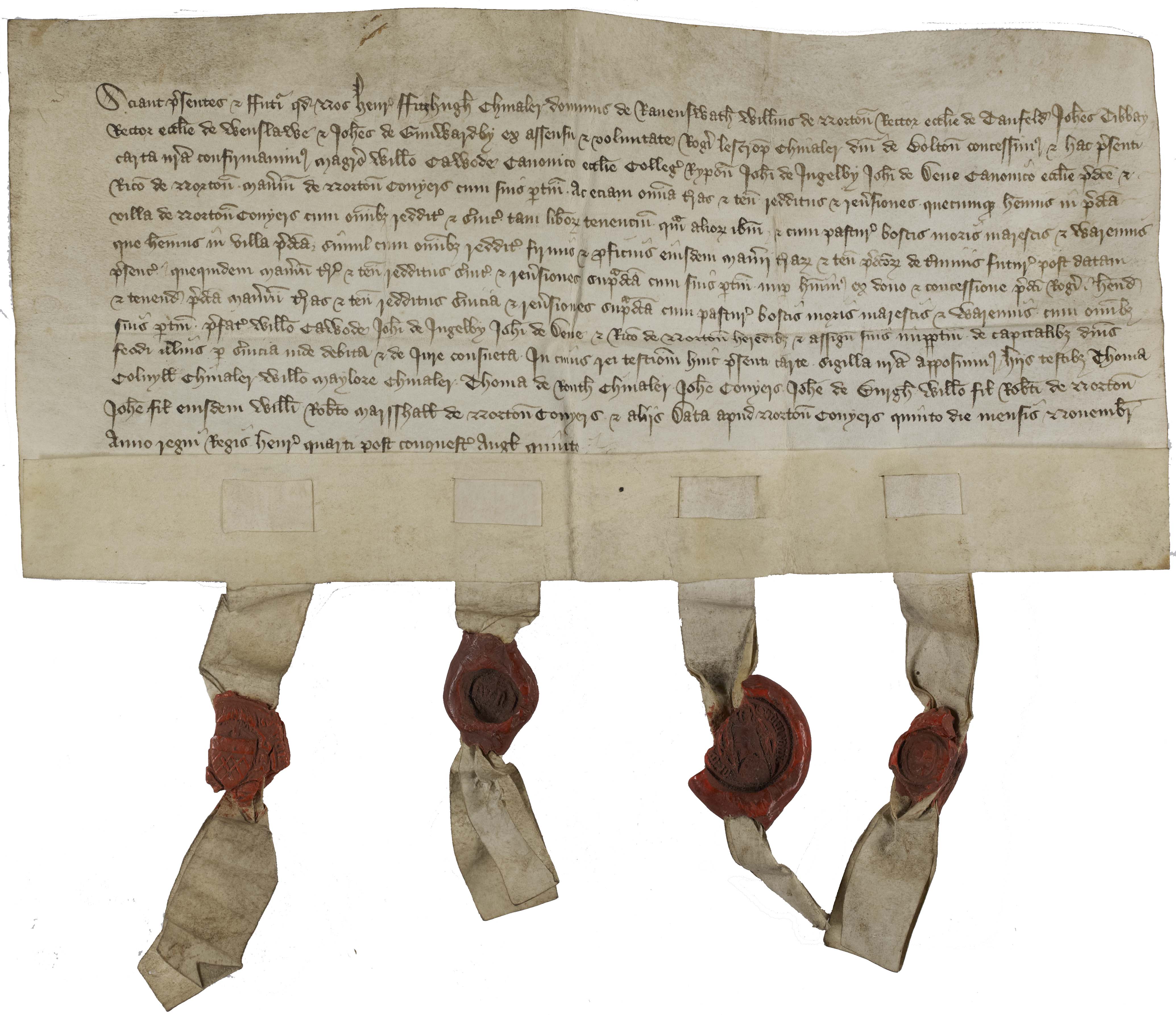
This document is the earliest one in the collection and is the grant of freehold land, legally known as a feoffment. Norton Conyers features in the Domesday survey of 1086 when it was in the ownership of the Bishop of Durham before passing to the Conyers family and then, as shown below, to Richard Norton in 1404.
Feoffment, manor of Norton Conyers, 1404
The text of the deed reads:
“Know (all men) present and future that we, Henry Fitzhugh Knight, Lord of Ravenswath, William of Norton Rector of the Church of Tanfeld, John Tibbay Rector of the Church of Wenslawe and John of Gunwardby by the assent and will of Roger Lescrop Knight Lord of Bolton we grant and by this present charter of ours we confirm to master William Cawode Canon of the Collegiate Church of Ripon, to John of Ingelby, to John of Dene Canon of the aforesaid church and to Richard of Norton , the Manor of Norton Conyers with its appurtenances And also all things lands and holdings rents and reversions whatever we have in the aforesaid town of Norton Conyers with all rents and services, so much of the free tenants as of the others in the same place and with pastures, woods, moors, marshes and warrens which we have in the aforesaid town similarly with all rents farms and profits of the same manor lands and holdings aforesaid by terms in the future after the present date, which manor lands and holdings rents services and reversions above mentioned with their appurtenances, lately we had by gift and grant of the aforesaid Roger to have and to hold the aforesaid manor lands and holdings rents services and reversions above said with pastures woods moors marshes and warrens with all its appurtenances to the aforesaid William Cawode, John of Ingelby, John of Dene and Richard of Norton their heirs and assigns in perpetuity from the chief lords of that fee by services thence owed and by right accustomed in testimony of which matter we have affixed our seals to this present charter with these witnesses Thomas Colvyll Knight, William Maylore Knight, Thomas of Routh Knight, John Conyers, John of Burgh, William son of Robert of Norton, John son of the same William, Robert Marshall of Norton Conyers and others. Given at Norton Conyers on the fifth day of the month of November in the 5th year of of the reign of King Henry IVth after the conquest of England“.
However, following Norton family involvement in the ‘Rising of the North’ against Elizabeth I in 1569, Norton Conyers was confiscated by The Crown. It was subsequently sold by Queen Elizabeth I to Simon Musgrave in 1574. The document resulting from the Grant from the Crown to Simon Musgrave can be seen below.
Court roll of the manor of Kippax, 1542
Court roll of the manor of Kippax, 1542
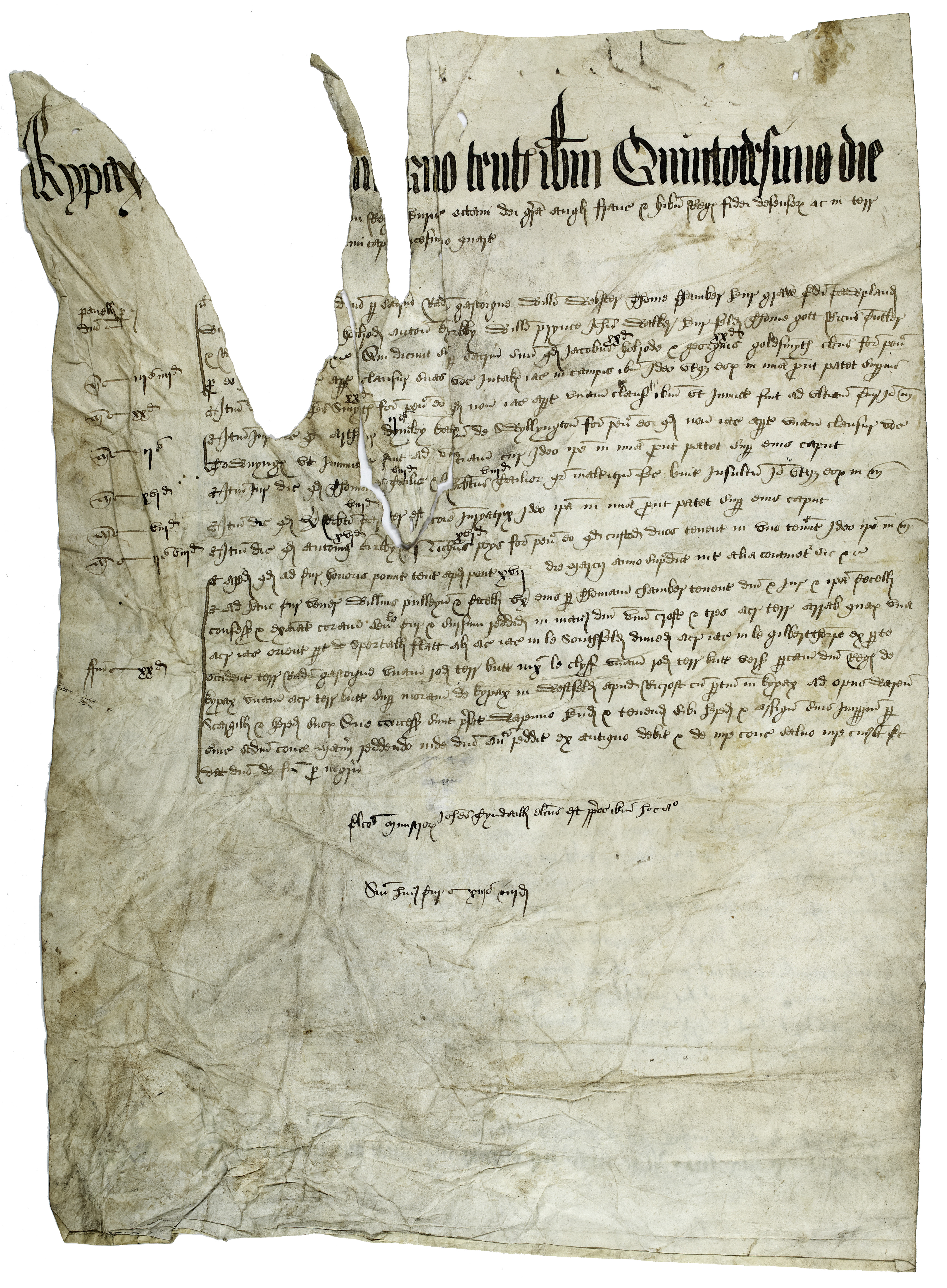
Manorial records such as this court roll, penned in Latin and written on both sides of the parchment, regarding the Kippax estate in 1542, provides a portrayal of how manors functioned, detailing the surrendering of land and property to the Lord of the Manor and listing misdemeanours such as hosting a vagabond and small thieves, maliciously making groundless insults, putting hens on a seeded field, carrying away neighbours crops, or behaving, as Wife Carter did, as a common scold together with the fines imposed for such actions, varying between 4 and 8 pence.
Grant of manor of Norton to Simon Musgrave, 1574
Following the confiscation of Norton Conyers by the Crown due to the involvement of the Norton family in the ‘Rising of the North’, the estate was subsequently sold to Simon Musgrave. It then passed to his second son, Thomas, whose daughter Catherine married Richard Graham of Netherby in Cumbria (later 1st Baronet of Esk). Richard bought the Norton Conyers Estate in 1624 from his father-in-law, Sir Thomas, in part exchange for lands at Ashby Puerorum in Lincolnshire, plus £5000. The estate comprised ‘all messuages, granges, mills, lands, tenements, tithes, etc’, and other liberties.
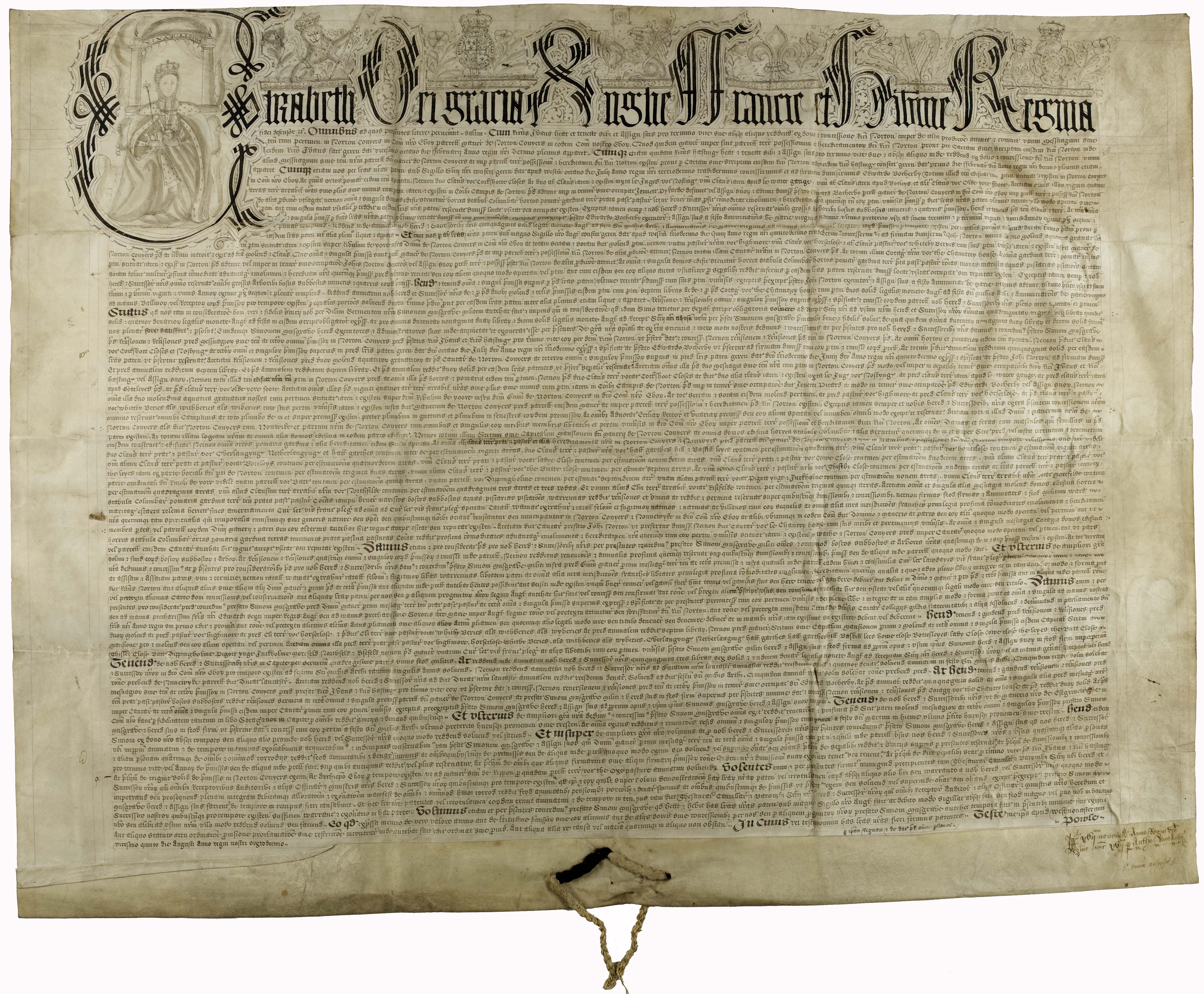
Grant of manor of Norton to Simon Musgrave, 1574
However, a legal dispute ensued as Richard considered this too much for the property concerned and took his case to court, being heard at Wakefield on 29 October 1624 with Dame Dorothy Musgrave defending, as Sir Thomas had died earlier that year. Its subsequent bequest to the second son, also called Richard, and his elevation to the baronetcy in 1662, consolidated the high status of the Grahams and their family seat at Norton Conyers.
Letter from Richard Graham to his father, 1643
The collection contains personal papers including letters, which are mainly legal in nature or discuss family affairs. An interesting gem is this one written in 1643 on behalf of a seven year old Richard Graham, who later becomes the first baronet of Norton Conyers, relating how his hunting dogs are faring and how he wishes to lead the hunt for the King. It would be a rather charming letter if it wasn’t so bloodthirsty in nature, but Richard’s enthusiasm and wish to please his father is very clear.
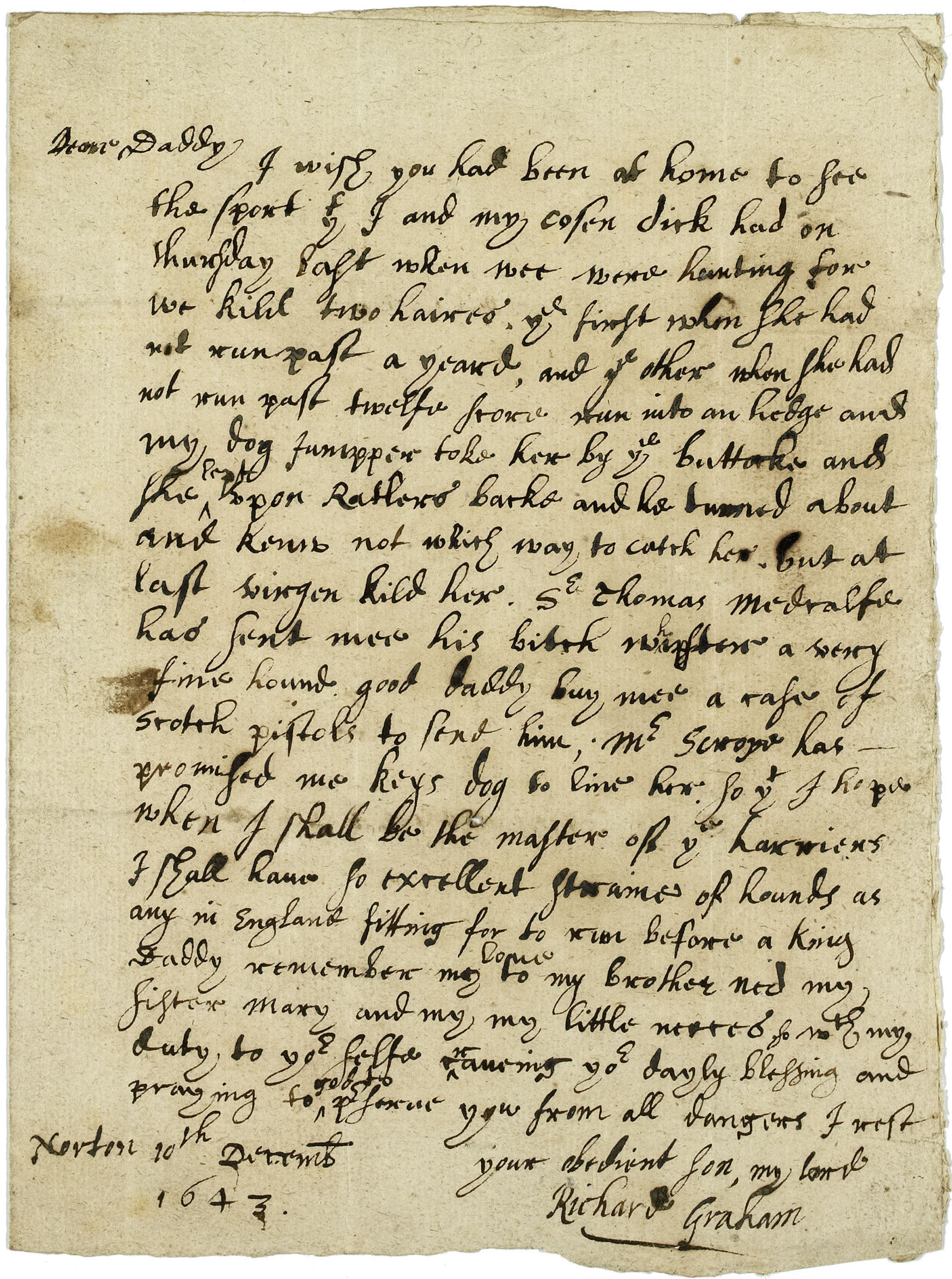
Letter from Richard Graham to his father, 1643 [ZKZ]
It reads:
“Dear Daddy
I wish you had been at home to see
the sport yt I and my cosen dick had on
Thursday last when wee were hunting for
we kild two haires. Ye first when she had
not run past a yeard, and ye other when she had
not run past twelve score run into an hedge and
my dog junipper toke her by ye buttocks and
she lept upon Ratlers backe and he turned about
and knew not which way to catch her, but at
last wirgen kild her. Sir Thomas Medcalfe
has sent mee his bitch whistler a very
fine hound. good daddy buy me a case of
scotch pistols to send him, Mr Scrope has
promised me keys dog to line (mate with) her so yt I hope
when I shall be the master of ye harriers
I shall have so excellent straine of hounds as
any in England fitting for to run before a King
Daddy remember my love to my brother ned my
sister Mary and my my (sic) little nieces so with my
duty to yourself craveing your dayly blessing and
praying to god to preserve you from all dangers I rest
Norton 10th Decemb 1643
Your obedient son, my lord
Richard Graham”
Assorted recipes and remedies, 1698-1702
The Graham archive also holds material of a domestic nature. The following three items come from a collection of recipes and remedies from the papers of Elizabeth Cage of Kippax Hall dating from the period 1698-1702 [ZKZ 4/6/2/5].
Items from the garden seem to make a regular appearance in many of the concoctions; although we’re not so sure about using snails, worms and wood lice…. don’t try this at home!
Remedy: Snaile water
This remedy was used for consumption and coughs.
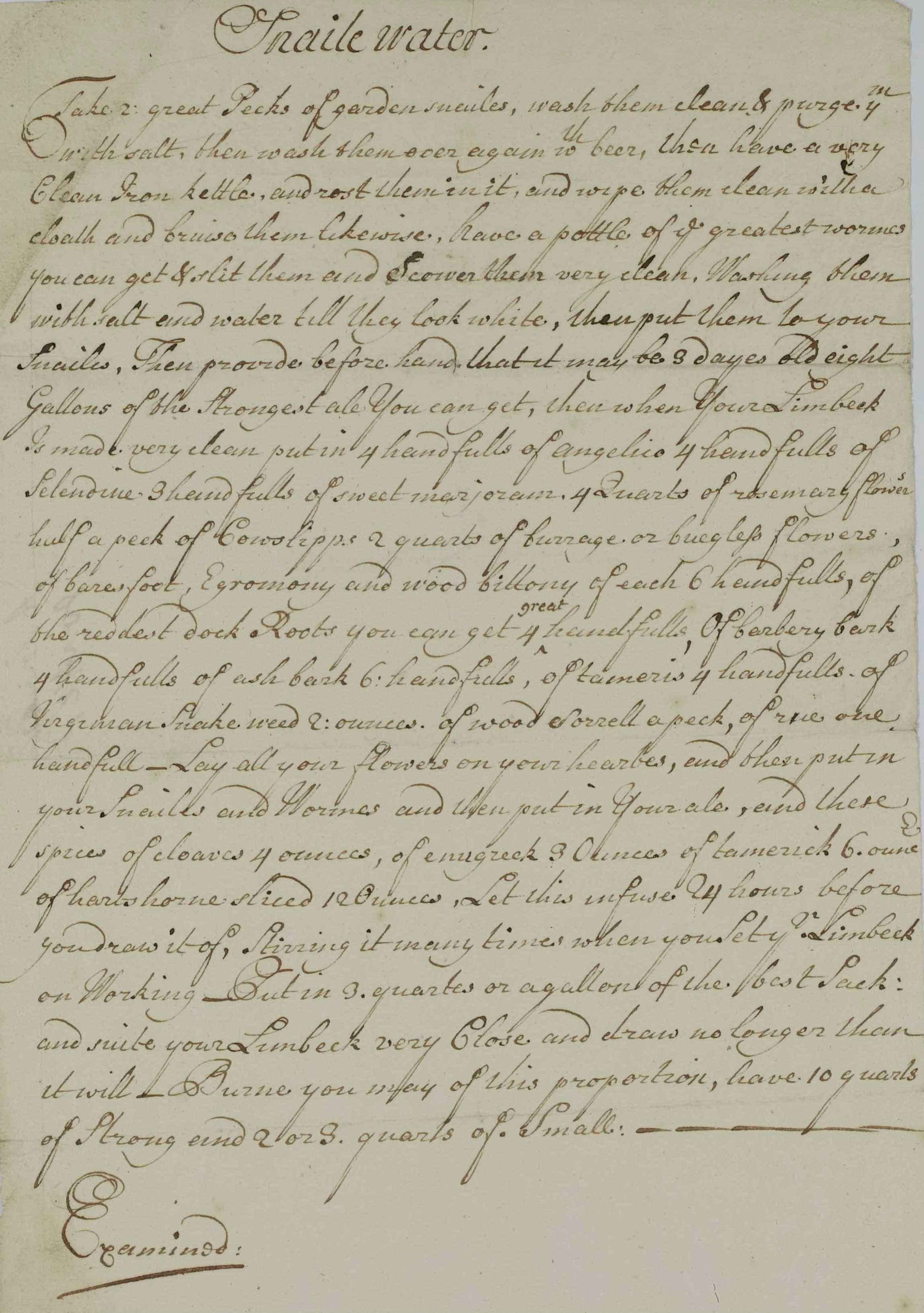
Snaile water:
“Take 2 great Pecks of garden snails, wash them clean & purge [th][e]m
with salt, then wash them over again w[i]th beer, then have a very
Clean Iron kettle, and rost them in it, and wipe them clean with a
cloath and bruise them likewise, have a pottle of [th]e greatest wormes
you can get & slit them and Scower them very clean. Washing them
with salt and water until they look white, then put them to your
Snailes. Then provide beforehand that it may be 3 dayes old eight
Gallons of the strongest ale You can get, then when your Limbeck
is made very clean put in 4 handfulls of angelico 4 handfulls of
Selendine 3 handfulls of sweet marjoram, 4 Quarts of rosemary flowers
half a peck of Cowslipps 2 quarts of burrage or buegless flowers,
of baresfoot, Egromony and wood bittony of each 6 handfulls, of
the reddest dock Roots you can get 4 great handfulls, Of barbery bark
4 handfulls of ash bark 6 handfulls, of tameris 4 handfulls, of
Virginian Snake weed 2 ounces of wood Sorrell a peck, of rue one
handfull — Lay all your flowers on your hearbes, and then put in
your Snailes and Worms and then put in Your ale, and these
spices of cloaves 4 ounces, of enugreek 3 Ounces of tamerick 6 ounces
of hartshorne sliced 12 Ounces. Let this infuse 24 hours before
you draw it of, Stirring it many times when you set y[ou]r Limbeck
on Working — Put in 3 quartes or a gallon of the best Sack:
and suite your Limbeck very Close and draw no longer than
it will — Burne you may of this proportion, have 10 quarts
of Strong and 2 or 3 quarts of Small ———
Examined:”
Remedy: powder of wood lice, for the eyes
Another unusual ingredient which was said to be very beneficial to the eyes was wood lice.
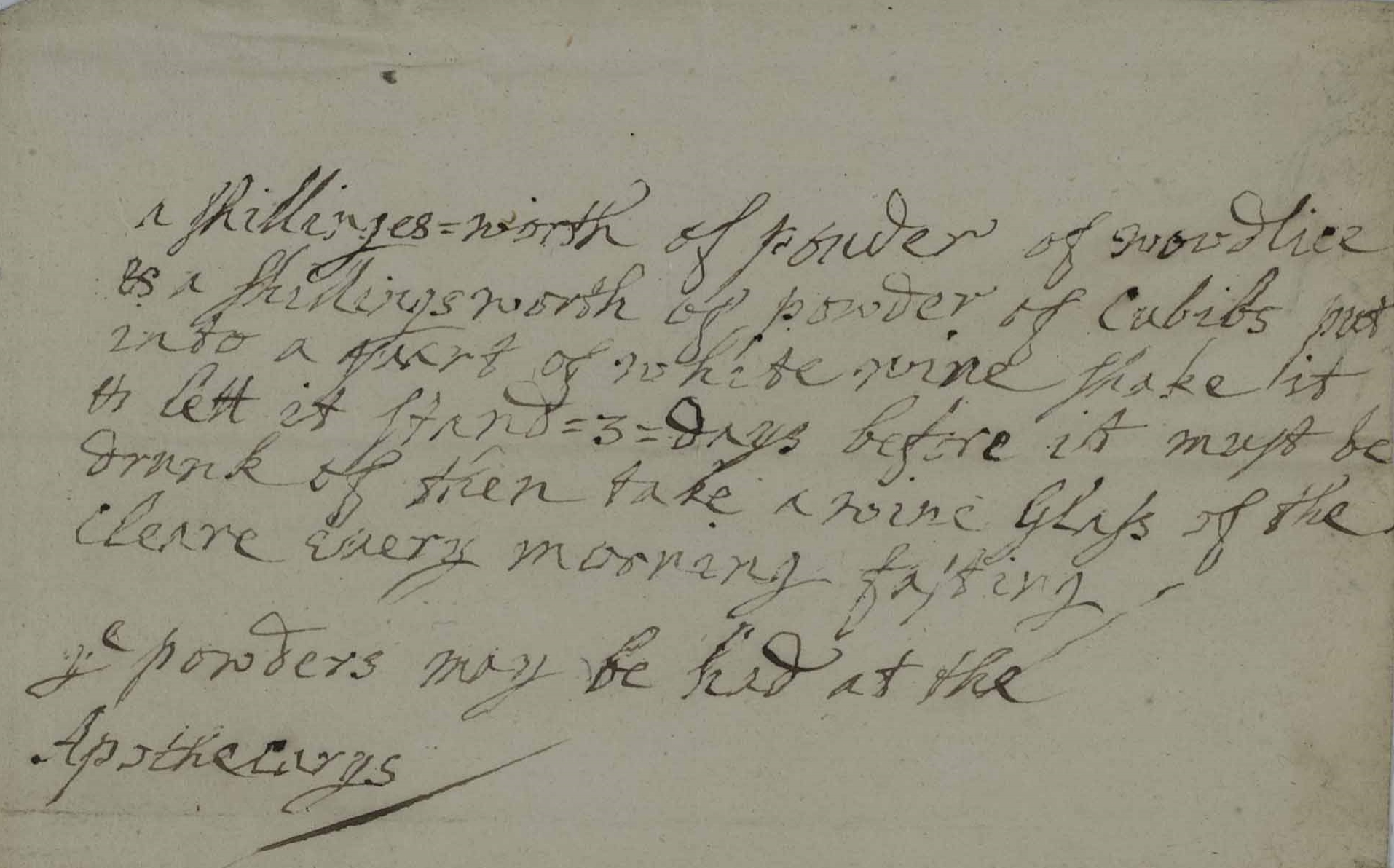
“a shillinges=worth of powder of woodlice
& a shillingesworth of powder of cubits put
into a quart of white wine shake it
& lett it stand =3=days before it must be
drank of then take a wine glass of the
cleare every morning fasting
ye powders may be had at the Apothecarys.”
Recipe: pickled cucumber
“Pickle Cowcumbers & Melions like Mango”
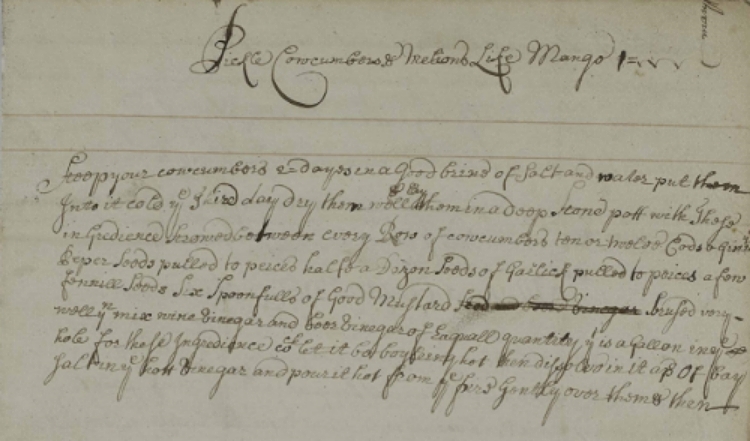
“Steep your cowcumbers 2=dayes in a good brine of salt and water put them
into it cold ye third day dry them well & lay them in a deep stone pott with these
in gredience strowed between every row of cowcumbers ten or twelve cod so gin ye
peper seeds pulled to peices halfe a dozon seeds of garlick pulled to peices a few
fennill seeds six spoonfulls of good mustard seed and beere vinegar brused very
well yn mix wine vinegar and beer vinegar of eaquall quantity yt is a gallon in ye
hole for these ingredience which let it be boyleing hot then dissolve in it a pound of bay
salt in ye hott vinegar and pour it hot from ye fire gently over them & then.”
Norton Conyers estate map, 18th-century copy
This estate map is an eighteenth century copy of a mid-seventeenth century one and includes details of field names and relative size, shown as acres, roods and perches. It also shows the Hall and outbuildings, thus helping one appreciate the scale of this one estate, amongst the many the Grahams had previously held.
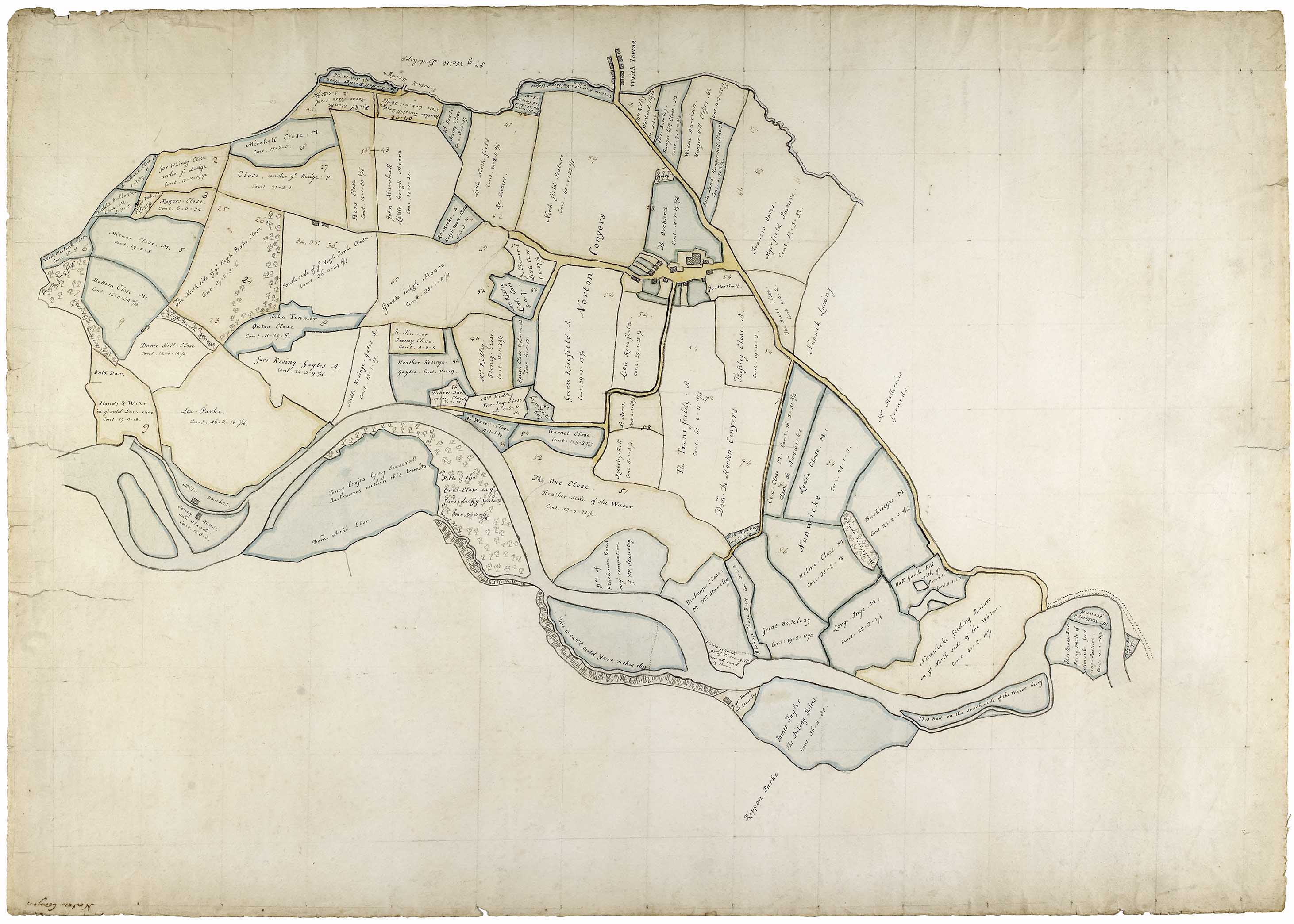
18th-century copy of Norton Conyers estate map [ZKZ]
In 1867, a map similar to this, was drawn up following the sale of the Norton Conyers estate to Viscount Downe, (then owner of nearby Baldersby Park). This was the only time during the last four hundred years when the estate was not held by the Graham family. Within the records, there is evidence of perennial boundary disputes due to the river changing its course and affecting the river banks, as well as many discussions as to the final sale price in 1879, ranging from a valuation of £28,000 up to £86,380.
Drawing of Norton Conyers Hall by George Devey, 1883
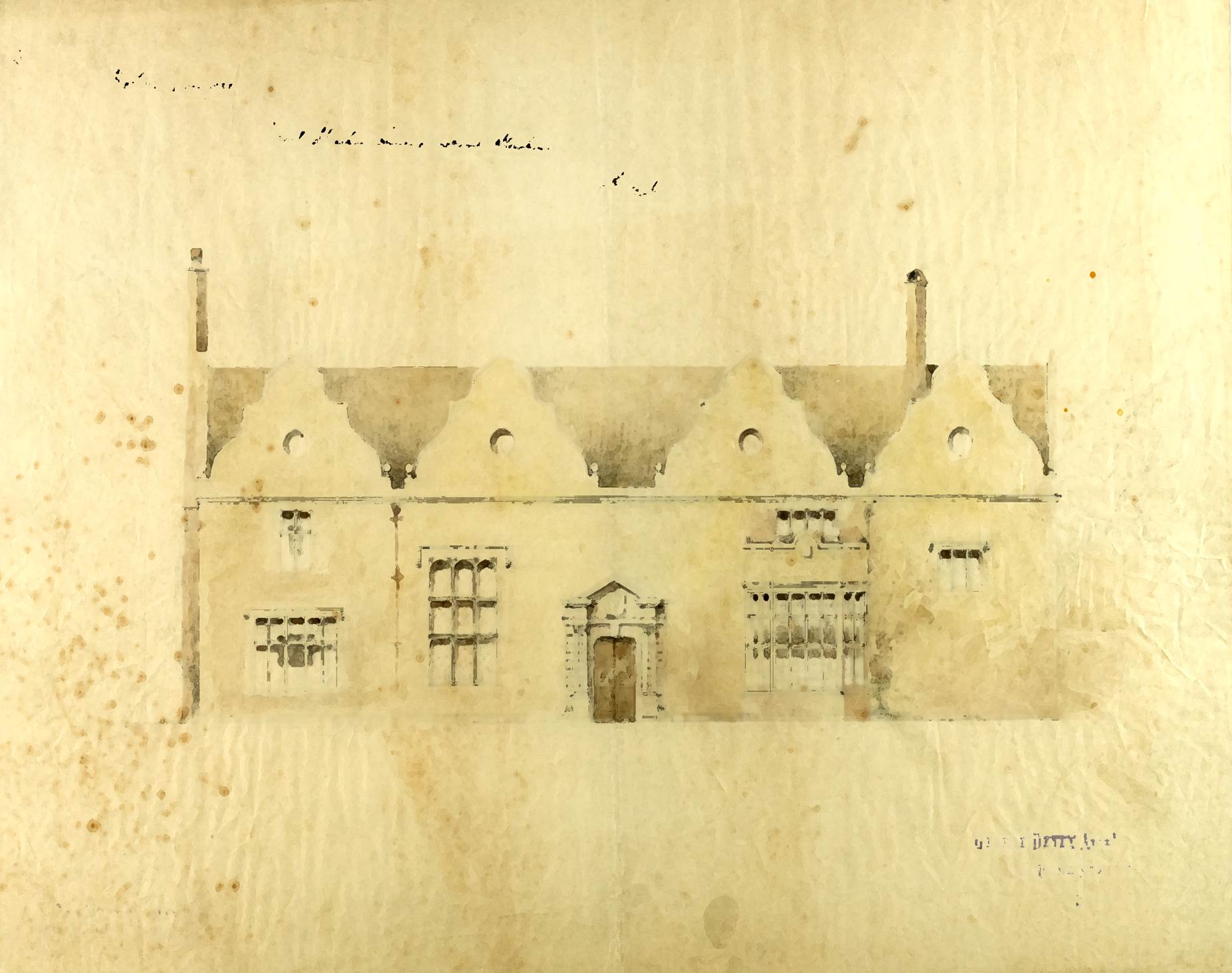
Drawing of Norton Conyers Hall by George Devey, 1883
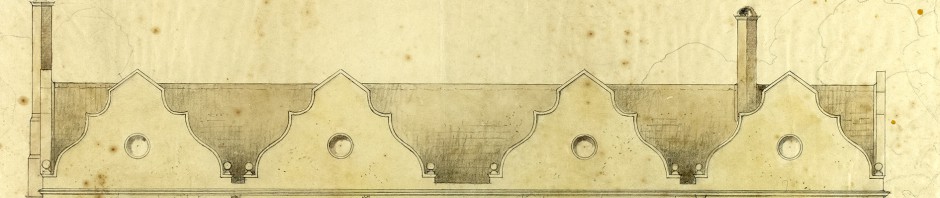
Norton Conyers Hall, shown here in this late-19th-century drawing, is located to the north of Ripon and has played host to several notable guests over the years. King Charles I stayed at Norton Conyers in 1633, whilst James II visited in November 1679 when he, as the then Duke of York, with his wife Mary of Modena, spent a night whilst en route to Edinburgh, resulting in a bedroom being named in his honour. In more recent times, Queen Mary stayed in 1933.
Charlotte Brontë took inspiration from this historic house as a model for Thornfield Hall in Jane Eyre, in particular, Bertha Rochester’s character and the room in which she lived, together with the concealed staircase to the attics.
This sketch, prepared by architect George Devey in 1883 for Sir Reginald, the 8th Baronet, shows proposed alterations to the house; other more detailed sketches exist for the main window on the right although a simpler version was later added.
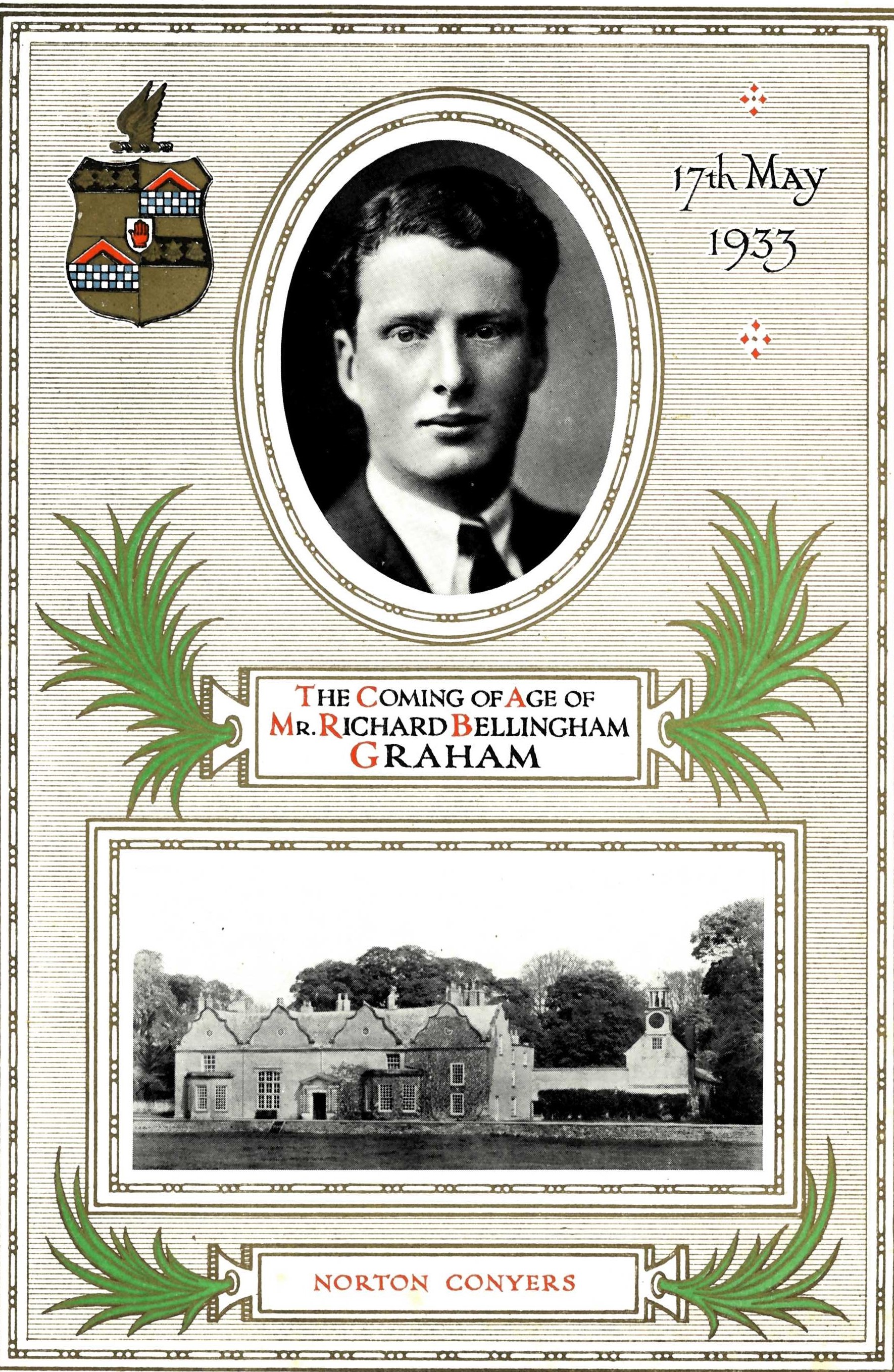
21st birthday commemoration of Sir Richard, 10th Baronet, 17 May 1933
Richard Graham, the 10th Baronet, reached his majority in 1933. Coming of age was a cause for great celebration, and various items were produced to mark the occasion. Cards such as the example shown below were printed, as were presentation volumes with dedications from estate workers. Newspaper reports tell us large parties were thrown, to which the local gentry and estate workers were invited to share in the celebrations.