
Treasures from the Parish Chest: exploring North Yorkshire’s church history from archives to architecture
In addition to parish registers, some of the earliest types of church records within parish record collections are the account books of the churchwardens. Of the four main roles of parish office, only that of the churchwarden has continued to the present day, hence these being the most likely records to survive. Whilst examples survive from the 16th and 17th centuries, many churchwardens’ account books within parish collections at the Record Office date to the 18th and 19th centuries.
Amongst the earliest surviving churchwardens’ accounts are examples from the churches of Masham, St Mary dating from 1542 [PR/MAS 3/1/1] and Bedale, St Gregory from 1576 [PR/BED 2/1]. Both of these 16th century books of churchwardens’ accounts contain reused pages from medieval music manuscripts, further information and images of these can be found in this blog.
A handwritten description within the re-bound volume of Masham accounts reads: “Book of churchwardens’ accounts for the parish of Masham from the year 1542 to 1677 inclusive, containing many useful & curious things relating to the rights & customs of the Twenty Four, or select vestry of the said parish, viz their auditing all the parish accounts, settling rates for repairs of the church and other uses, granting warrants of distress upon such as were in arrear to the said rates, [?] the churchwardens &c.” A typewritten note with the account book states: “very few books of this sort exist in these parts. It is especially valuable as an illustration of the government of a small town in the 16th and 17th centuries“.
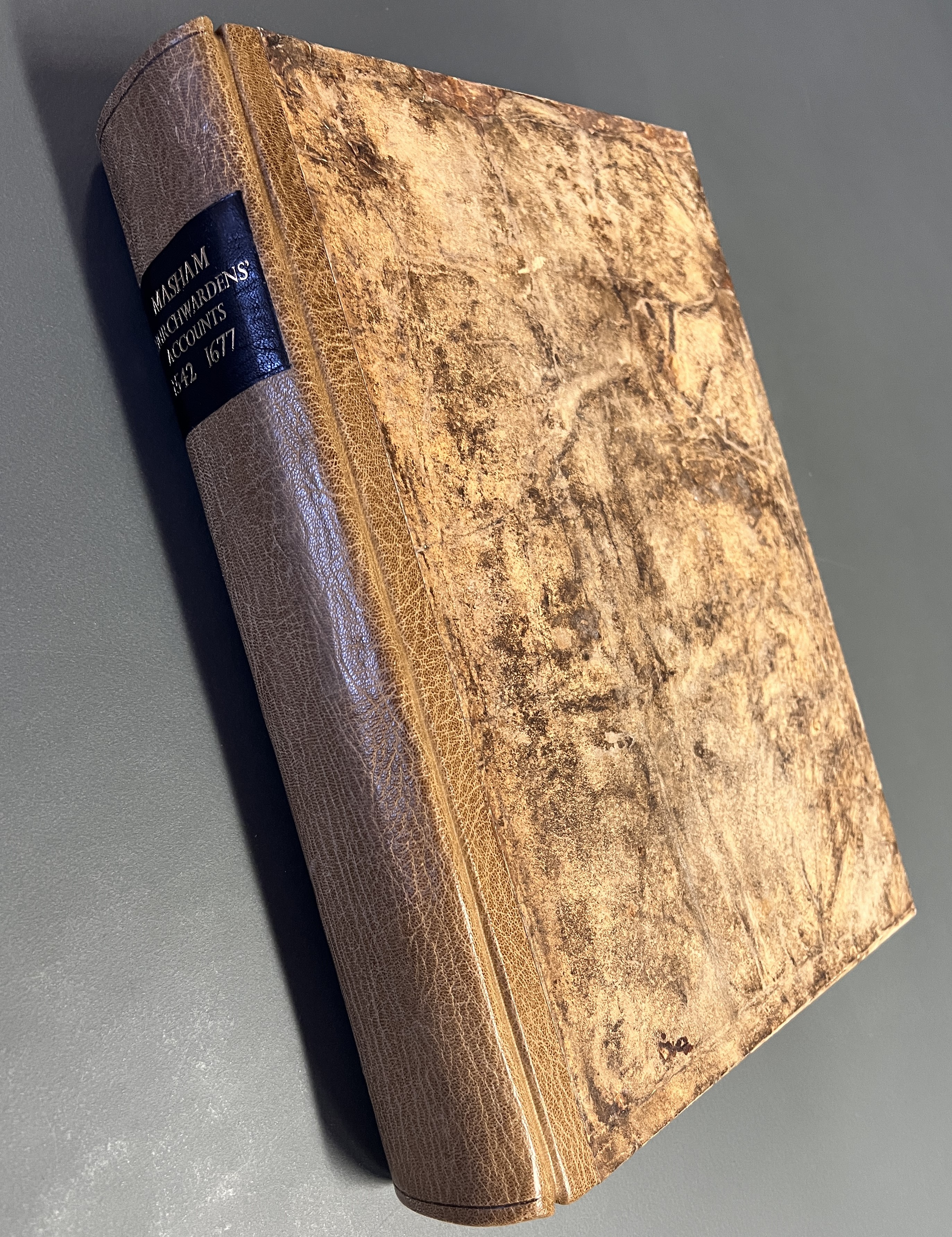


Masham, St Mary: pages from the churchwardens’ accounts and select vestry minutes, 1542-1677 [PR/MAS 3/1/1]
The churchwardens and their role
Churchwardens were unpaid members of the community, primarily responsible for the management and maintenance of the fabric of their parish church and its possessions. Their role was to collect and administer funds, to keep accurate records of the money coming in and the payments going out. Their accounts were inspected regularly by the vestry meeting or a committee appointed for that purpose.
They were also required to present reports to the ecclesiastical court and at the visitation of the Archdeacon, Bishop or their representatives on the lapses in the manners or morals of their fellow parishioners. Presentable offences ranged from failing to attend church services to adultery, drunkenness, swearing, money lending and the use of profanities in church. The churchwardens had to repel strangers and loiterers from the church and were also empowered to make a presentment against their rector or vicar if they found any pastoral neglect or theological or personal irregularity in their life or conduct.
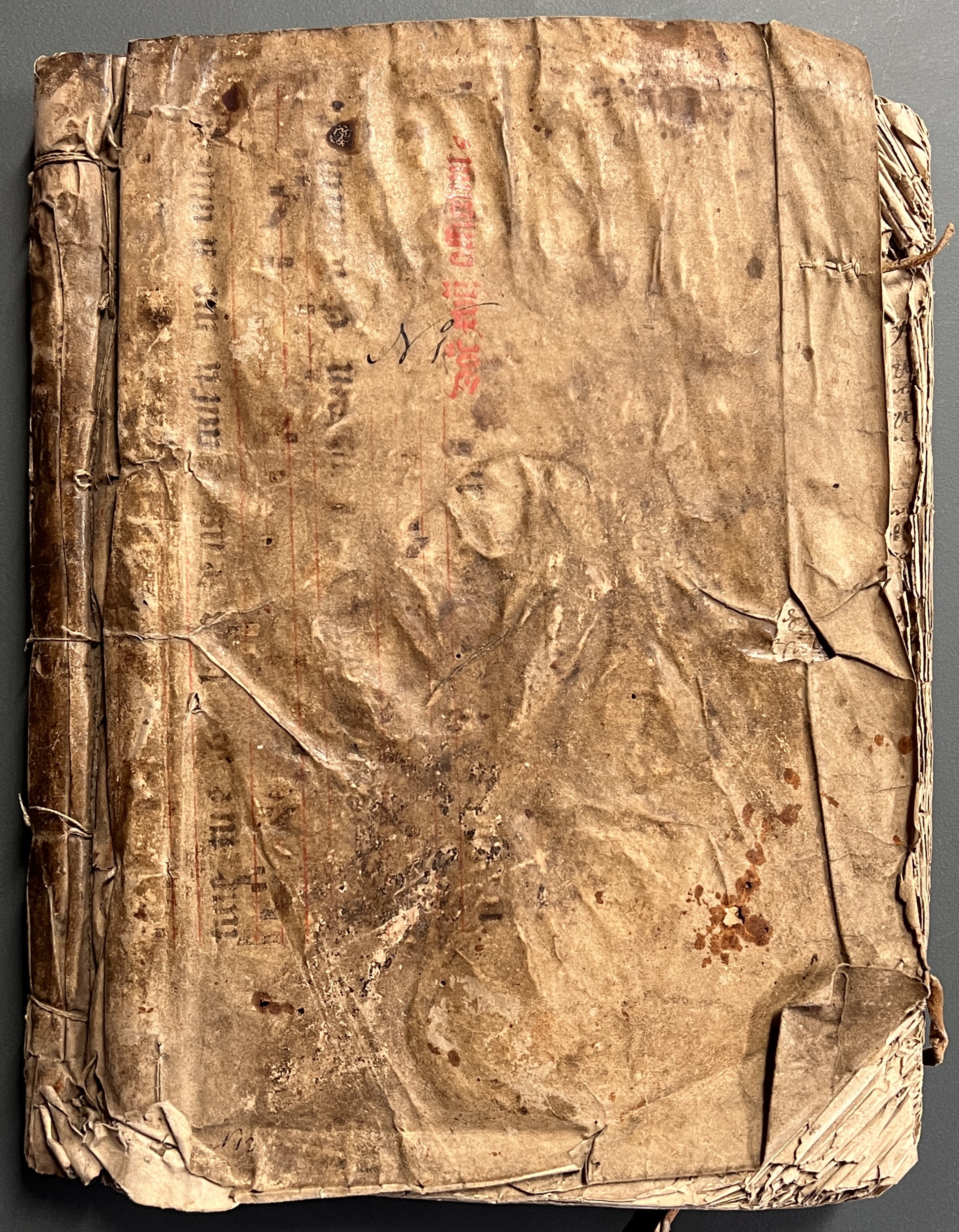


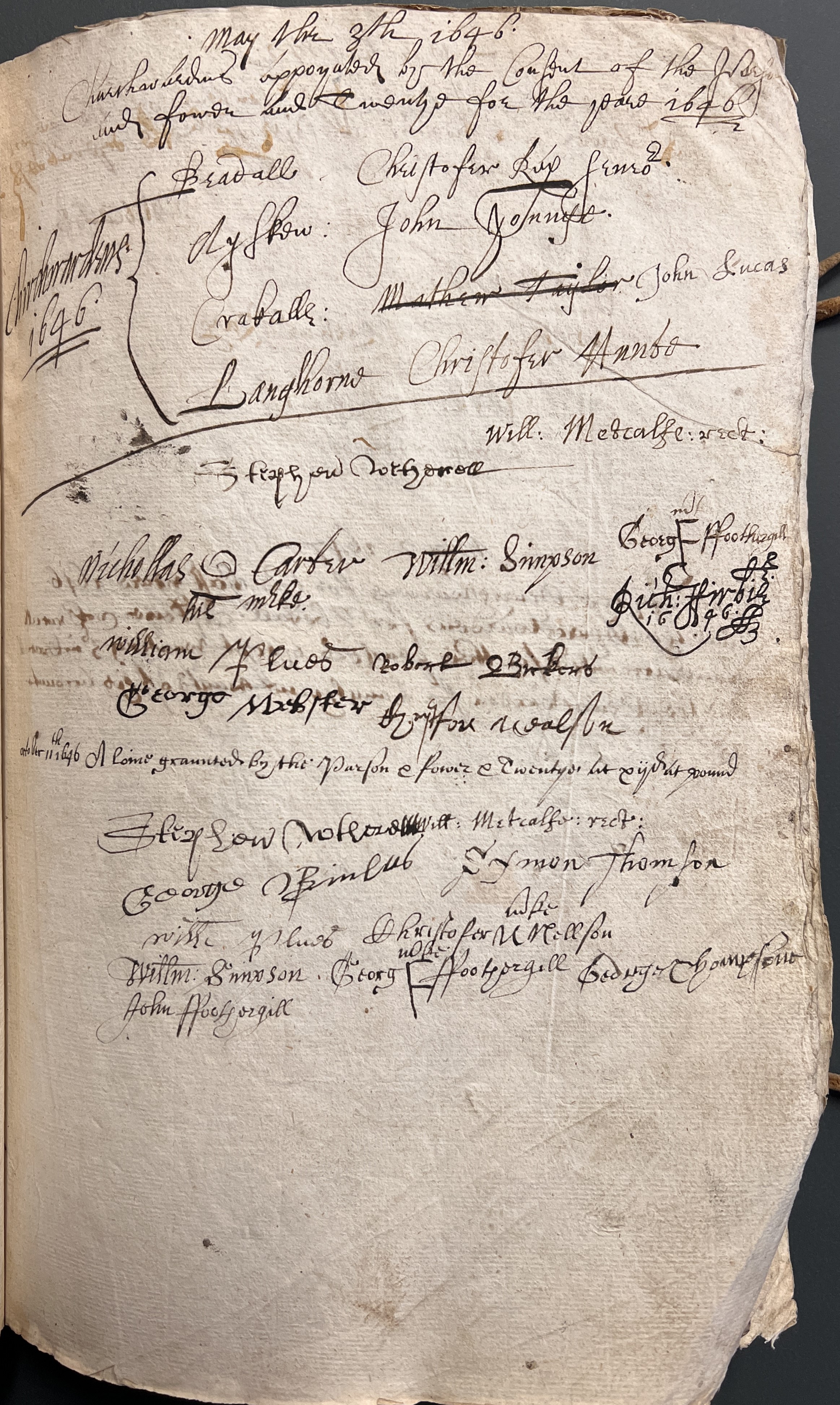
Bedale, St Gregory: churchwardens’ account book, 1576-1675 bound with parchment pages of medieval music, showing pages recording the appointment of churchwardens for the years 1644 and 1646, the signatures of the four and twenty (vestry members) authorising the churchwardens to collect arrears in March 1648 and Thomas Wittye of Bedale admitted as a brother to Christ’s Hospital, Firby, May 1649 [PR/BED 2/1]
Each parish would select two or four churchwardens, but there was no limit as to number. Methods of selection often varied considerably from parish to parish, most receiving their office from a vestry meeting or from the incumbent. Every householder was liable to serve in the office, unless they were legally exempted from such duty, for example as members of the nobility, members of Parliament or military officers. If a person wished to avoid service, they could pay a substitute or refuse to serve and pay a fine. Their normal term of office was for one year, although this could not be relinquished until a successor had been appointed and sworn in.


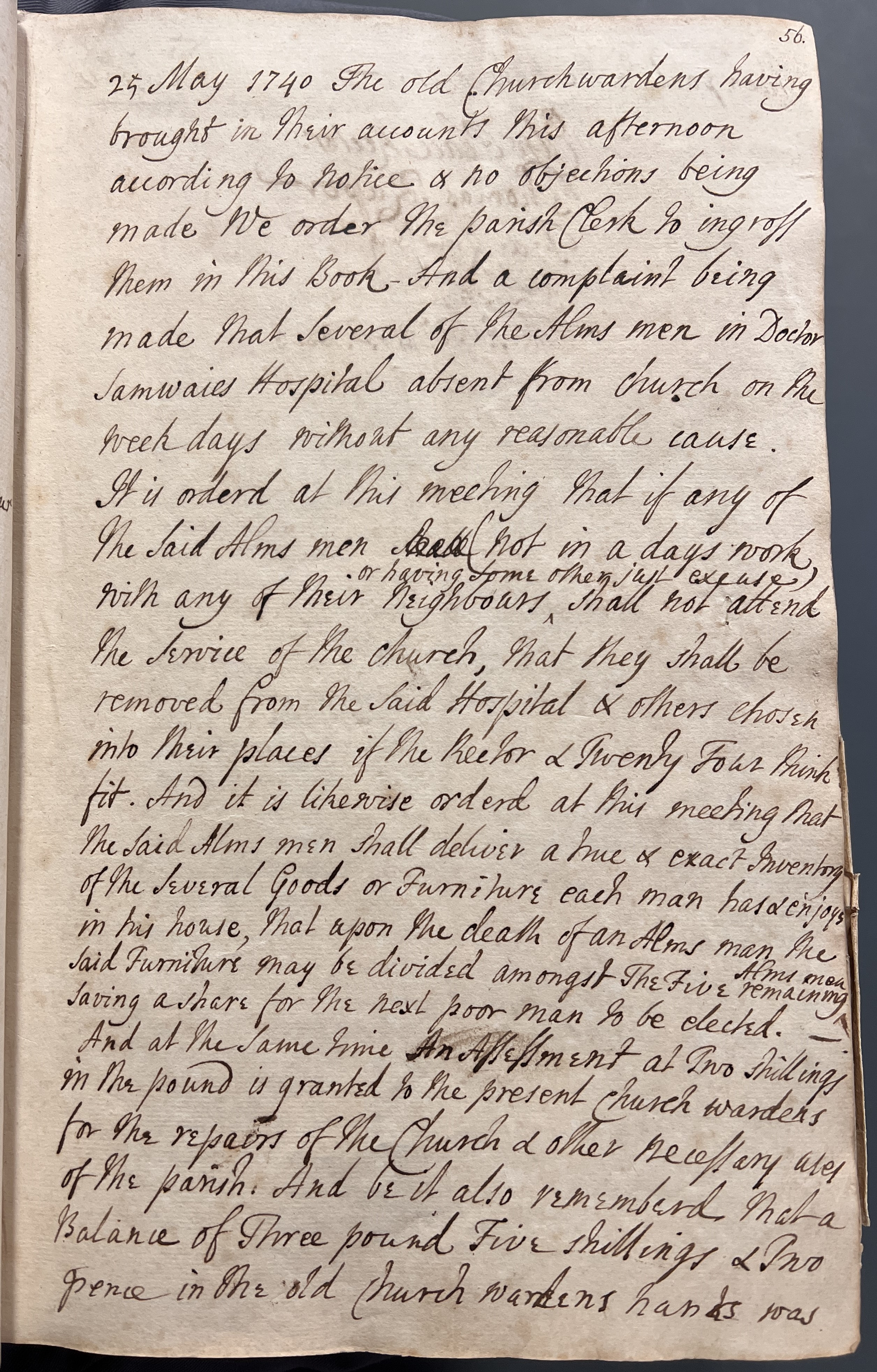
Bedale, St Gregory: Churchwardens’ account book 1734-1860, showing page of accounts for 1739 and a report on ‘a complaint that several of the alms men in Dr Samwaies Hospital were absent from church on the week days without any reasonable cause’ and that ‘if they do not have a just excuse, they shall be removed from the said hospital’, 25 May 1740 [PR/BED 2/3]
By the 18th century, churchwardens’ income was usually raised by a church rate levied on the occupants of property in the parish and authorised by the vestry or its equivalent. This income enabled the churchwardens to reimburse themselves for money spent fulfilling their obligations, although they did not receive a salary.
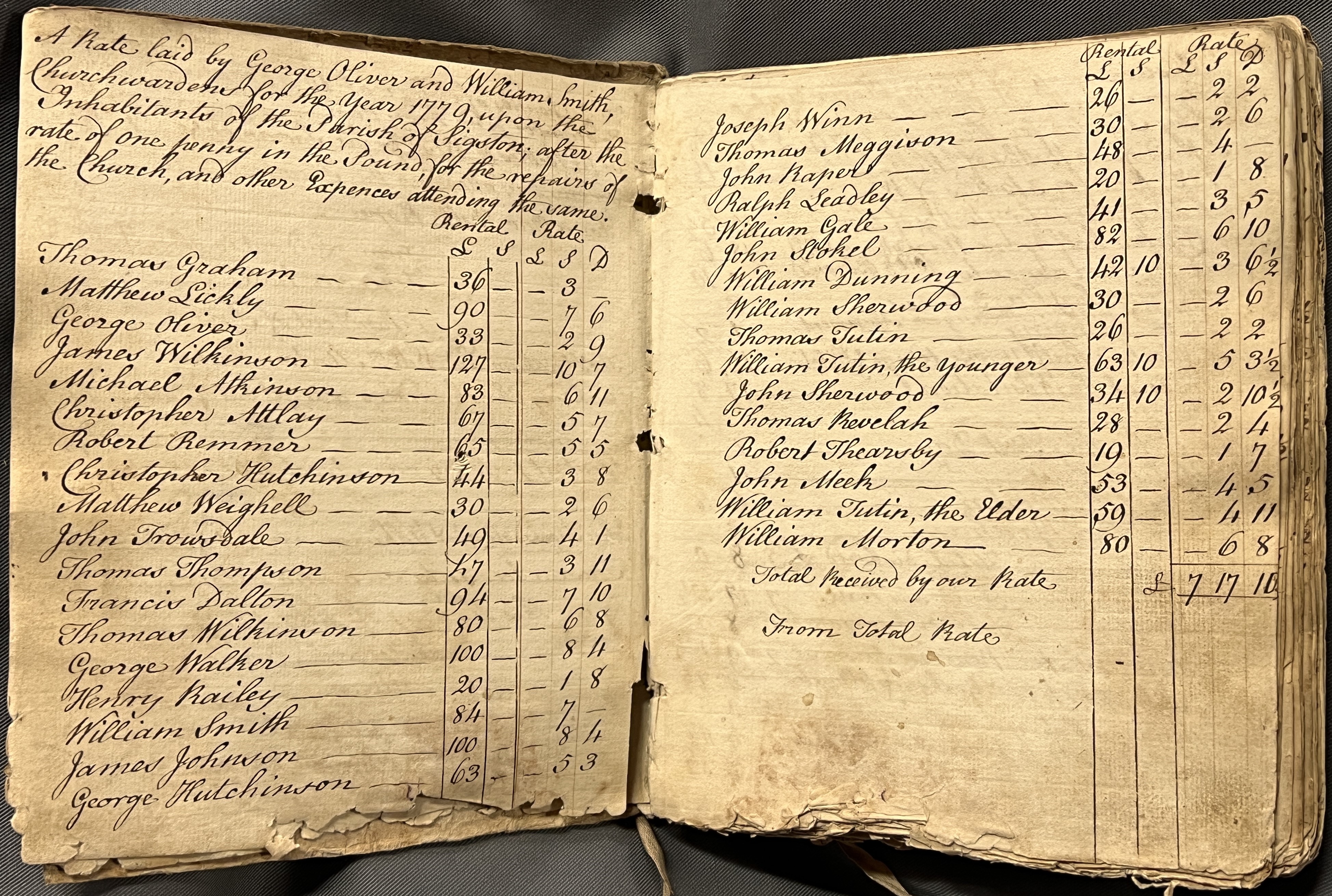

Kirby Sigston, St Lawrence: churchwardens’ account book, 1777-1847 showing pages recording rates levied by the churchwardens on inhabitants ‘for the repairs of the church and other expenses attending to the same’, for 1779 and the year ending 27 May 1828 [PR/KRS 4/1]
Expenses of the churchwardens
From the churchwardens’ accounts, we can see the wide variety of payments made in fulfilment of their duties. Much of the churchwardens’ time and money was spent on the maintenance and repair of the fabric of their church, apart from the chancel. This could include whitewashing, flooring, repairing roof leads and slates, repairing windows and pointing the outside of the church, the tower or steeple. Such work was often contracted out to local tradesmen. Maintenance of the chancel was outside the churchwardens’ responsibility. The charge and liability for this related to the ownership of the lay rectory, although the churchwardens often had difficulties in compelling the lay rectors to make the necessary repairs.

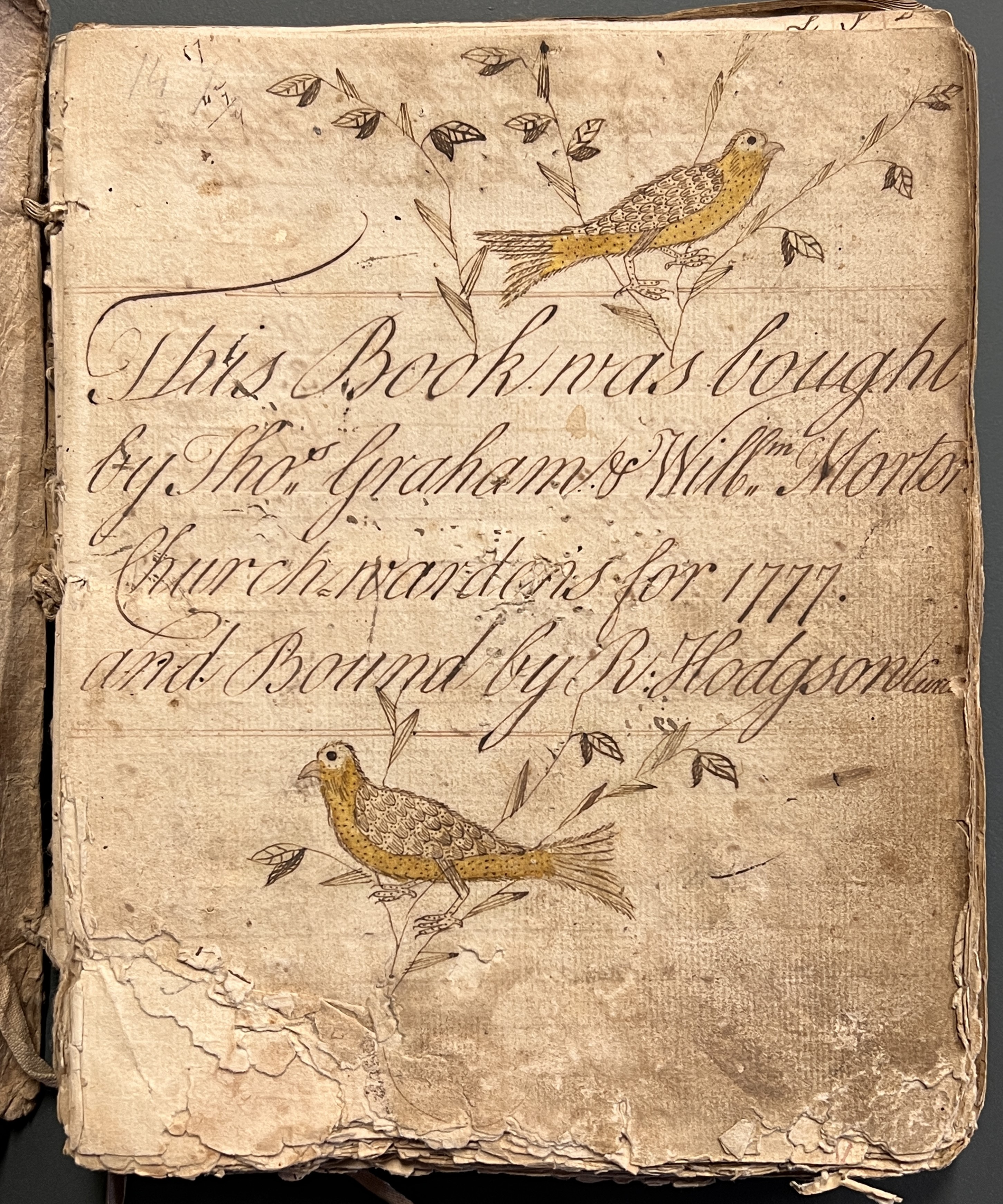
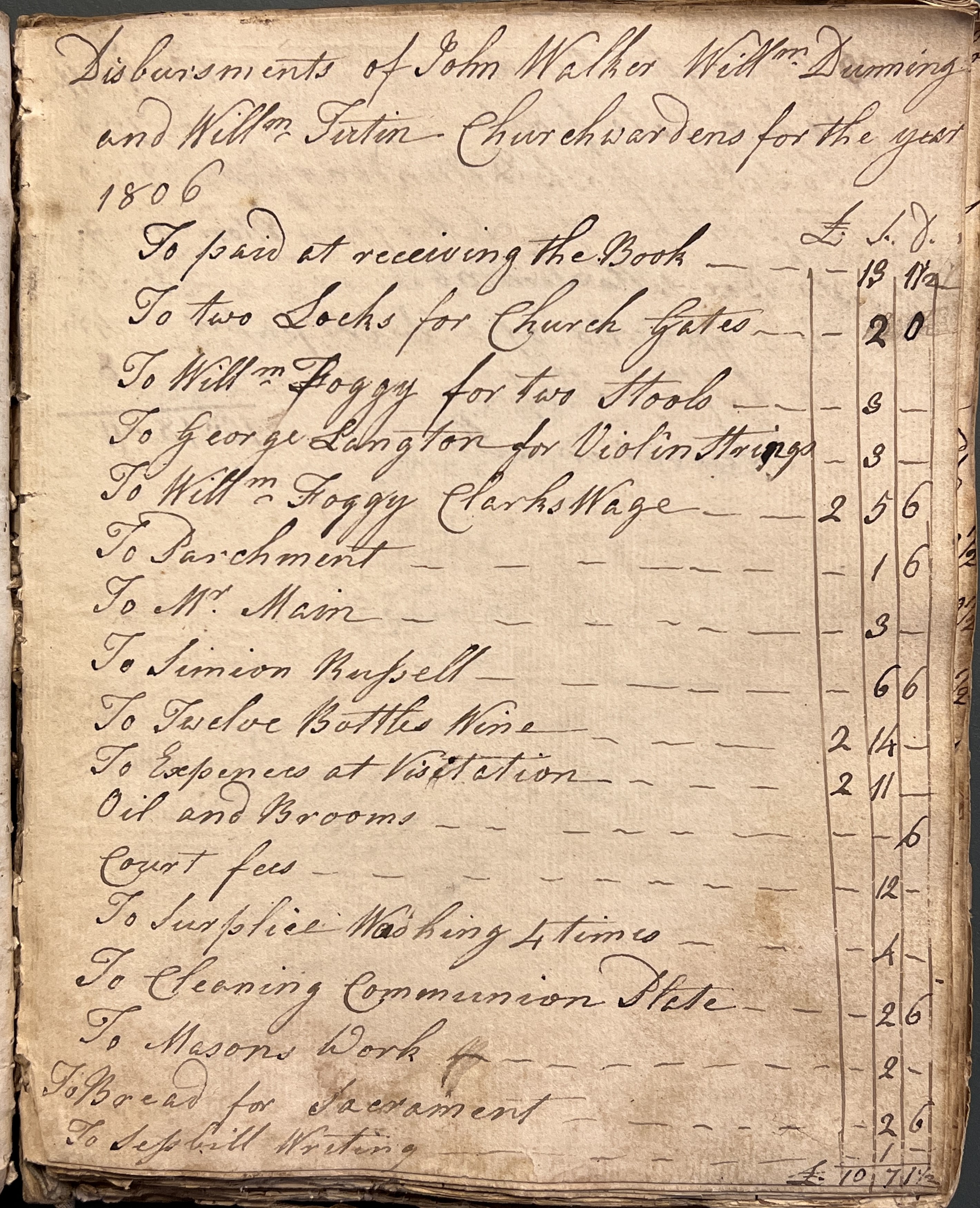
Kirby Sigston, St Lawrence: churchwardens’ account book, 1777-1847 showing decorated title page and disbursements (expenses) for the year 1806, including two locks for the church gates, violin strings, 12 bottles of wine, oil and brooms, surplice washing 4 times and cleaning the Communion plate [PR/KRS 4/1]
Churchwardens were also responsible for the upkeep of the churchyard, the churchyard gate, for mowing the grass and the general care of the graves. Inside the church, they oversaw the allocation, arrangement and care of pews and other church furniture such as the font and pulpit; those who could afford it paid annual rent for their pews. Church silver had to be cleaned and repaired and the vicar’s surplice had to be washed.
Churchwardens had to procure the materials needed for Communion services; wine and bread was bought from retailers or public houses, and candles were regularly bought in bulk. Books for use in Divine service had to be obtained, such as the Book of Common Prayer; these had to be looked after and repaired. Churchwardens also had to pay for obligatory Forms of Prayers and Acts of Parliament; special prayers were usually issued to give thanks for great victories in war or to mark special royal occasions. Acts of Parliament were to be read to the assembled congregation, such as the Act against Profane Cursing and Swearing in 1746.

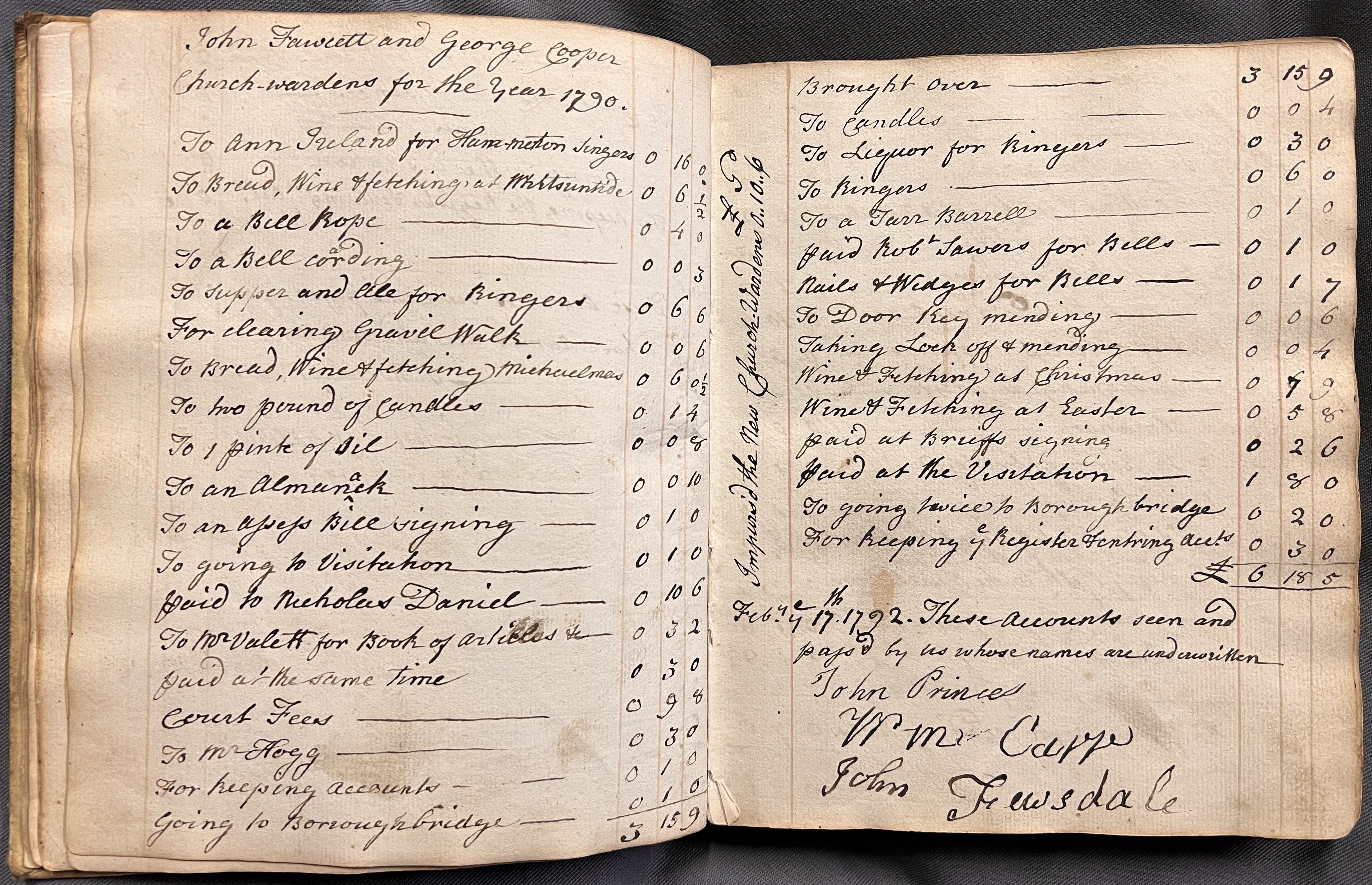
Nun Monkton, St Mary: churchwardens’ account book, 1779-1869, open at page for the year 1790 [PR/NUM 10/1]
The above account book records the payments of John Fawcett and George Cooper, churchwardens for the year 1790. These payments include 16s (shillings) to Ann Ireland for Hammerton singers, 4s for bell rope, 6s 6d (old pence) for supper and ale for the ringers, 6d for clearing the gravel walk, 6s ½d for fetching bread and wine, and 1s 4d for two pound of candles.
Further information
Searchable online database of the Churchwardens’ Accounts of England and Wales, webpage, which also includes a useful summary of some of the ways in which churchwardens’ accounts can be used by historians
Jaques, H. 1978 ‘North Yorkshire Churchwardens’ accounts in the 18th century I’ pp.59-79 in North Yorkshire Country Record Office Journal no. 6, Publication 17.
A list of Churchwardens’ Accounts held at the Borthwick Institute, York
 North Yorkshire Archives Blog