
The Record Office holds an extensive collection of documents generated by the North Riding Quarter Sessions over the course of its history, spanning more than three centuries. This article offers an overview of the wide variety of subjects documented in these records, highlighting a range of illustrated examples.
In a previous post, we looked at the history and role of Quarter Sessions and the officials who attended: the Justices of the Peace, the Grand and Traverse Juries, and others including the Sheriff, Bailiffs and Constables. Future posts will explore the bundles of working papers from the Quarter Sessions and feature some of the stories of the people who appear within them.
Subjects covered by Quarter Sessions’ records
Until the creation of the North Riding County Council in the late-19th century, the Justices of the Peace were responsible for local government in the North Riding. They had both judicial and, from the 16th century onwards, administrative functions. Their records cover an extensive range of topics, including crime, roads and bridges, weights and measures, vagrancy, houses of correction, licensing, county rates, militia, police and various taxes.
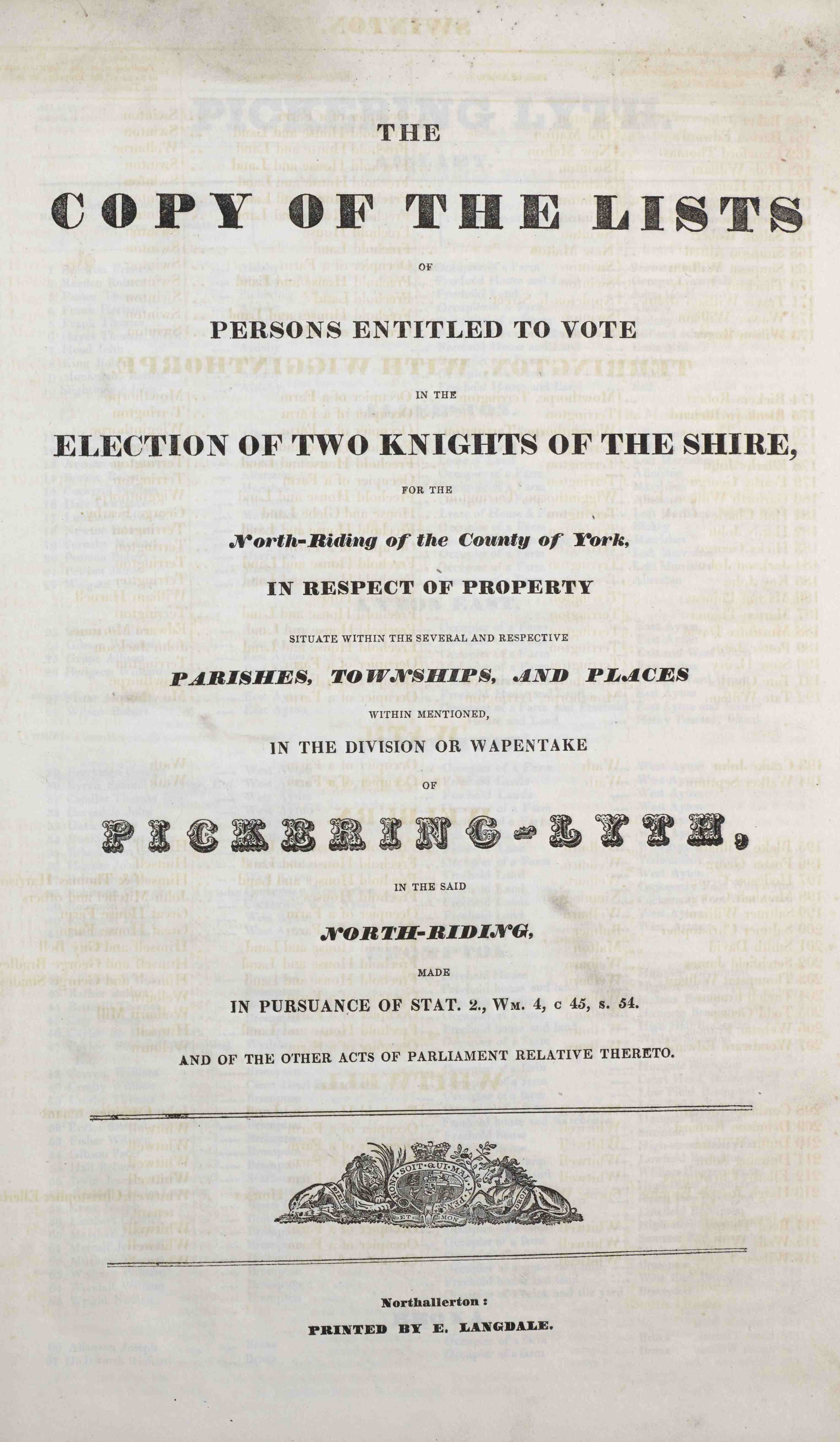

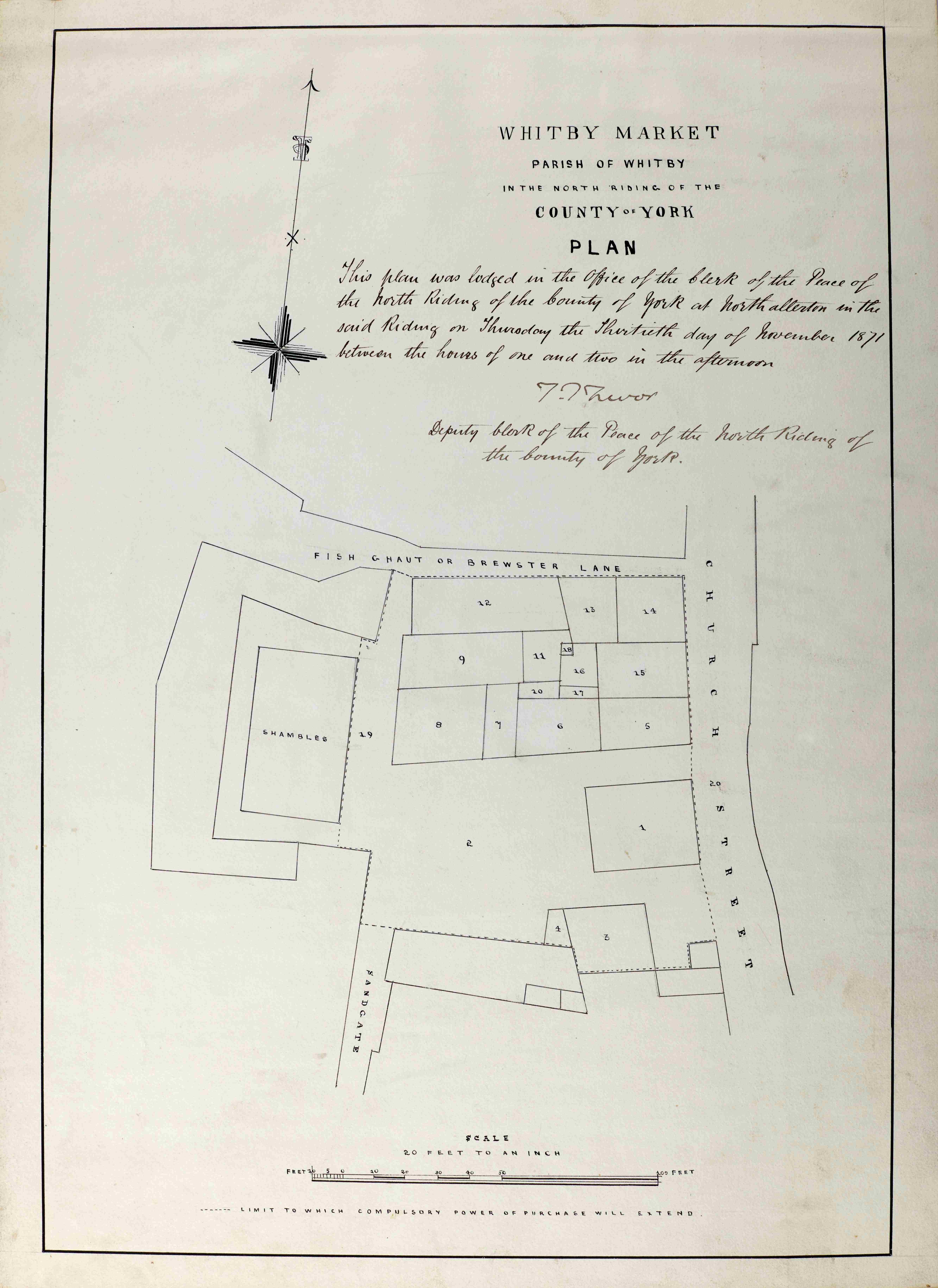
Left to right: Page from the first Register of Electors for the North Riding, 1832 [QDR(E)]; Poster of the Association for the Prosecution of Felons, 1841 [QAP(F)]; Plan of Whitby market, 30 November 1871 [QDP(M) 180]
Broadly, these records of Quarter Sessions have been grouped under the following six subject headings:
- Administrative records [QA]
- Clerk of the Peace [QC]
- Enrolment and registration, deposit and return [QD]
- Finance [QF]
- Justices of the Peace [QJ]
- The Court in session [QS]
This blog post provides an overview of these subjects, each of which are subdivided into specific themes (sub-fonds). An hierarchical list of these themes can be found in our online catalogue by an advanced search for the ‘Document ref’ of ‘Q’. Clicking on the blue ‘Q’ hyperlink in the search results will open up the hierarchical list, which can be further expanded by clicking on the ‘+’ signs, where present. Clicking on the blue hyperlinks in this list will lead to further information about each theme. Summary information can also be found in the entries listed under Quarter Sessions, which can be found on pages 68-82 of our searchroom Guide no. 1 (link opens as pdf).
Hyperlinks to our online catalogue are provided throughout the text below, which can be followed to find additional information about particular themes. Clicking on the images below will open full-screen versions when viewing online.
Administrative records
The records in this section are concerned with the administrative, rather than the judicial, functions of the Justices of the Peace. Until 1889 and the creation of the North Riding County Council, the Justices of the Peace were responsible for local government in the North Riding. The Justices then became solely a judicial body and their administrative functions (except that of licensing) were taken over by the County Council.
Justices began to undertake administrative duties from the 16th century onwards, following legislation of the Tudor monarchs. These duties continued to grow during the centuries that followed. The Justices of the Peace acquired most of their administrative duties either under Acts of Parliament or Orders of the Privy Council in London, and became responsible for such matters as bridges, gaols, lunatic asylums, highways, weights and measures and the licensing of alehouses or inns. Quarter Sessions was a court of law and all its business, including that of administration, was carried out under judicial forms.

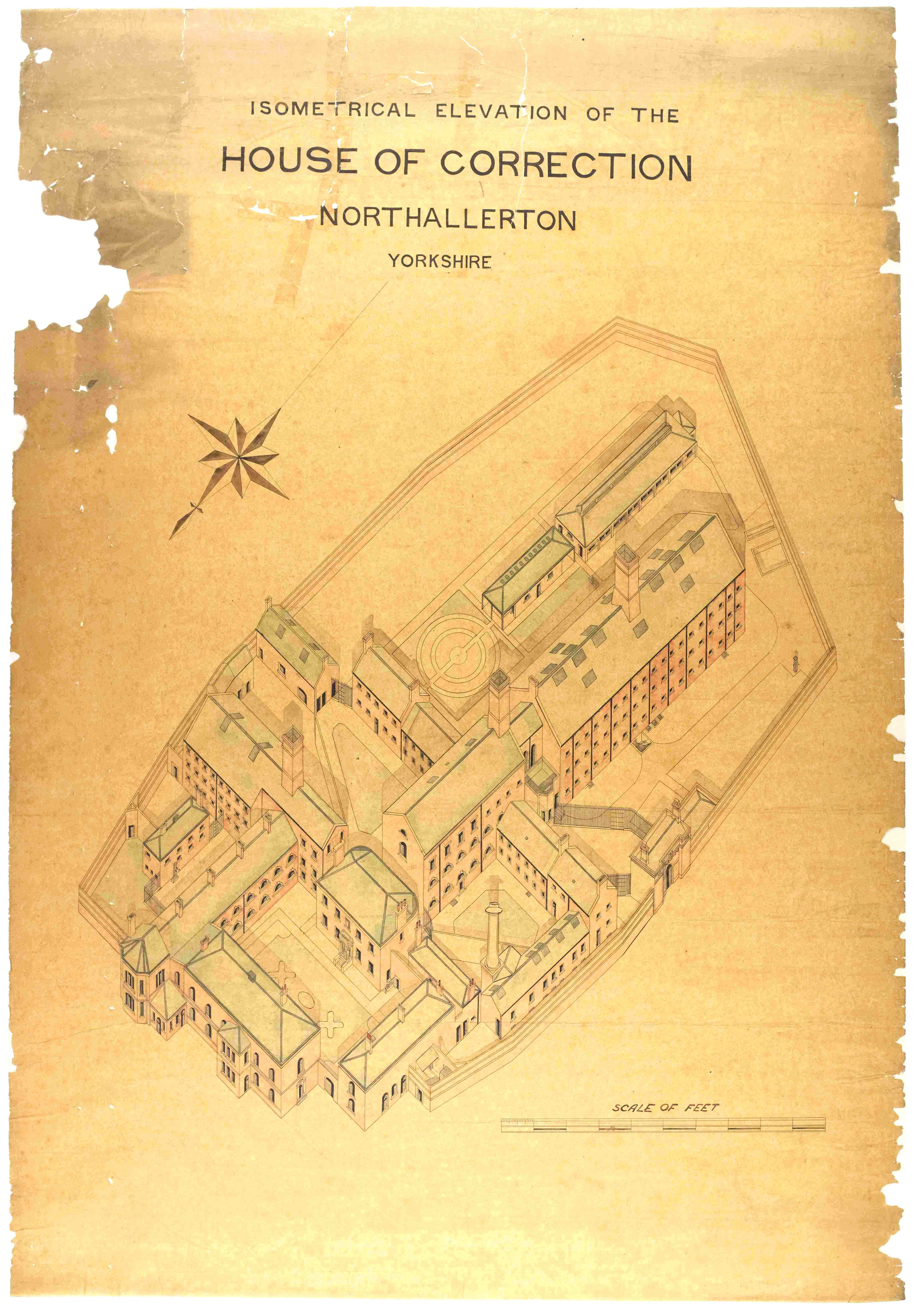
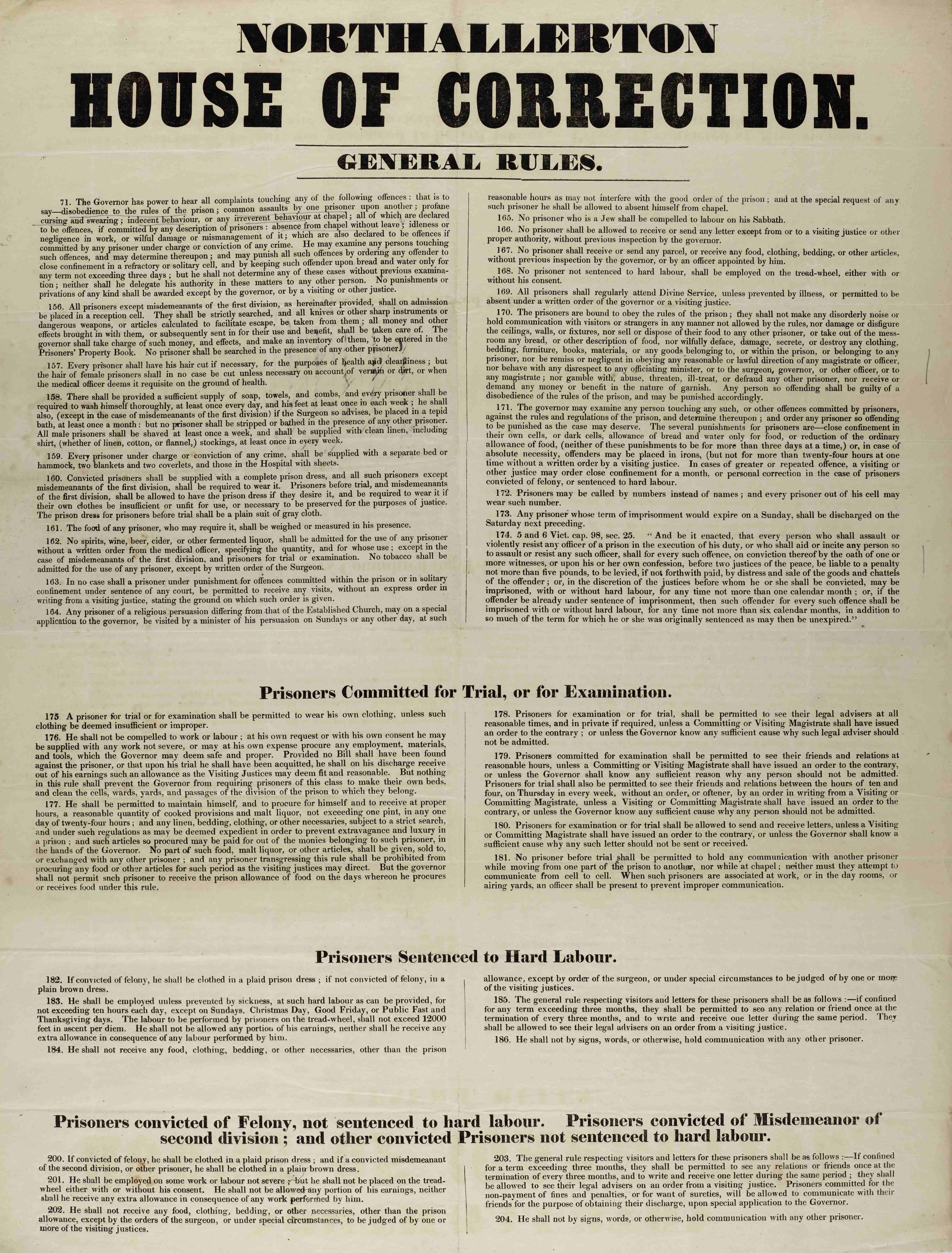


Clockwise from top left: Calendar of prisoners at the House of Correction in Northallerton, 1819 [QSG]; Isometrical elevation (south view) of the Northallerton House of Correction, undated (c.1870) [QAG]; General Rules of the Northallerton House of Correction, undated, (19th century) [QAG]; Ground plan of Northallerton Prison, undated (c.1870) [QAG]; Photograph of the staff of Northallerton Prison, 1891 [EF 218]
Administration records cover the running of the Quarter Sessions as a whole as well as the responsibilities which came under it. They cover each of the following areas (rather than records of individual cases, which can be found amongst the working papers): bridges [QAB]; county buildings [QAC]; diseases of animals [QAD]; fisheries [QAF]; gaols and houses of correction [QAG]; highways [QAH]; lunacy [QAL]; police [QAP]; licensed victuallers (persons selling alcohol) [QAV]; weights and measures [QAW] and exempt jurisdictions [QAX].
[Square brackets denote the related Record Office collection references, which are hyperlinked to our online catalogue. Once in the catalogue, click the blue hyperlink in the document reference field to find further information about each theme].
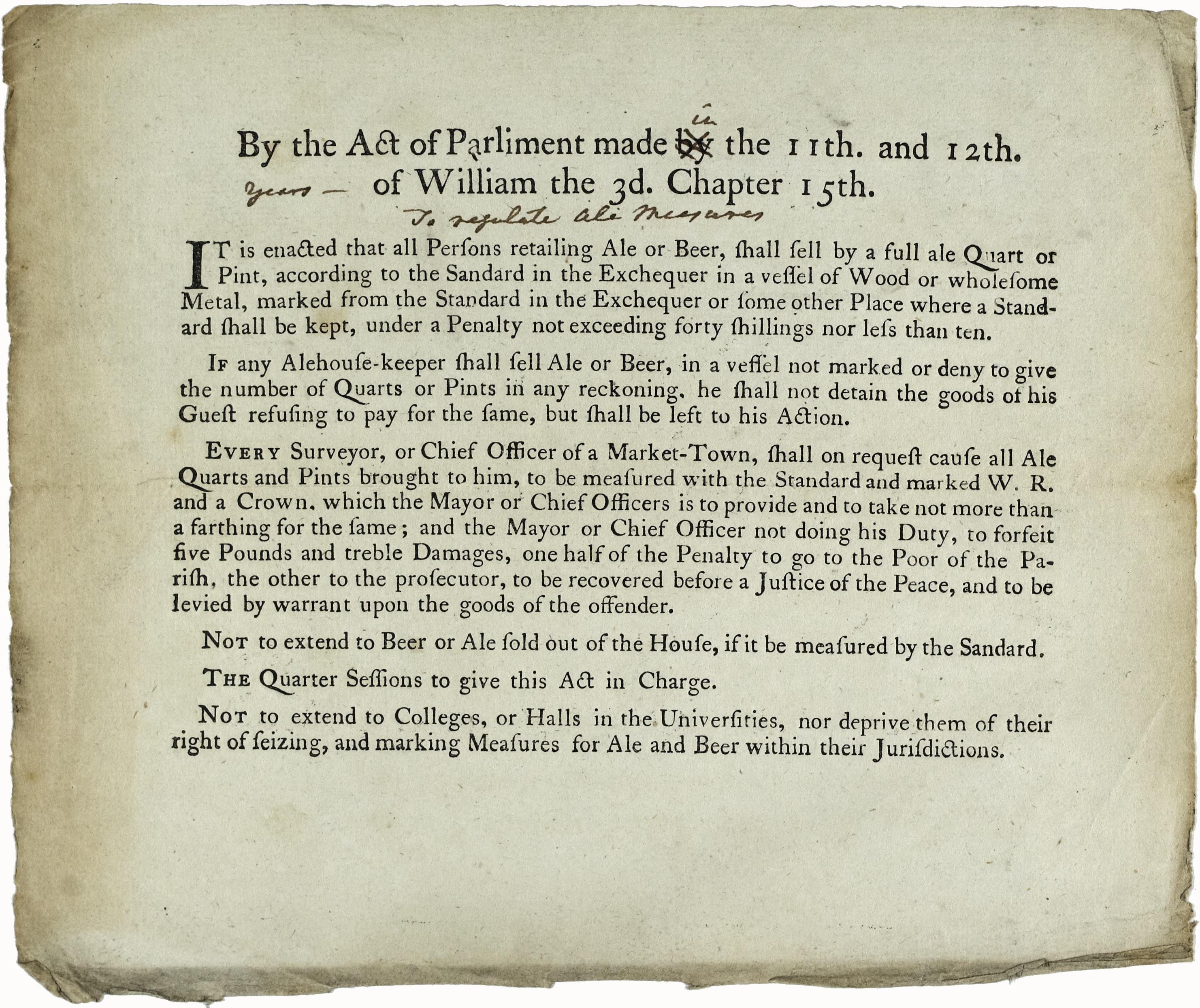

- Left: Handbill relating to the regulation of ale measures, 1698-1699 [QAW]
- Right: Plan of part of the Borough of Scarborough showing licenced houses, 1904 [QAV(C)]
An example of records relating to bridges can be seen in our previous blog on Easingwold maps, which features a plan of West Moors Estate on the north side of New Bridge, Easingwold, 1774. The Quarter Sessions’ collection also includes North Riding Bridgemaster John Carr’s ‘Book of Bridges’ from c.1805, which includes plans and elevations of over 85 bridges in the North Riding [QAB(P)]. Images of some of these plans can be seen in our previous blog on John Carr.

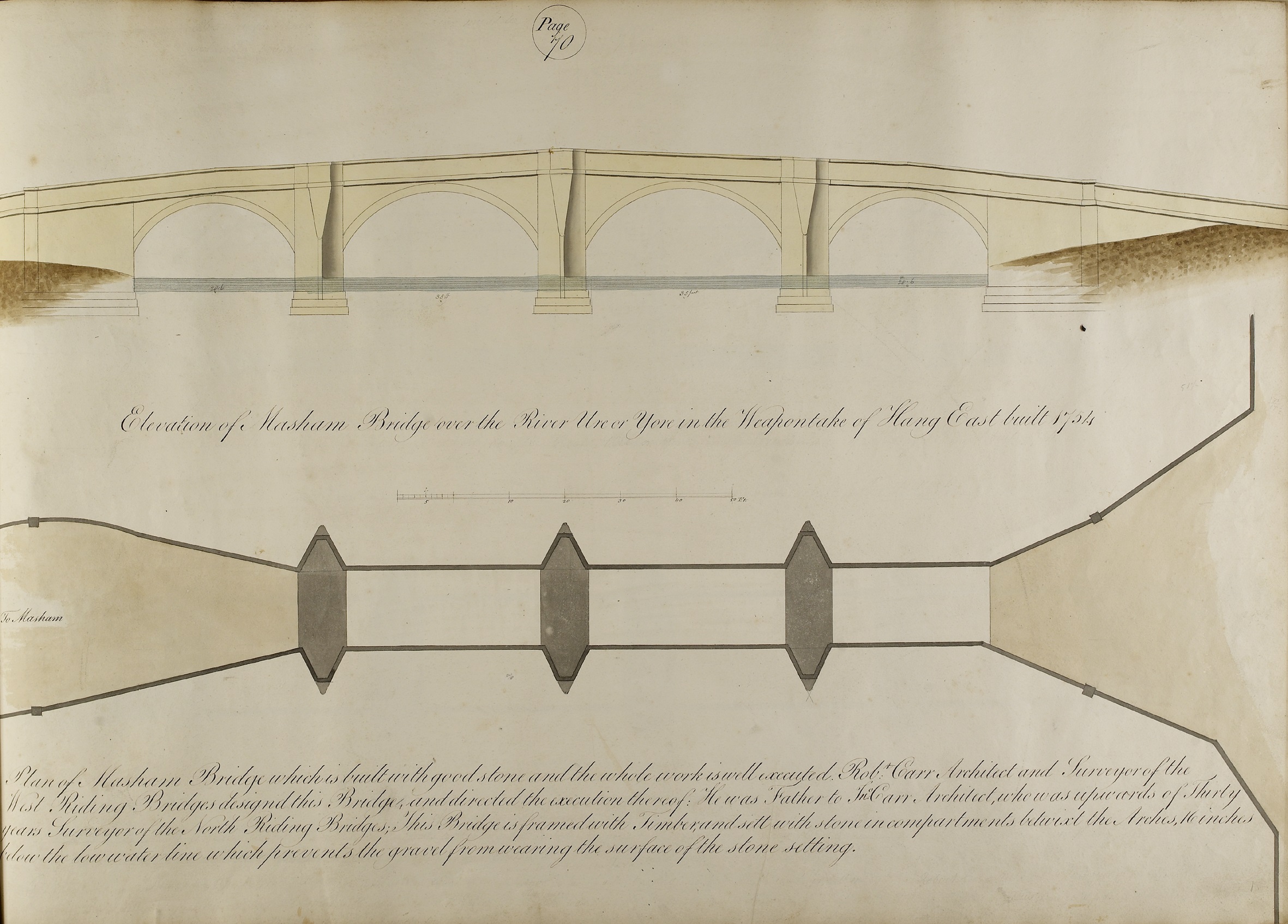

- Left: Index page and illustration of the elevation of Masham Bridge over the River Ure from John Carr’s ‘Book of Bridges’, c.1805 [QAB(P)]
- Right: Document in which John Carr describes the role of Bridgemaster, c.1775 [QAB]
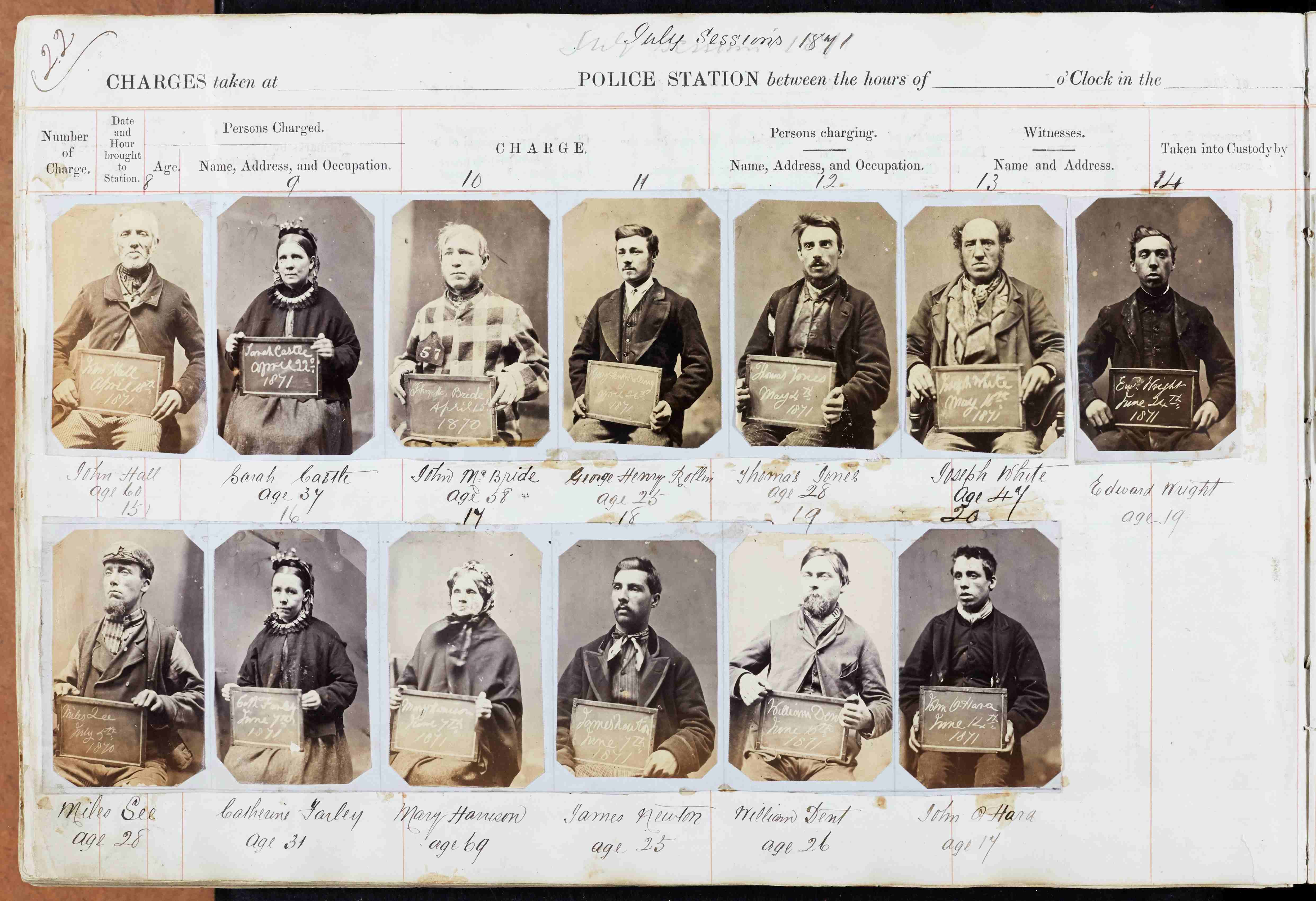

- Left: Page from the Police charge book with photographs, 1871 [QAP]
- Right: Pages from Acting Sergeant Bland’s constable journal, Scalby station, 1906 [QAP]
You can read more about some of those charged with offences who appeared before the Quarter Sessions in our series of blog posts on criminal women.
Clerk of the Peace
The Clerk of the Peace was the official with responsibility for the records of the Court of Quarter Sessions. Legally trained, they provided legal advice to the Justices and drew up indictments, presentments and other documents, as well as having other administrative responsibilities in relation to the organisation of the Sessions and their proceedings.

Sir Hubert Gordon Thornley, C.B.E., D.L., Clerk of the Peace from 1916-1960 [EF 494/102]
Records of the Clerk of the Peace cover bonds relating to various subjects [QCB]; correspondence [QCC]; fees and finance [QCF]; clerk’s indexes to a variety of plans, papers and minute books [QCI]; legal papers [QCL]; precedents, draft or copy indictments and proceedings [QCP]; returns to Government departments [QCR] and miscellaneous papers [QCZ].
Enrolment and registration, deposit and return
This class of records includes documents relating to a variety of subjects, which the Clerk of the Peace was instructed under various Acts of Parliament to enrol, register, and file. Over the course of the 17th, 18th and early-19th centuries, these records grew in number. Enrolment (entering into the rolls of the court), refers to the formal process of recording an agreement, deed, or records of legal and other transactions in order to be legally binding or to ensure they were preserved for future reference. How these records were preserved varied according to time and place. They could be copied into official register books, or deposited and filed by the Clerk of the Peace or his deputy.


- Left: Two pages from a register of enrolments of enclosure awards and conveyances, from an indenture concerning land for a school and dwellinghouse to be built by the Thirsk Infants School Society, 15 December 1835 [QDD(D) Book P]
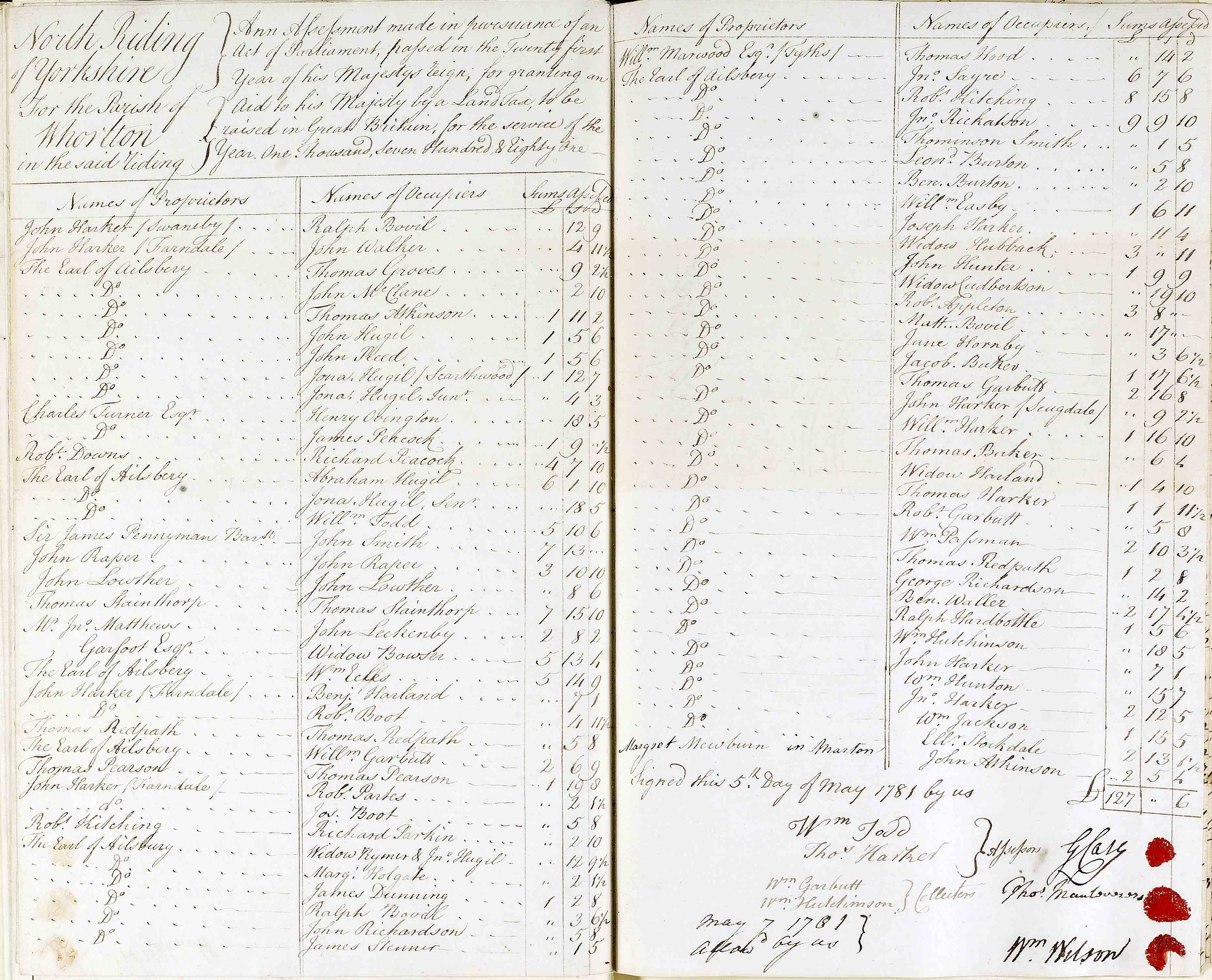
- Right: Langbaurgh West Land Tax, extract for Whorlton, 1871 [QDE(L)]
Records were first enrolled or filed with the Clerk of the Peace after an Act of Parliament of 1535, which directed that deeds of bargain and sale (a particular type of deed of conveyance of property) should be enrolled. These enrolments are usually the earliest records of Quarter Sessions that still exist; for the North Riding, they survive back to 1538.
This is an extensive collection of records covering a variety of topics. These include records of appointments of coroners, militia officers and deputy lieutenants, commissioners of oaths, petty constables and sheriffs and undersheriffs [QDA]; savings banks [QDB]; charities [QDC]; deeds and awards [QDD]; elections and electoral registers [QDE]; fisheries [QDF]; hairpowder duty [QDH]; jurors [QDJ]; freemasons [QDM]; nonconformists [QDN]; public undertakings and copies of deposited maps and plans [QDP]; printing presses [QDQ]; recruitment of men for the navy [QDRE]; turnpike trusts [QDT]; vagrants [QDV]; workhouses and poor relief [QDW]. A full list of the records with the prefix ‘QD’ can be found in our online catalogue collection browser under ‘Q‘, from ‘QDA’ to ‘QDZ’.


- Left: Extract from the register of hair powder duty certificates issued in the parish of Thirsk for the year 1796 [QDH]
- Right: List of bastardy summonses issued, applications heard and orders made, 1853 [QDW]
You can read all about the hairpowder tax in our previous blog on Big Wigs and Guinea Pigs and find out more about recruitment of men for the navy in our Record Office publication on North Riding Naval Recruits.


Railway plans and sections for the Richmond and Hawes Junction Railway, November 1882 [QDP(M) 239]
Finance
The records in this section are concerned with the financial affairs of the North Riding and the Court of Quarter Sessions during the period 1593-1889 and with the County Treasurers in particular. They include accounts, bills, vouchers and fines [QFA]; records of committees [QFC]; records of county rates [QFR] and other finance papers [QFZ].
For most of the 16th century, the financial business of the county was conducted by the Clerk of the Peace, and rates were levied on an ad hoc basis for such items as the building and repair of County Bridges, the militia or the repair of York Castle. The ‘Bridge Book’ of 1565-1637 [QAB], for example, shows that collectors were appointed to raise rates for particular bridges. These rates were sometimes levied only on the area in the immediate vicinity of a bridge, sometimes on the whole of the North Riding, in which case they were collected through the High Constables or Bailiffs of the wapentakes. In this period, there was no permanent Treasurer responsible for the collection and expenditure of such rates.

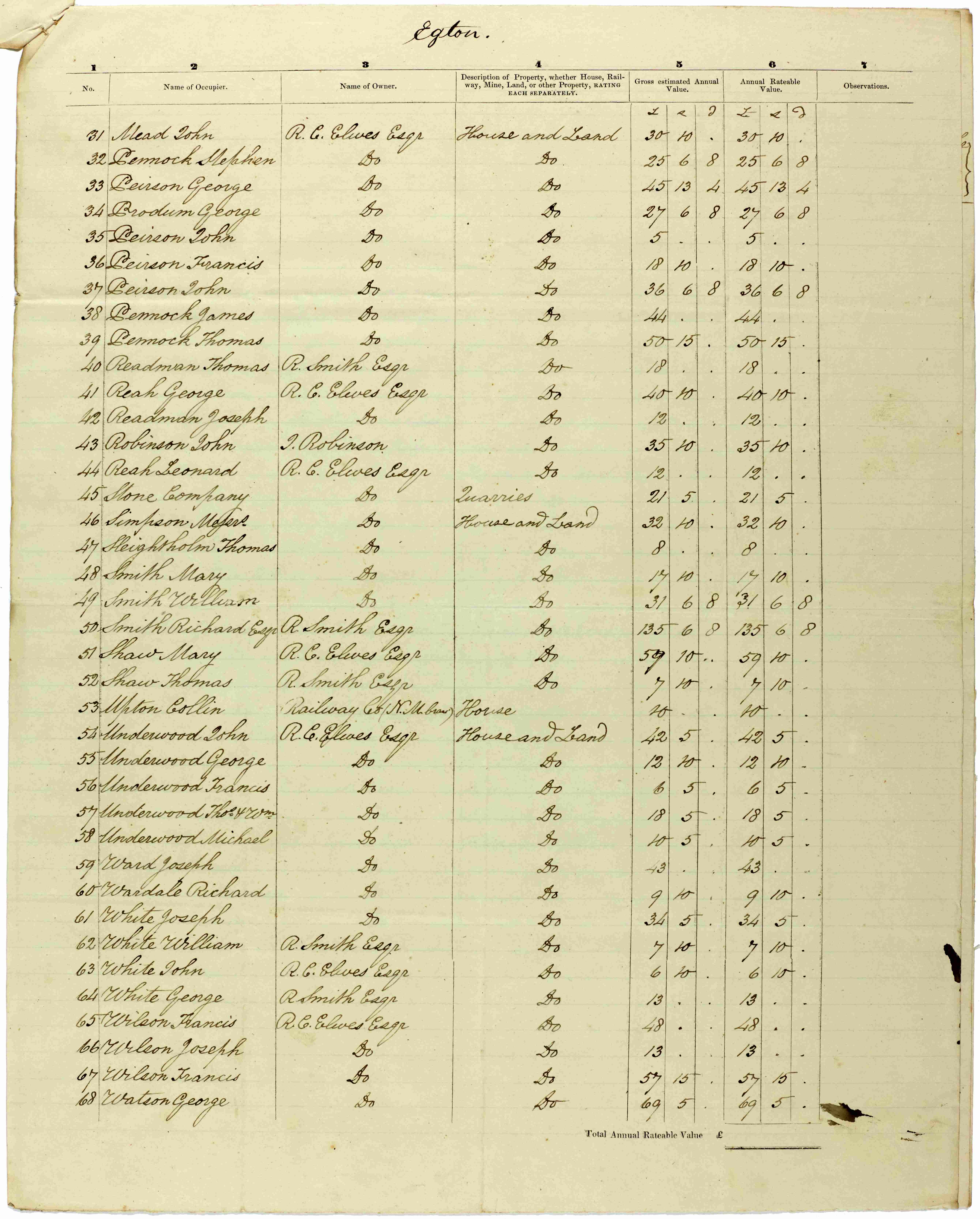
County Rate basis, return of rateable values for the township of Egton, 1846 [QFR(V) 1/31/4]
The Acts for the relief of maimed soldiers and mariners in the late-16th century first provide for the appointment of Treasurers. Until the 17th century, the office of Treasurer appears to have been honorary and held for a period of one year. In 1866, County Bankers were appointed in place of the Treasurer (who had previously acted as Banker to the County), and in 1868 a paid auditor was appointed, who reported to the Finance Committee.
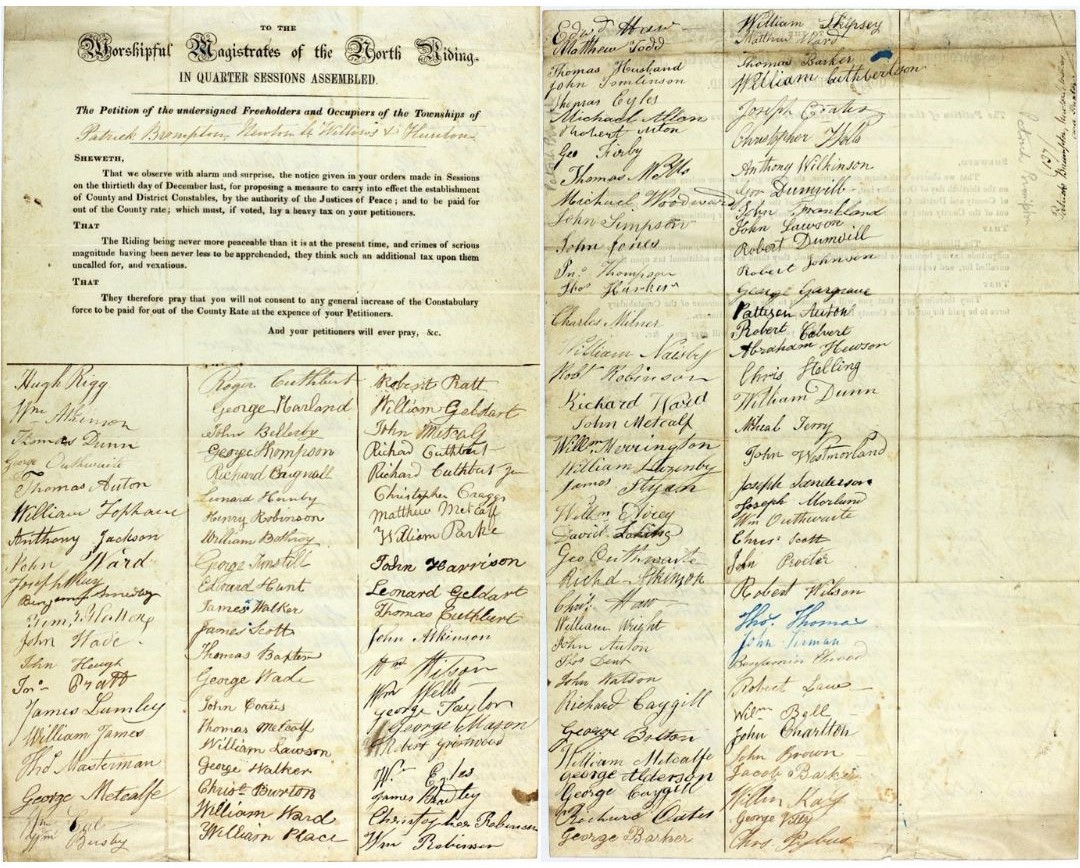
Not everyone welcomed the establishment of County and District Constables, who were to be paid for out of the County Rate. There are a series of petitions from the residents of a number townships against this, as they felt there was not enough crime to warrant having to pay for new police constables (see the petition of 1841 featured below). It wasn’t until 1856, fifteen years later, that the North Riding of Yorkshire Constabulary was set up.
Petition against the establishment of County and District Constables by
the people of Patrick Brompton, Newton le Willows and Hunton, 1841 [QAP(F)]
The petitioners say that, in 1841, “The Riding being never more peaceable than it is at the present times, and crimes of serious magnitude having been never less to be apprehended, they think such an additional tax upon them uncalled for, and vexatious”…
Justices of the Peace
The records in this section relate to the appointment, qualification and oaths of the Justices of the Peace. Justices are, and were (from the 13th century and their origins as custodes pacis), nominated by royal commissions under the Great Seal. Their duties and powers, as well as the method of nomination and appointment, have varied from time to time. By the beginning of the 16th century, the Lord Chancellor had become responsible for the nomination of new Justices, often on the recommendation of existing Justices, Assize judges, friends or relations. Since the 18th century, the Lord Chancellor has consulted the Lord Lieutenant of a county. It was the custom to include in the royal commission the names of many eminent people, both ecclesiastical and lay, who never in fact attended Quarter Sessions.
Records in this section cover Commissions of the Peace [QJC]; lists of Justices and acting magistrates [QJL]; Justices’ oaths [QJO]; miscellaneous papers [QJP] and Justices’ qualification oaths [QJQ].
The Court in session
Minute and Order Books
The most important records of the business carried out by the Justices of the Peace meeting in Quarter Sessions are the Minute and Order Books [QSM]. These Minute and Order Books, the formal record of the Court proceedings, survive for the North Riding in an unbroken series from 1605, with one isolated record of a court in 1570 at Richmond. Up to 1769, there is one series of Minute and Order Books recording both judicial and administrative proceedings.
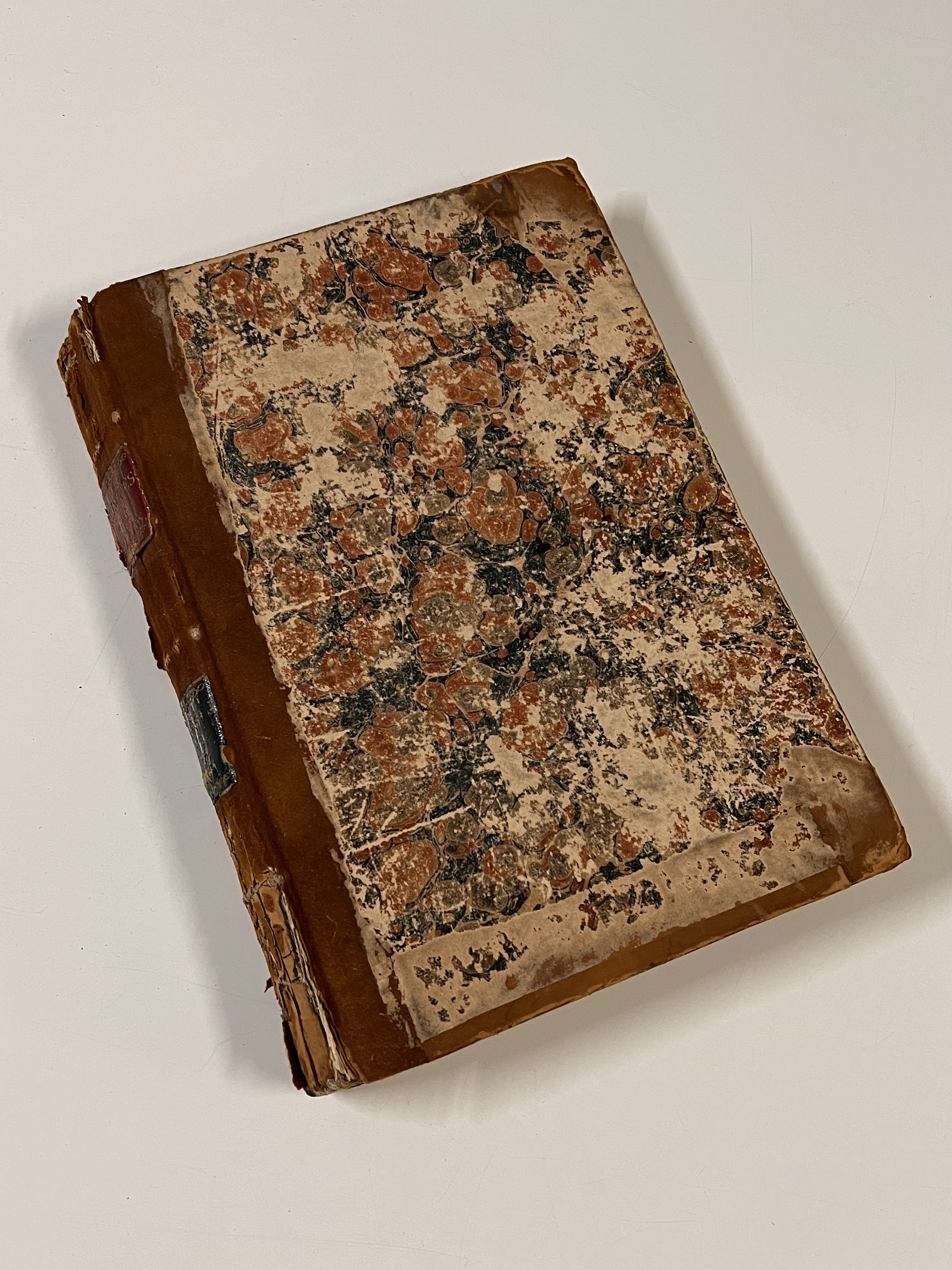
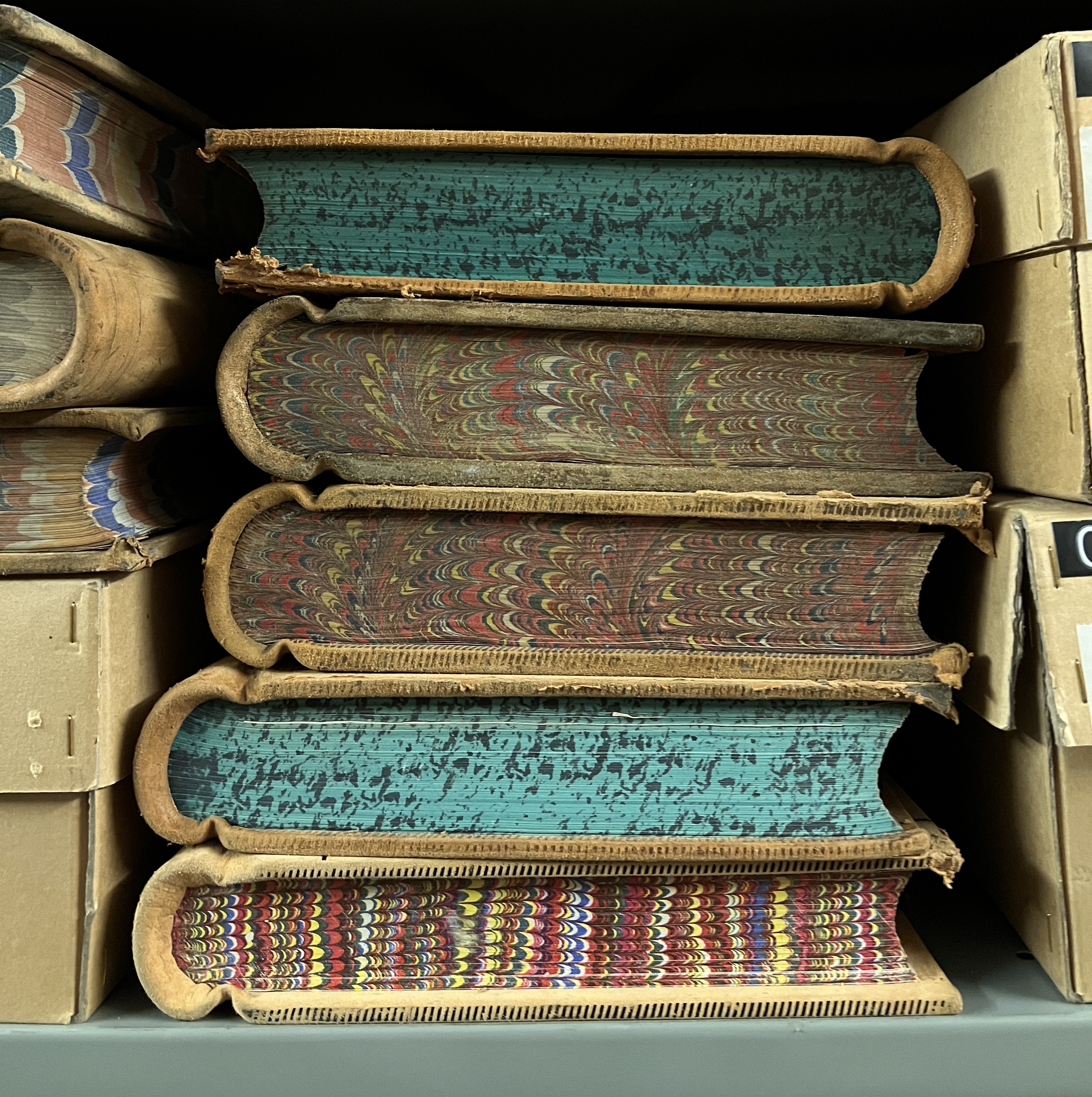
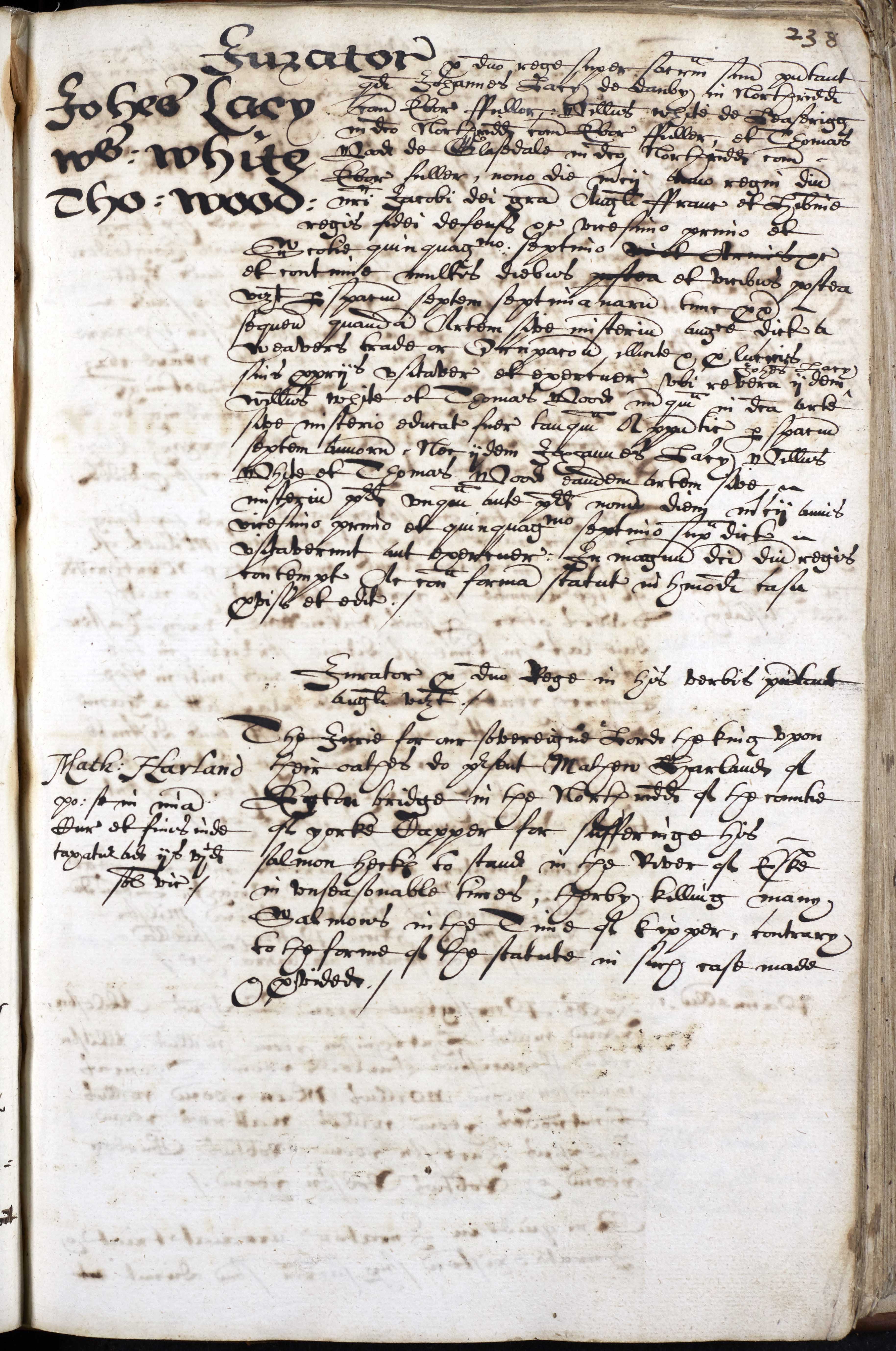

Minute and order books from the North Riding Quarter Sessions, showing examples of pages from the 17th century [QSM 2/4 (1620-1625) & 2/9 (1651-1654)]
However, from the second quarter of the 18th century onwards, these books ignore the judicial business and only include the orders of the Court relating to administrative business, appeals, road diversions, appointments of new justices and orders as to prosecution costs: this series was labelled ‘Book A’ in the Office of the Clerk of the Peace in the 19th and early 20th centuries. In 1769, a separate series of Minutes was begun (later called ‘Book S’) containing records of trials and judicial business. This series continued until 1921, when it was merged with the Order Book or ‘Book A’. In 1813, a third book was instituted called the ‘Special Orders Book’ containing only those orders relating to the administrative work of Sessions, such as the appointment and reports of ad hoc Committees and county officials and the upkeep and repair of roads and bridges and county buildings. This series was merged with the Order Book (‘Book A’) in 1927.

Extract from the Minute and Order Book recording payment of 30 shillings to Thomas Boynton of West Ayton to ‘helpe to beare his charges to the hot baith in Somersetshire to which he is admitted to go for the recovery of his health being so directed by his physitions and chyrurgion [surgeon]’, 20 April 1658 [QSM 2/10]
Quarter Sessions rolls, or bundles
The Sessions rolls, or bundles contain most of the papers received or created during Sessions and considered worthy of preservation [QSB]. They are working papers relating to both the judicial and the administrative functions of the Justices.
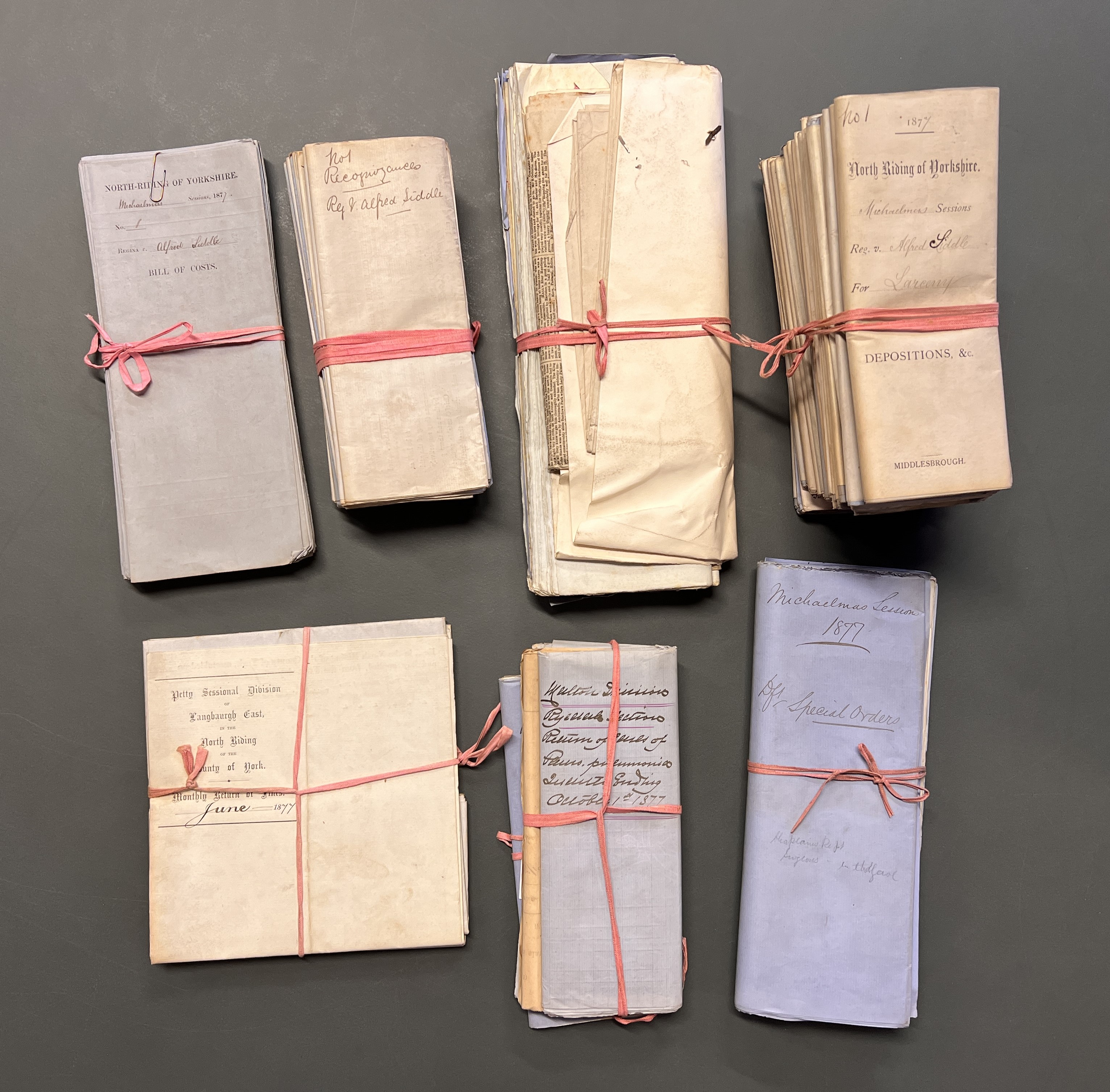
A selection of unopened bundles of working papers from the Quarter Sessions, Michaelmas 1877 [QSB]
These papers can include jury lists, writs to summon juries, presentments and indictments (charges in judicial proceedings), depositions (examinations of defendants and witnesses), recognizances (bonds to secure appearance at Court, be of good behaviour etc.), calendars (lists) of prisoners, petitions, licences, highway diversions, poor law papers and sacrament certificates. Quarter Sessions were held four times a year at Easter, Midsummer, Michaelmas and Epiphany. At first, the Court met in various towns throughout the Riding including Northallerton, Stokesley, Richmond, Thirsk and Malton, but by the early-nineteenth century it had settled in Northallerton.
You can find further information about the working papers of the Sessions in the following blog post.
Further reading:
A printed calendar of the Quarter Sessions’ minute books, edited by the Rev. J.C. Atkinson: Quarter Sessions Records: North Riding of the County of York, was published by the North Riding Record Society, 1884-1892 in 9 volumes. These provide a useful guide to the contents of the Minute and Order Books but are not full transcriptions; additional details may be found in the original text. The calendared volumes can be accessed online via the following links:
- Volume 1. 1605-12: abstracts or transcripts of all minutes and orders, including special sessions.
- Volume 2. 1612-20 – including special sessions, with extracts from accounts for lame soldiers and hospitals 1605-1615.
- Volume 3. 1621-1634: including special sessions; recusants, 1611-1630.
- Volume 4. 1634-1647: including enrolled indentures, 1538-1693.
- Volume 5. 1647-1658.
- Volume 6. 1658-1677.
- Volume 7. 1677-1716: with registrations of papists’ lands 1717-1742.
- Volume 8. Registration of papists’ lands 1717-1782; oaths of allegiance and supremacy, 1766-1777; declarations of dissenting preachers, 1791-1818.
- Volume 9. More papists lists, including enrolments of conveyances, 1719-1770; persons taking oaths, 1698-1716.
Many cases heard at the Quarter Sessions were reported in local newspapers, which may contain contemporary accounts of them. Increasing numbers of these local newspapers are now available to search online via the British Newspaper Archive subscription website. This resource is available to search via computers in most North Yorkshire libraries as well as our Record Office searchroom, by appointment.
Other blog posts on the North Riding Quarter Sessions:
- Introducing the Quarter Sessions and those who attended: All Human Life: North Riding Quarter Sessions, 1660-1971
- The Working papers of the North Riding Quarter Sessions
- Juvenile offenders in the North Riding Quarter Sessions
- North Riding Quarter Sessions’ scandals
- Previous blogs on stories of criminal women who appear in North Riding Quarter Sessions’ records
 North Yorkshire Archives Blog
Good afternoon,
I am researching my Calvert ancestors who came from North Yorkshire (Kiplin Hall) and I’m wondering if your expertise might help me with understanding a source that I have found. It is in difficult handwriting, but appears to be “Riding of York Mss (Hist Com. Ref. IX (or LX?) July 1689 It appears to be a volume from the Historical Manuscript Commission Collection, but I have searched widely and cannot find such a volume. I’m wondering if it makes sense to you or your colleagues?
Thank you.
Nancy Calvert-Koyzis, Ph.D.
Hi Nancy,
That reference has puzzled us too! If you are able to send us a bit more context, or details of the source it refers to, we will happily have a further look into it. Please email us directly archives@northyorks.gov.uk and we’ll see if we can help.
Thanks – North Yorkshire Archives