
The papers of the Jackson family, including letters of John Jackson R.A. (1778-1831) are held within the collections of the Record Office (ZFO). Jackson, a portrait painter and skilful copyist, was born in Lastingham in 1778.

ZFO Portrait of John Jackson, unsigned and undated
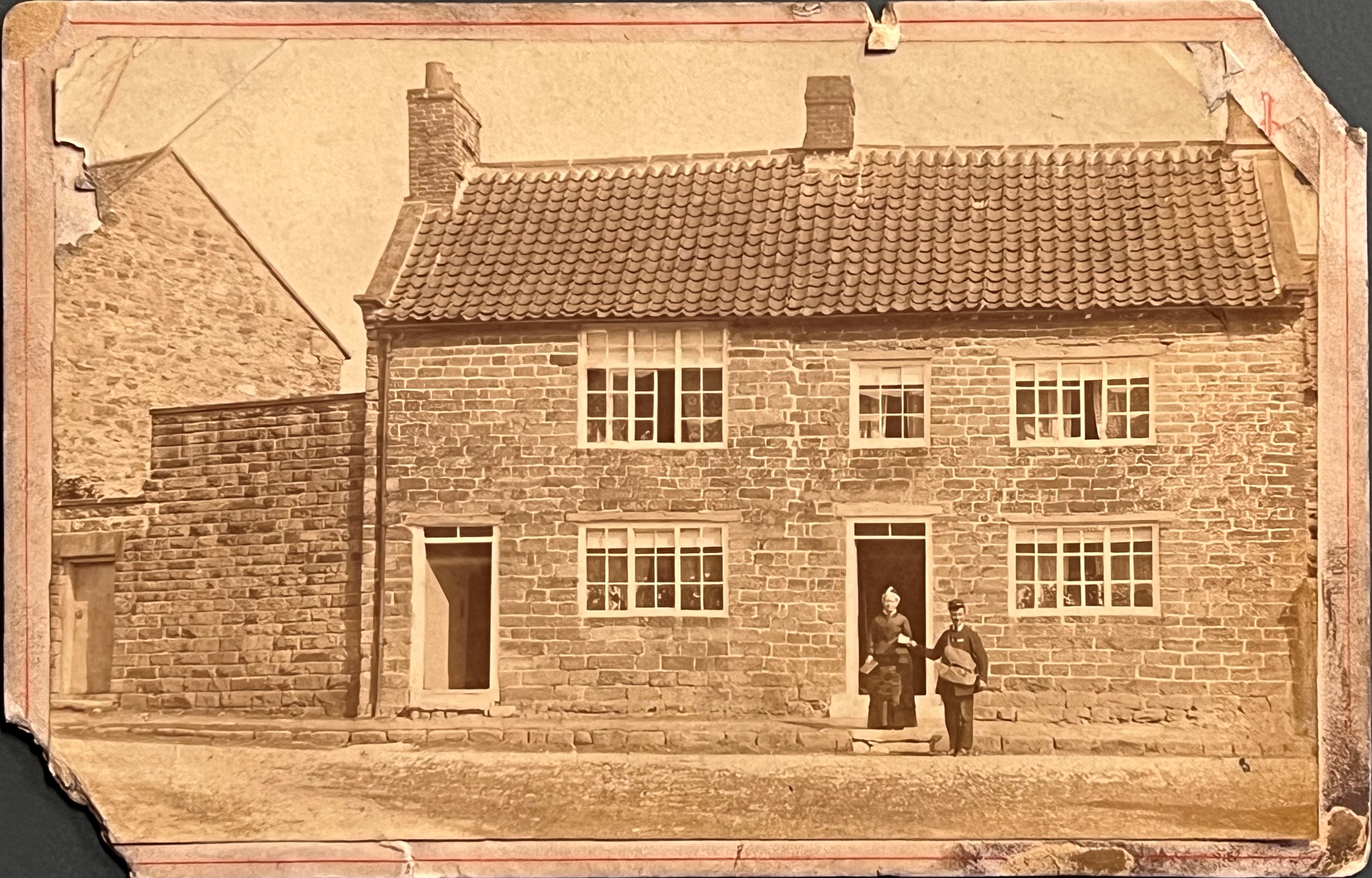

ZFO Photograph of the house in Lastingham, annotated on the reverse “in which John Jackson R.A. was born – not much altered since 1778. Now two cottages – room in which artist was born is on the right with two (bedroom) windows. The door where a relative of mine is receiving a letter from postman was not in existence in the artist’s time”, undated.
Two of his school exercise books survive within this collection, containing a number of sketches and doodles, which show his gift for drawing from an early age. Originally intended to follow the profession of a tailor, his talent was noticed by the Earl of Mulgrave.
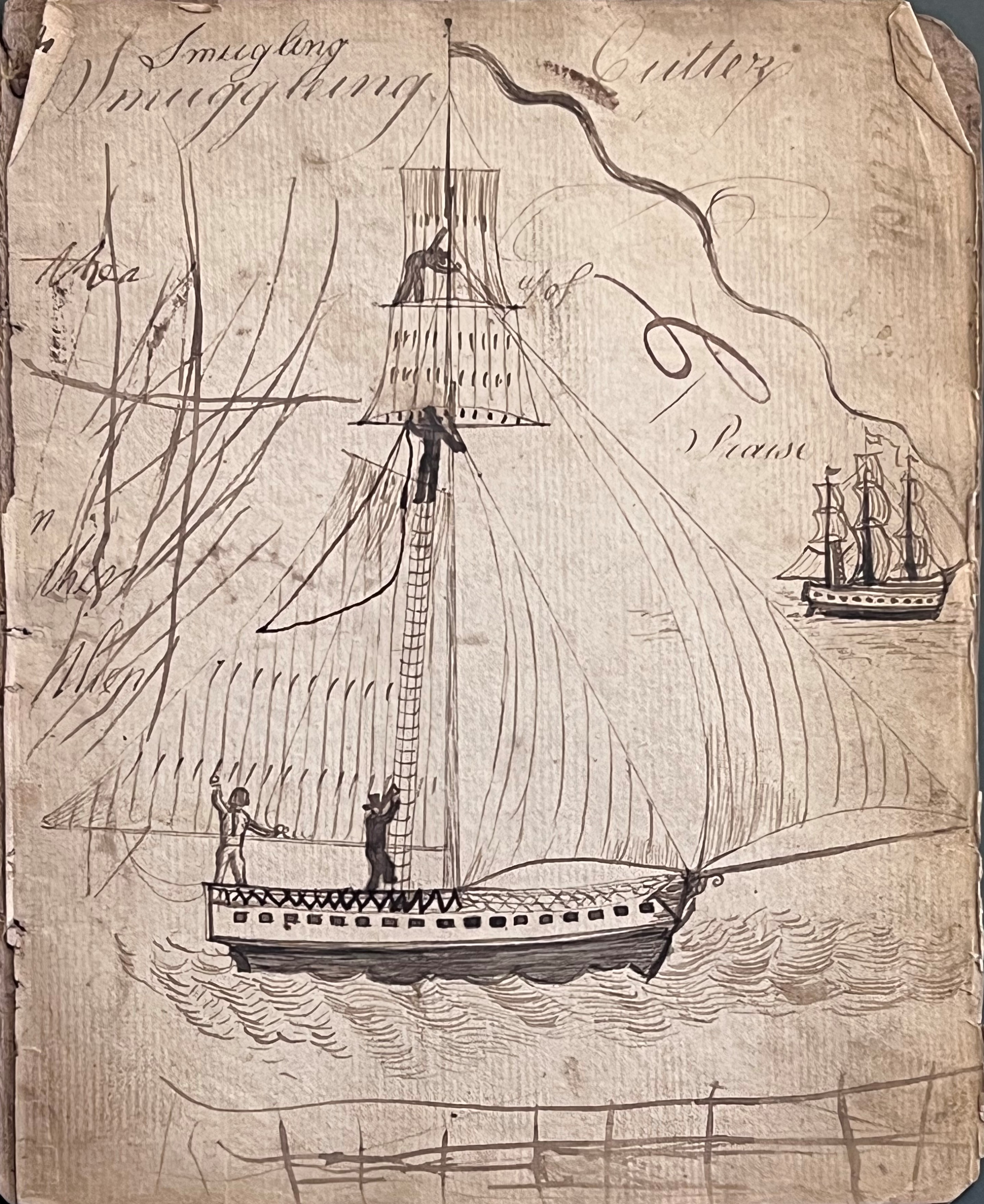

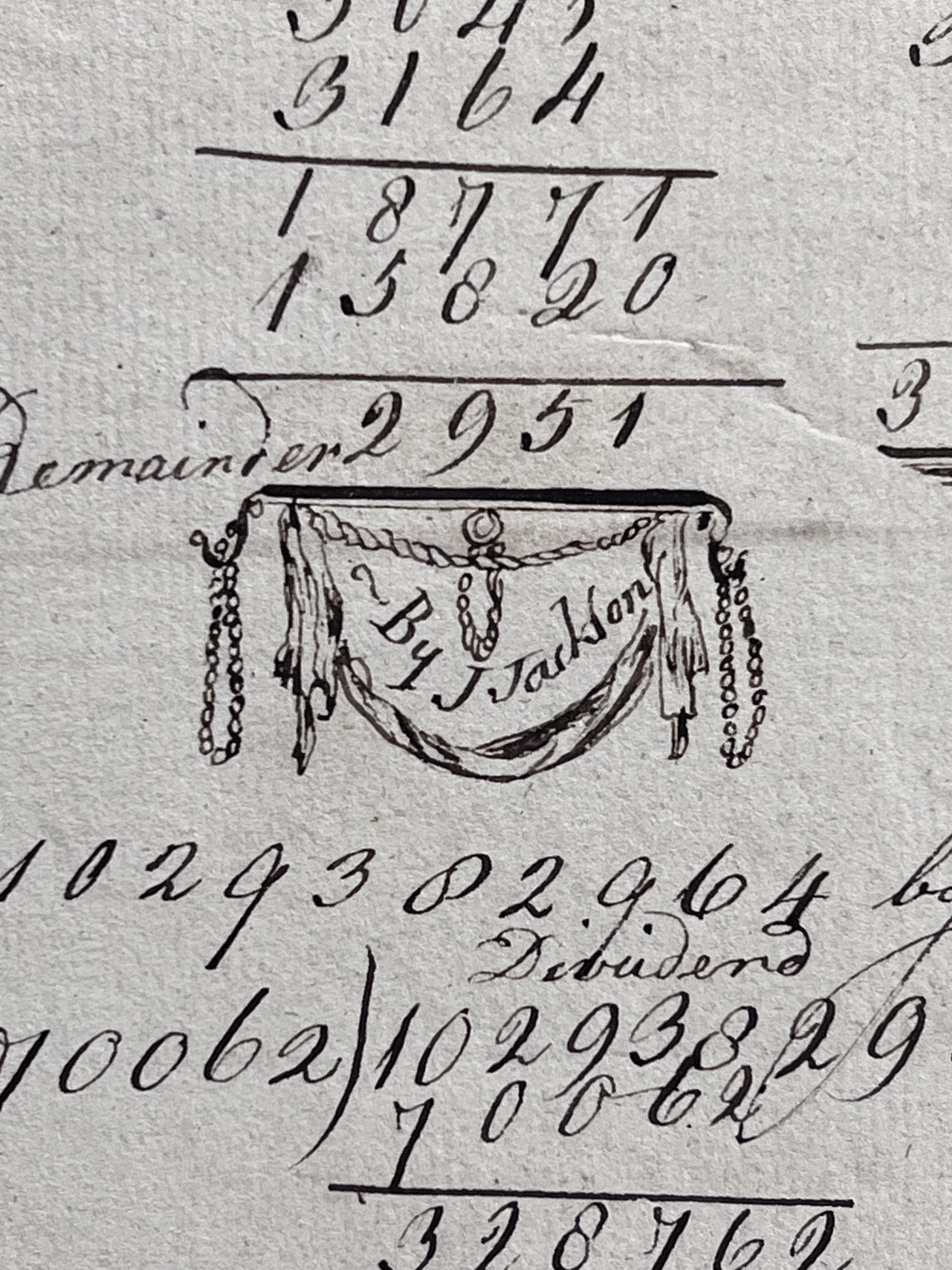
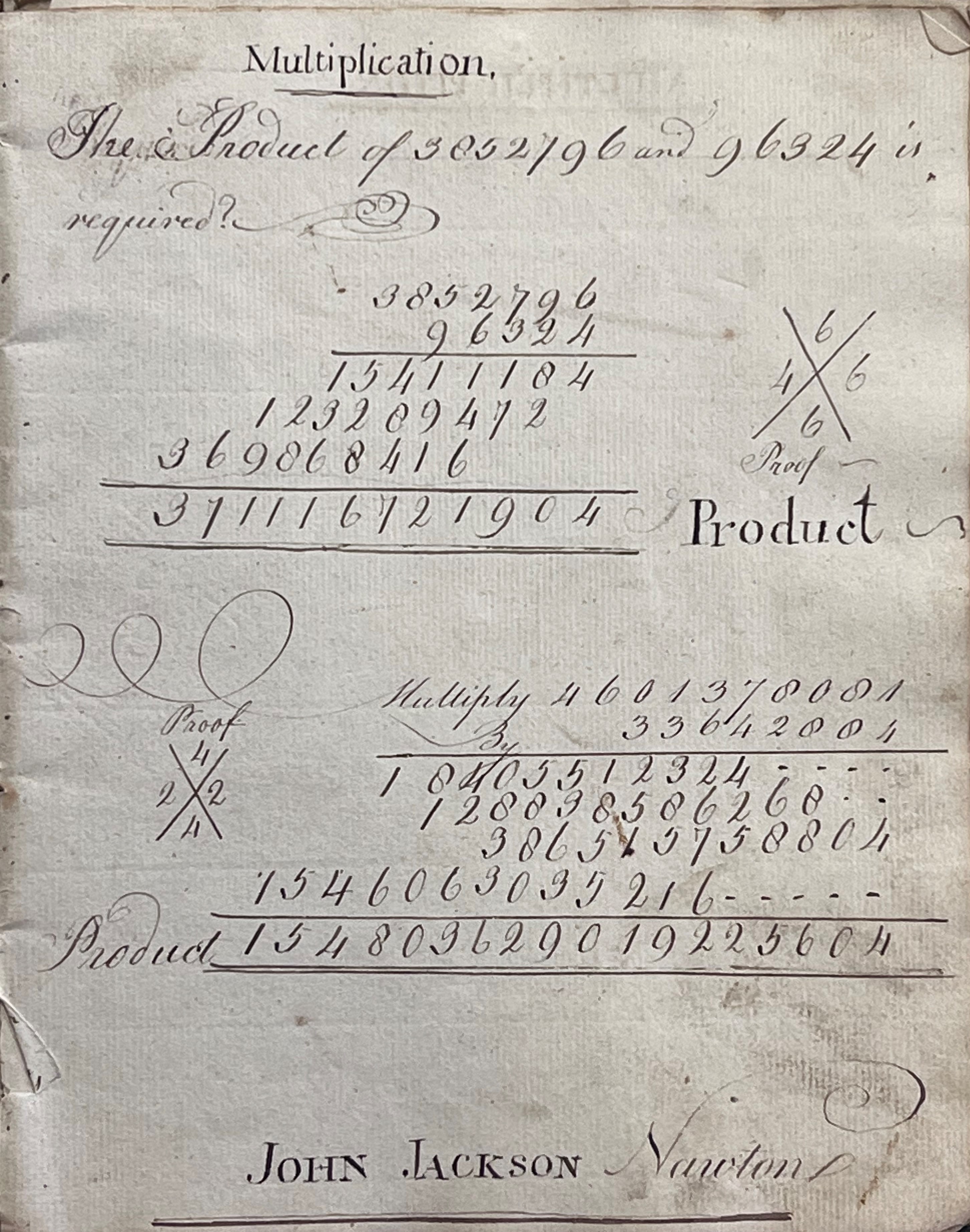
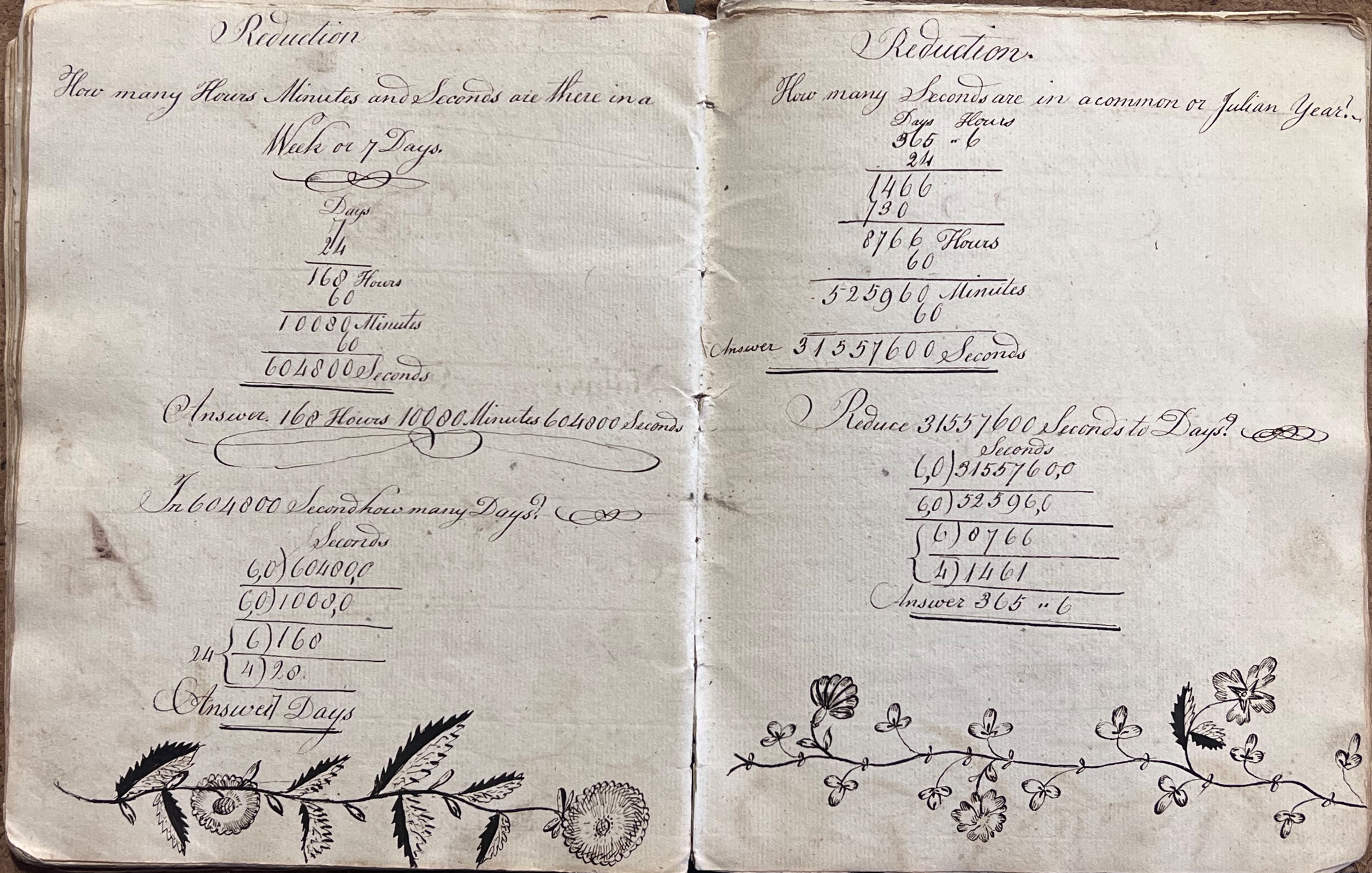

ZFO A selection of sketches and drawings by John Jackson from the pages of his schoolboy exercise books
In January 1802, John Jackson wrote to his brother from Mulgrave Castle:
“Lord Mulgrave desires I will stop with him so long as he remains in the country, has promised to procure me a place in the Royal Academy and says he will provide me with every thing necessary untill I can provide for myself.”


ZFO Letter from John Jackson to his brother, from Mulgrave Castle, 20 Jan 1802

Under the Earl’s patronage, Jackson did study at the Royal Academy, becoming a member in 1817. His pleasure at this event was tempered by the illness of his wife, Maria, and five-month-old son.
ZFO Invitation to dinner to Jackson from the Earl of Mulgrave
On 10 January 1817, he wrote to his brother Roger at Lastingham:
“In all probability I shall bury my dear boy and his mother the partner of my life for the last nine years in one grave…
I think it is more than probable that I may succeed in my election as a Royal Academecian on the 10th of next month a circumstance at another period which might have been gratifying but really as I am now situated nothing earthly seems to have any effect on my mind.”
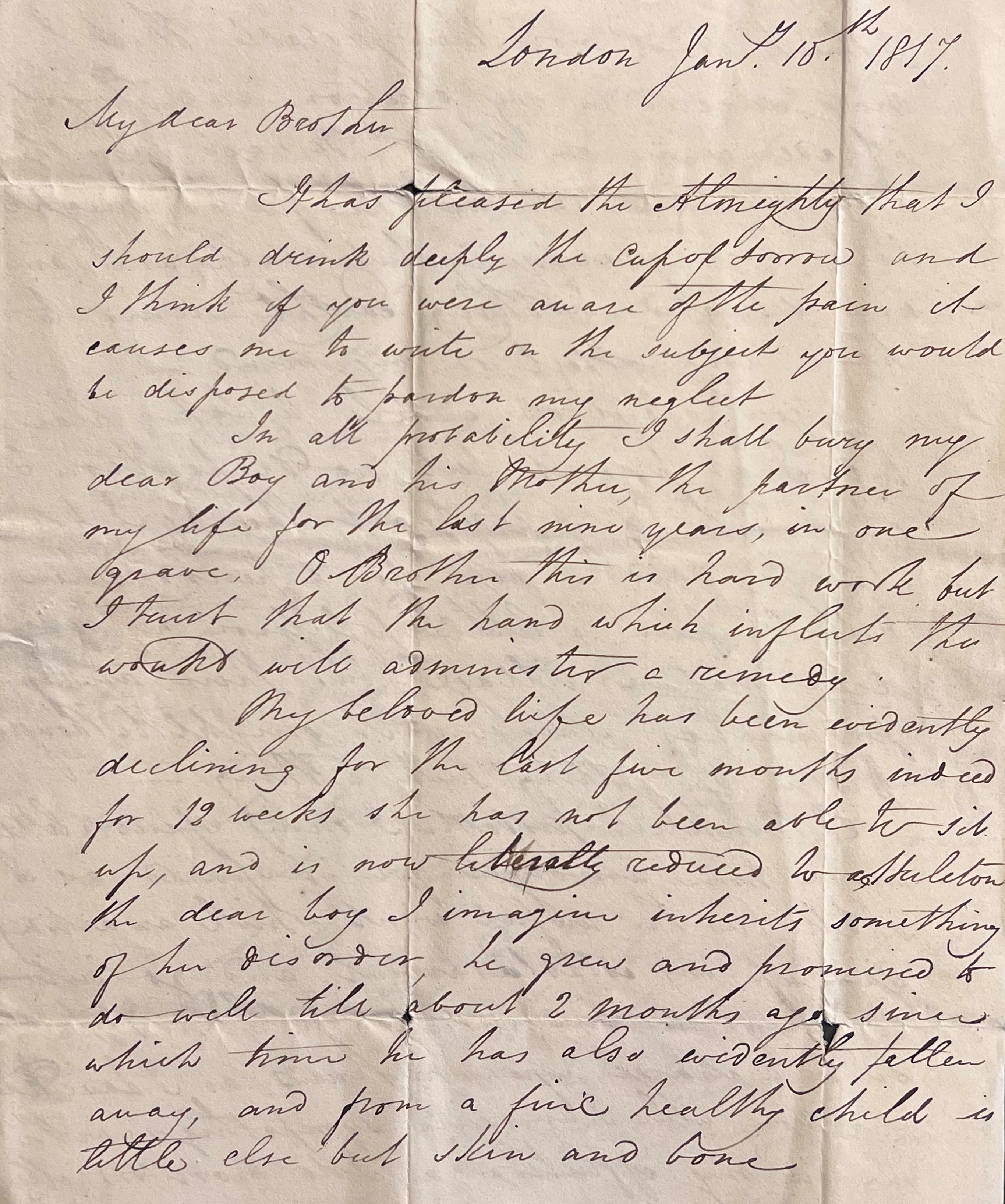

ZFO Letter from John Jackson to his brother, from Mulgrave Castle, 10 Jan 1817
On 30 January 1817, he wrote a further letter expressing the hope that his son might survive but there is no better news of Maria. There is then a gap in the correspondence until November 1817, and it would appear that at some time during this period Maria died. In 1818, Jackson married his second wife, Matilda Ward.
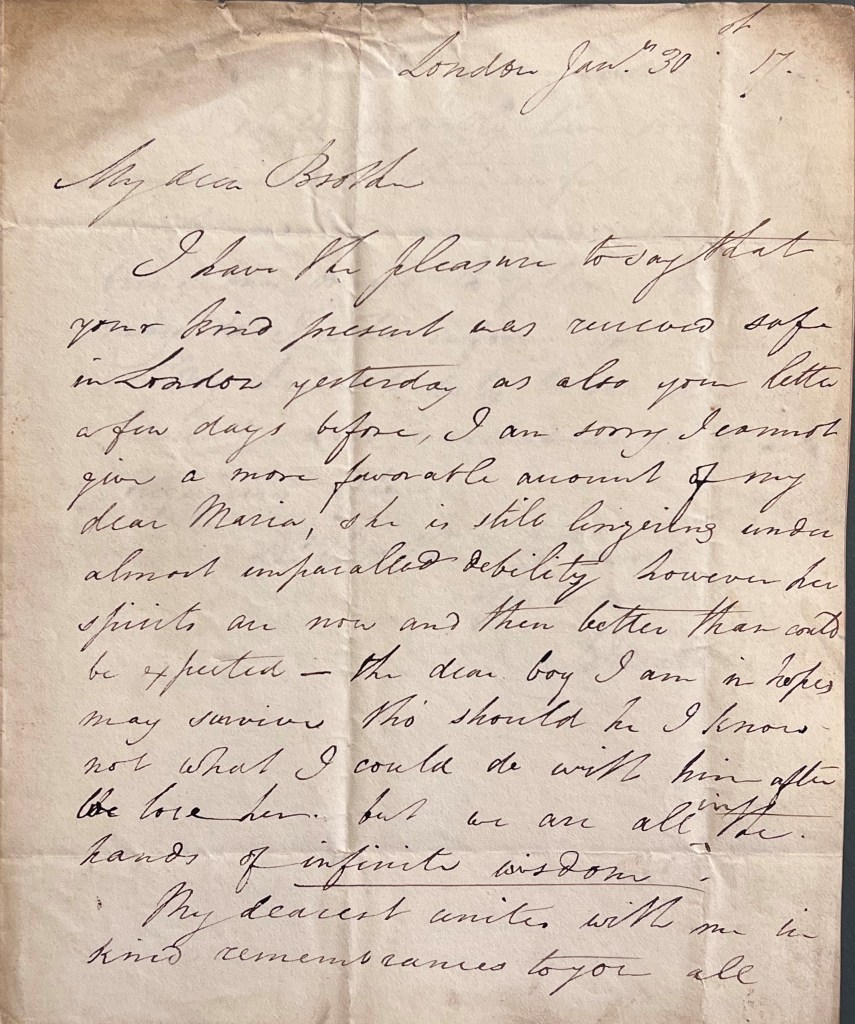

ZFO Letter from John Jackson to his brother, from London, 30 Jan 1817


ZFO Letter from John Jackson to Miss Ward in London, from Mulgrave Castle, 24 Nov 1817
The majority of the correspondence concerns family matters, but there are references to Jackson’s work. In 1816 he mentions a sketching tour in the Netherlands:
“…General Phipps having kindly offer’d me a jaunt to Holland with himself I could nor resist their [sic] being a probability of its ultimately proving very advantageous…“
and references are made to working visits to Castle Howard, Duncombe Park, Harewood, Sir John Ramsden’s near Ferrybridge and Hampshire.


ZFO Letter from John Jackson to his brother, from Ordnance Yacht, Harwich Harbour, mentioning a sketching tour in the Netherlands, 15 Aug 1816
In February 1818 he wrote to his brother:
“You will probably have been informed of my success again this year at the British Institution. I had but little time left for getting anything ready after my return to London as the pictures were received early in Feby, however I managed to depict a Moses in the Bulrushes which with the portrait of another Moses (an old Jew) I sent and the Marquis of Stafford took a fancy to little Moses and gave me 50 gs for it. Another gentleman liked old Moses and took him for 30 – I have heard something about being born with a silver spoon in one’s mouth.”
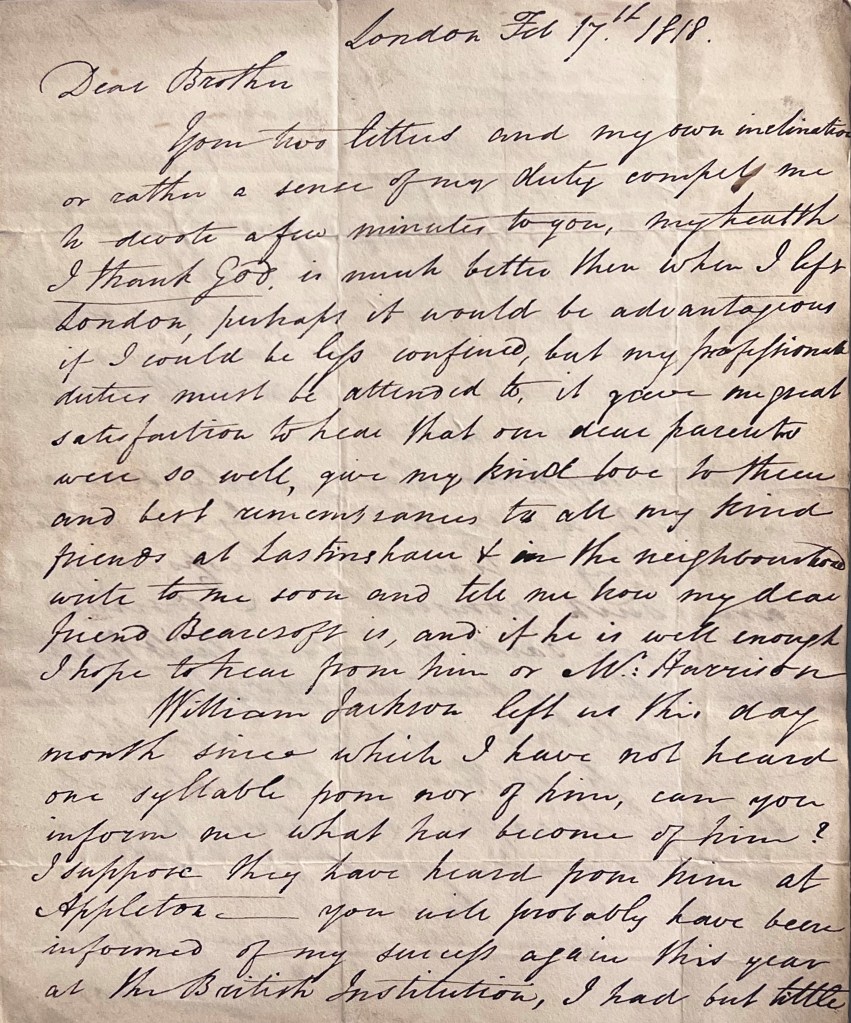

ZFO Letter from John Jackson to his brother, from London, referring to his success at the British Institution, 17 Feb 1818
In a letter of July 1819, Jackson wrote again to his brother:
“I have some idea of making a tour thro’ Italy this Autumn which I imagine would not only contribute to my health but be highly benificial in a professional point of view.”

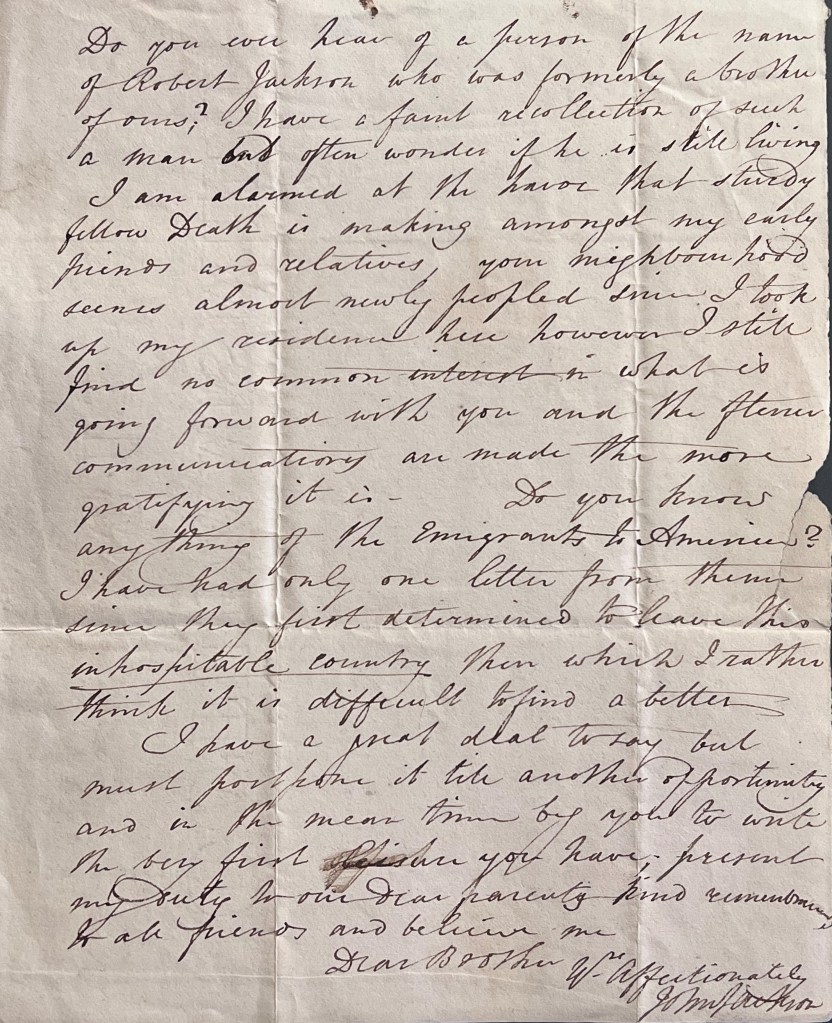
ZFO Letter from John Jackson to his brother, from London, mentioning a proposed tour through Italy, 15 July 1819
It was on this tour that Jackson was elected to the Academy of St Luke. Unfortunately, no letters from his journey survive with this collection. However, his career continued to prosper and in November 1820 he wrote:
“I am happy to say that circumstances have placed me where I could not have expected to be, and my prospects brighten daily. My income professionally averages about 12 hundred per annum [about £68,000 nowadays], a sum considerably beyond my expenditure but much of my property I cannot command at a moment therefore some arrangement is necessary.”
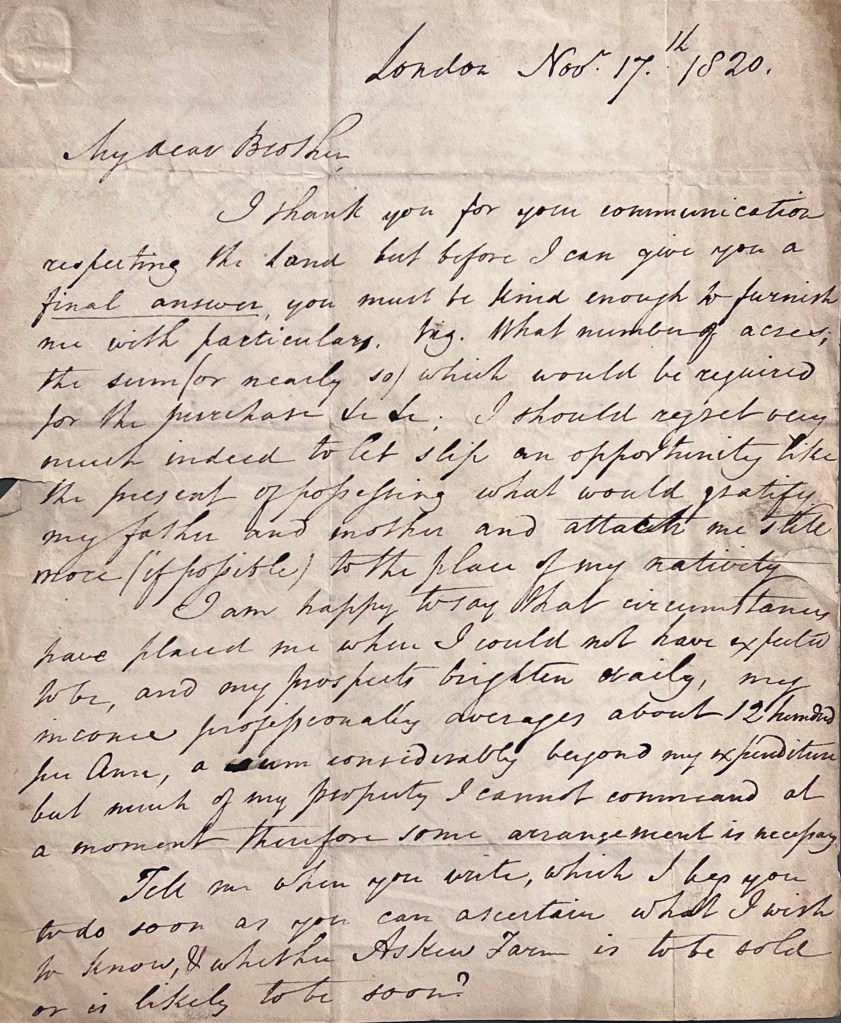

ZFO Letter from John Jackson to his brother, from London, referring to his £1,200 income, 17 Nov 1820
The following year, he refers to “a succession of professional calls that tie my hands up completely from morning till night“
In November 1826, Jackson prepared eight architectural drawings for the restoration of Lastingham Church, some of which are pictured below.

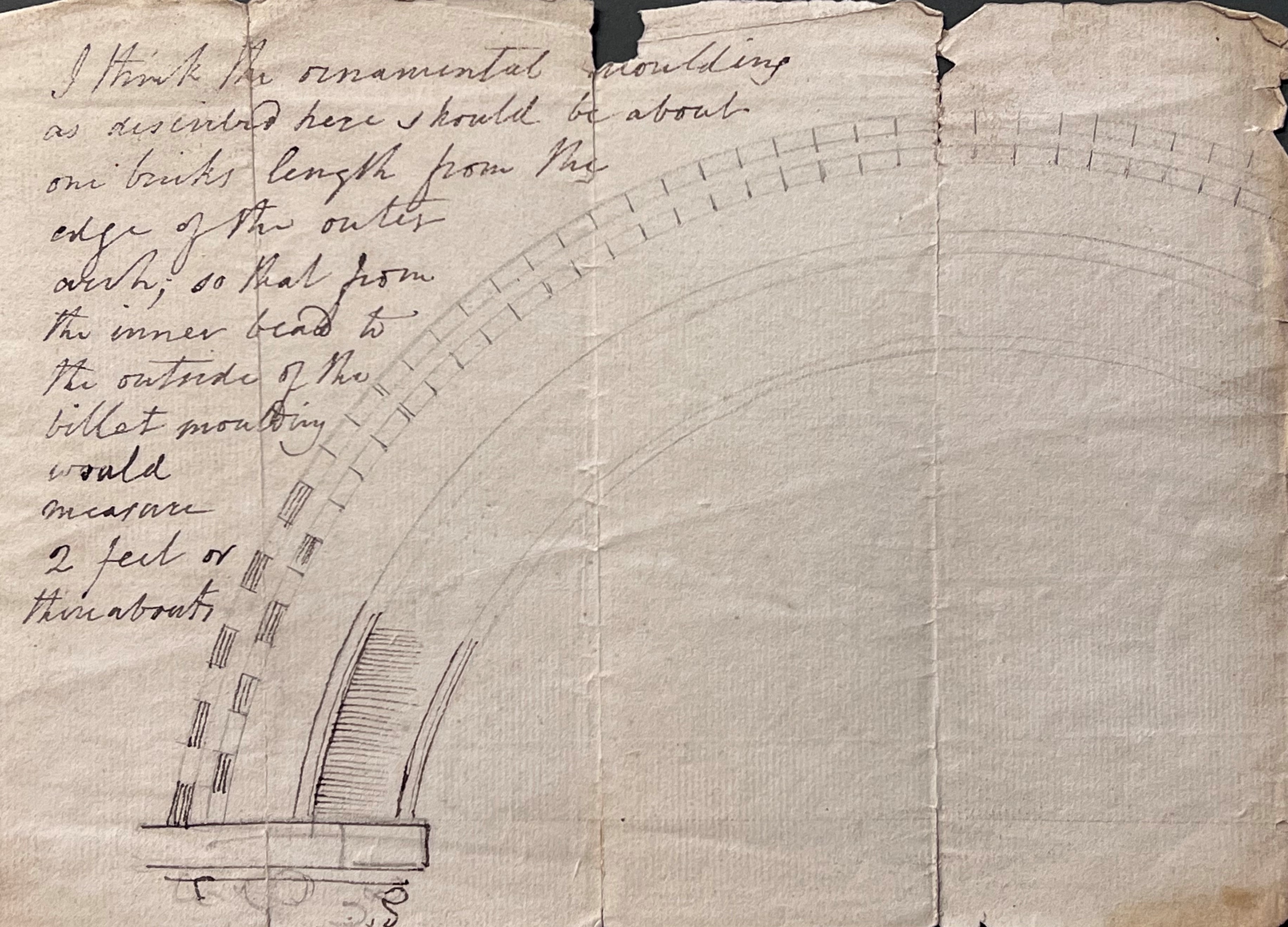
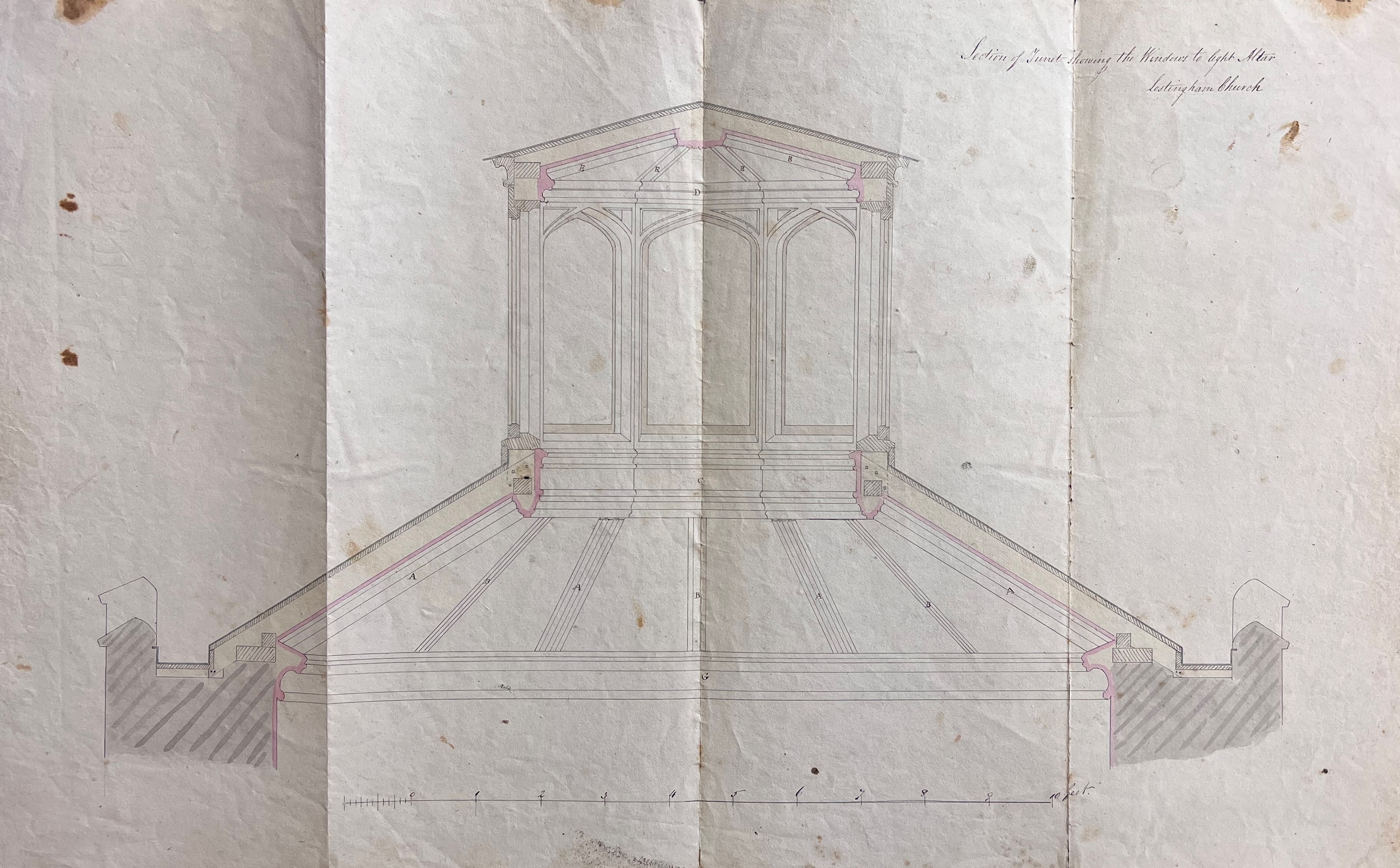

ZFO Architectural drawings by John Jackson for the restoration of Lastingham Church, November 1826 (left to right):
- Plan of ceiling over altar
- Detail fof ornamental moulding over arch
- Section of turret showing the windows to light altar
- Plan showing part of the roof naked & part covered for turret over altar
Jackson retained an affection for Lastingham and, in 1828, his painting “Christ in the Garden” was placed as an altar piece in the church. In 1880, during the restoration of the church, the painting was cut to fit a smaller frame and moved to the south aisle, and in 1933 moved again to form the altar piece for a side altar.
Jackson died of consumption in London in 1831 and is buried in the churchyard of St John’s Wood. A tablet to his memory was erected in Lastingham church.

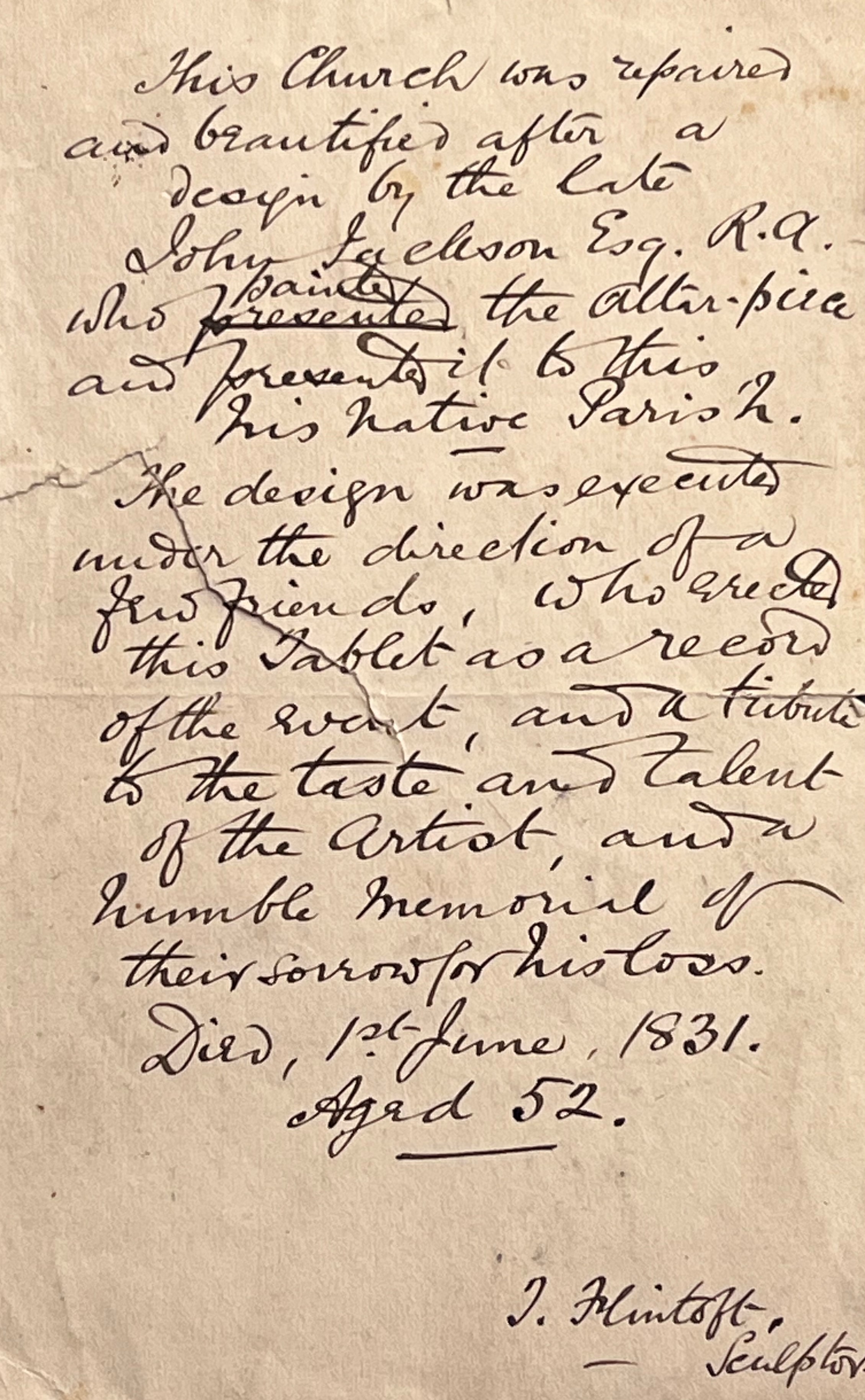

ZFO Notice to erect a memorial to John Jackson in Lastingham Church by subscription, 6 July 1831 and notes concerning the proposed text for the memorial
 North Yorkshire Archives Blog