
Treasures from the Parish Chest: exploring North Yorkshire’s church history from archives to architecture
Parish Registers
In the 16th Century, during the Protestant Reformation, Henry VIII broke with the authority of the Pope and the Catholic Church. Via the Act of Supremacy, 1534, the King became the Head of the Church of England. Parish registers were first compiled in England in 1538, when King Henry VIII’s chief minister Thomas Cromwell issued a mandate that ministers of parish churches were to record all baptisms, marriages and burials taking place at their church. These records were to be stored in secure parish chests and priests could be fined if they refused to comply with the new rules. Often written on loose sheets, very few of these earliest records survive.
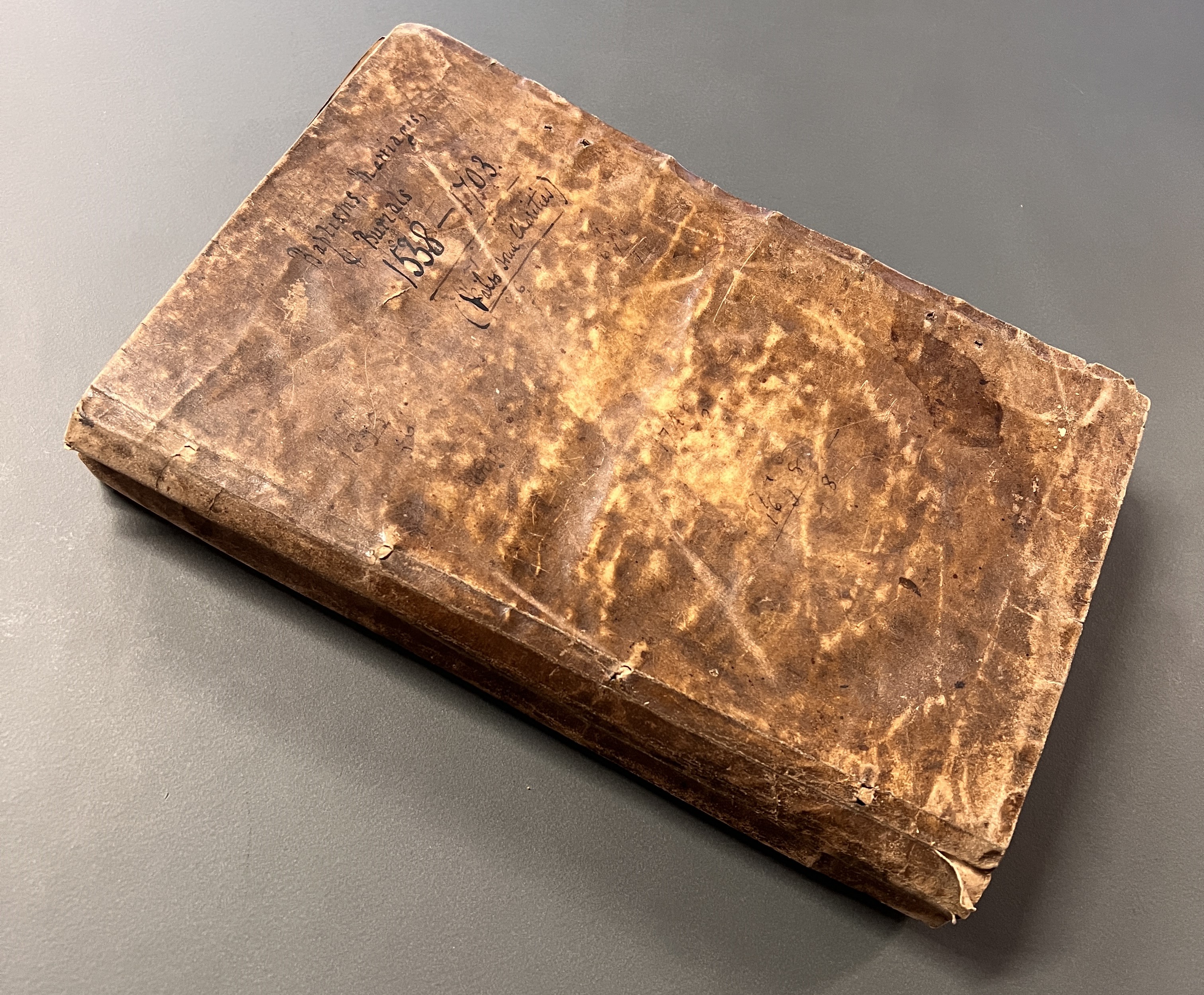
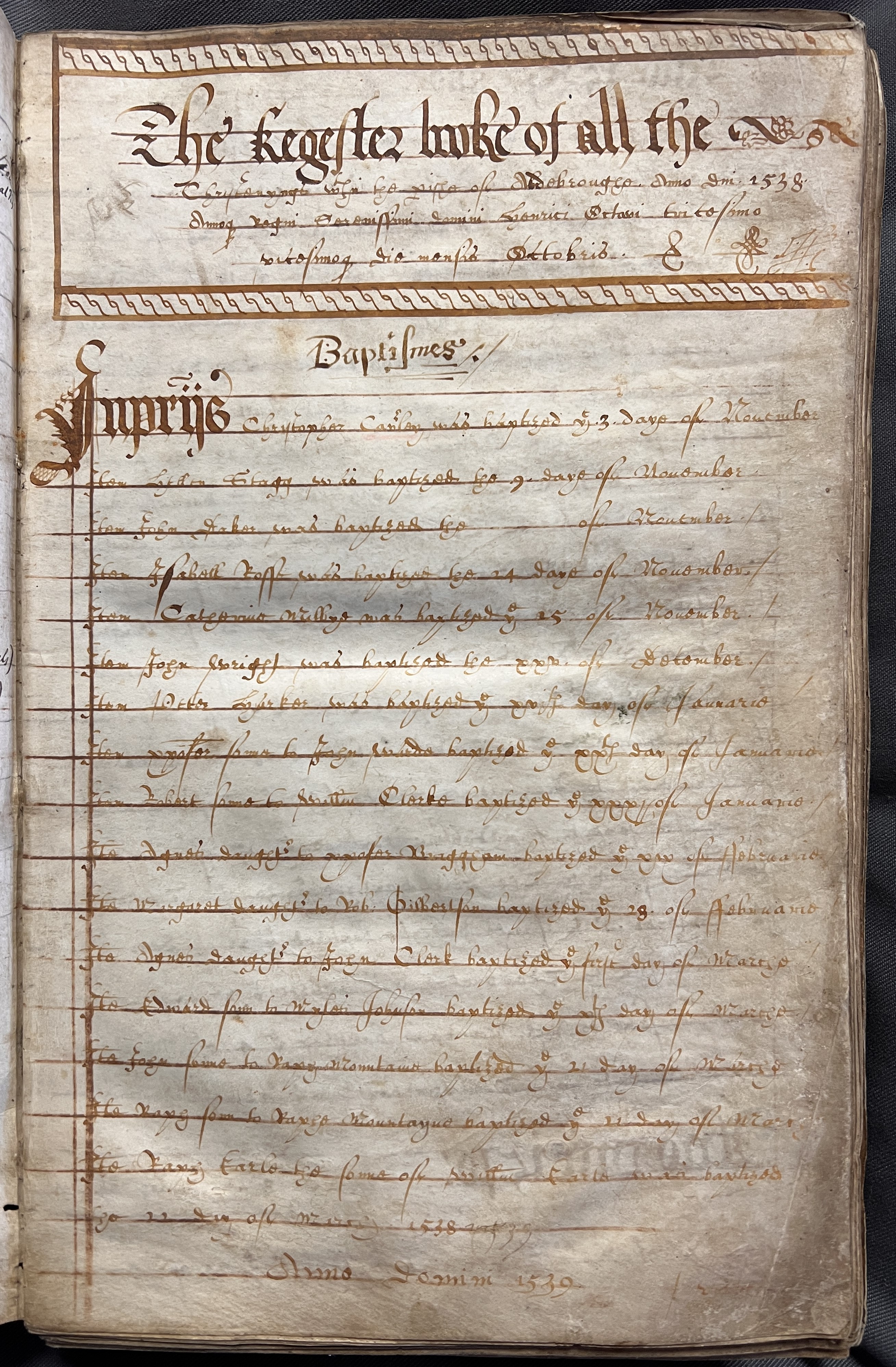

One of the earliest parish registers held in the Record Office collections, from Aldborough, St Andrew, containing records of baptisms, marriages and burials from 1538-1703, showing pages of baptisms in 1538 and from 1539-1541 [PR/ALB 1/1]
In 1598, Queen Elizabeth I ordered that the loose-leaf registers be transferred to a parchment book, especially those written since the beginning of her reign in 1558. Accordingly, many parish registers start from this date.
These registers are ‘composite’ and have baptisms, marriages and burials in the same volume, generally written in a chronological order, or in different sections of the book.
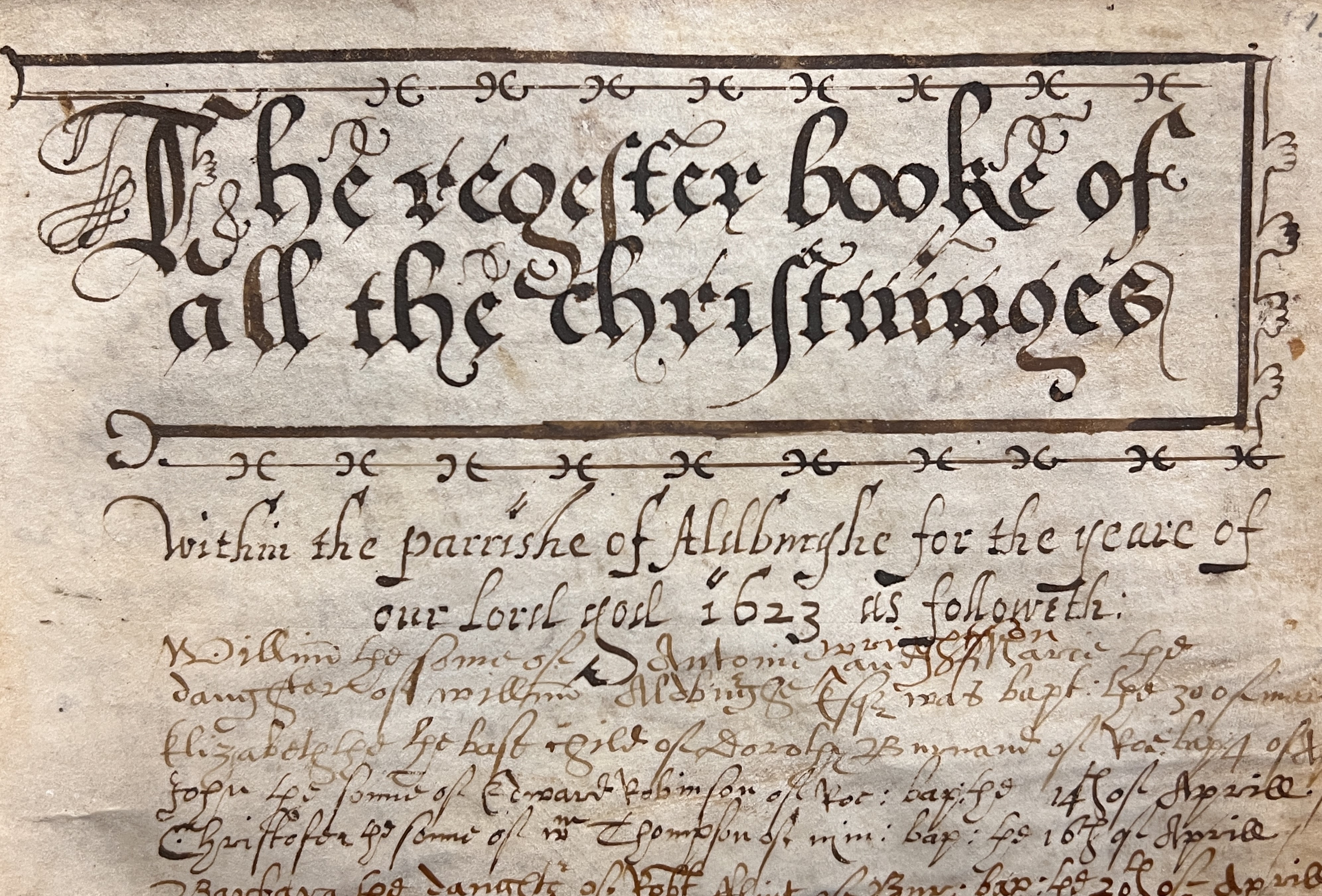

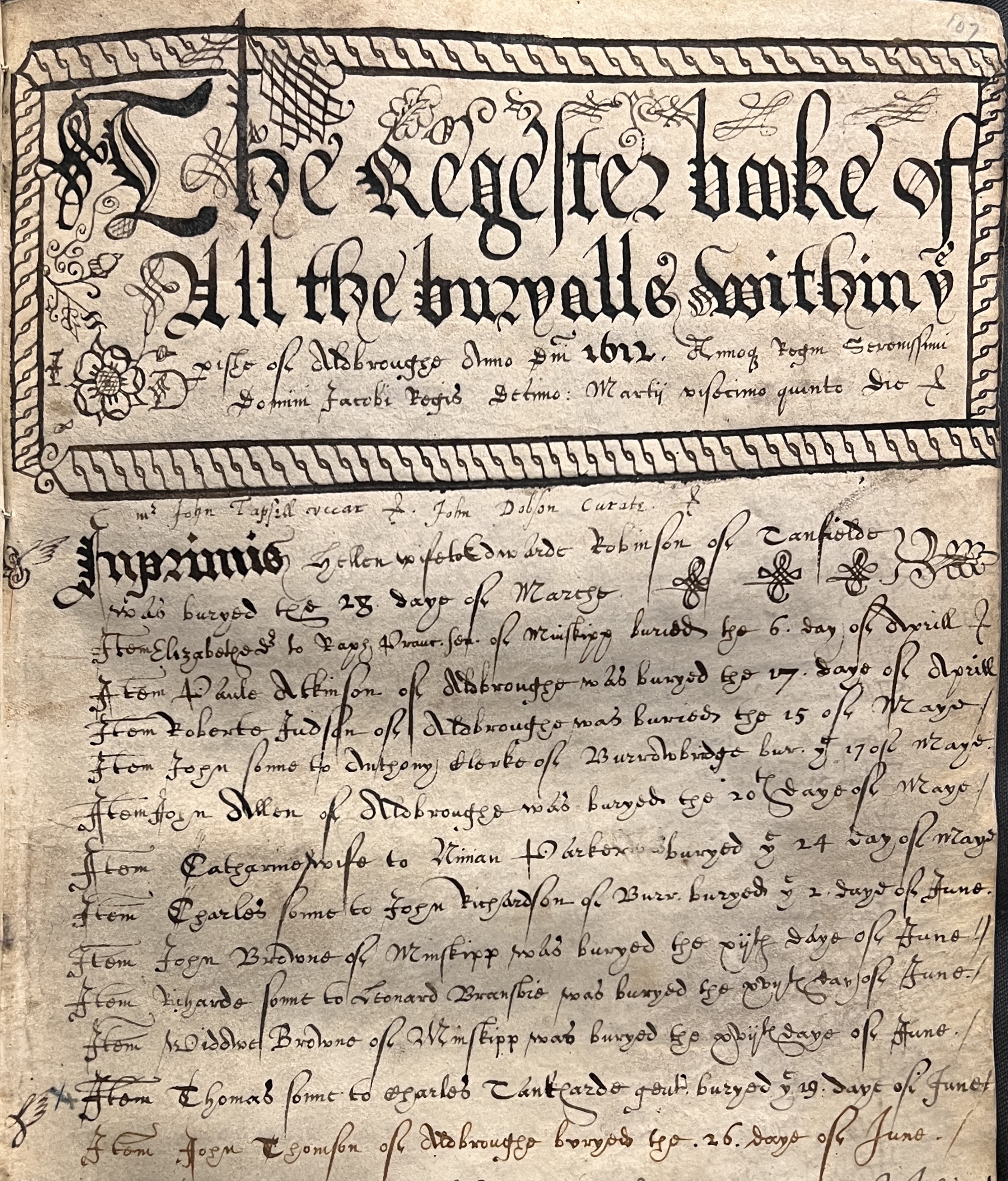
Each of the beautifully defined headings for the different sections of the parish register for recording ‘christninges’, ‘maryages’ and ‘buryalls’ from the years 1622/1623 in the parish of Aldborough, St Andrew [PR/ALB 1/1]
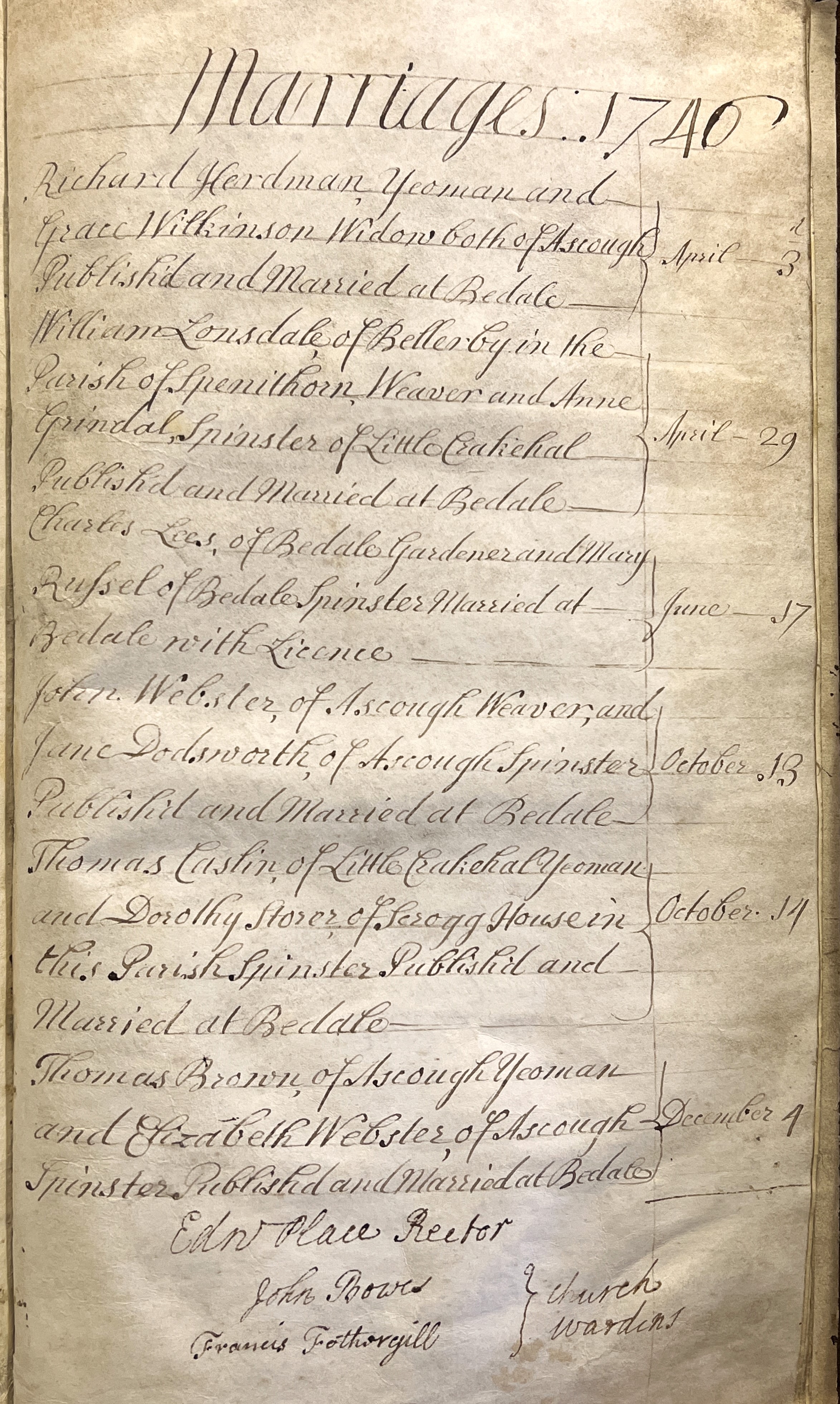
Prior to 1754, an event would be recorded and/or presented in different ways depending on the officiating minister. These record entries are usually quite brief and contain limited information. The register may be written in Latin; the ink may be very pale; handwriting and its style may be very tightly spaced and often difficult to read. Pages may be damaged, particularly around the edges. Spelling will vary tremendously, and names are often written phonetically; first names are sometimes abbreviated. Although a child was usually baptised a few days, weeks or months after birth, it wasn’t unusual for children to be baptised years after their birth, or even as an adult, and for siblings to be baptised together.
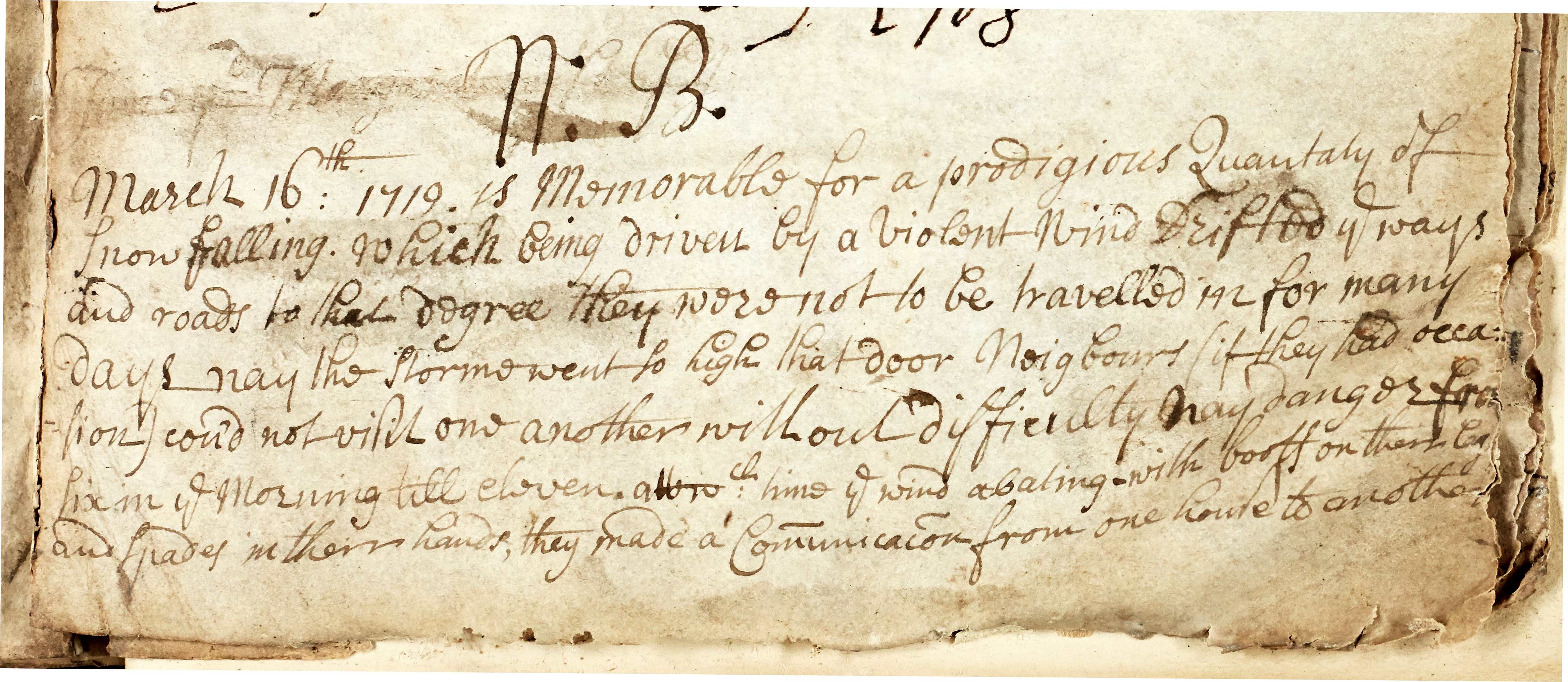
Parish registers might also record particular events that took place within the parish, such as periods of extreme weather and their impact, visiting preachers, or the death of a monarch.
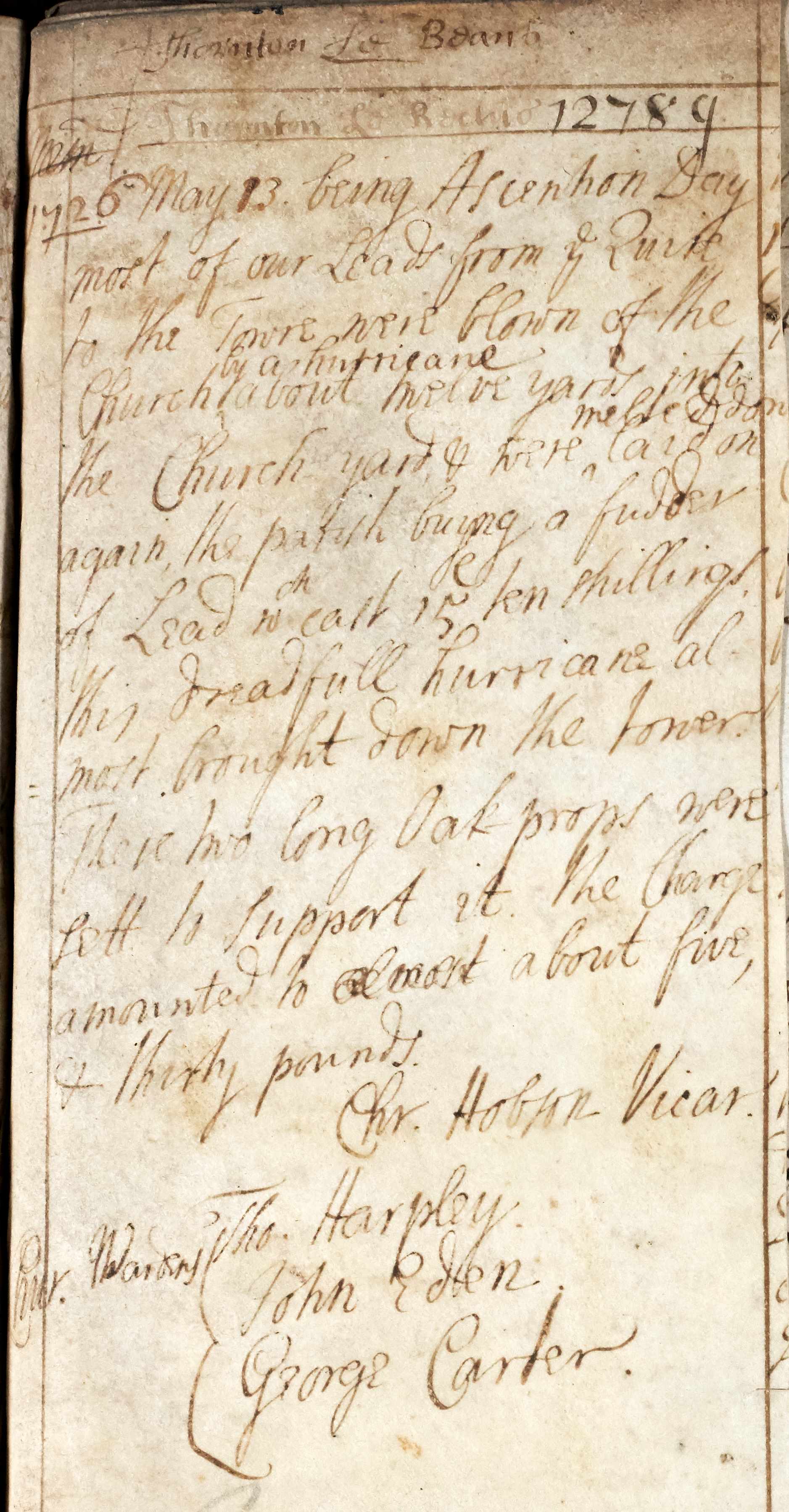
- L: North Otterington, St Michael & All Angels baptism, marriage and burial register, 1590-1750: “13 May 1726 being Ascension Day most of our leads from the quire to the tower were blown off the church by a hurricane…” [PR/OTN 1/1]
- R: Thornton in Lonsdale, St Oswald baptism, marriage and burial register, 1576-1724: “16 March 1719 is memorable for a prodigious quantity of snow falling…” [PR/TNL 1/1]
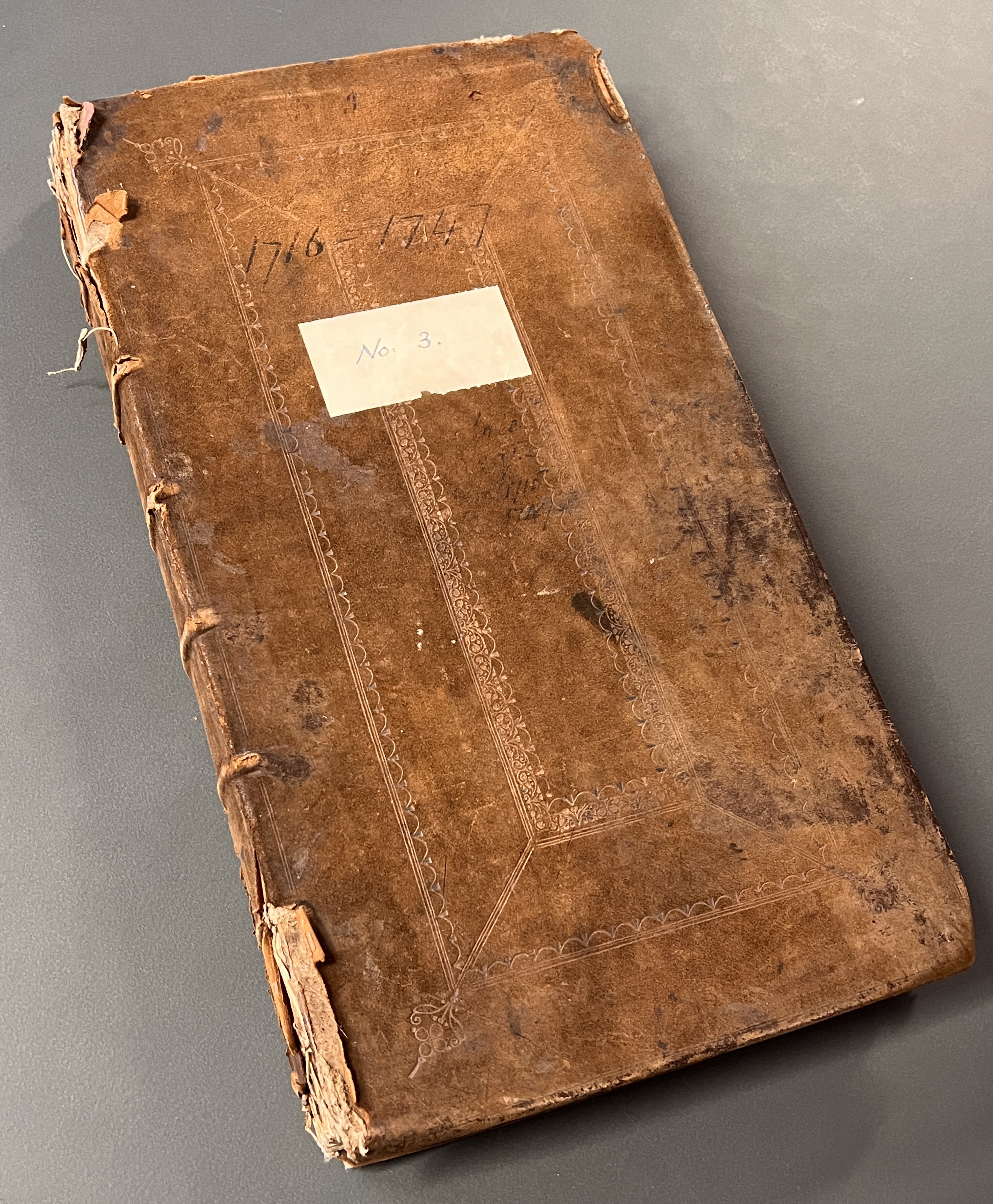
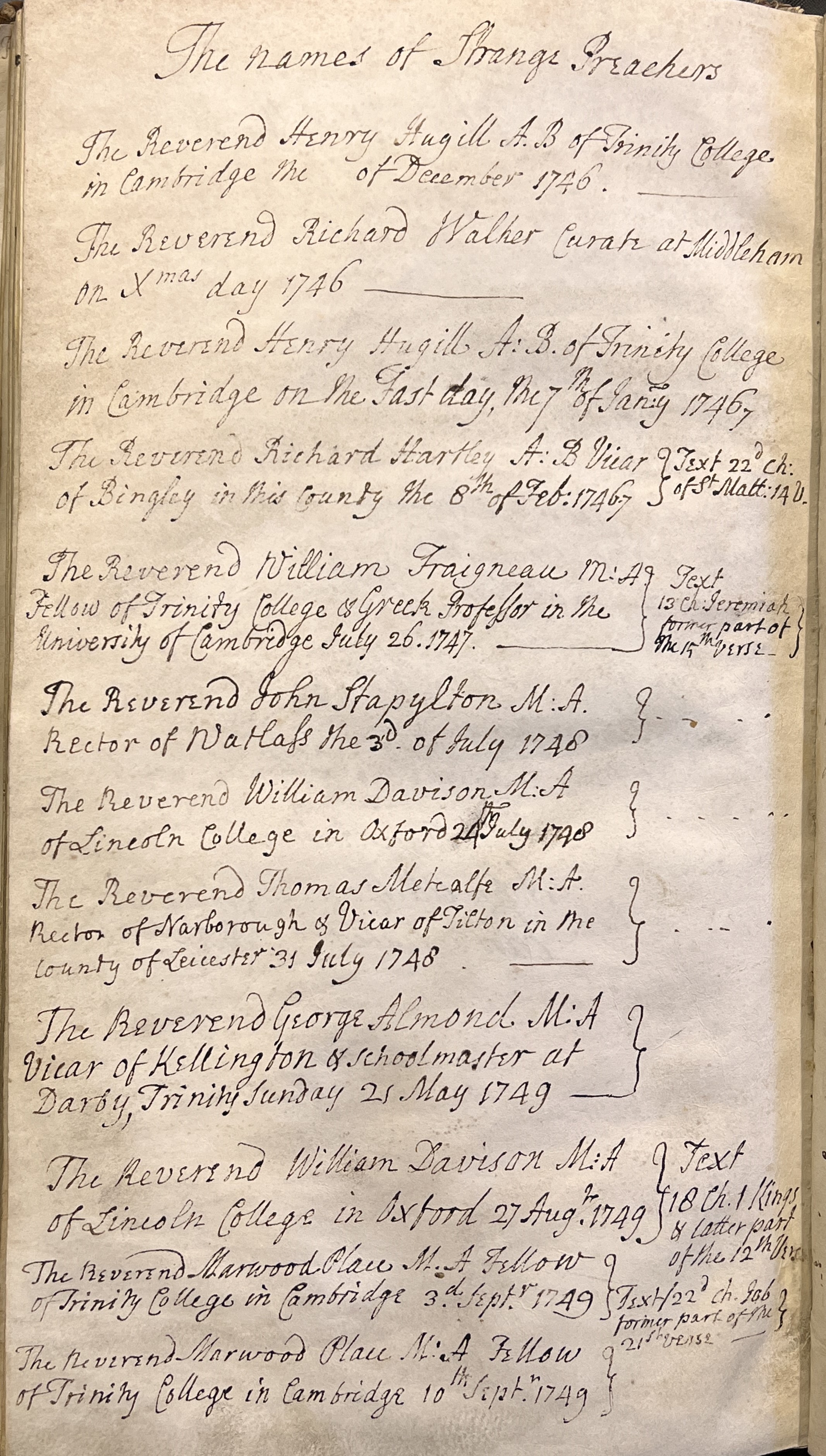
Other parish-related information may be found written in the parish register, such as this list of Strange Preachers 1746-1749 on the opposite page to records of marriages in 1746 in the Bedale, St Gregory register of baptisms, marriages and burials, 1716-1747 [PR/BED 1/3]
Canon 52 of the law of the Church of England, 1604 stipulated that the names of all strange preachers (preachers from outside the parish) were to be entered in a book kept for that purpose. This was to include their name, the day they preached and the name of the Bishop of whom he had license to preach. In the example from Bedale above, their name and the date are recorded, as well as their title, where they came from and, in most cases, the text they used to preach.
1653 Marriage, Baptism and Burial Act
In 1653, “An Act touching Marriages and the Registring thereof; and also touching Births and Burials” was passed by Parliament during the Interregnum following the English Civil Wars. This lesser known and short-lived piece of legislation briefly established a system of civil marriage where ceremonies were performed by Justices of the Peace. The physical parish register and the responsibility for the registration of baptisms, marriages, and burials were removed from clerical control and placed in the hands of a secularly elected Parish Registrar. This meant that, for a time, marriage entries were much more detailed as more information was required, such as the parents names, and many parishes started new registers in this year. Any marriages that were not performed and recorded in this way were technically illegal. The Act lapsed in 1657.
An article on The Impact of the Commonwealth Act on Yorkshire Parish Registers by David Woodward (Local Population Studies Number 14, Spring 1975) can be read online via this link (opens as pdf).
A note on the calendar and dates
In 1752, two changes were made to the English Calendar by the Calendar Act of 1750:
“An act for regulating the commencement of the year; and for correcting the calendar now in use“, also known as Chesterfield’s Act
- From the Julian (Old Style) to the Gregorian Calendar (New Style).
- The commencement of the year was changed from the old Julian reckoning of 25th March (Lady Day) to 1st January (January, February and March became the initial months of the year, not the final months of the previous year).
Under the Julian Calendar, “ber” was sometimes added to a number to indicate a month of the year, thus: 7ber=September; 8ber=October; 9ber=November; 10ber=December
The new system can be found in use prior to its formal introduction; care should be taken when transcribing documents of the pre-1752 period between 1 January and 24 March. The Old Style of 1 February 1626 would be written as 1 February 1626/7 in the New Style.
Further information
Online searchable databases holding most North Yorkshire County Record Office parish register data:
NB: These websites are subscription services; free access can be provided, by appointment, in the Record Office searchroom, and also at most North Yorkshire Libraries.
Ancestry UK: Yorkshire record collections webpage
Find My Past: Yorkshire parish registers list webpage
Find My Past: The Yorkshire Collection webpage
Neighbouring archive collections holding parish registers from North Yorkshire and the former North Riding of Yorkshire area:
Parish registers deposited at the Borthwick Institute for Archives, York (opens as pdf)
Durham County Record Office ‘Parish Registers’ webpage
East Riding Archives ‘What’s in the archives?’ webpage (click on ‘people’ and then ‘parish registers’)
Church of England Parish Registers at Teesside Archives and Middlesbrough Reference Library (opens as pdf)
West Yorkshire Archive Service Collections Guide 1: Parish Registers (opens as pdf)
 North Yorkshire Archives Blog