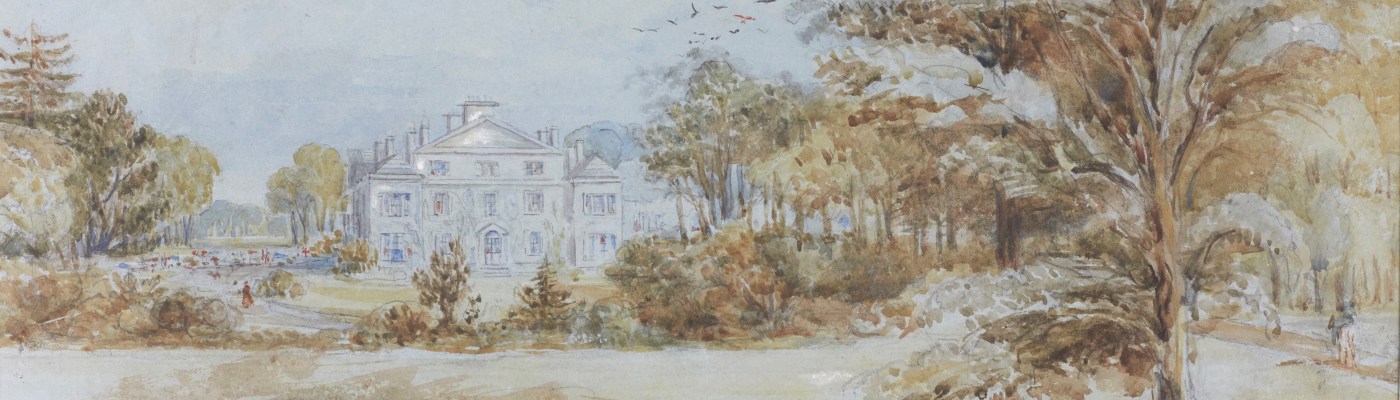
by Gail Falkingham, Archives Assistant
This post features a selection of artwork from the 18th-and 19th-century sketchbooks of two talented, amateur artists that were on display at our May 2025 ‘Treasures of the Archives’ event. Thomas Orde, later Thomas Orde-Powlett, 1st Baron Bolton (1746-1807) drew portraits and cartoons of friends, family and society ladies. Henrietta Matilda Crompton (1793-1881) sketched and painted views of the landscape on her visits to the country estates of family and friends, and on excursions around Yorkshire and further afield.
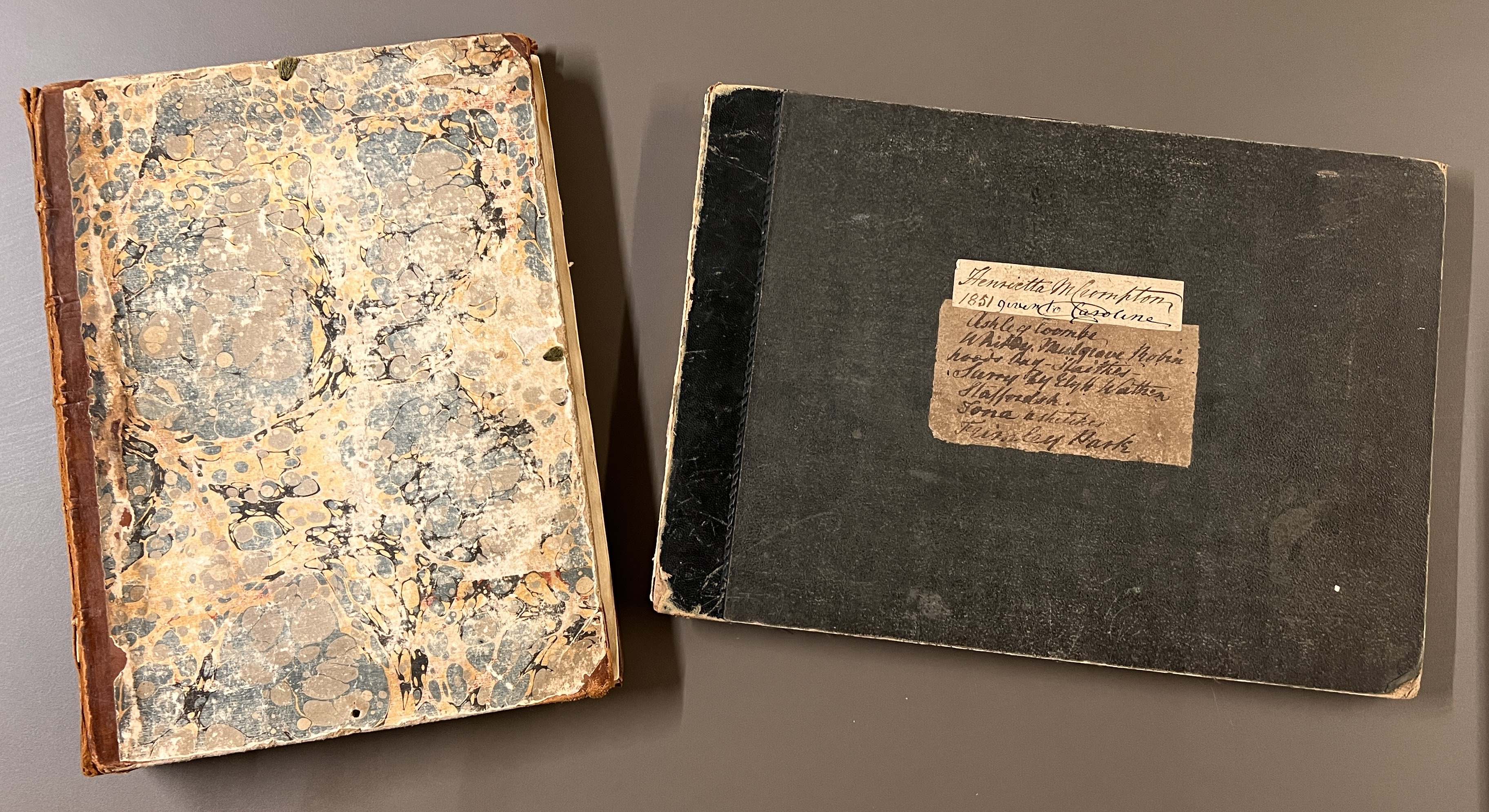
Two of the sketchbooks: Left: Thomas Orde’s book of finished drawings, late-18th-century [ZBO IX 1/3/2] and Right: Henrietta Matilda Crompton’s 1851 sketchbook [ZCM]
Thomas Orde, later Thomas Orde-Powlett, 1st Baron Bolton (1746-1807)
A talented amateur artist, Thomas Orde’s sketchbooks are held as part of the Bolton Hall archive [ZBO]. They are titled ‘Etchings’ [ZBO IX 1/3/1], ‘Outline Drawings’ [ZBO IX 1/3/3] and ‘Finished Drawings’ [ZBO IX 1/3/2].
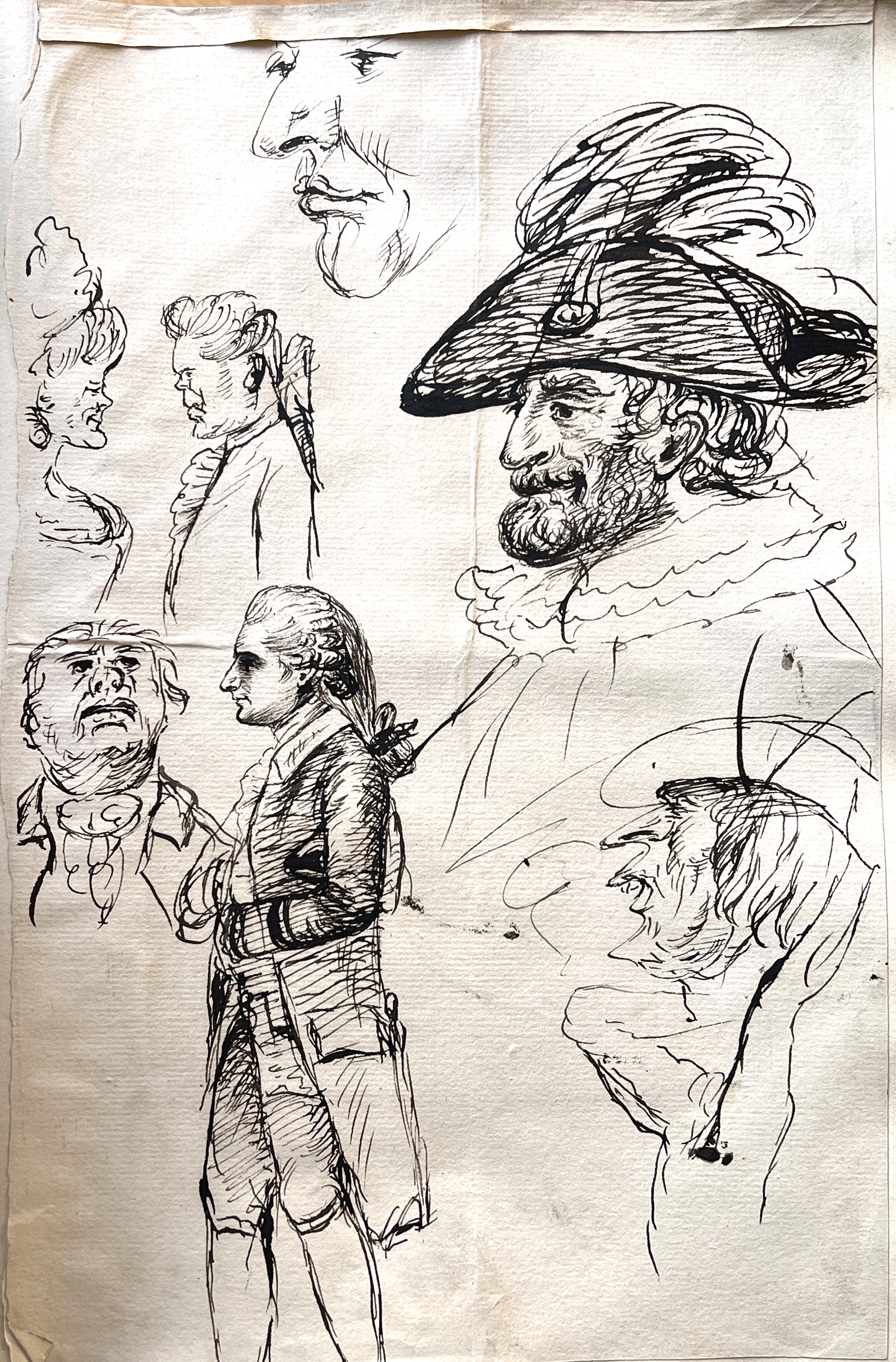
Sketches by Thomas Orde from his book of outline drawings [ZBO IX 1/3/3]
Thomes Orde’s late-18th-century artwork features portraits of his family, as well as people he encountered at social events and during his travels. After studying at Eton and Cambridge, he completed his education by making a Grand Tour of Europe aged 26, from 1772-74. Whilst in Rome, he had his own portrait painted by renowned artist Pompeo Batoni. You can read more about Thomas Orde’s travels in Italy via this related blog page: Thomas Orde in Italy, 1772-1773 and 1788-1789.
Upon his return to England, Thomas had a successful career as a barrister, civil servant, politician and landowner. In 1778, he married Jean Mary Browne-Powlett, through whom he inherited Bolton Hall and Bolton Castle in Wensleydale. He later took the additional surname of Powlett and was created 1st Baron Bolton in 1797.
In his book of finished drawings, there are several portraits of society ladies who, we presume, he sketched at social occasions.
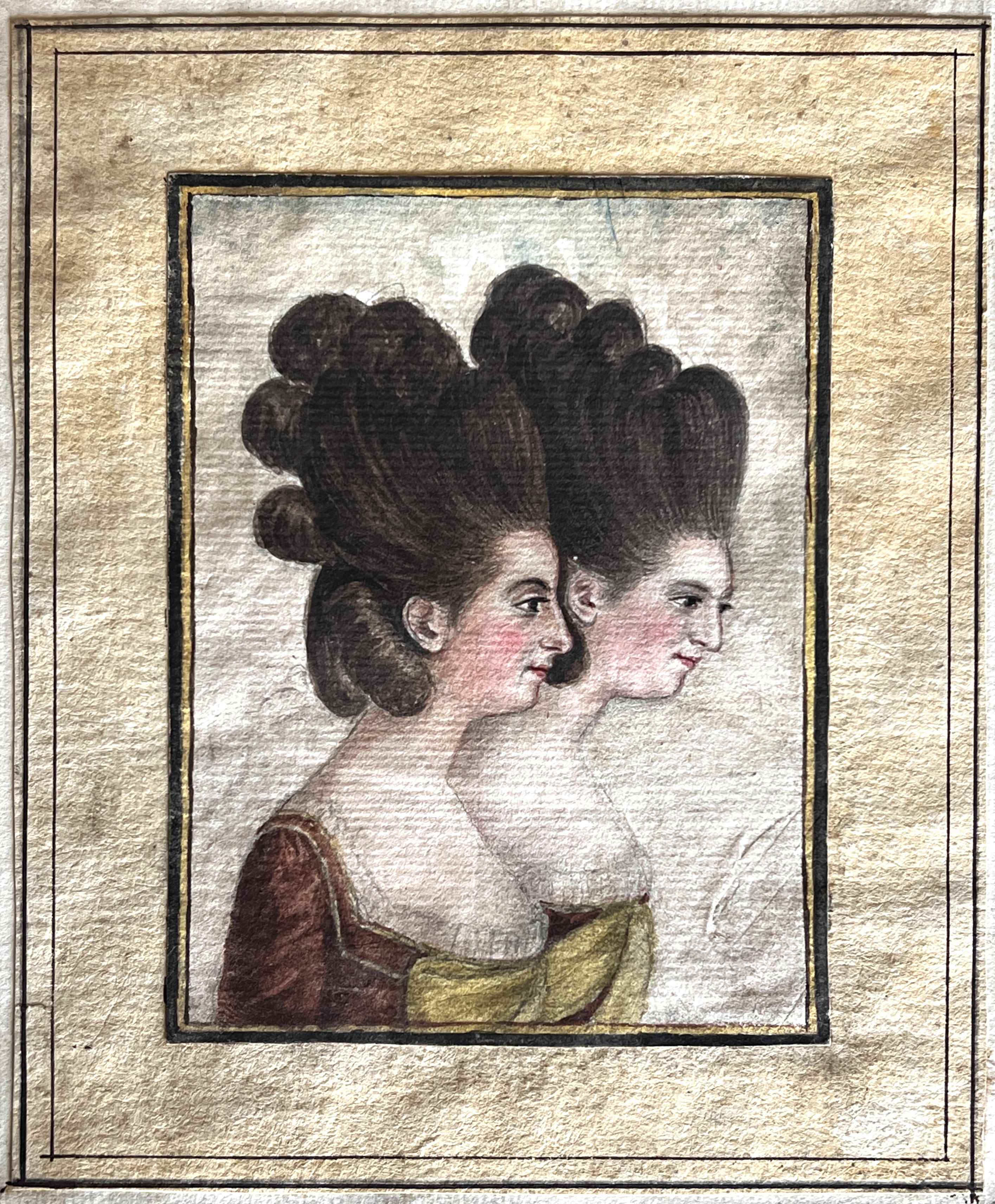
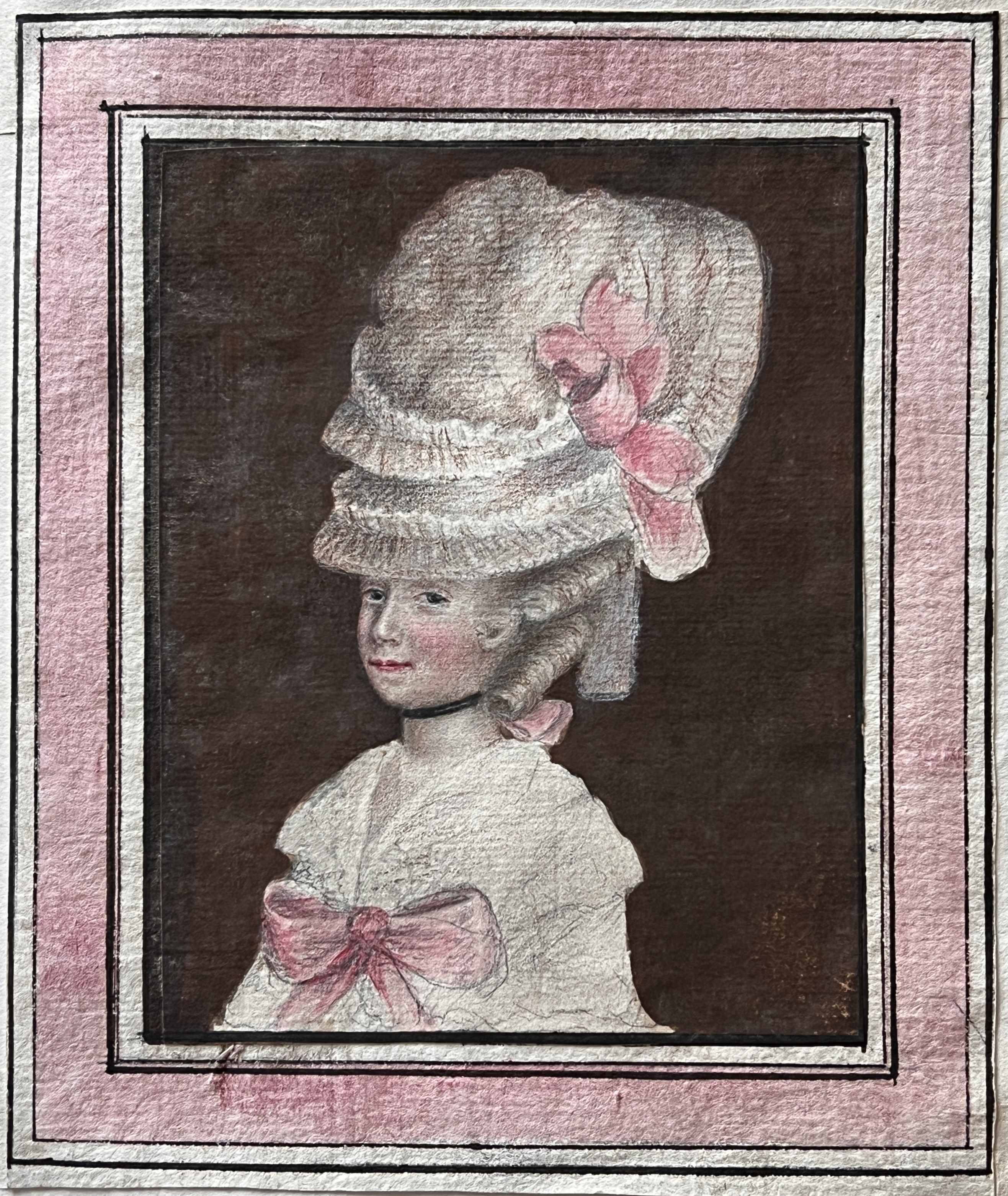
Portraits of unknown ladies in the book of finished drawings [ZBO IX 1/3/2]
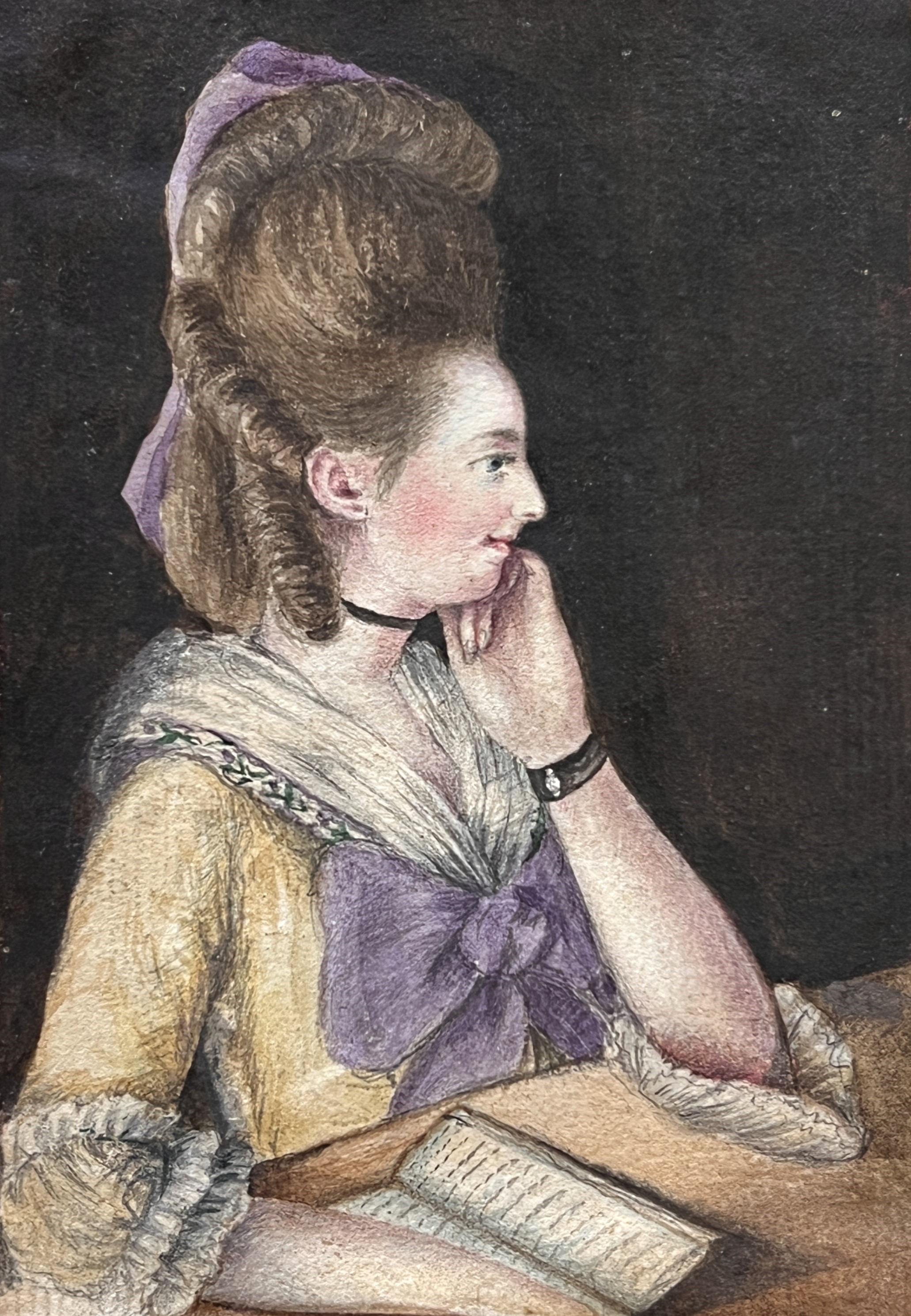
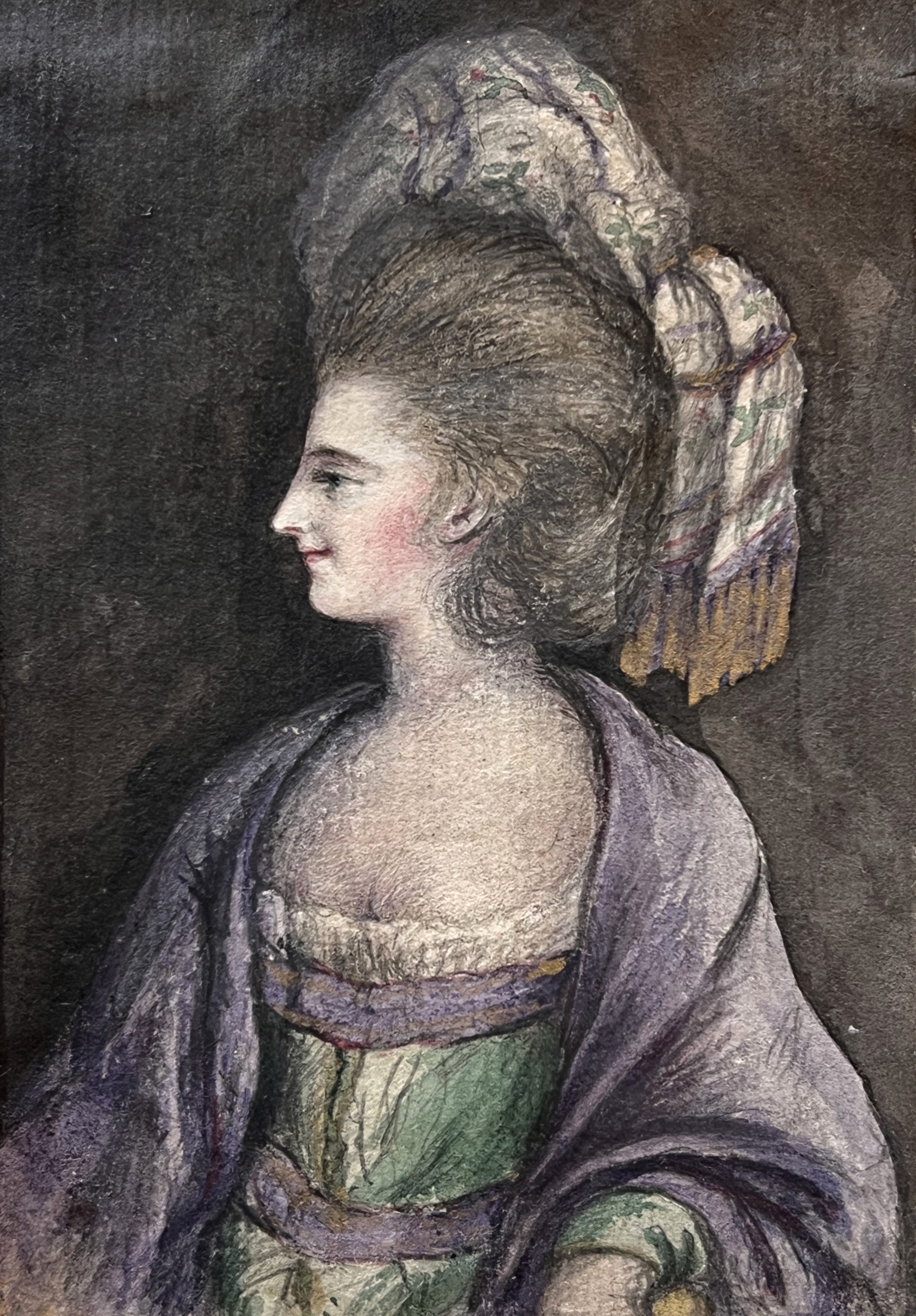
Left: Georgiana, Duchess of Devonshire and Right: her sister Henrietta, Duchess of Bessborough [ZBO IX 1/3/2]
Thomas Orde also drew members of his family, as well as more comical sketches, often inserting Latin phrases and puns that reveal his sense of humour.
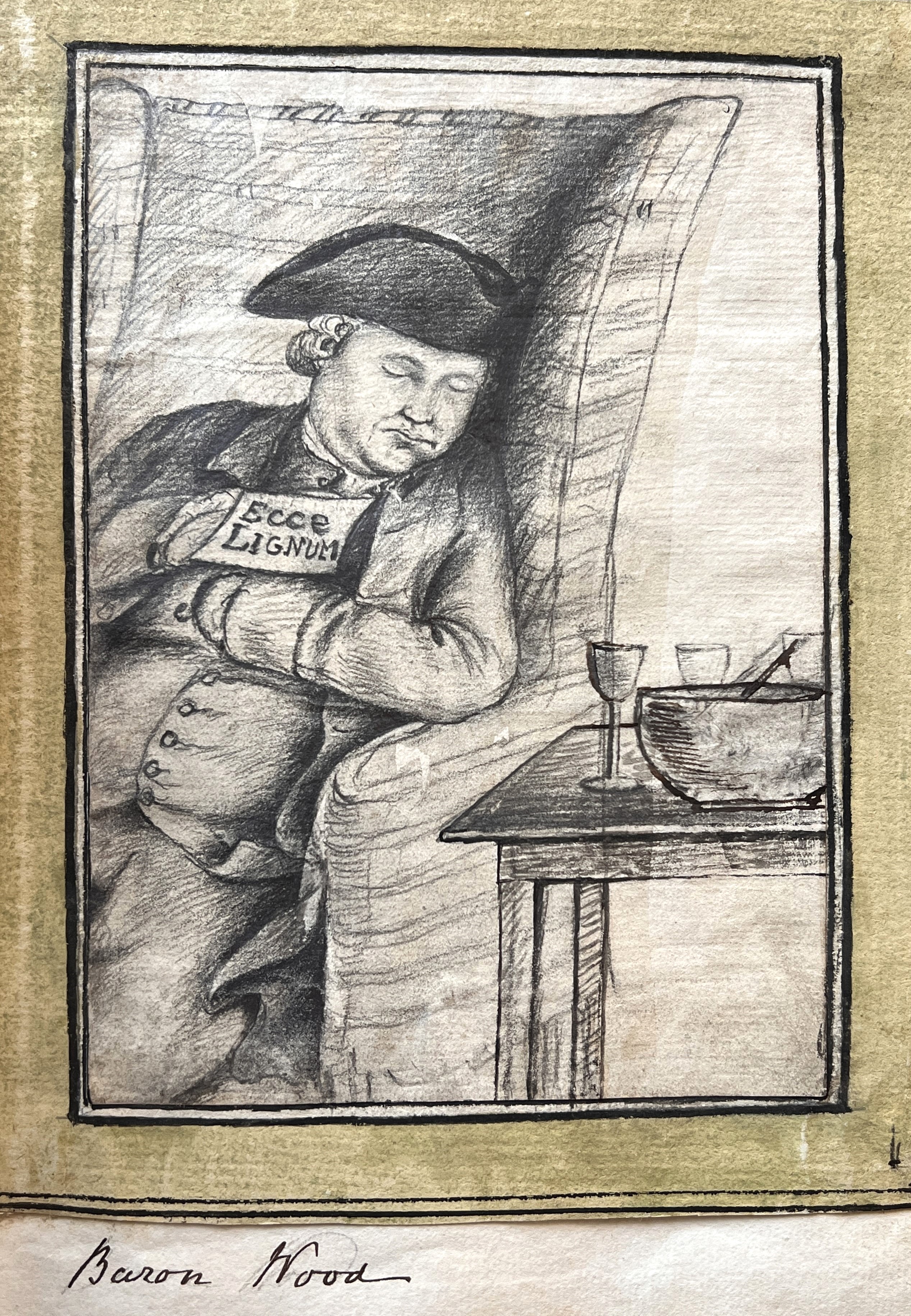
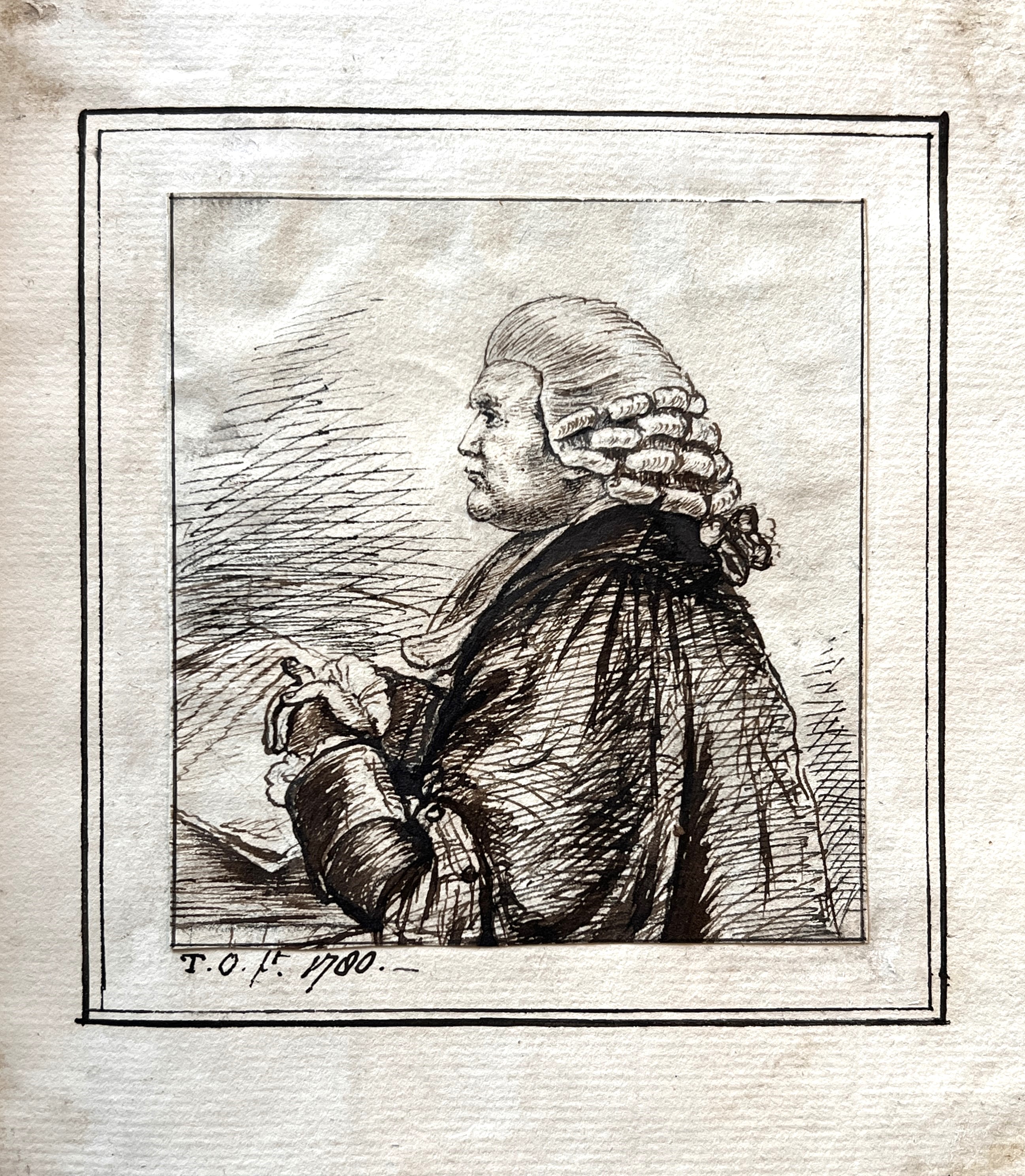
Two quite different sketches of Baron Wood from the book of outline drawings: Left: sleeping, with the Latin ‘Ecce lignum’ (‘Behold! wood’) and Right: a profile dated 1780 [ZBO IX 1/3/3]
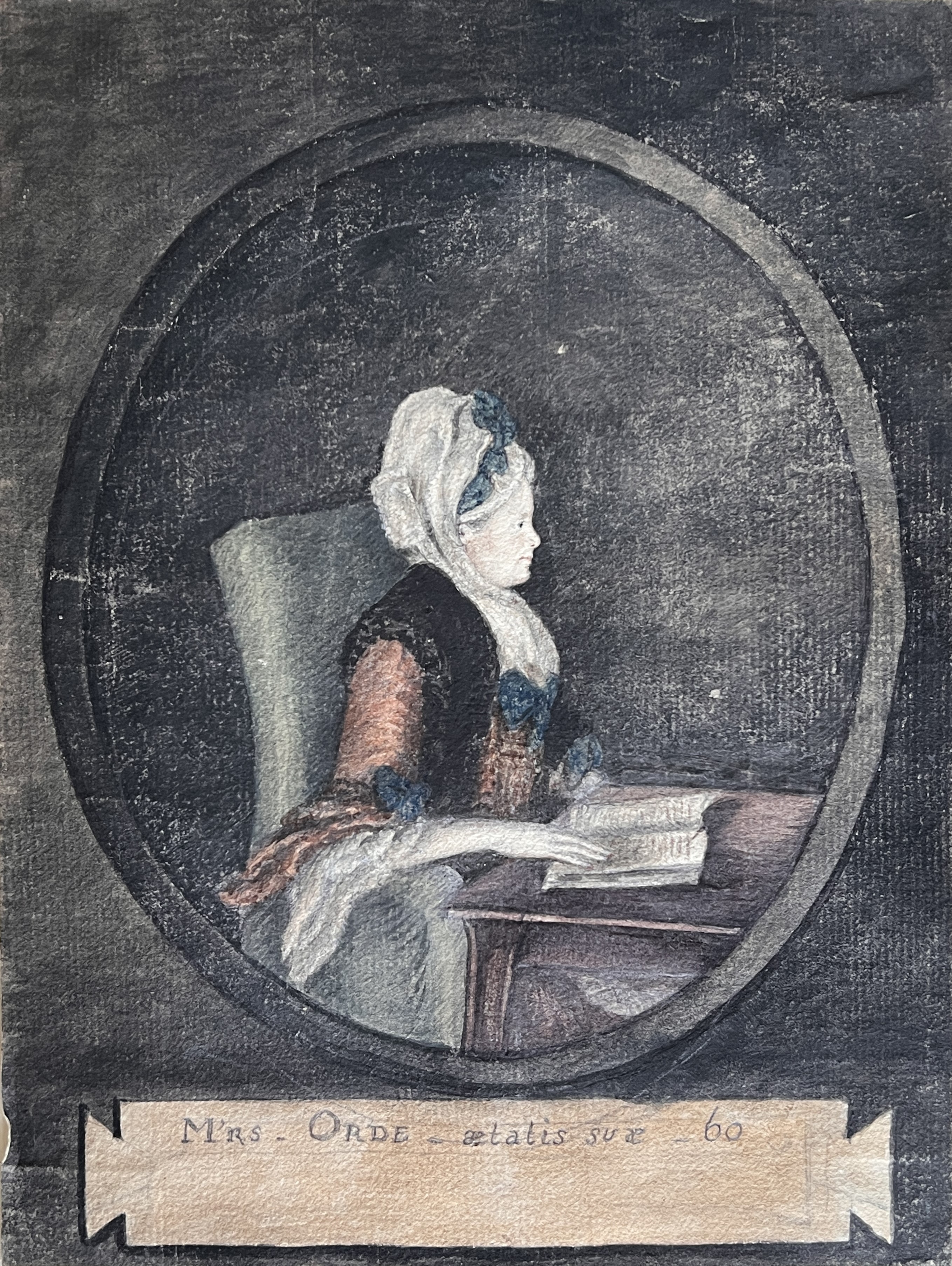
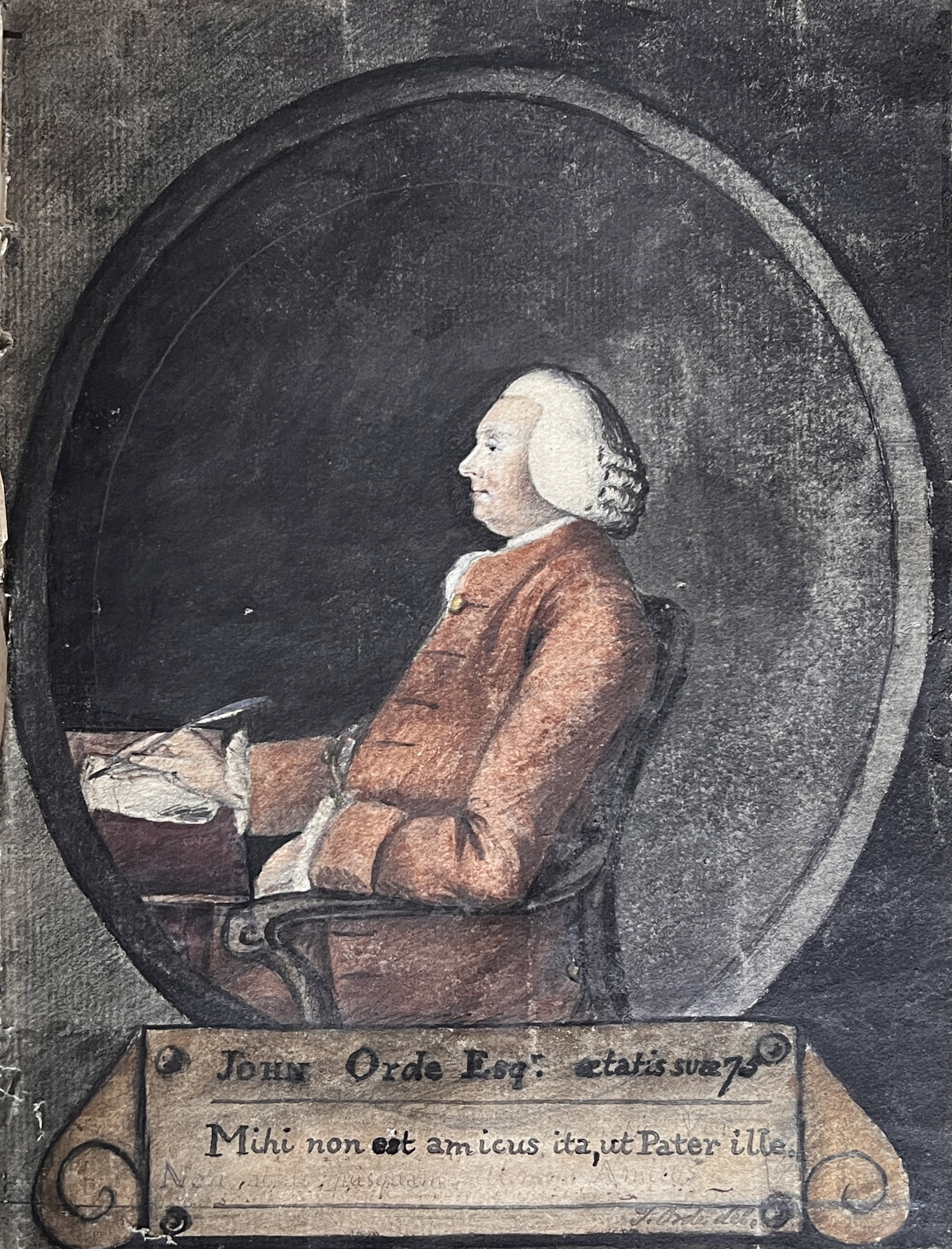
From the book of finished drawings: Left: Mrs Orde, aged 60 and Right: his father John Orde Esq., aged 75, inscribed: ‘Mihi non est amicus ita, ut Pater ille’ (which roughly translates as: ‘There’s no friend to me like that father’) [ZBO IX 1/3/2]
It was fashionable in the late-18th century to wear large wigs to signify wealth and status (the origin of the phrase ‘big wig’). Women would wear huge, towering creations decorated with ribbons and topped with ostrich feathers. You can read more about this in our blog: Big Wigs and Guinea Pigs.
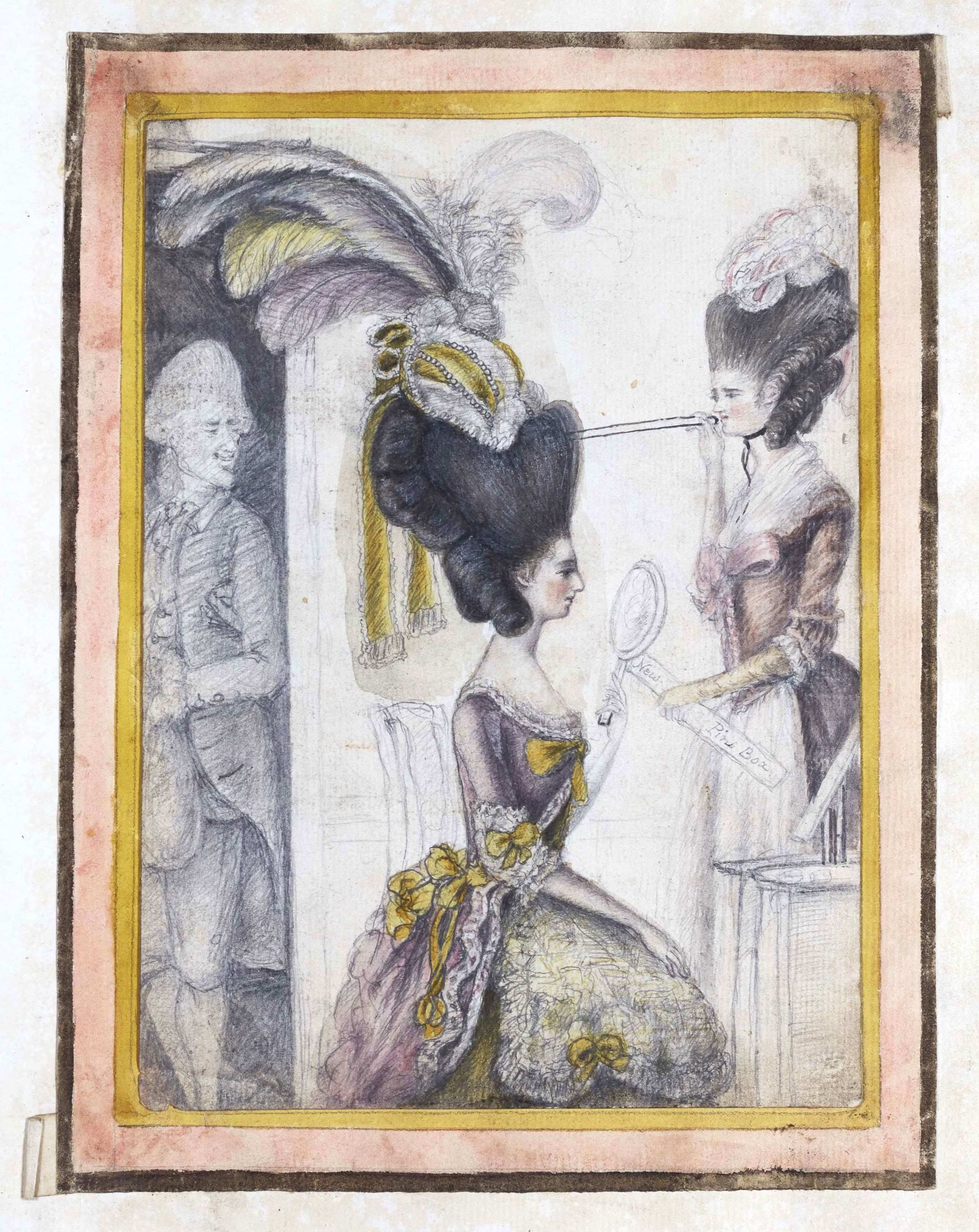
Comical sketch showing a maid holding a large hair pin from a box of new pins, styling the elaborate hair of her mistress, who is looking at herself in a hand mirror whilst being watched from behind the door by a smiling footman, from Thomas Orde’s book of finished drawings [ZBO IX 1/3/2]
In the images above and below, if you look closely, you can see how the finished drawings have been cut around with tabs left at the corners (presumably cut from another sketchbook or loose page). These tabs have been used to affix the drawings to a clean page of the sketchbook
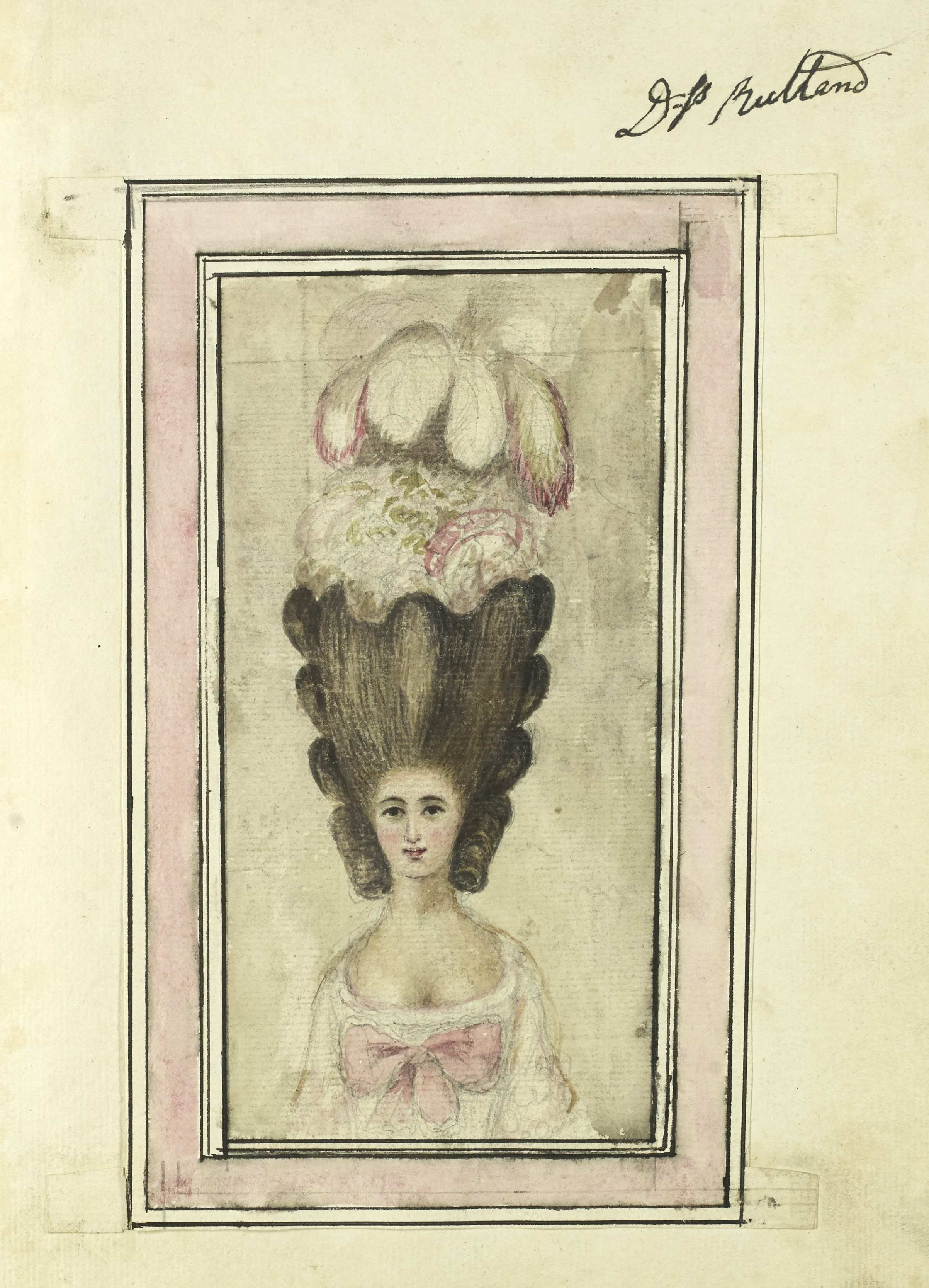
Another portrait from Thomas Orde’s book of finished drawings depicting Mary Isabella, Duchess of Rutland sporting a most extravagant hairstyle! [ZBO IX 1/3/2]
In the 18th century, it was common for etchings and engravings to be made from drawings so they could be reproduced and distributed as prints. Etching uses chemicals to erode lines into a metal plate, whereas an engraver copies the drawing onto the plate using a sharp tool to cut the lines. Ink is spread over the plate, filling the incisions; the surface is then wiped clean leaving ink only in the grooves. Dampened paper is laid on top of the plate and both are run through a rolling press to produce a print that is the reverse image of the original drawing.
Thomas Orde’s sketchbooks contain examples of some of the prints made from his drawings. In both of the prints reproduced below, the impression made by the metal plate in the paper around the edge of the image can be seen.
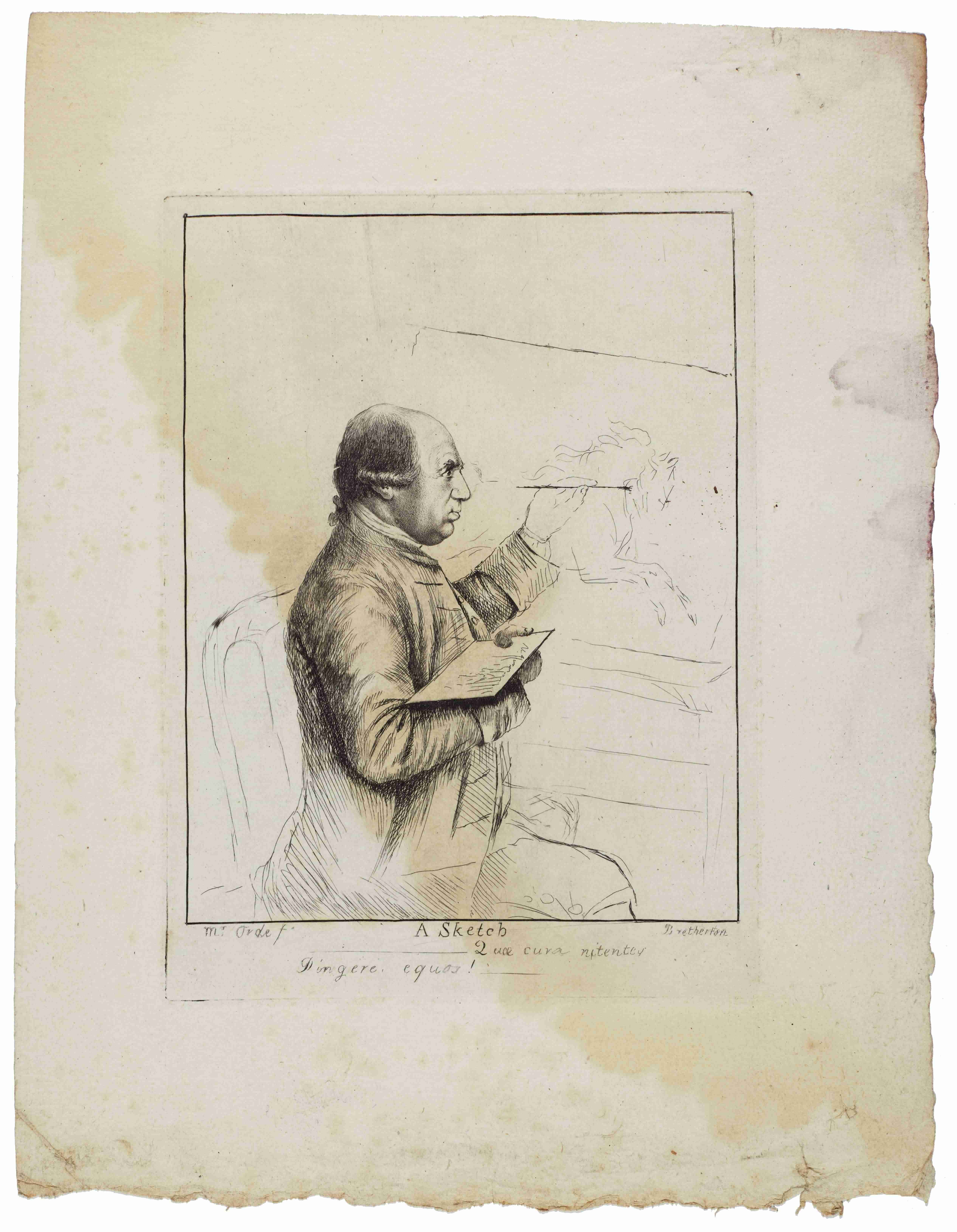
Print by etcher and engraver James Bretherton [fl.1750-1799] from a drawing by Thomas Orde titled ‘A Sketch’ depicting the artist George Stubbs [1724-1806] painting a horse – loose sheet within Thomas Orde’s book of etchings (the diagonal ‘tide mark’ across the image indicates that the paper has previously been wet) [ZBO IX 1/3/2]
Written in pencil beneath the title:
‘Quae cura nitenter pingere equos!’ – ‘What care [is taken] to paint horses so splendidly!’
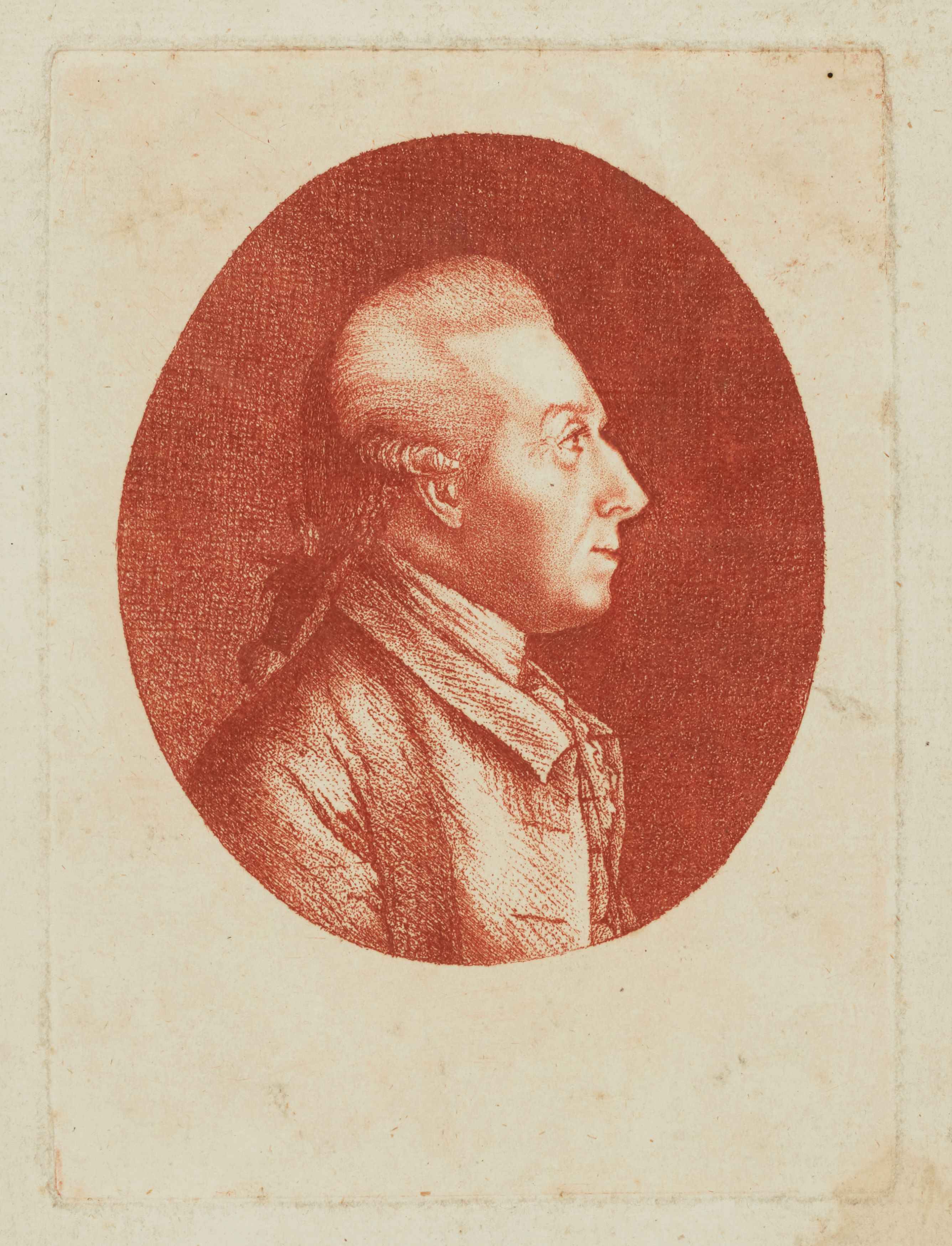
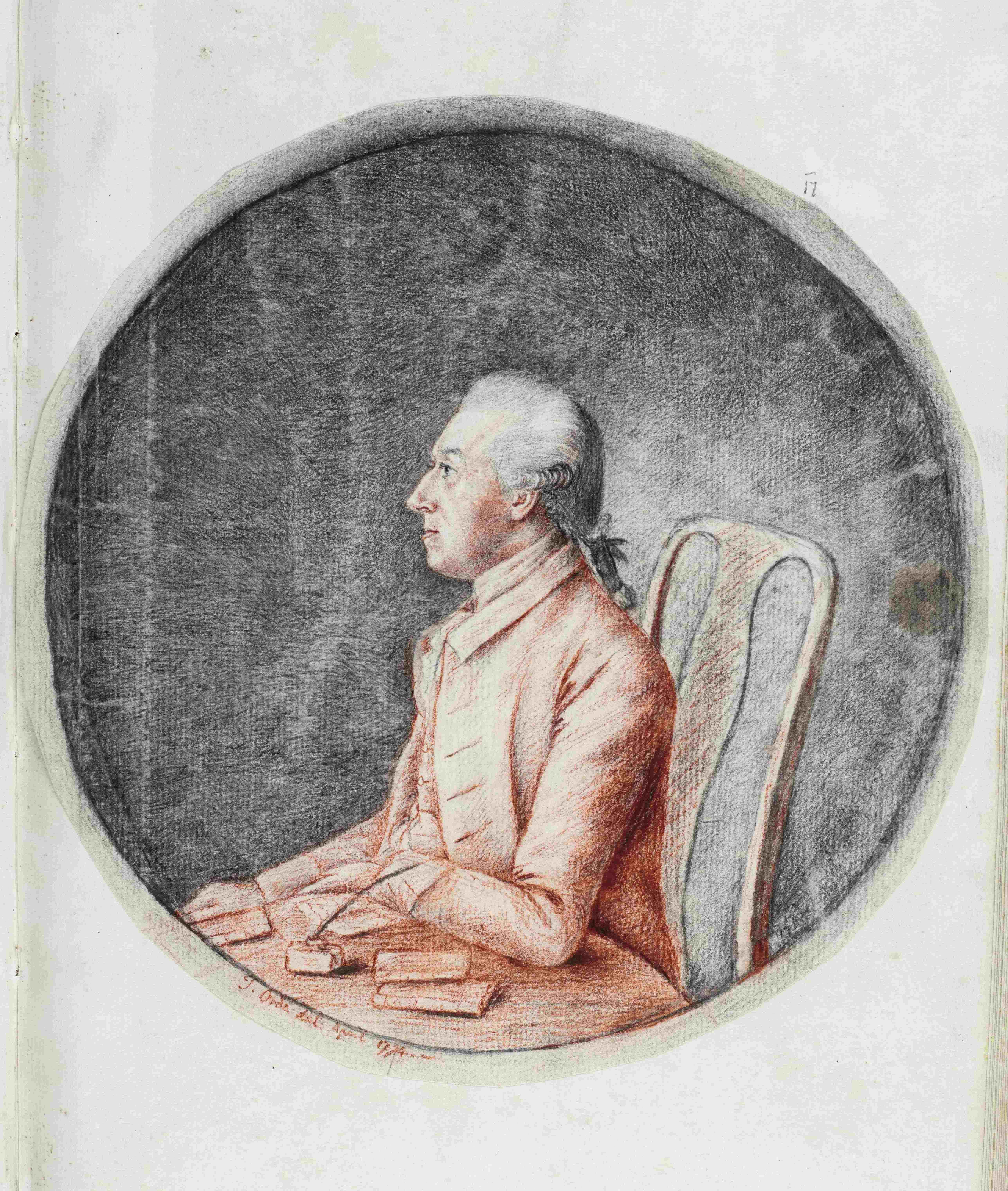
Left: A print in red ink of the head and shoulders of an unknown gentleman, on a loose paper sheet from Thomas Orde’s book of etchings and Right: Drawn profile of an unknown gentleman (perhaps the same as depicted in the print?) seated at a table with ink pen and books, signed ‘T. Orde del. [delineavit (‘drawn by)] April 1774‘ from the same sketchbook [ZBO IX 1/3/3]
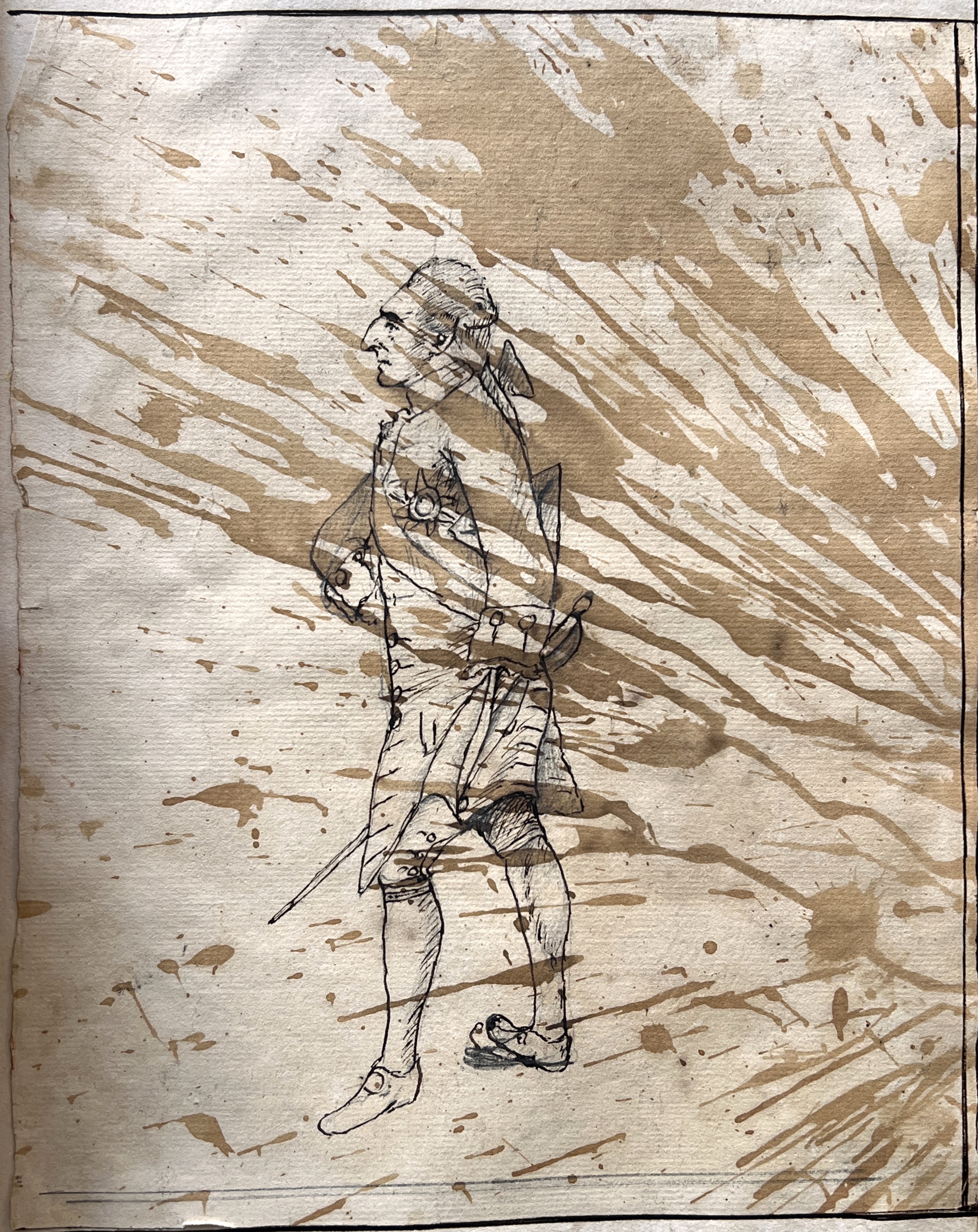
We can only imagine the artist’s reaction to this mishap! [ZBO IX 1/3]
Henrietta Matilda Crompton (1793-1881)
Henrietta Matilda Crompton was educated at home by private tutors, taking drawing lessons from renowned landscape artists of the time, such as Copley Fielding (1787-1855) and David Cox (1783-1859), amongst others. Henrietta’s artwork mainly depicts landscapes, as can be seen in the examples below. Several of Henrietta Matilda Crompton’s sketchbooks are held within the Azerley Chase records of the Crompton family, whose main family seat was Esholt Hall, near Bradford [ZCM]. The sketchbooks cover the period from 1813 to c.1870.
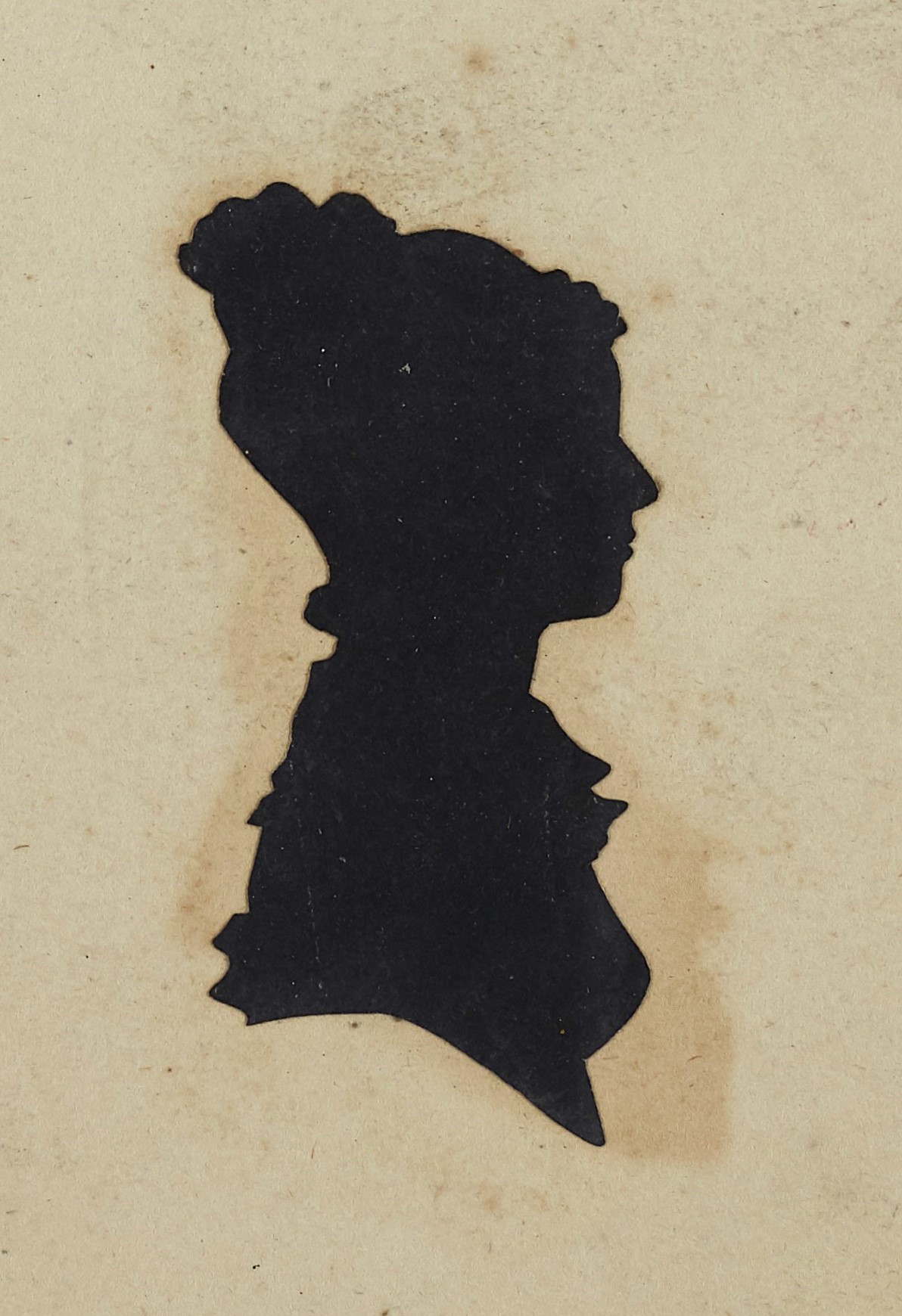
The only image we have of Henrietta is this silhouette of 1823 [ZCM]
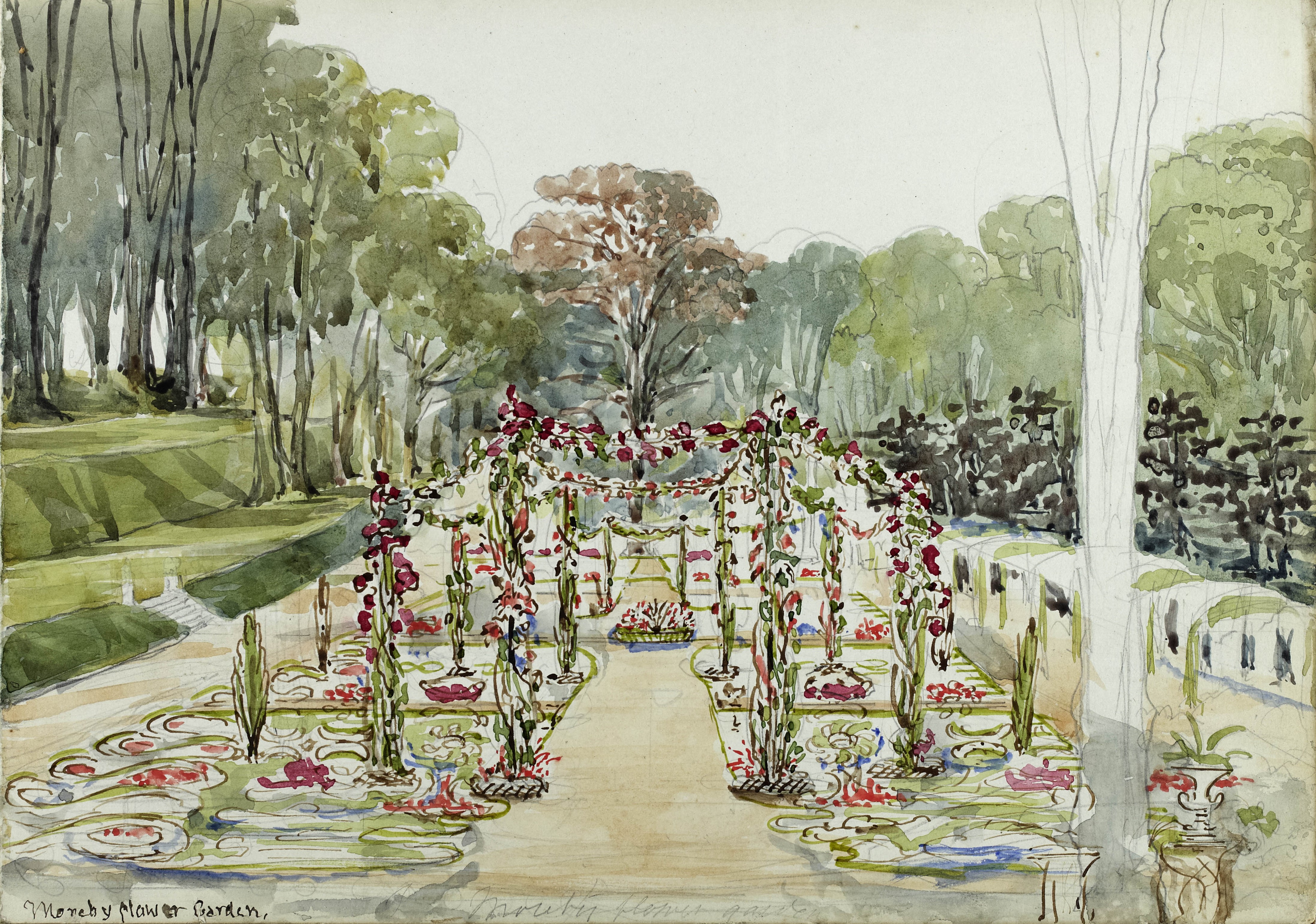
A drawing from Henrietta’s latest sketchbook showing the terraced gardens of Moreby Hall on the banks of the River Ouse south of York, c.1870; home of her eldest sister Maria Anne and brother-in-law Henry Preston [ZCM]
Having never married, Henrietta lived for most of her life with two of her sisters at Micklegate House in York. She took her sketchbooks with her whilst visiting the homes of friends and family and on excursions around Yorkshire and further afield.
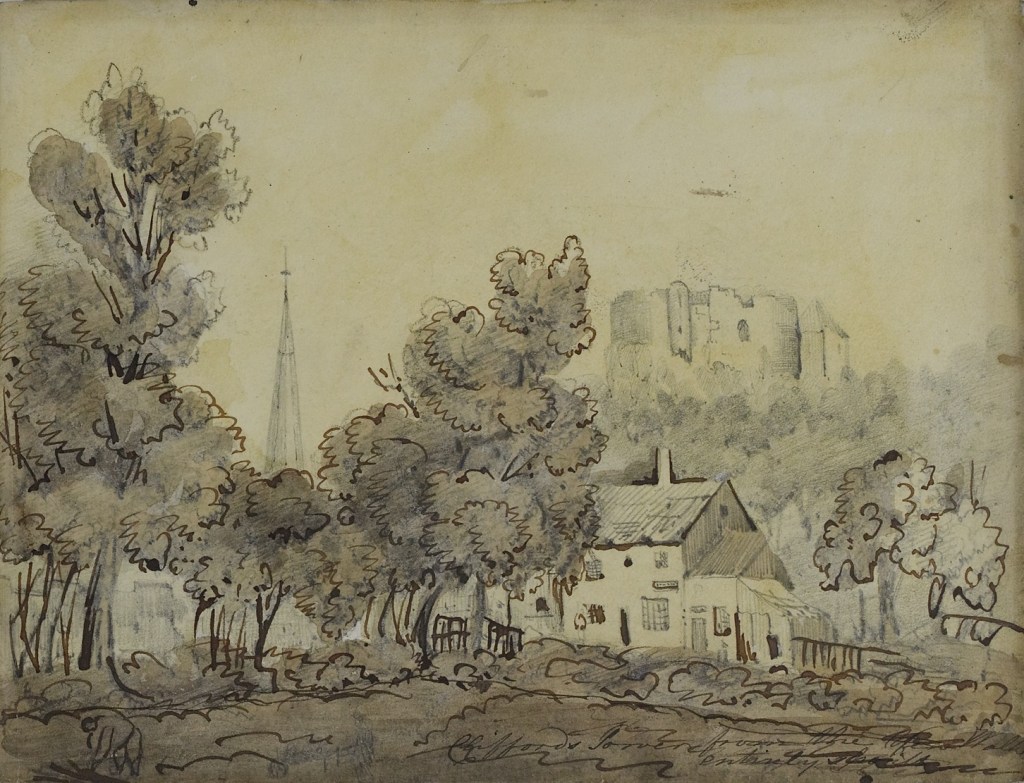
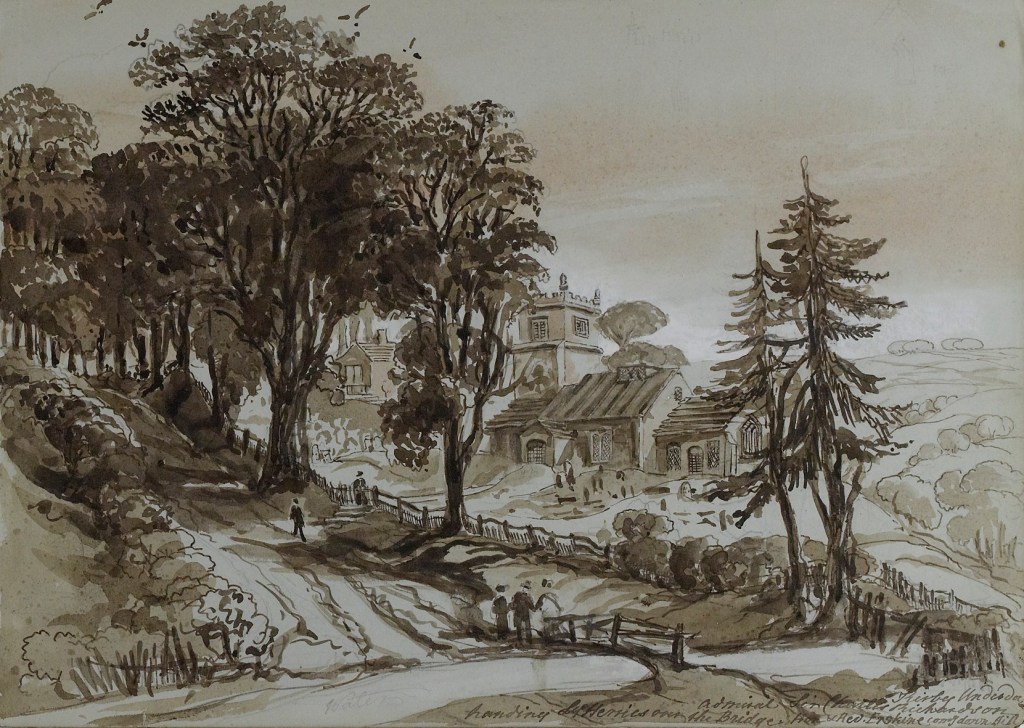
Left: A pencil and ink sketch of Clifford’s Tower, York, c.1813 and Right: Sepia wash of All Saints, Kirby Underdale, c.1840-1850 [ZCM]
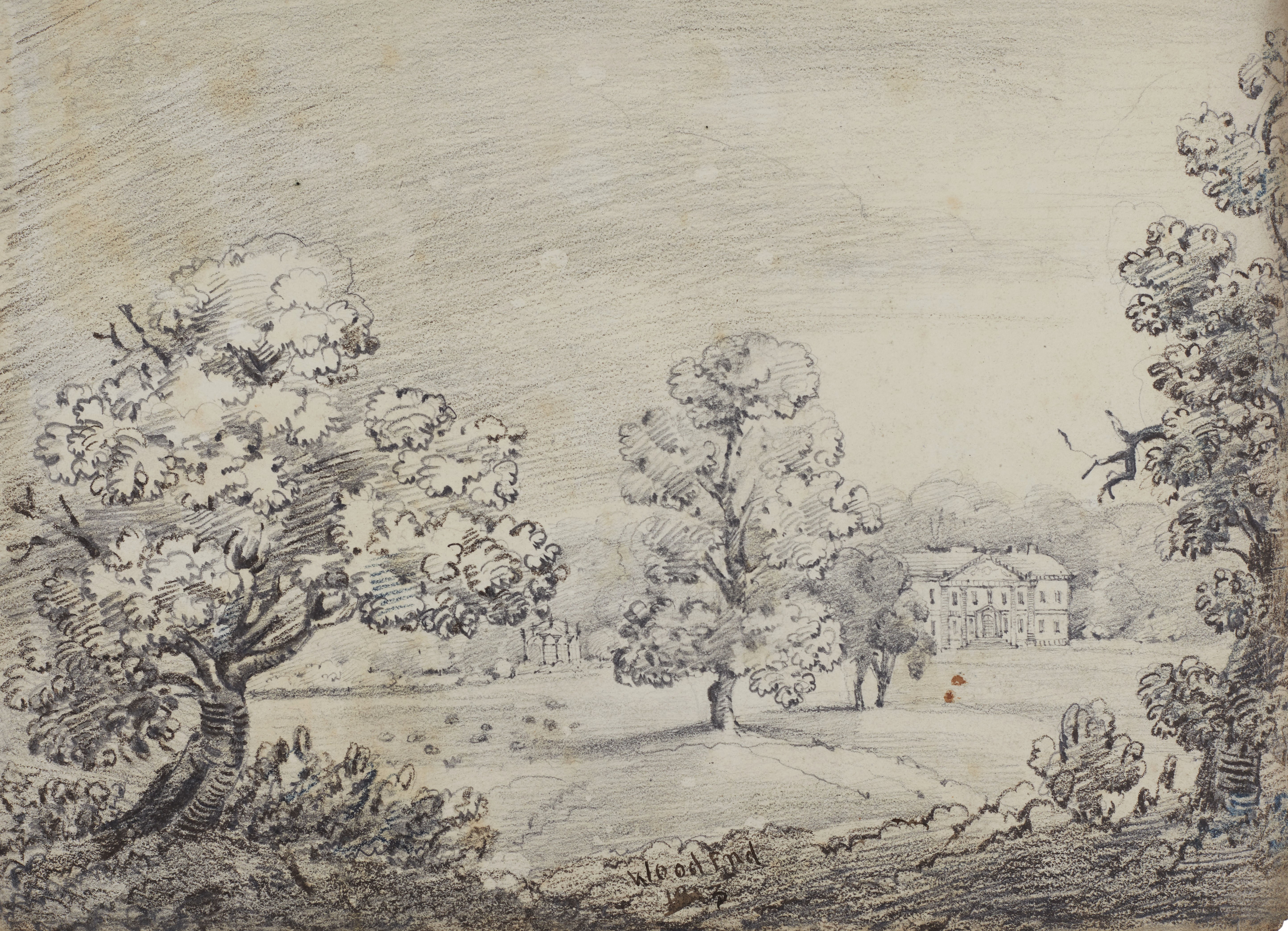
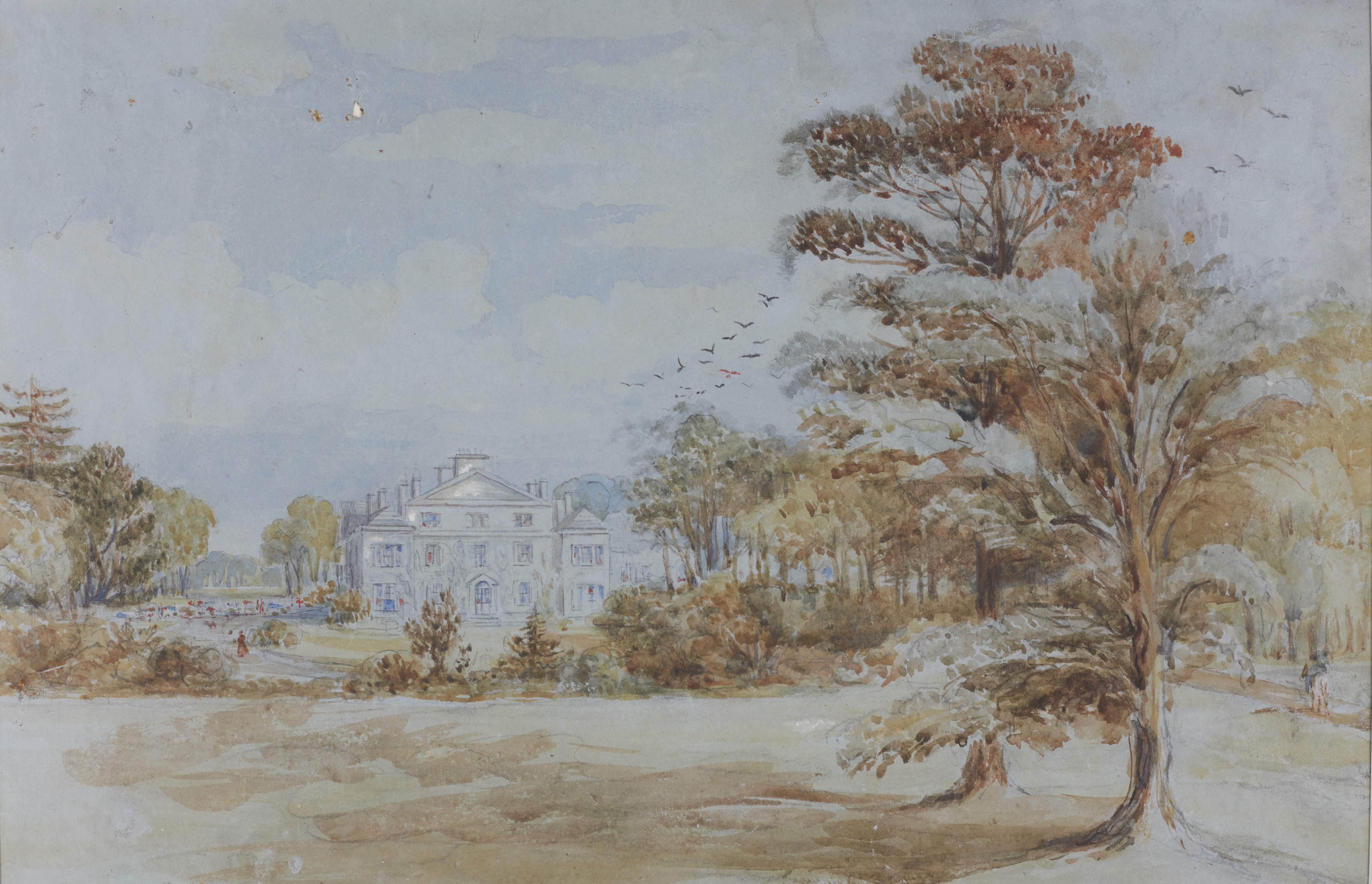
Two properties since demolished: Left: Wood End, Thornton le Street, c.1813; home of Samuel Crompton, her uncle and Right: Sion Hill, Kirby Wiske, 1848; home of Samuel Crompton, her brother [ZCM]
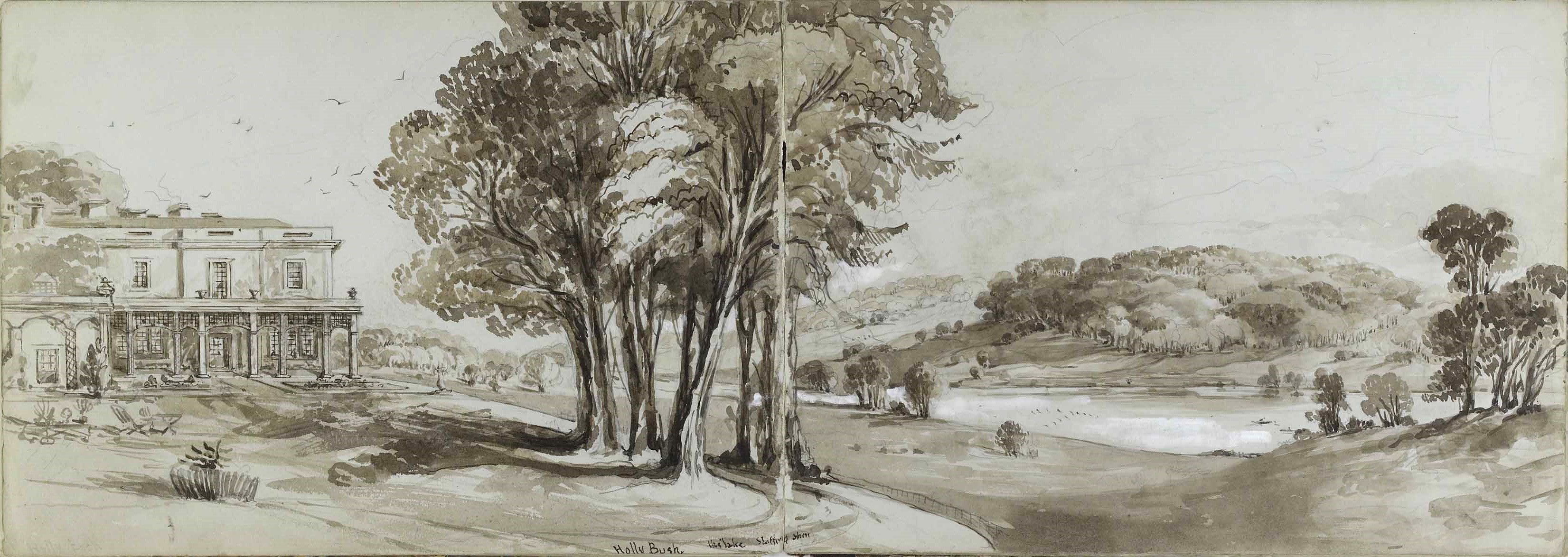
A double-page spread sepia wash of Holly Bush, Burton upon Trent, Staffs, c.1848; home of Thomas K. and Elizabeth Hall (née Crompton) [ZCM]
Henrietta’s sketchbooks contain many familiar scenes of the Yorkshire coast in sepia wash and watercolour.
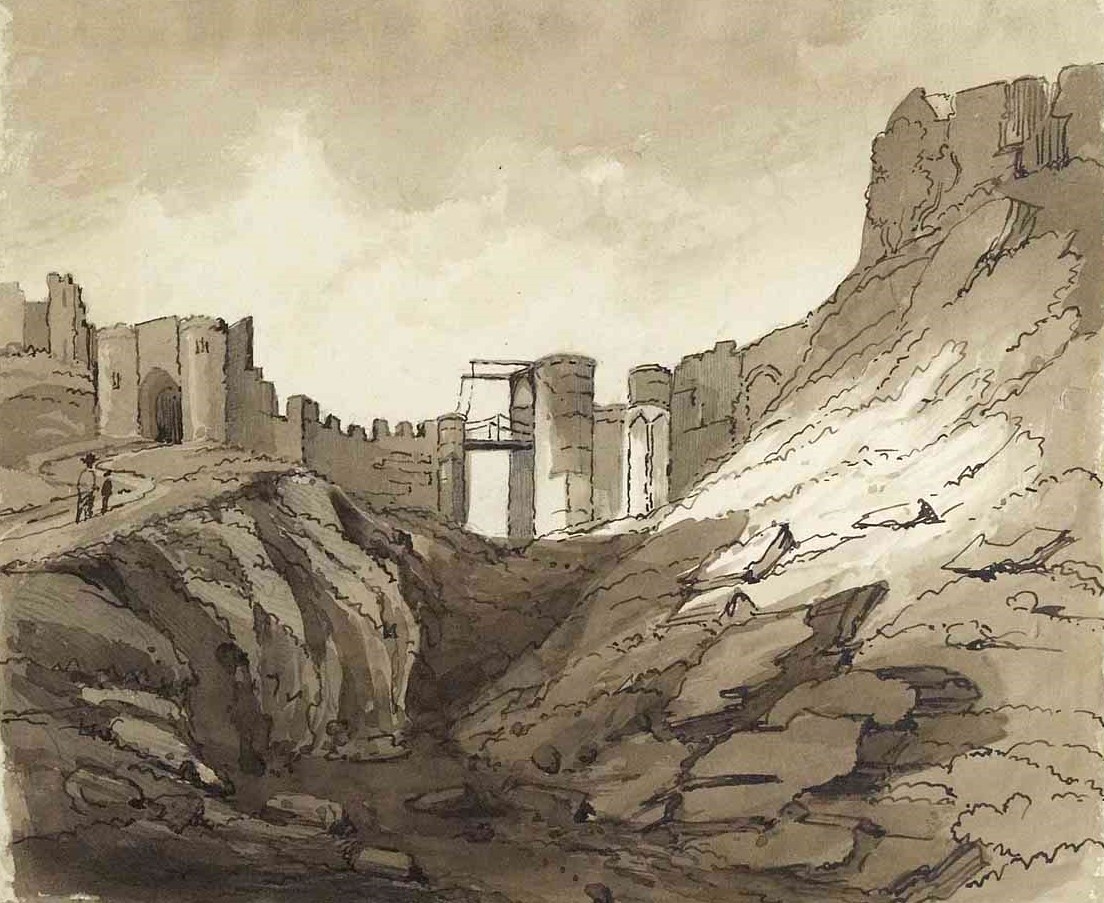
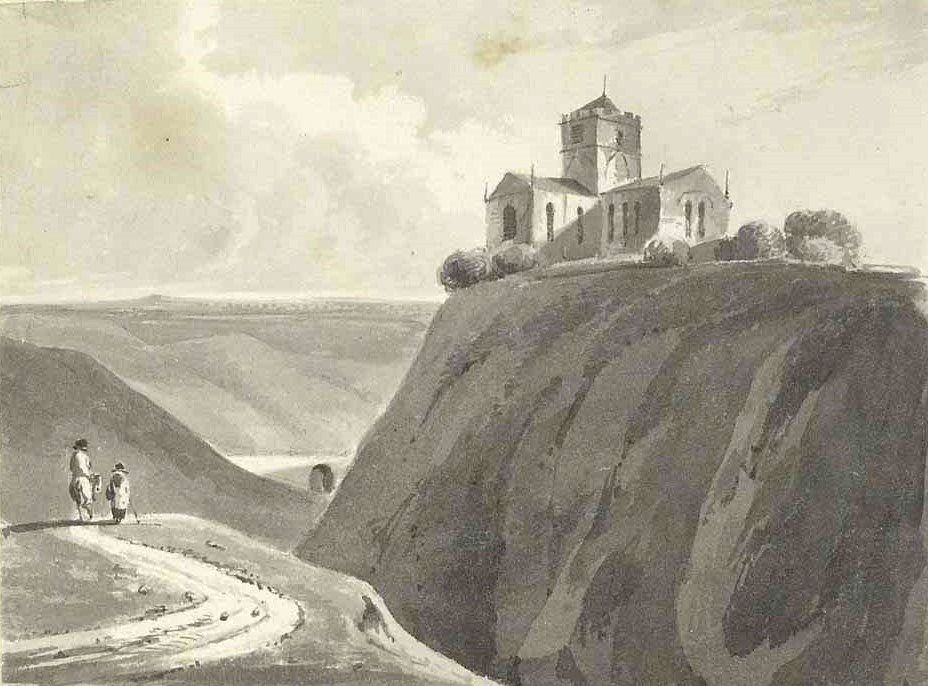
Two drawings from Henrietta’s earliest sketchbook, c.1813: Left: Scarborough Castle drawbridge and Right: St Oswald’s church, Filey [ZCM]
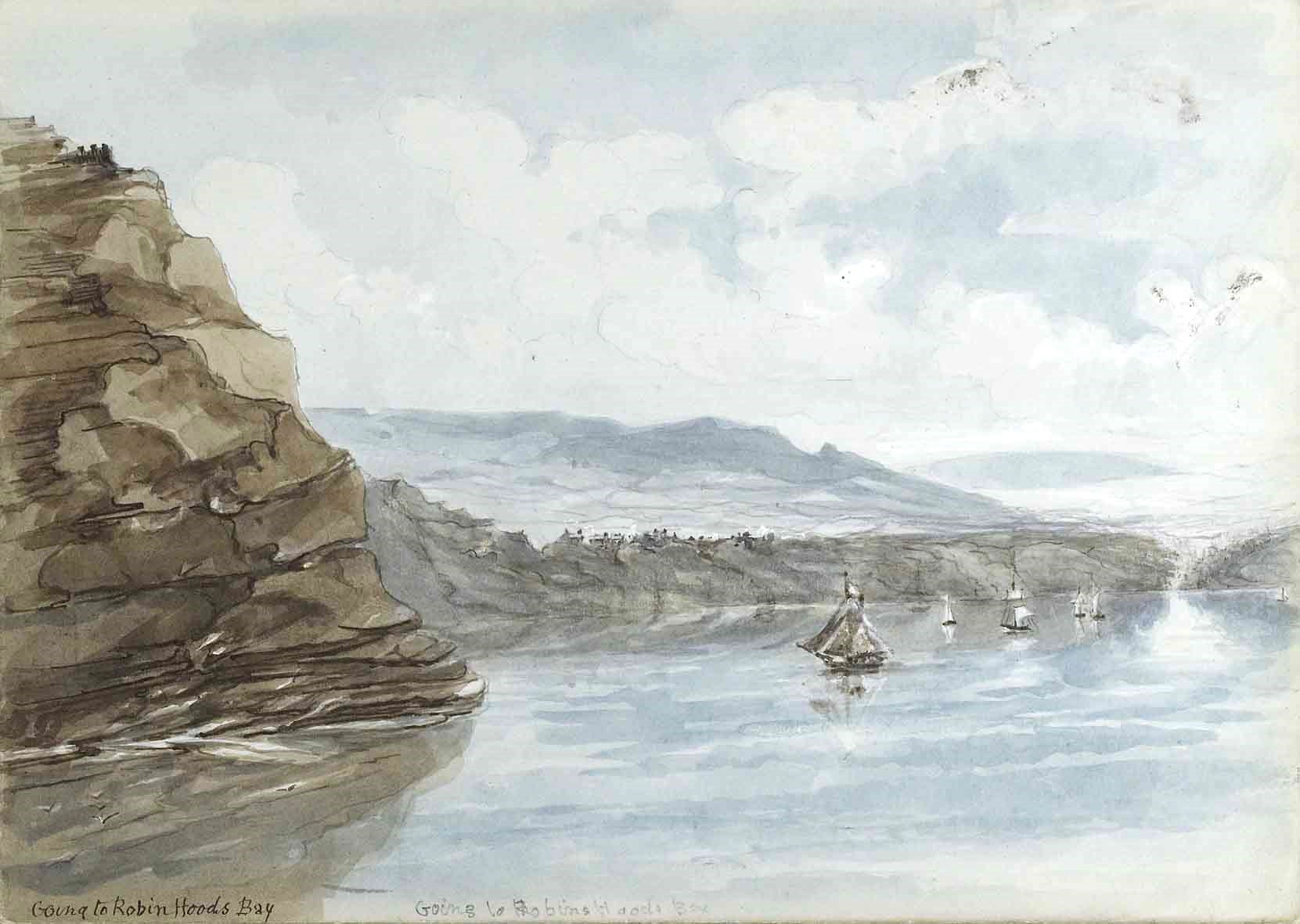
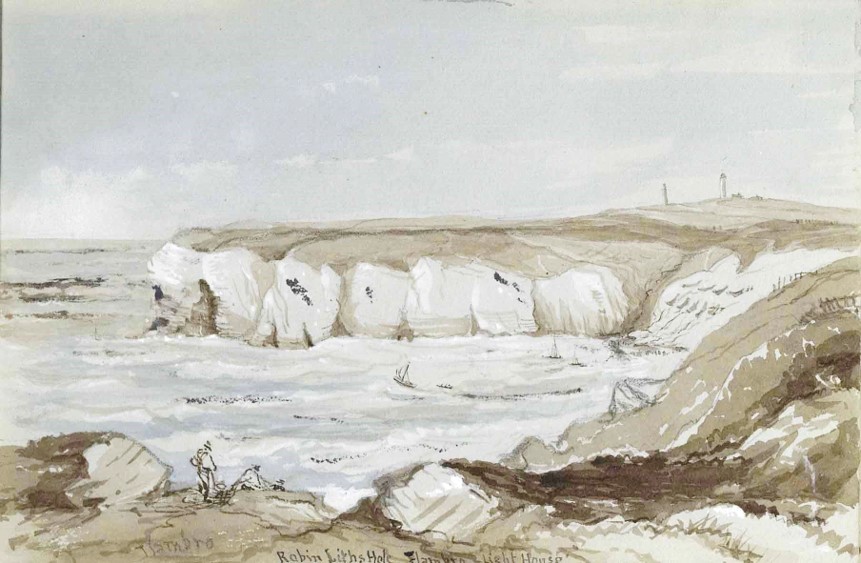
Left: ‘Going to Robin Hood’s Bay’ and Right: Robin Lythe’s Hole and lighthouse, Flamborough, c.1848 [ZCM]
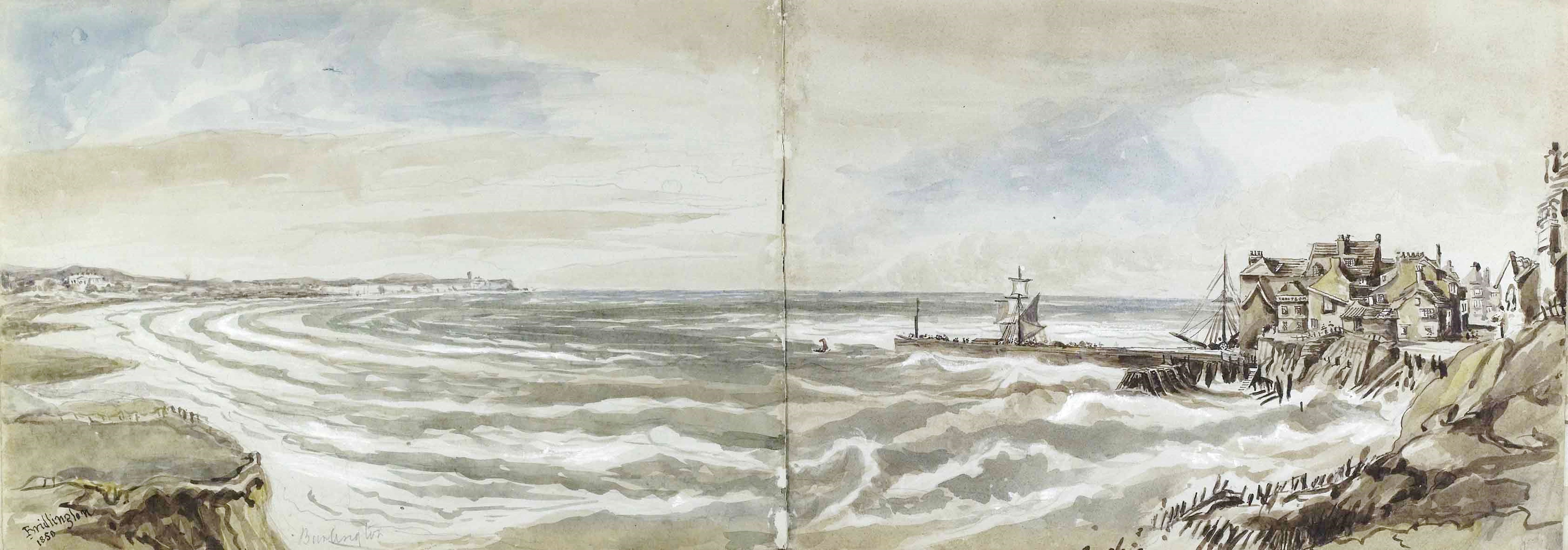
A double-page spread view of Bridlington Bay, 1850 [ZCM]
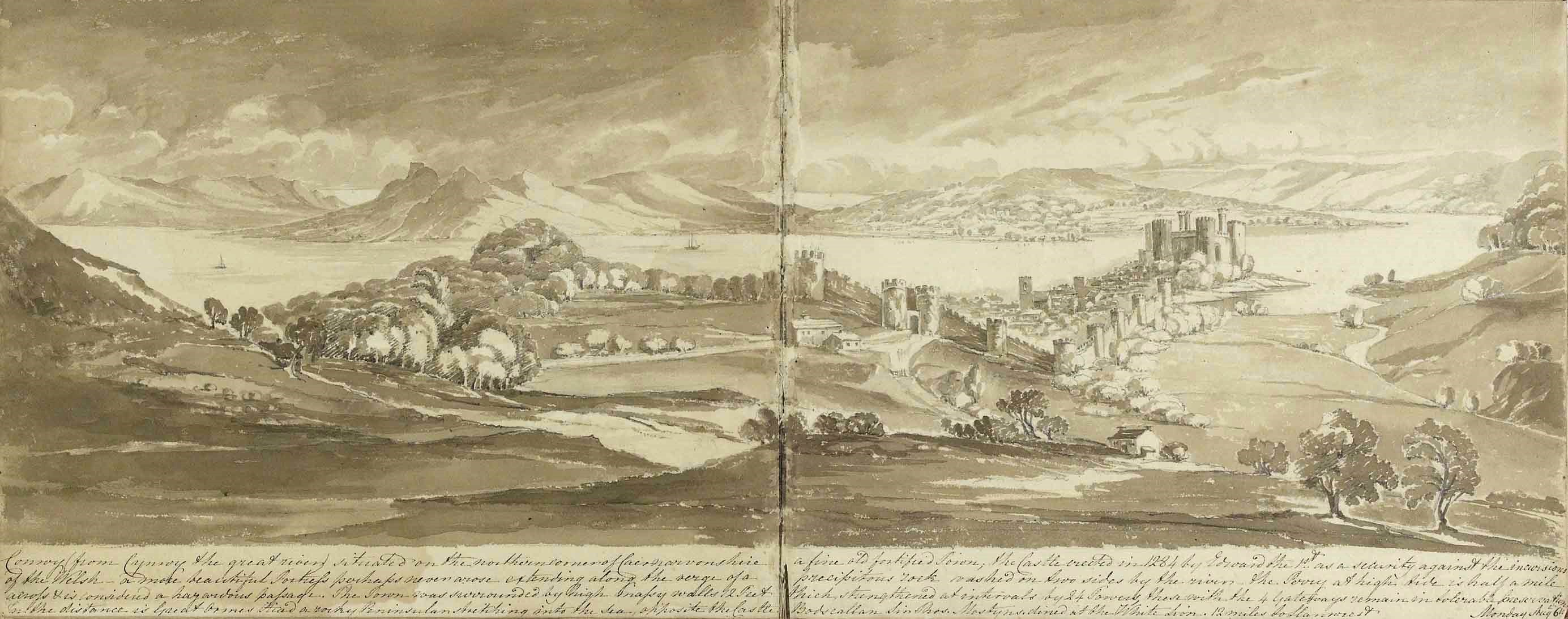
Drawing of Conwy Castle, dated 6 August 1821, from Henrietta Matilda Crompton’s sketchbook of a tour of Wales, made in 1821 with her older siblings, brother William Rookes (1790-1871) and sister Mary Frances (1792-1866) [ZCM]
Written beneath the drawing:
“Conwy (from Cynwy the great river) situate on the northern corner of Caernarvonshire, a fine old fortified town, the Castle erected in 1284 by Edward the 1st as a security agains the incursions
of the Welsh – a more beautiful fortress perhaps never arose extending along the verge of a precipitous rock washed on two sides by the rivers – the ferry at high tide is half a mile
across and is considered a hazardous passage. The town was surrounded by high massy walls 12 feet thick, strengthened at intervals by 24 towers, these with the 4 gateways remain in tolerable preservation
In the distance is Great Ormes Stead a rocky peninsular stretching into the sea, opposite the Castle, Bodscallan – Sir Thomas Mostyn’s, dined at the White Lion. 12 miles to Llanrwst. Monday Augt 6th”
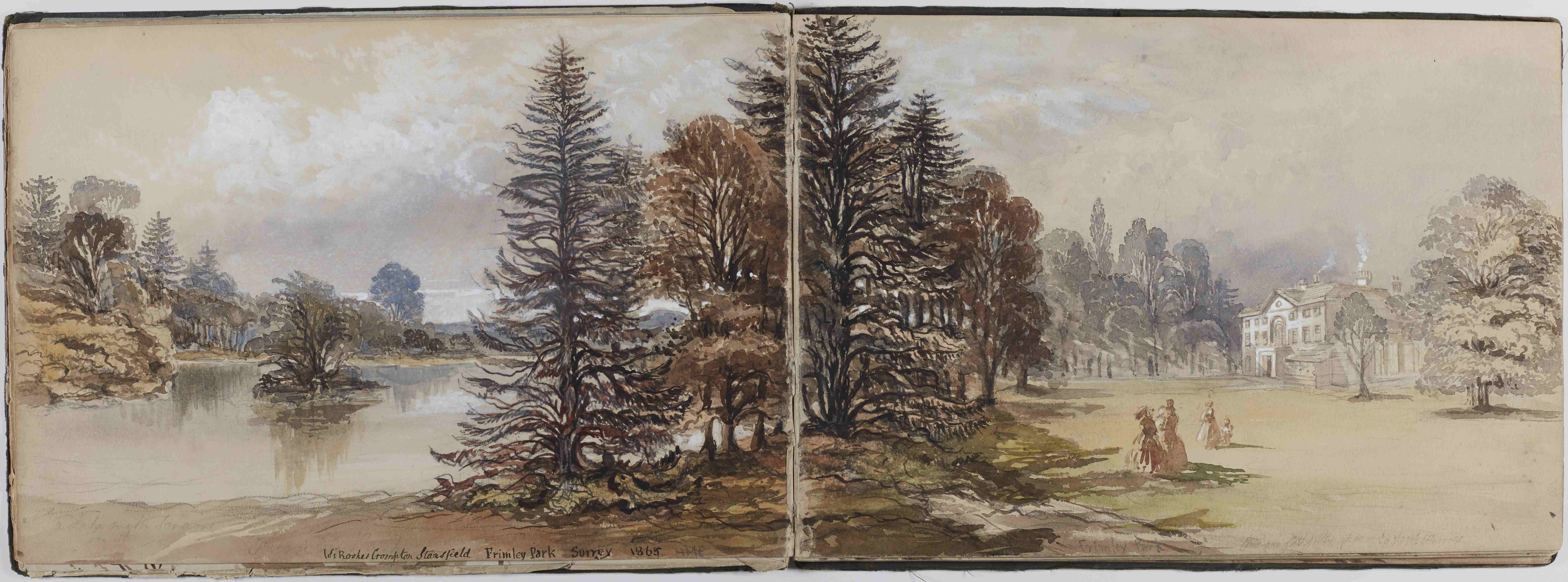
From Henrietta Matilda Crompton’s sketchbook, noted on the front cover ‘given to Caroline’, probably her youngest sister Caroline Rachel (1809-1885). Open to show Frimley Park, Surrey and its surrounding parkland and lake, 1865. This was the home of her elder brother William Rookes Crompton Stansfield (1790-1871), who took on the additional surname of Stansfield, his mother’s maiden name, in 1832 [ZCM]
Further reading:
Available to purchase in our online shop, or consult in our public search room: Letters and papers of Henrietta Matilda Crompton and her family: a list with extracts; including ‘The art of Henrietta Matilda Crompton’ by Stephen Allen. North Yorkshire County Record Office Publication 53, 1994, edited by M.Y.Ashcroft.
Another artist in the archive is John Jackson R.A. (1778-1831), a portrait painter and skilful copyist, who was born in Lastingham, North Yorkshire, in 1778 – see our 2023 blog: Letters of John Jackson R.A.
 North Yorkshire Archives Blog