by Karen, Archives volunteer
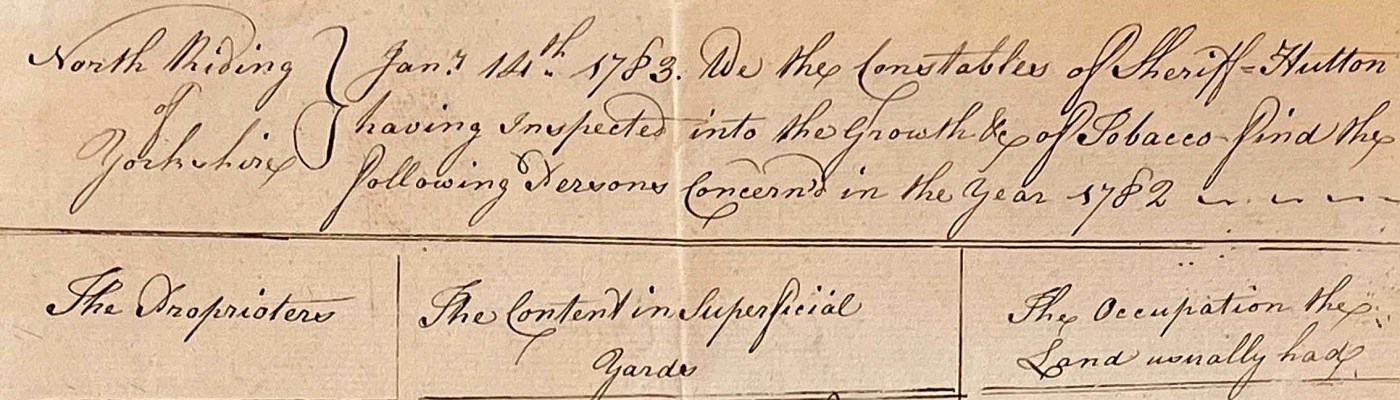
In a previous post, we explored the types of documents that form the working papers of the North Riding Quarter Sessions. This post focuses on an unusual set of documents that appeared in bundles for the Christmas and Midsummer Sessions of 1783. In January and July 1783, parish constables reported on the use of land for growing tobacco.
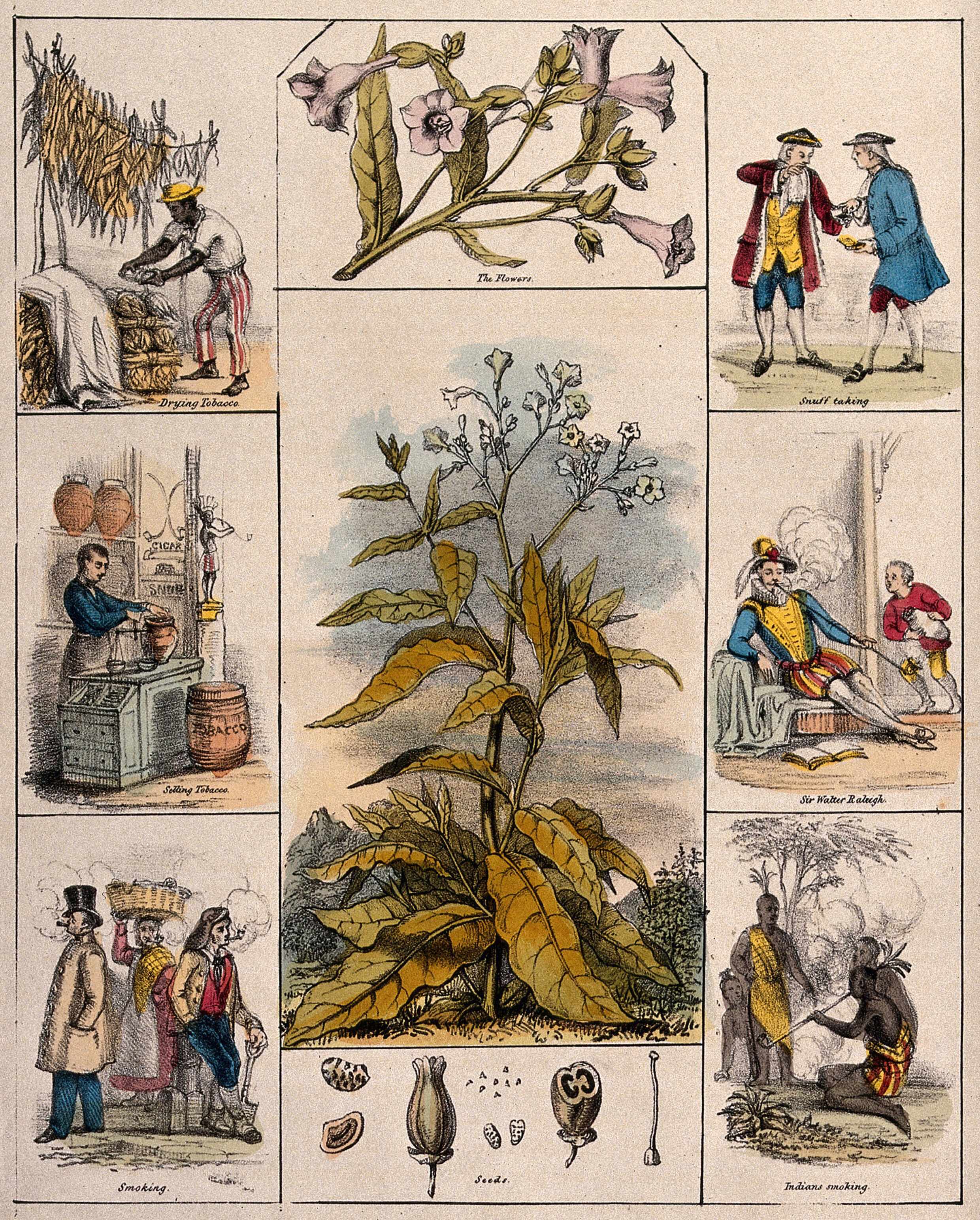

Left: A tobacco plant (Nicotiana tabacum), its flowers and seeds, bordered by six scenes illustrating its use by man. Coloured lithograph, c. 1840. Wellcome Collection. Source: Wellcome Collection, public domain.
Right: Smoking tobacco (Nicotiana tabacum L.): flowering and fruiting stem. Coloured etching by M. Bouchard, 1772. Wellcome Collection. Source: Wellcome Collection, public domain.
In January 1783, of returns from 54 parishes, 25 suggest that there had been a lot of interest in experimenting with this crop in the Vale of York. These returns list 227 people from different economic backgrounds growing tobacco, including landowners, yeoman farmers, tailors, widows and day labourers. Parish constables were asked to identify tobacco that was sown, planted, growing, curing, cured or made. In July, returns from 49 parishes reported only 18 people growing tobacco.
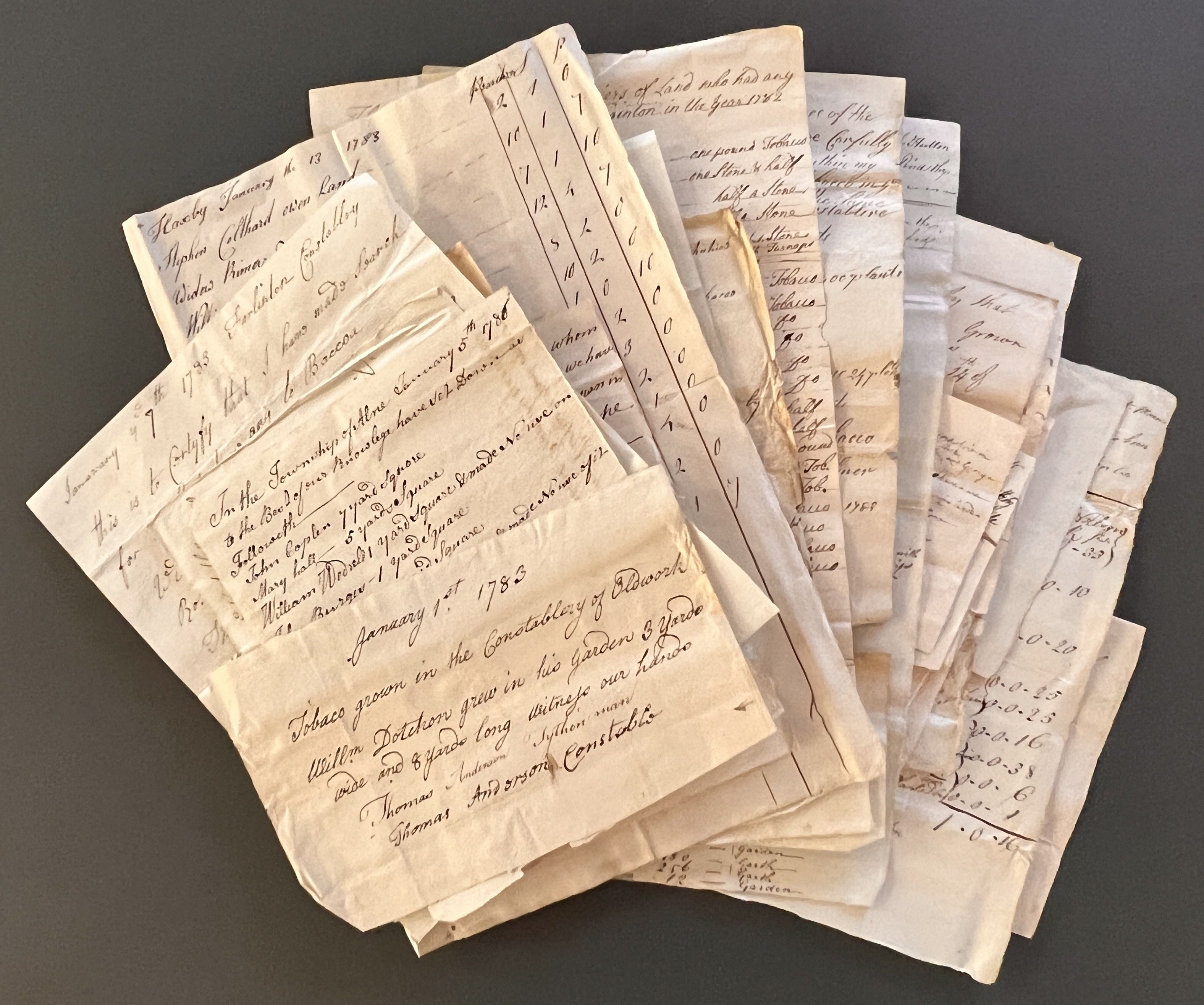
Image showing the bundle of parish constables’ returns on tobacco growers from the Quarter Sessions held at Easingwold on 14 January 1783 [QSB 1783 1/12/1-54 – link opens online catalogue, scroll down the page to find listings for 1783 Q1]
Local newspapers reported on gardeners’ success with tobacco – in December 1778, the Leeds Intelligencer reported that at West Rounton, 200 tobacco plants had been grown:
“At West Rounton, in the North-Riding, 200 tobacco plants have been raised from seeds, which afforded large and luxuriant leaves. The stems measured nearly three inches round at the bottom, and the height five feet. Some of the leaves have been smoked, and found little inferior to those from Virgina. A convincing proof that the soil and climate of old England (if not restrained by law) would supply its inhabitants with this useful article.”
Quoted from the Leeds Intelligencer, 1 December 1778
Although we now associate tobacco growing with the American colonies, it was widely grown in the British Isles well before the 18th century and usually smoked in pipes by both men and women. Gardeners at large estates used tobacco as a caterpillar repellent and sheep farmers used it to prevent scab damaging the wool. It was also heavily promoted as a medical cure, with claims that it could ease toothache, lethargy and drowsiness and even a bizarre suggestion that a tobacco smoke enema could revive a drowned person.
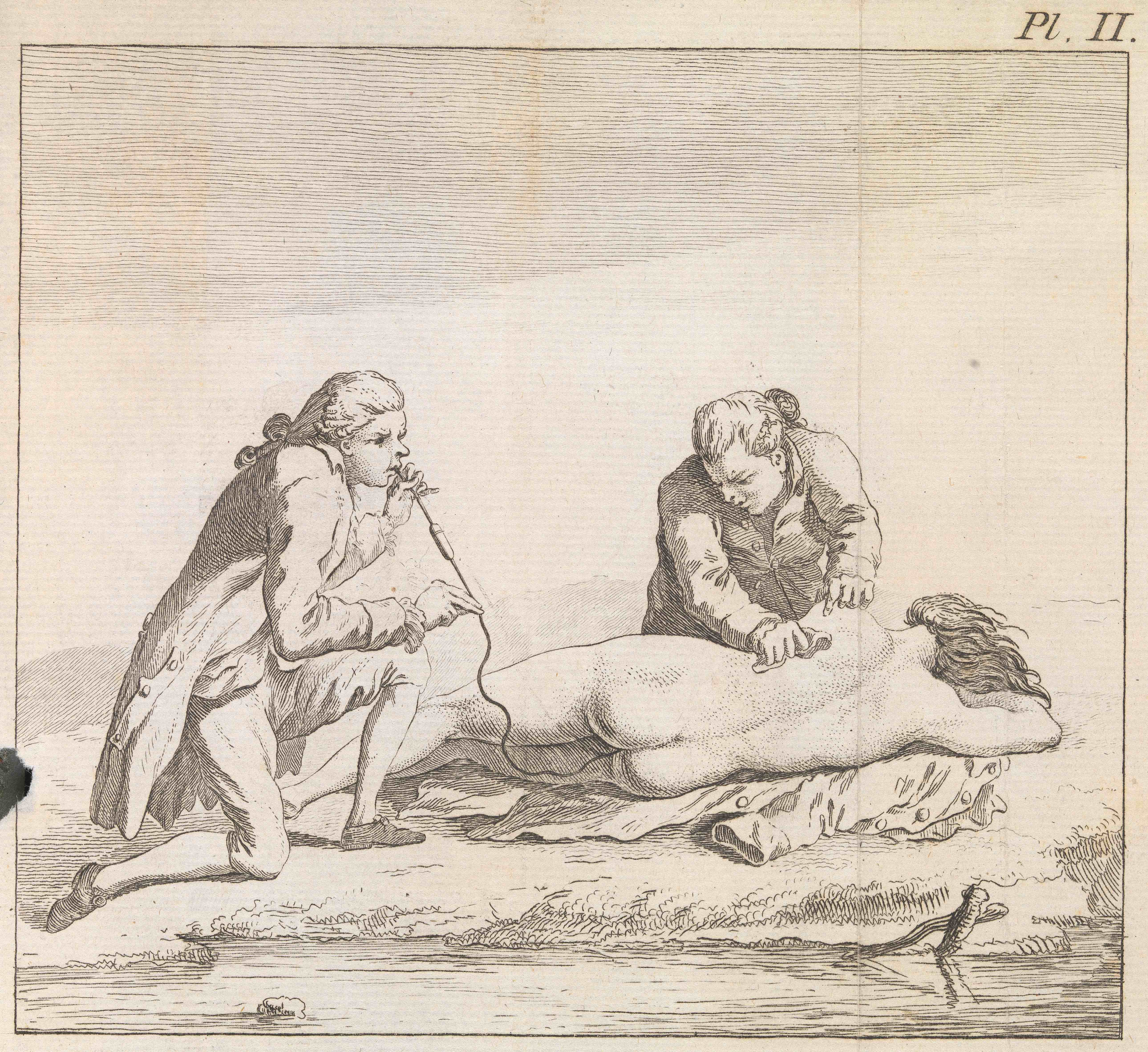
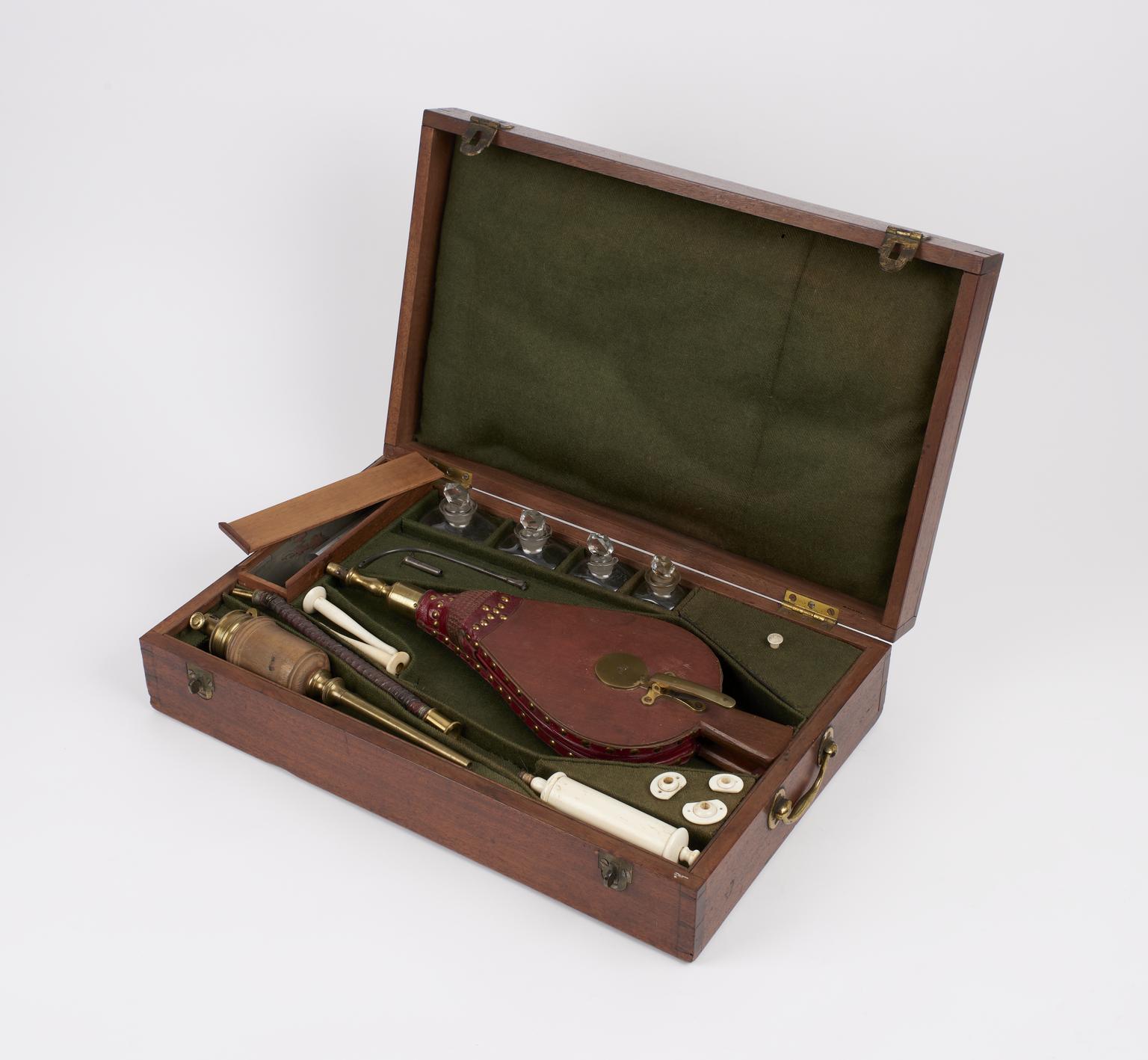
Left: Avis au peuple, sur les asphyxies, ou morts apparentes et subites, contenant les moyens de les prévenir et d’y remédier. Avec la description d’une nouvelle boëte fumigatoire portative / [Joseph Jacques de Gardane], 1774. Source: Wellcome Collection, public domain. [translated as: concerning asphyxiation, or apparent and sudden deaths, containing the means of preventing and remedying them, with the description of a new portable smoke box]
Right: Tobacco resuscitator kit, England, 1785. A640992. Source: Science Museum Group Collection online, CC BY-NC-SA 4.0 Licence
A letter published in the Leeds Intelligencer in October 1774 offered advice on the use of tobacco smoke:
Sir,
By inserting the following method for recovering persons apparently dead by accidents, with directions to be observed in the treatment of persons drowned, suffocated in coalpits, struck with lightning, etc recommended by eminent physicians in England, Germany, France, Holland, etc, and practiced with success, you’ll oblige many of your readers as well as yourself.
1) The Body, as soon as found, must be carefully conveyed upon a hand-barrow, or other convenient carriage to the nearest house; and there stripped, laid in a sloping posture, with the head highest, upon any broad bench or table, wrapped in blankets before a fire, if the weather be cold, or the body wet and chilled,otherwise in the moderate warmth of a room. If upon examination any parts of the body be found injured, the prospect of success will be less in proportion to the hurt.
2) You must begin immediately to rub the body, and continue to do it, for a long time without intermission, with dry warm flannels, along the back-bone, the sides, belly, and breast, on the palms of the hand and soles of the feet. NB gross sluggish bodies should be rubbed on the back-bone, breast, neck and face, with flannels sprinkled with spirits of hartshorn, mixt with brandy. Some puffs of tobacco to be blown up the nose frequently.
3) During the rubbing, or before, some warm vapour must be forced up into the bowel; tobacco smoke may be used for robust bodies ……
Quoted from the Leeds Intelligencer, 11 October 1774
Commercially grown imported tobacco (which arrived in its raw form) provided the British government with an opportunity to raise revenue by taxing imports and they soon legislated to prevent home growing of tobacco. Published guides on tobacco cultivation were available and described the best methods, including using a heated growing bed where seed could be planted in spring and which could, in a good year, produce two crops of leaves that were hung up to dry before being processed.
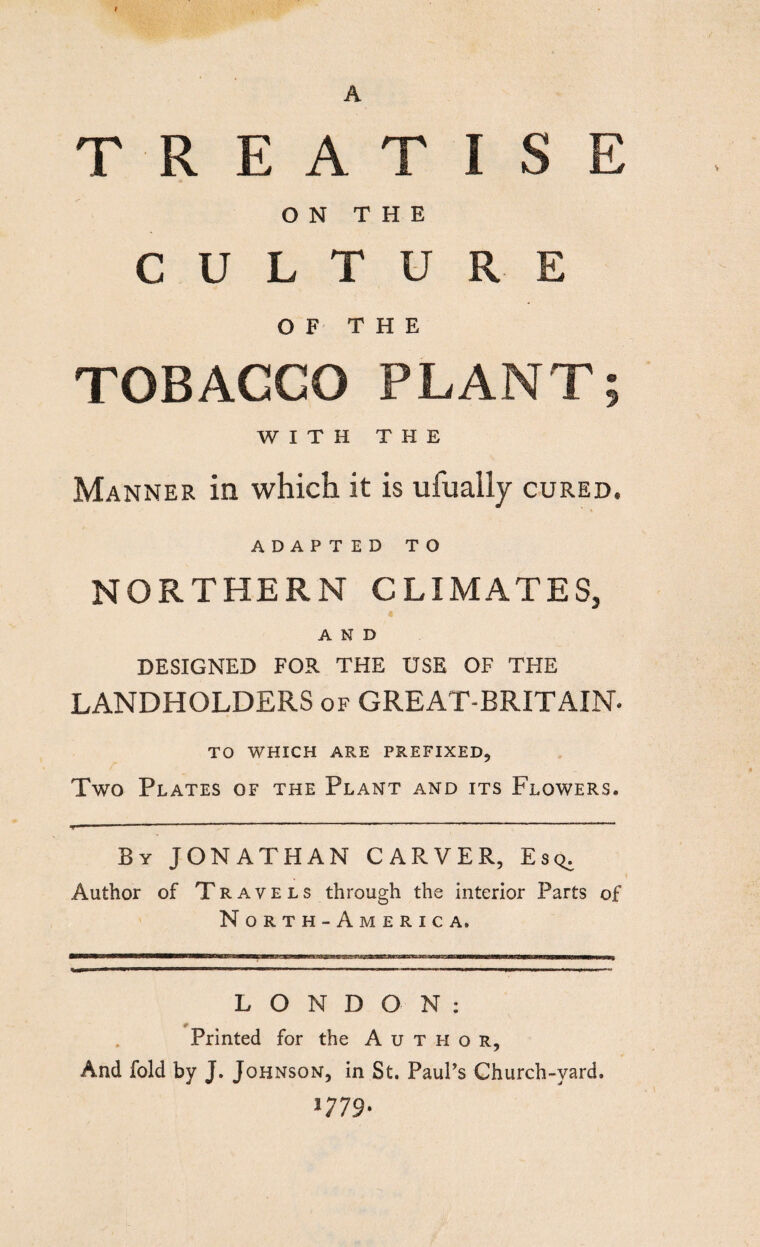
Title page from ‘A treatise on the culture of the tobacco plant; with the manner in which it is usually cured. Adapted to northern climates, and designed for the use of the landholders of Great-Britain. To which are prefixed, two plates of the plant and its flowers’ by Jonathan Carver, 1779. Source: Wellcome Collection, public domain.
Tobacco imports decreased during the period of the American Revolution in the late-18th century, and this may have prompted renewed interest in raising home-grown tobacco. However, the government did not want to lose an opportunity to raise tax, and made it very clear that English tobacco growers would be prosecuted.
The Leeds Intelligencer reported in March 1783 that:
“We can inform the public, (from the best authority) that fourteen occupiers of land, near Easingwold, are now under prosecution, at the suit of the Attorney General, in the Court of Exchequer, for growing tobacco in the year 1782. It is said that the penalties amount to upwards of 30,000l.”
Quoted from the Leeds Intelligencer, 25 March 1783
Tobacco sellers and manufacturers were also particularly concerned to protect their incomes. In January 1782, Leeds tobacco manufacturers published ‘A Caution to the Growers of Tobacco’ in the Leeds Intelligencer newspaper, which left readers in no doubt about their intention to press hard for home tobacco growers to be prosecuted:
A CAUTION TO THE GROWERS OF TOBACCO
Whereas, in direct and open Violation of Law, considerable quantities of TOBACCO were last year planted and grown in the Neighbourhood of York, and other parts of this country.
And as tobacco (the produce of America bears at present so high a price, that it is presumed *(unless prevented by a vigorous execution of the laws) that much greater quantities will be planted this year; whereby such manufacturers of tobacco as have a due regard to the laws, and will not countenance such illicit practices, may be materially injured, whilst others of a contrary stamp, are enriching themselves by buying and selling tobacco the grown of this country, to the detriment of the Revenue and every fair Trader.
We therefore whose names are hereunto subscribed (being all manufacturers of tobacco in Leeds) give this public notice that we are resolved to prosecute those who shall hereafter plant tobacco in this country, as offenders against an Act of Parliament passed in the 15th year of the Reign of Charles the Second, from which the following extract is taken for the information of the ignorant.
“That all and every the person or persons whatsoever that do, or shall at any time hereafter, set, plant or sow any tobacco in seed, plant or otherwise, in or upon any ground, field, earth or place, within the kingdom of England etc, shall for every such offence forfeit and pay the sum of TEN POUNDS, for every rod or Pole of Ground that he or they shall so plant, set or sow with tobacco, and so proportionately for a greater or lesser Quantity of Ground.”
John Cadman, Joseph Walker, George Page, John Shute, Samuel Murgittroyd, John Darnton, Robert Gray, James Simpson, John Sedgwick, Thomas Beverley, Joseph Newsom, John King, Samuel Glover, T Outhwaite, jun.
Quoted from the Leeds Intelligencer, 22 January 1782
The growers of tobacco listed in the parish constables’ returns included men and women, landowners and tenants – growers in Claxton included a carpenter, cooper, tailor and a day labourer, and there is a remarkable amount of detail in some of the returns. Some reports list the number of plants and others the area of land planted. In Coneysthorpe, it was reported that Marton Riley had 62 plants planted ‘in an onion bed amongst onions’, two growers in Marton, John Taylor and William Hall, had just six plants each (see images below). Land is variously described in units of square yards, roods, perches, rods and acres making it difficult to make comparisons between parishes, but a linear rod, perch and pole are equal and equivalent to 5.5 yards.

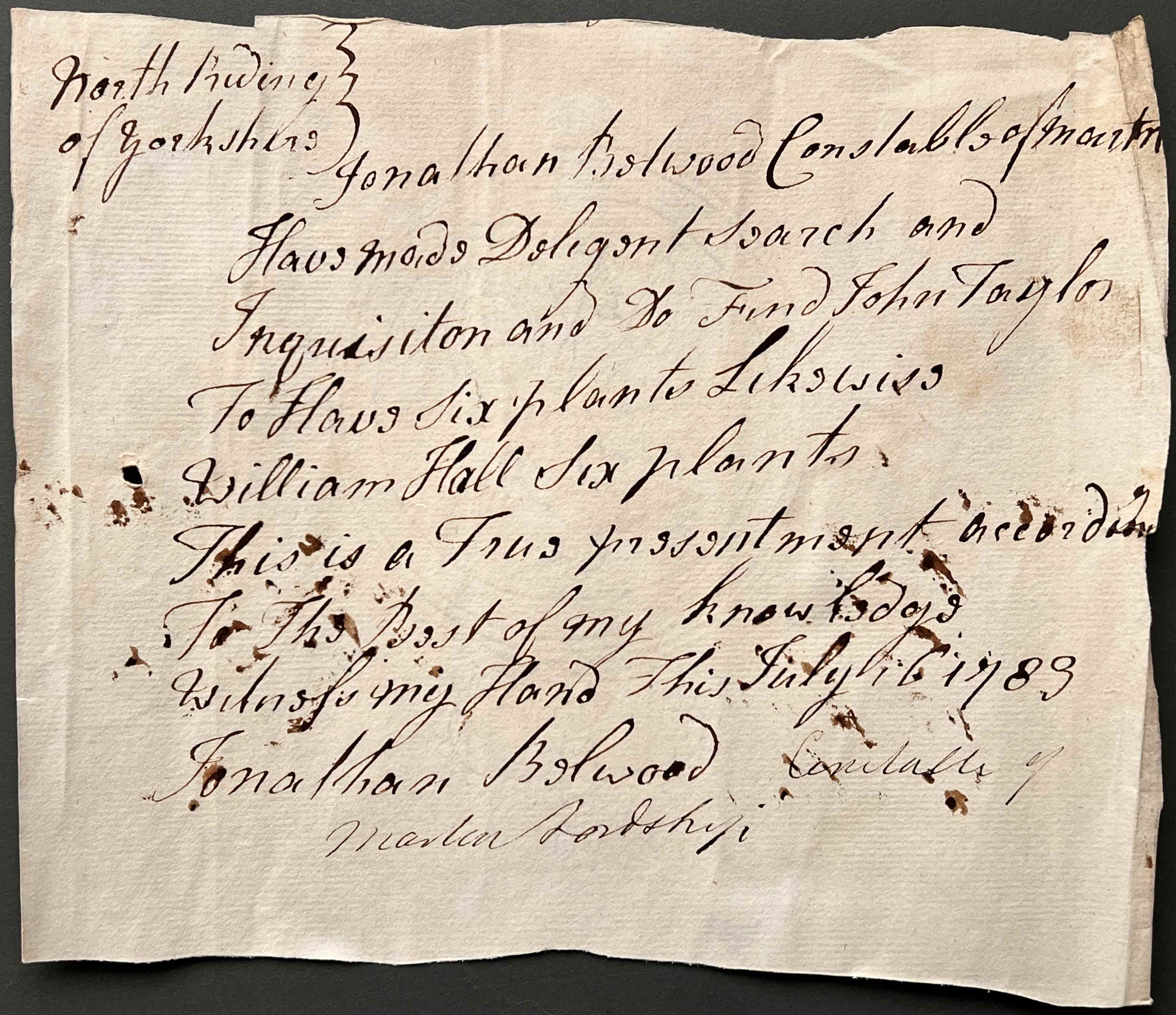
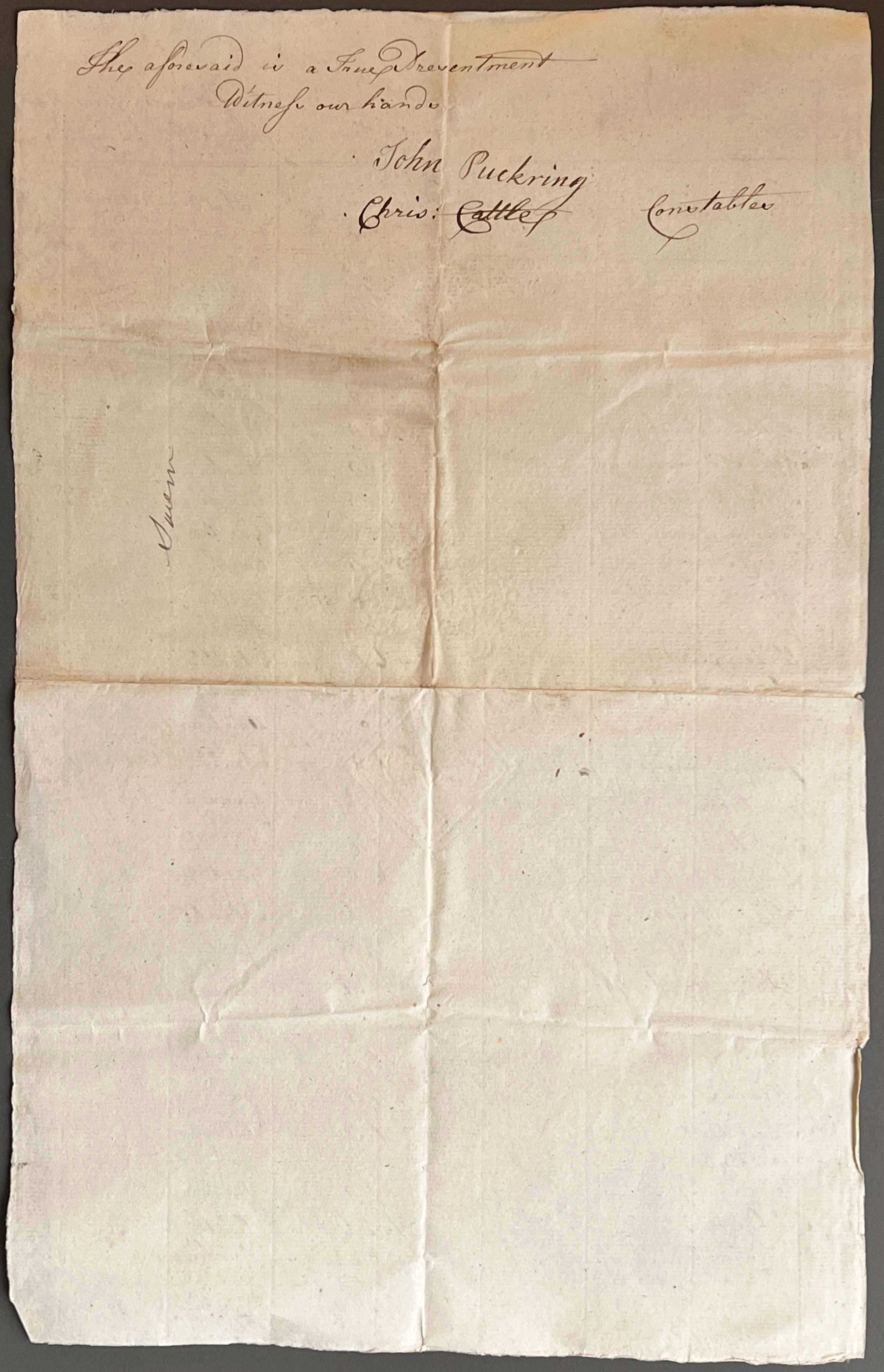
Parish constables’ returns on tobacco growers from the Midsummer Quarter Sessions, 1783 for Coneysthorpe (left) and Marton (right) [QSB 1783 3/12]
Tobacco plants are recorded differently across the parishes, sometimes as numbers of seeds sown or the numbers of plants in the ground or by the weight of the tobacco harvested.
Growers in Sheriff Hutton and Sutton on the Forest seem to have been very active, with 33 people listed in Sheriff Hutton and 27 in Sutton. Over two acres of land had been planted with tobacco in Sheriff Hutton and the constable’s return for the parish also reveals how the land was usually used. Widow Foster had planted a huge area, appearing on the list twice: 2266 square yards on arable land and had turned over an orchard for a further 252 square yards of tobacco growing. James Gascoigne also turned his orchard over to tobacco growing and interplanted his turnips with tobacco plants. Many others were growing the tobacco plants in their gardens.

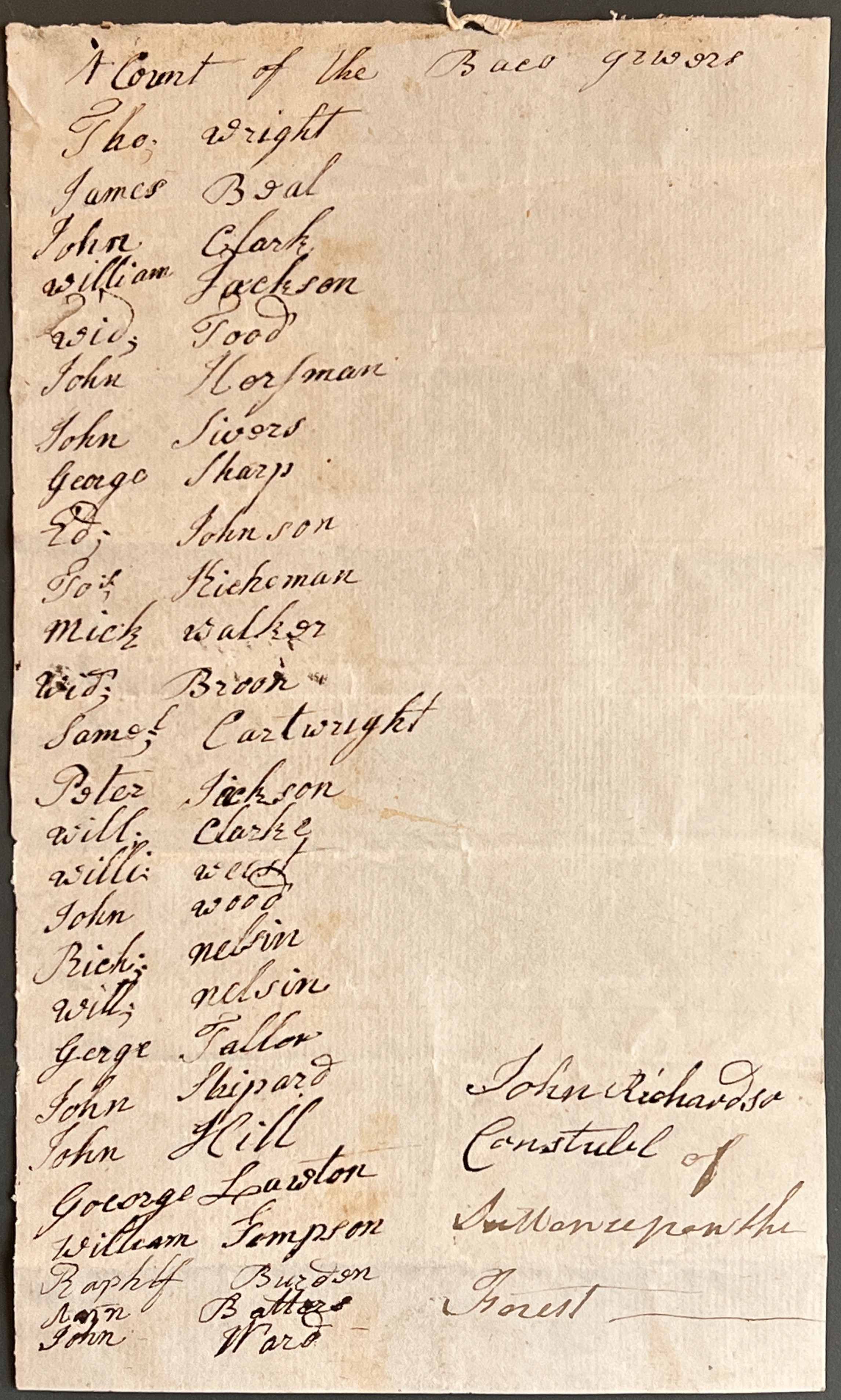
Parish constables’ returns on tobacco growers from the Christmas Quarter Sessions, 1783 for Sheriff Hutton (left & centre) and Sutton on the Forest (right) [QSB 1783 1/12/35 & 50]
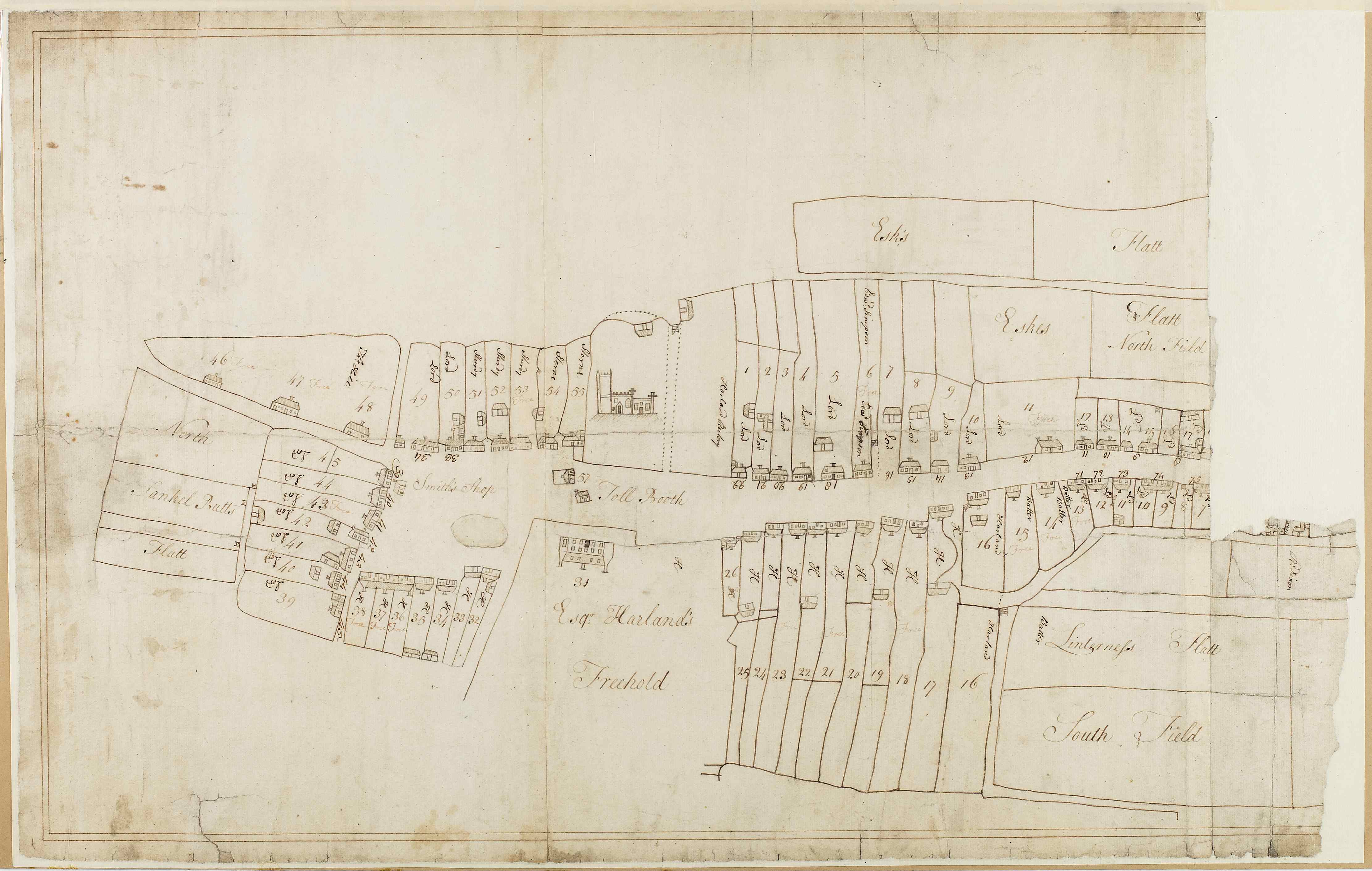
Plan of Sutton on the Forest village showing individual house plots where, potentially, some of the garden/orchard areas may have been used in the 1780s for tobacco growing; undated (early-18th century)[ZDV VI 48]
Some of the returns give a hint as to how the growers themselves felt about growing their own tobacco – the return for Stockton lists seven men growing tobacco with the caveat that ‘they had planted out of cuerosety [curiosity]’. In Brandsby, William Wildman, constable, reported of the tobacco plants there that ‘none came to perfection’ (see images below).
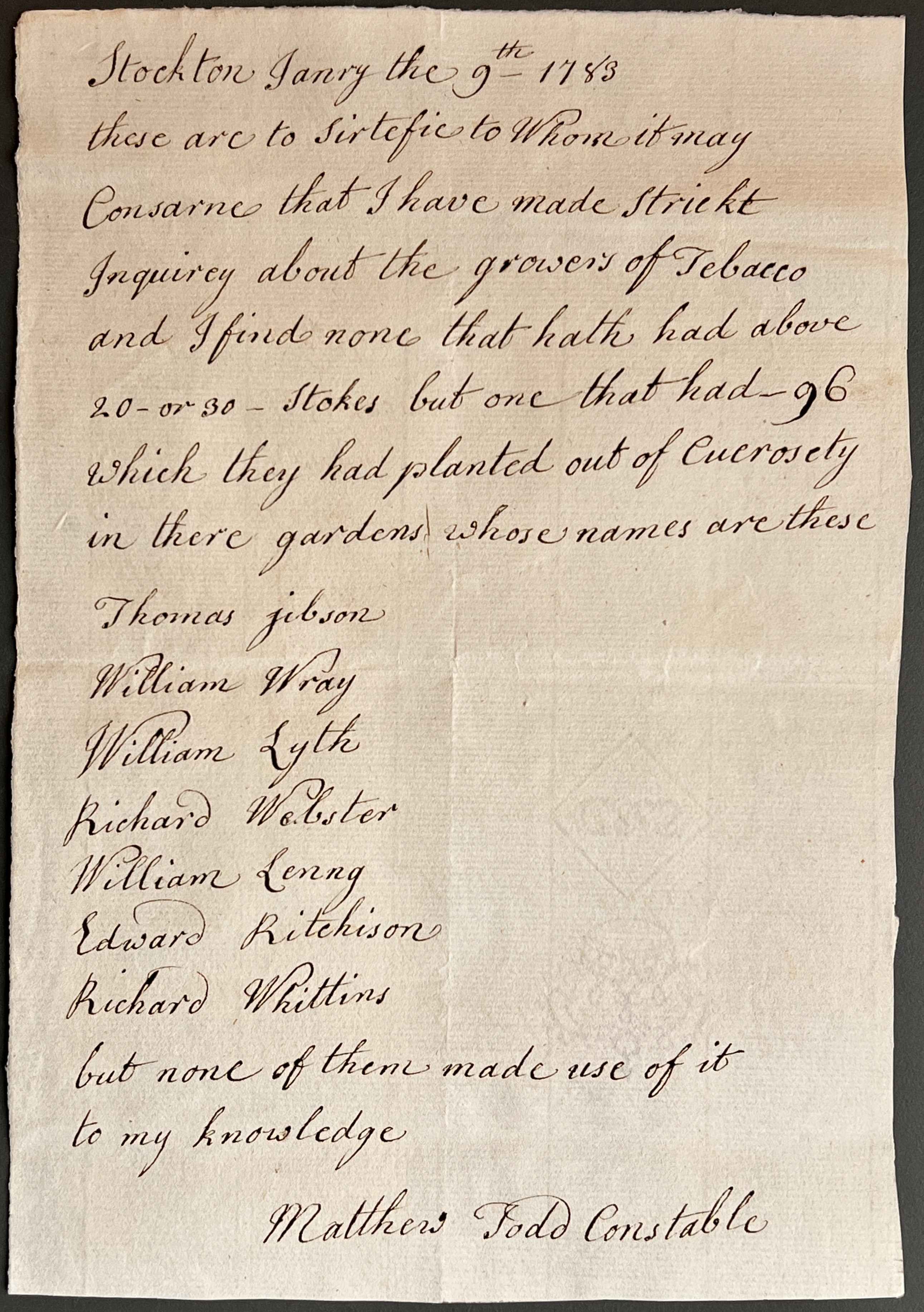
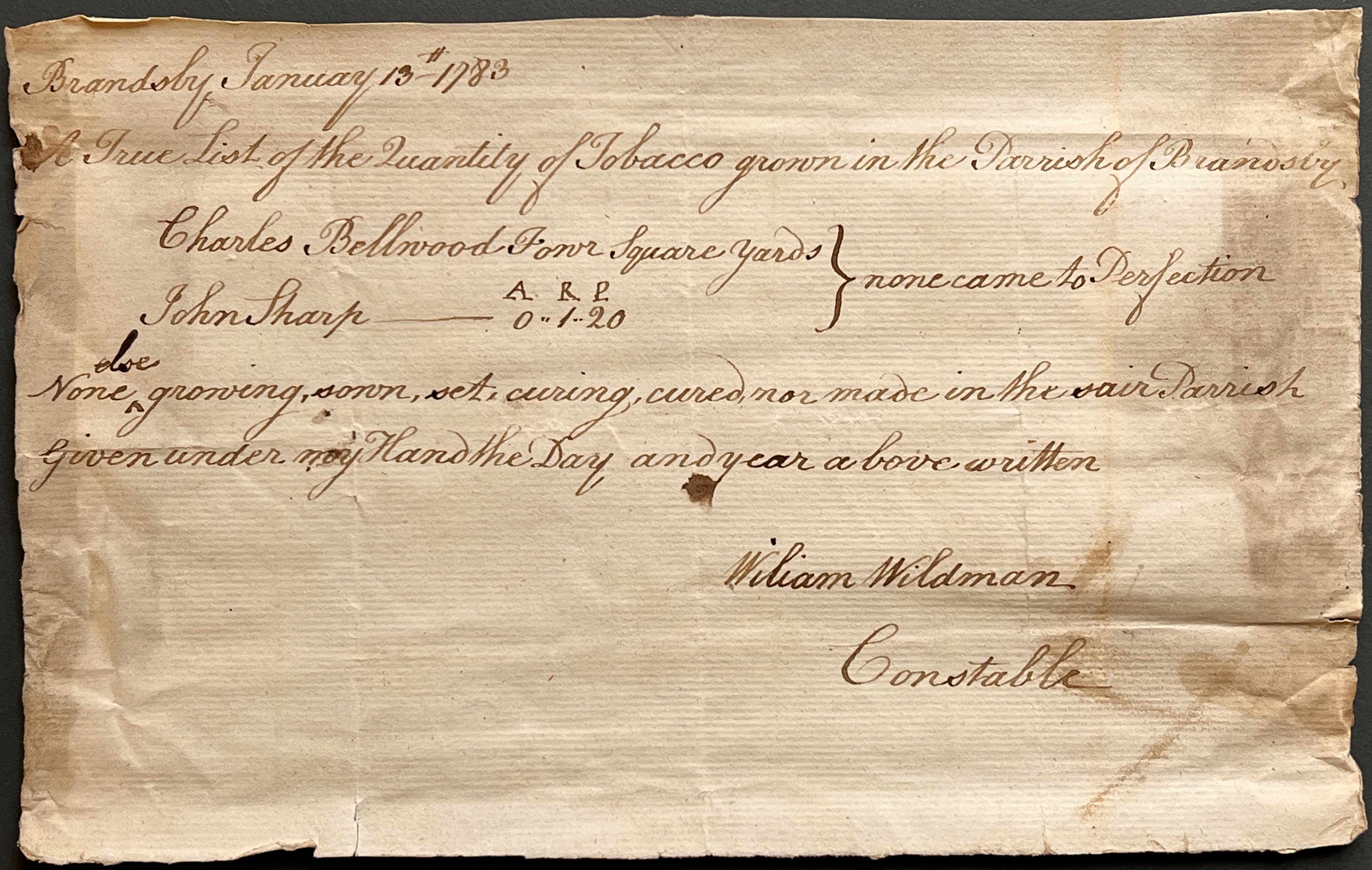
Parish constables’ returns on tobacco growers from the Christmas Quarter Sessions, 1783 for Stockton on the Forest (left) and Brandsby (right) [QSB 1783 1/12/5 & 10]
Overall, there seems to have been mixed success, some not even harvesting their small crops and others managing to harvest large quantities. Growers in Wigginton reported a successful harvest – William and John Pearson produced four stone of tobacco from one rood of land, and George Bell and John Martin produced a pound of tobacco from thirty plants (see image below).
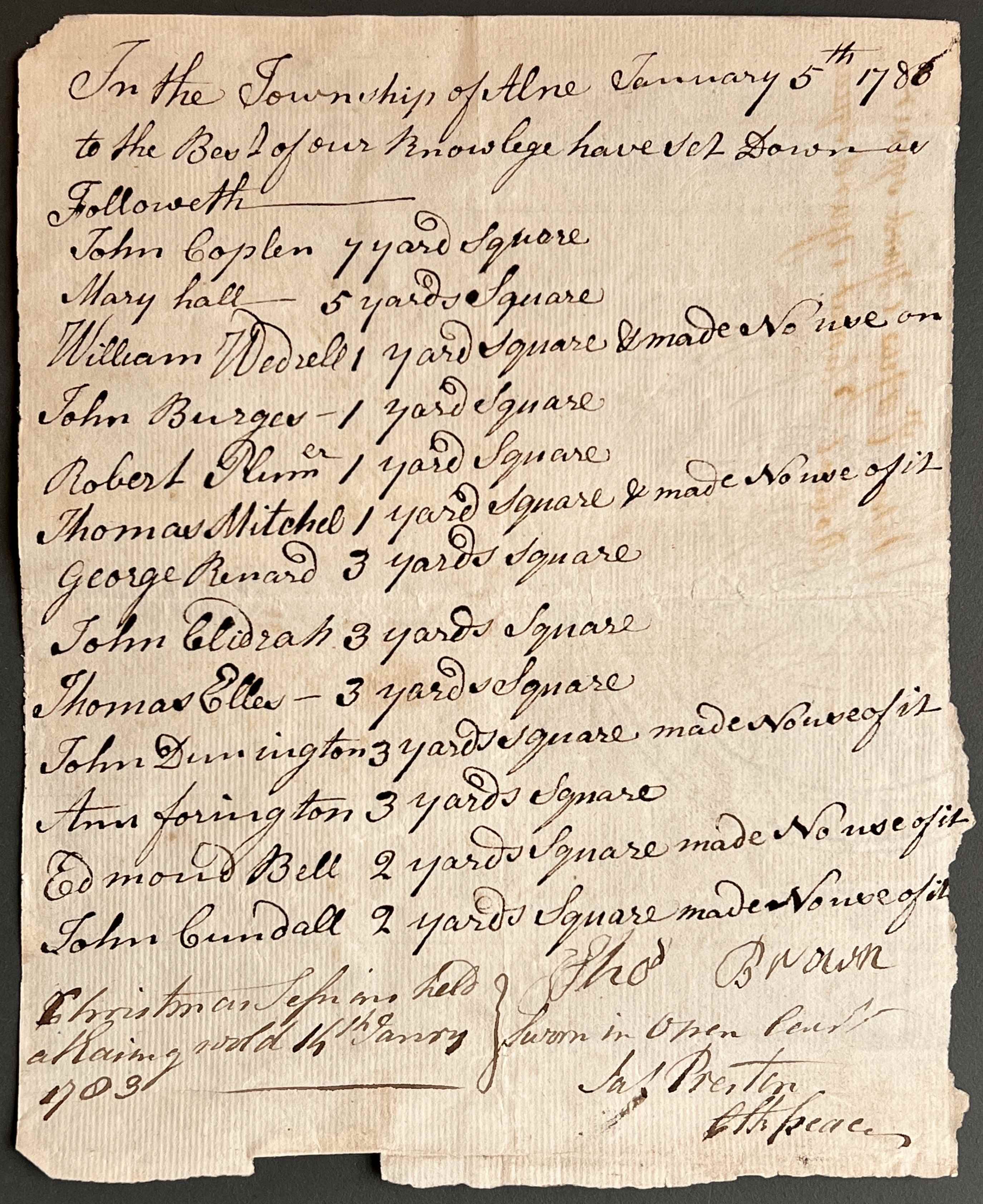
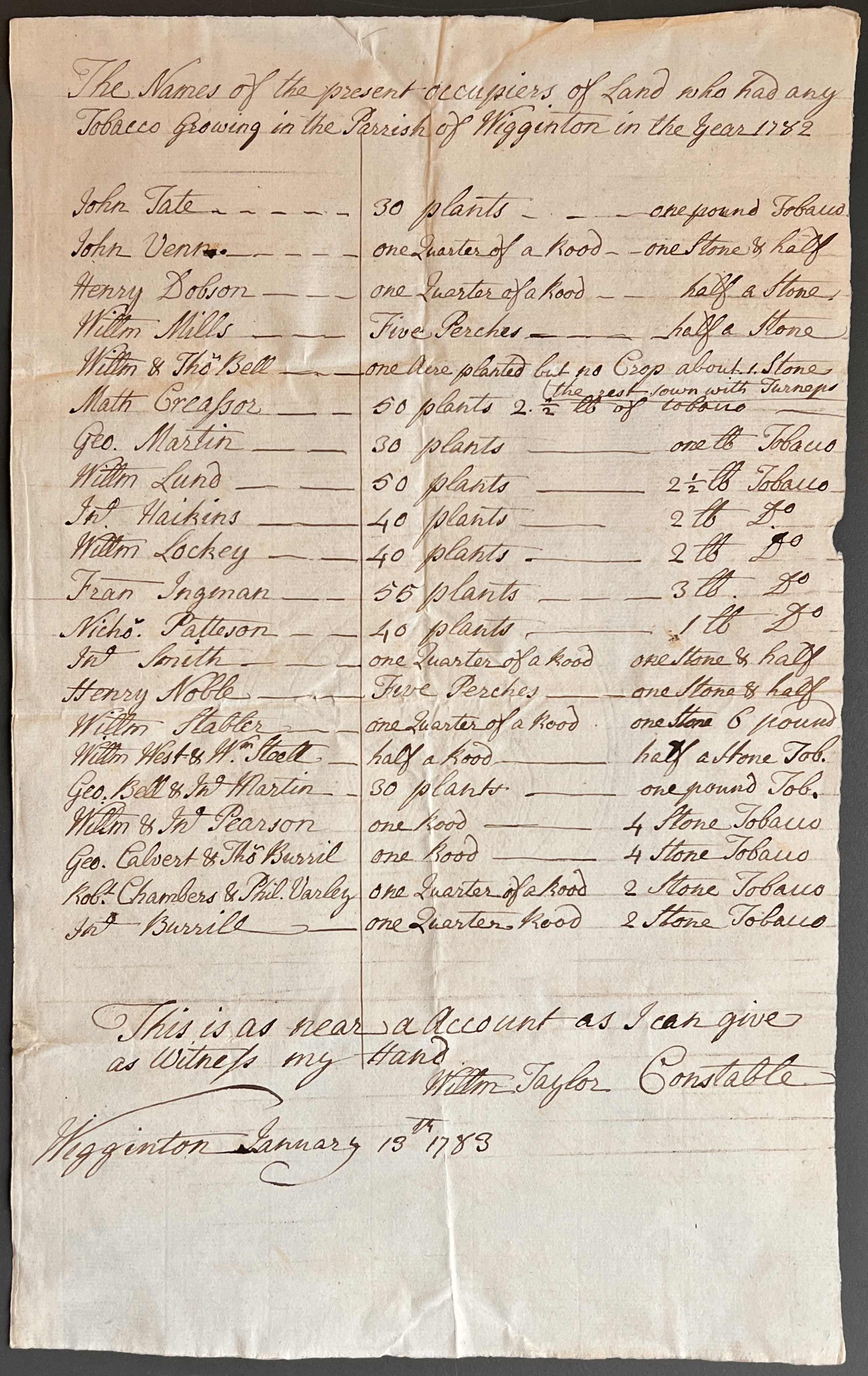

Parish constables’ returns on tobacco growers from the Christmas Quarter Sessions, 1783 for Alne (left), Wigginton (centre) and Claxton (right) [QSB 1783 1/12/2, 22 & 25]
In Farlington, parish constable Edward North reported that six growers all had tobacco curing. Christopher Peckit, in Cornborough, had successfully harvested a stone and a half of tobacco and had begun ‘curing’ the harvested leaves, but the parish constable reported that Peckit had since burnt it, presumably alarmed by the threat of local tobacco manufacturers to prosecute local growers (see images below).
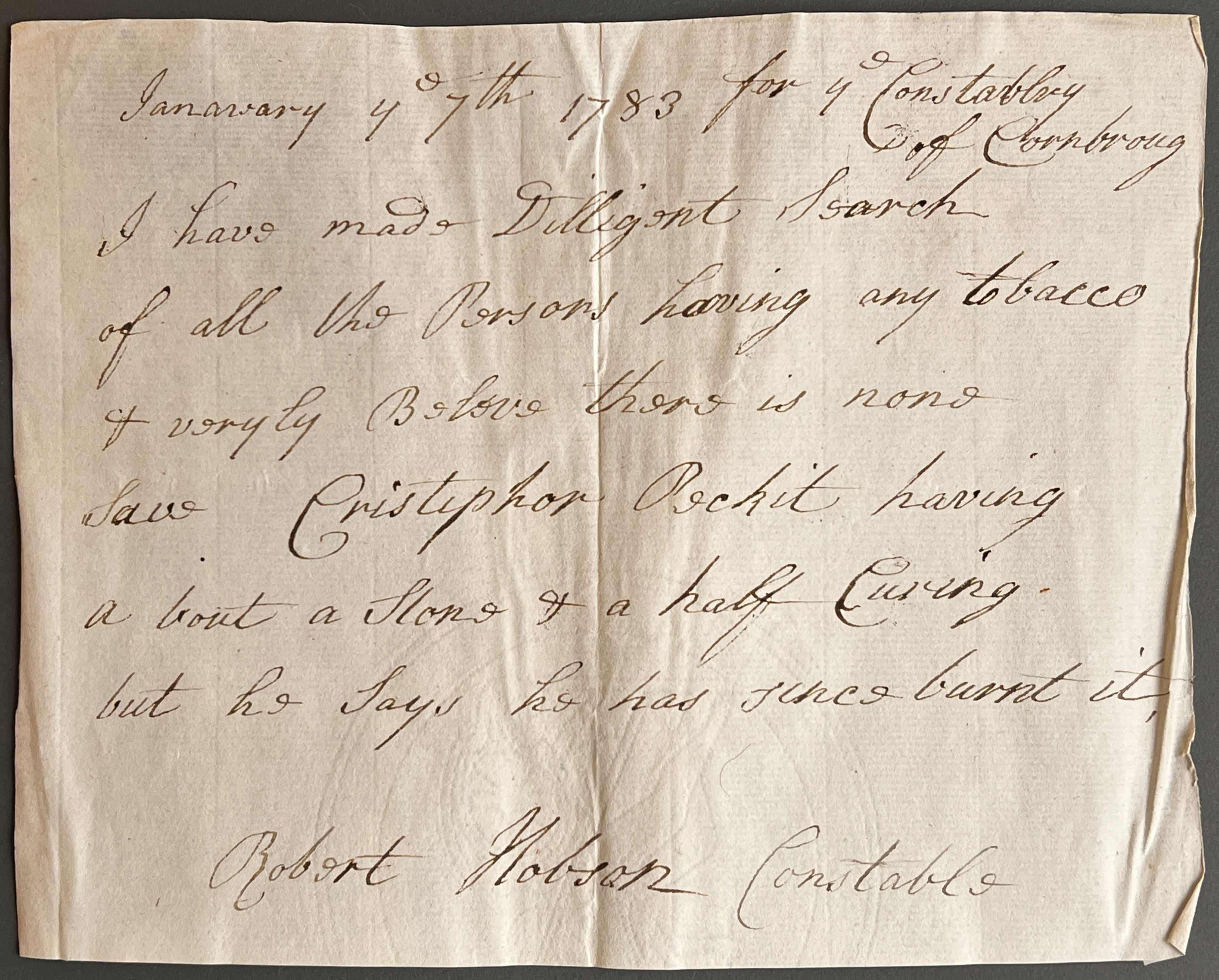
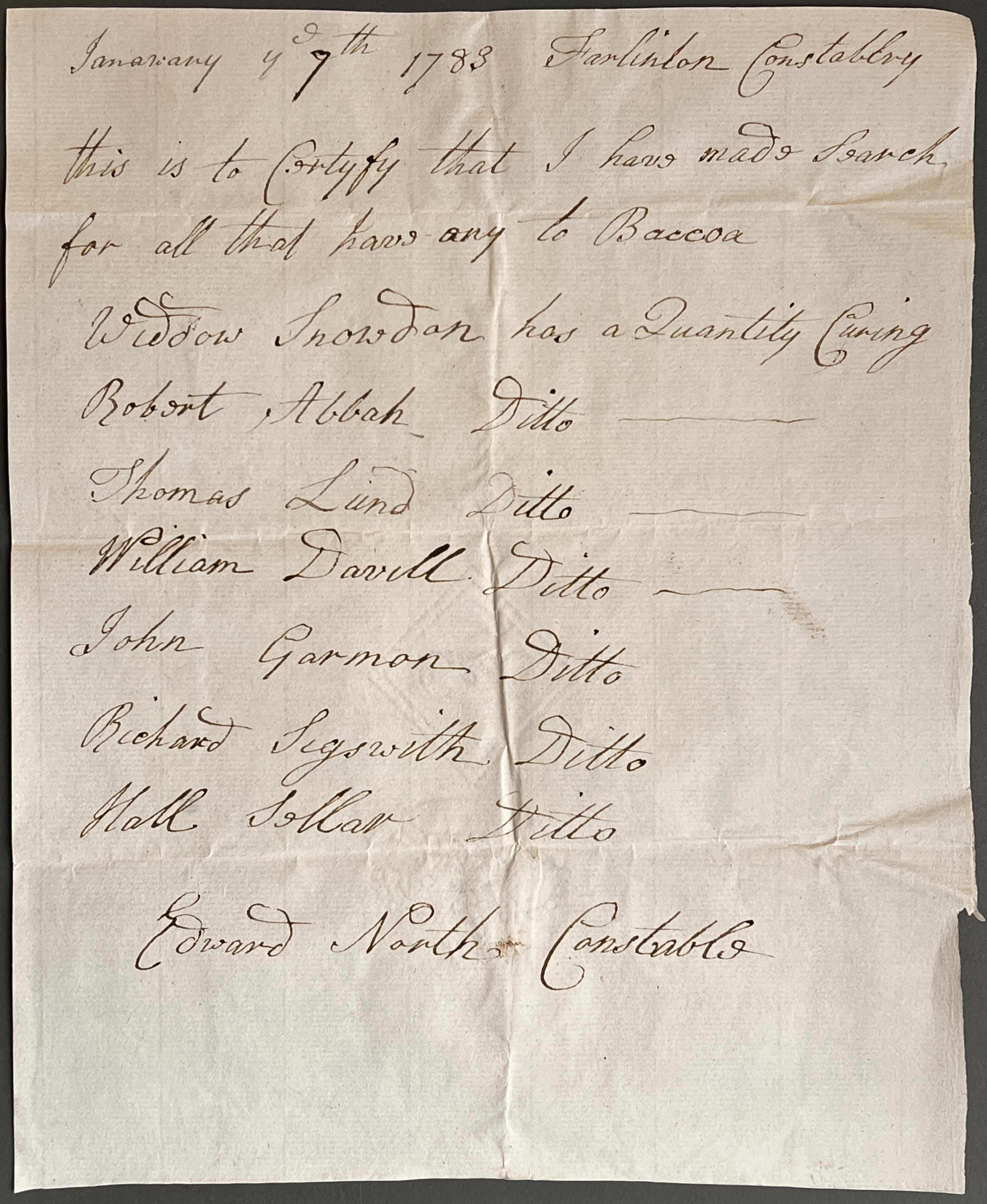
Parish constables’ returns on tobacco growers from the Christmas Quarter Sessions, 1783 for Cornborough (left) and Farlington (right) [QSB 1783 1/12/3 & 4]
Changes in legislation in the following years meant that fines for home growing were not enforced and the import of tobacco from America restarted. It is also possible that the home-grown tobacco was less popular than the imported variety. Whatever the reasons, these are the only set of documents found in the Quarter Sessions Bundles so far that specifically record tobacco growing in the Vale of York.
 North Yorkshire Archives Blog