by Sarah Pearey, Archives Assistant
This blog post explores and illustrates medieval documents issued from the papal chancery held by North Yorkshire Archives. It is intended to follow our recent post on documents from our collections which were issued by the English royal Chancery.
The chancery of the papal curia was the centre of papal government, manufacturing and issuing papal correspondence, decrees, orders, verdicts and bulls, and enrolling them in the Papal Regesta (similar to the English royal chancery’s Patent, Charter and Close Rolls, but not always as consistently) from the late twelfth century.
Papal bulls
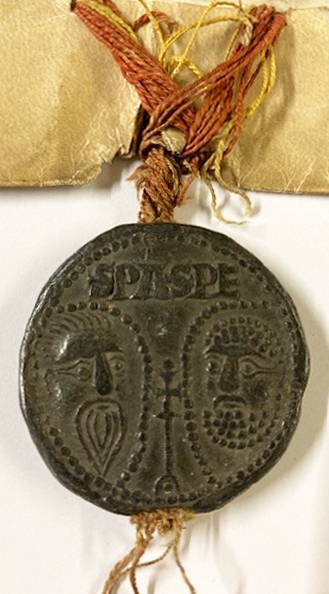
A papal bull is an official document issued by the papal chancery, named for the lead bulla attached, depicting the apostles St Peter and St Paul on one side, and the name of the pope on the other. We hold three papal bulls in our collections.
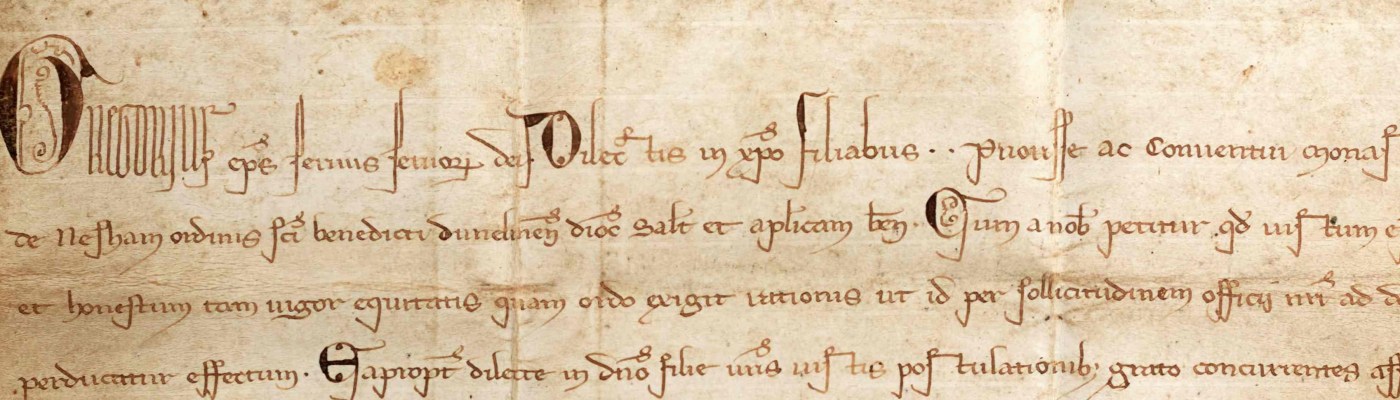
Papal Bull of Gregory IX, 1230
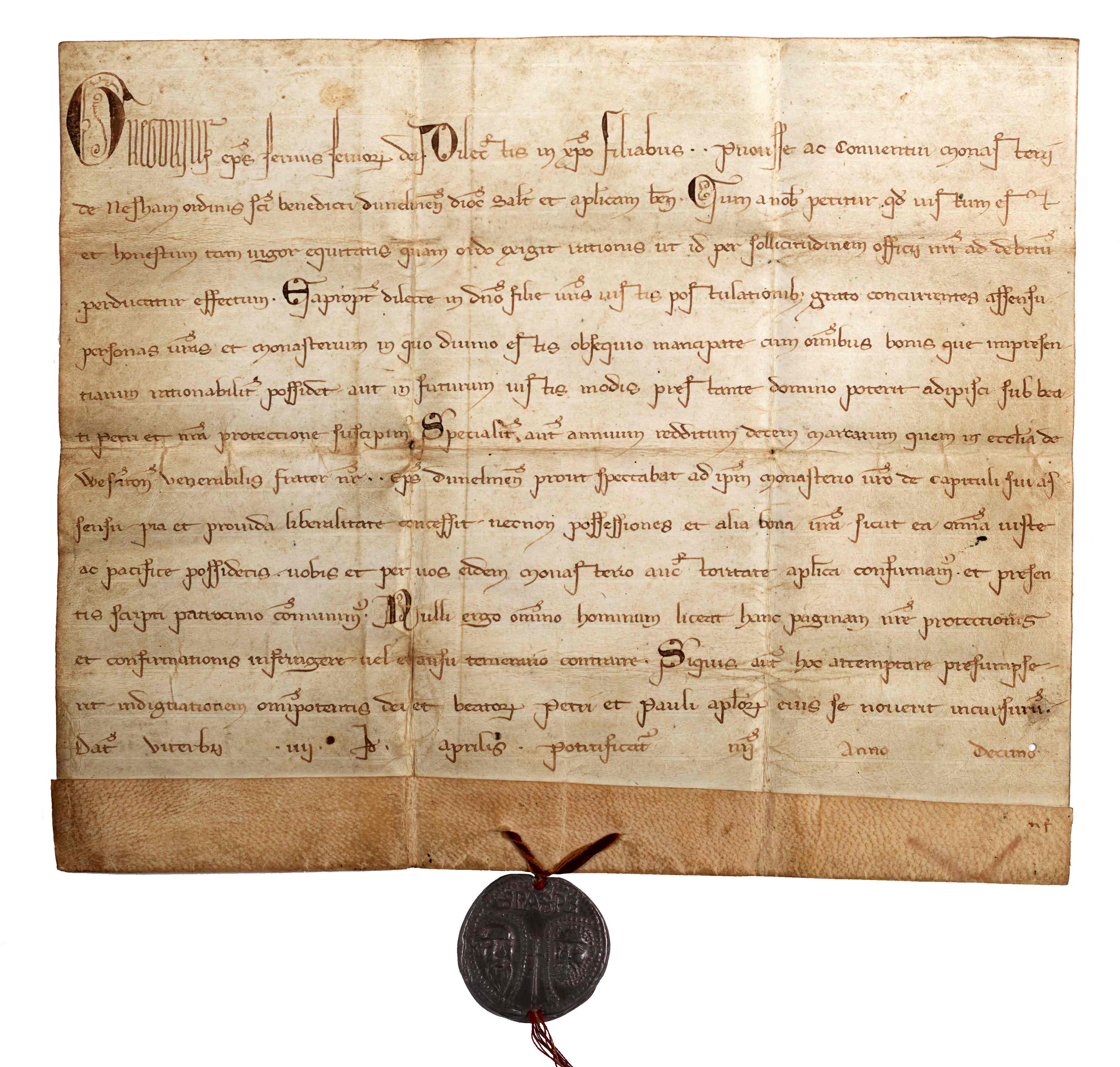
Papal bull of Gregory IX granting patronage to Nesham [Neasham] abbey and confirming grant of 10 marks per year out of Wesa’ton[?] church, made by bishop of Durham, 10 April 1230 [ZRL 5/7]
From the Lawson family of Brough Archive [ZRL], we hold a papal bull issued by the chancery of Gregory IX to Neasham Priory. Neasham Priory was a Benedictine monastery housing a community of nuns, founded in the mid-twelfth century, near Sockburn (County Durham) on the River Tees, of which little trace now remains.
Papal Bull of Boniface IX, 1396
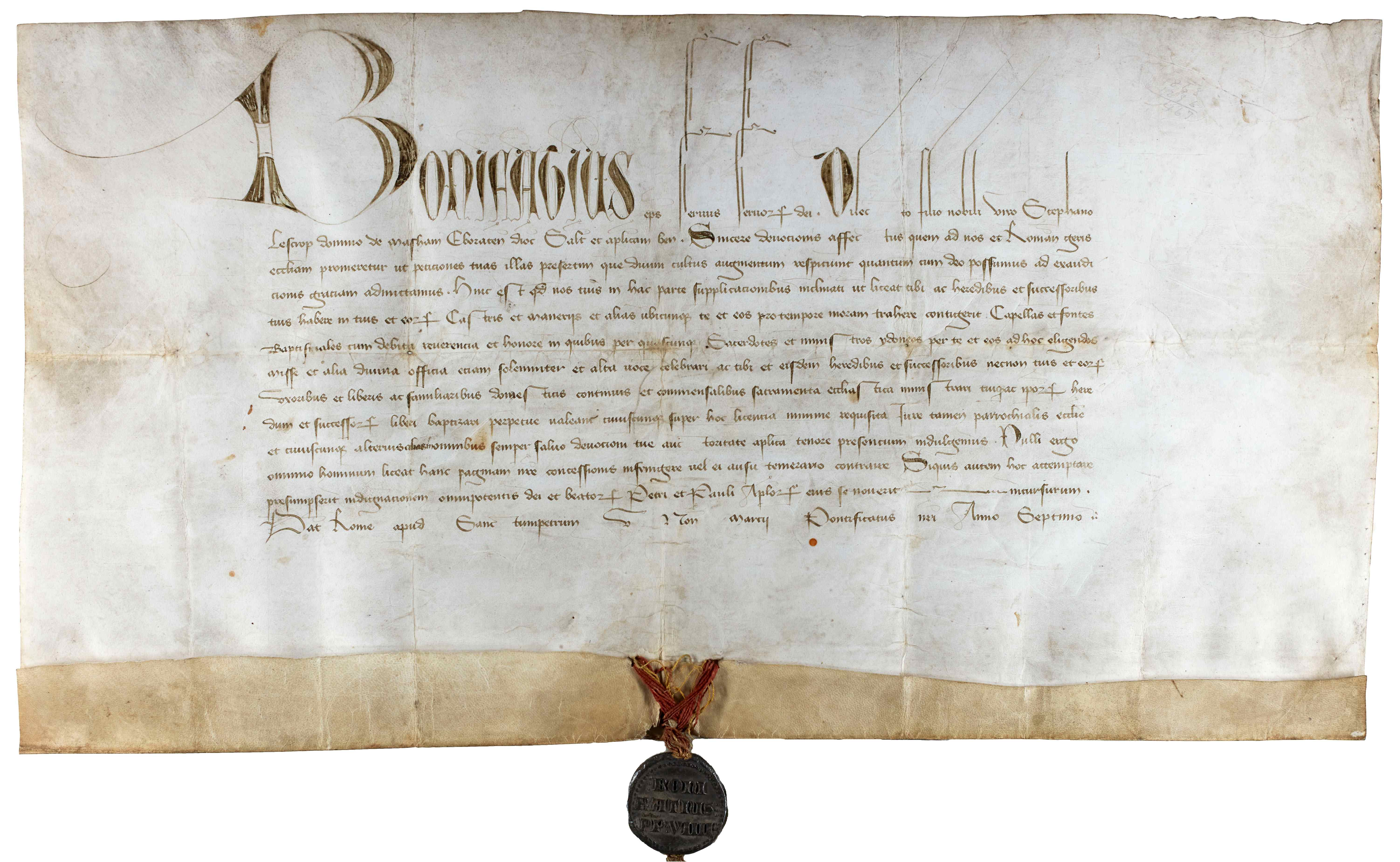
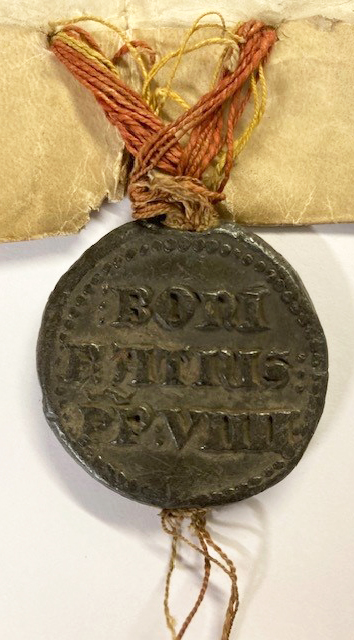
Papal Bull of Boniface IX granting to Stephen Lescrop, Lord of Masham, and his successors the right to have chapels and baptismal fonts and priests to say divine service in any of his dwelling houses, 3 March 1396 [ZPT 23/1]
Wealthy lay people could petition the pope for a licence to build their own chapels on their estates and choose their own chaplains – like the example above, issued to Stephen Scrope, 2nd Baron Scrope of Masham (1345-1406) in 1396.
This document was found and given to H. A. Scrope in April 1910 by C. Riddell of Felton, who wrote from Swinburne Castle, Barrasford, Northumberland:
“I had a day in the office yesterday cleaning out old boxes of deeds and came on the enclosed.. How this grant got here I don’t know, but I’ll make you a present of it. …“
Papal bull of Innocent VIII, 1490

Papal bull of Pope Innocent VIII authorising dispensation for admission of Ralph Wandisfurth als Northend, scholar, to holy orders withstanding defect of birth [illegitimacy], 12 September 1490. Dated at Rome, St Peter’s, signed M Robini and sealed with the Bulla of Innocent VIII [ZKW, MCall no 52]
In the above papal bull, Ralph Wandisfurth [Wandesford] is being permitted to enter the clergy despite being illegitimate. Canon law prevented men with the defectus natalium (defect of birth, or illegitimacy) from entering holy orders, unless they received a papal dispensation like this one.
Papal dispensations for marriage
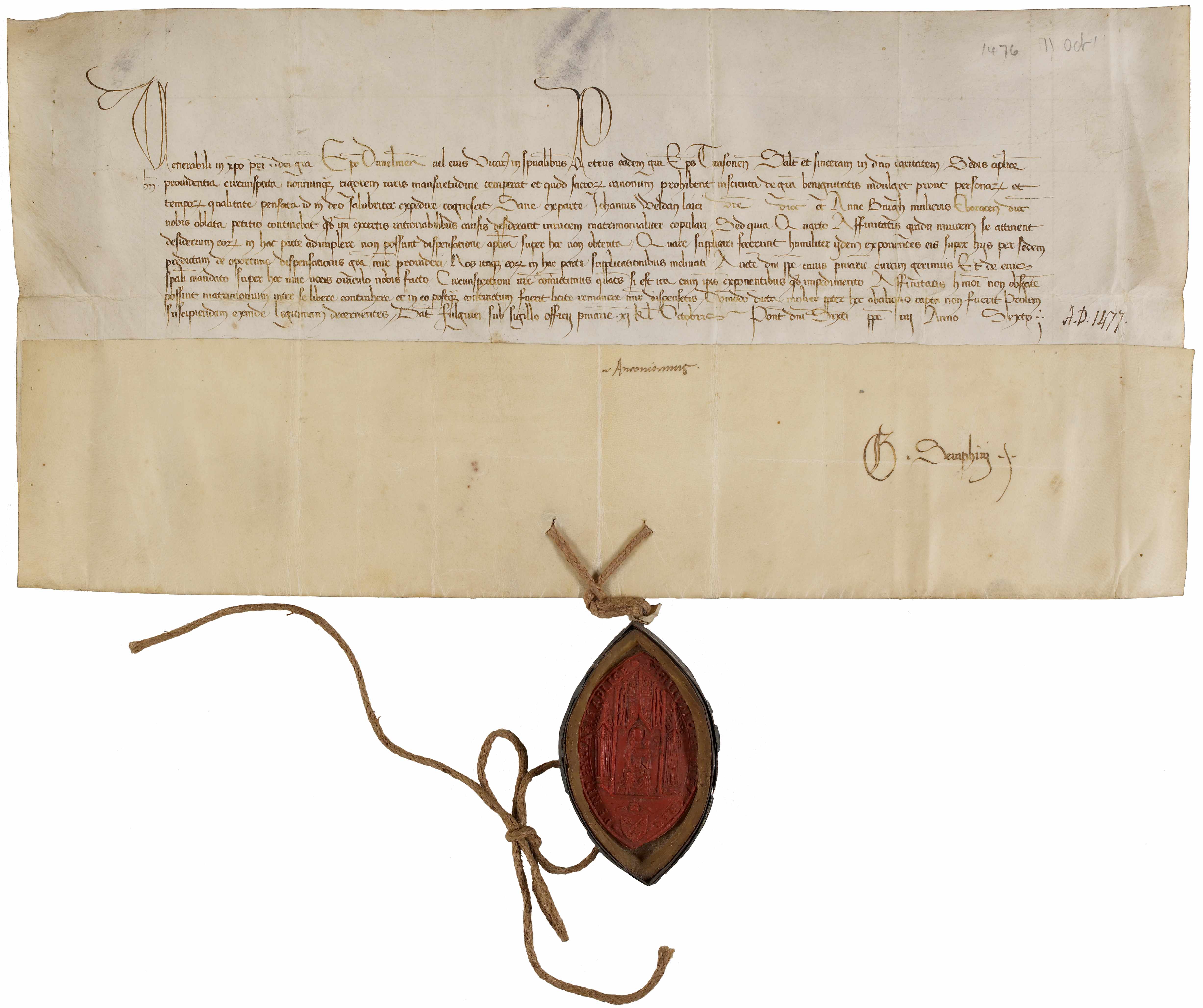
Papal Dispensation for the marriage of John Weldan, a layman of Durham Diocese, and Ann Burgh of York Diocese, who are related in the fourth degree, with proviso that the woman shall not meanwhile have been taken by any man so as to impugn legitimacy of issue, 11 October 1477 [ZRL 1/39]
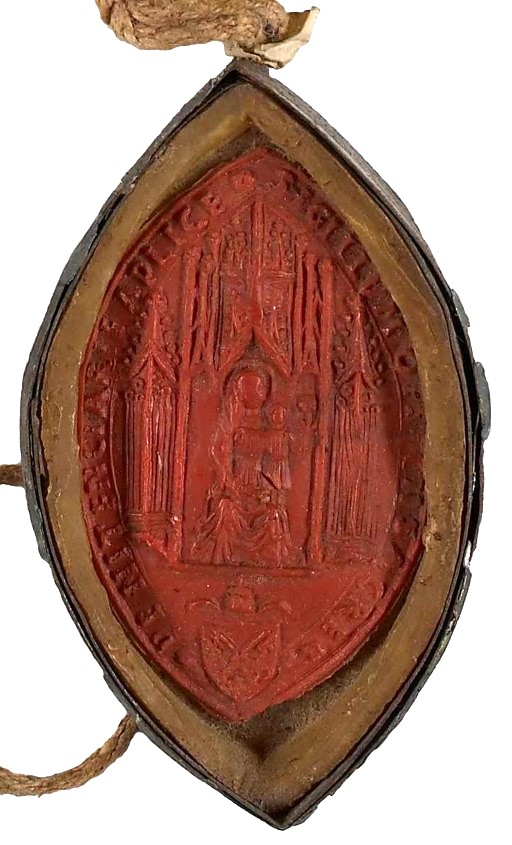
With detail of seal of the Penitentiary in red wax on cord. Vesica, 2 ½ x 3 inch. Virgin and child with lily under gothic canopy. In base: Papal Arms
Papal documents also appear in the form of papal dispensations or licences to marry. Many nobles and gentry secured marriage dispensations in late medieval Europe, particularly from the papal Chancery. In the later fifteenth century, there was a rise in the number of laity requesting marriage dispensations, this time from the Apostolic Penitentiary.
The Apostolic Penitentiary, which emerged as a department of the papal tribunal by the mid thirteenth century, dealt with matters of conscience. One of its main responsibilities was issuing dispensations for the marriage of individuals of close kinship, that had been otherwise prohibited by Canon Law in 1215 (prohibited marriage between those related within four degrees of consanguinity (kinship through blood) or affinity (kinship created through marriage).
The seal attached to the above marriage dispensation is that of the Penitentiary – a pointed oval shape, with the Virgin and child with lily under a gothic canopy, with the papal arms at the base.
In 1533, Henry VIII’s Dispensations Act forbade his subjects to petition the papacy for grants and favours, and the role of issuing such dispensations and graces became that of the Archbishop of Canterbury.
Sources and further reading:
Bliss, W.H. (ed.) (1893) Calendar of Papal Registers Relating To Great Britain and Ireland: Volume 1, 1198-1304, via British History Online
Clarke, Peter (2011) ‘Central authority and local powers: the apostolic penitentiary and the English church in the fifteenth century’, Historical Research, Volume 84, Issue 225, pp. 416–442.
Clarke, Peter (2013) ‘Canterbury as the New Rome: Dispensations and Henry VIII’s Reformation’, The Journal of Ecclesiastical History, 64(1), pp. 20–44.
Clarke, Peter (2024) Dispensations and church courts in later Medieval England. In, Clarke, Peter and Robson, Michael (eds.) Popes, Bishops, Religious and Scholars: Studies in Medieval History Presented to Patrick N. R. Zutshi for his Seventieth Birthday. (BCEEC, 8) Turnhout, Belgium. Brepols, pp. 389-409.
Sayers, Jane. E. (ed.) (1999) Original Papal Documents in England and Wales from the Accession of Pope Innocent III to the Death of Pope Benedict XI (1198–1304), Oxford University Press.
Wertheimer, Laura (2005) ‘Illegitimate birth and the English clergy, 1198-1348’, Journal of Medieval History, Volume 31, Issue 2, pp. 211-229.
 North Yorkshire Archives Blog