Welcome to our blog, sharing our collections, conservation and outreach
Methodism in the archives
By Daniel Sudron, Archivist
Within the collections at the County Record Office there are a huge range of records relating to Methodism and Methodist Chapels. The following is a brief introduction to a selection of these records.
Methodism and John Wesley
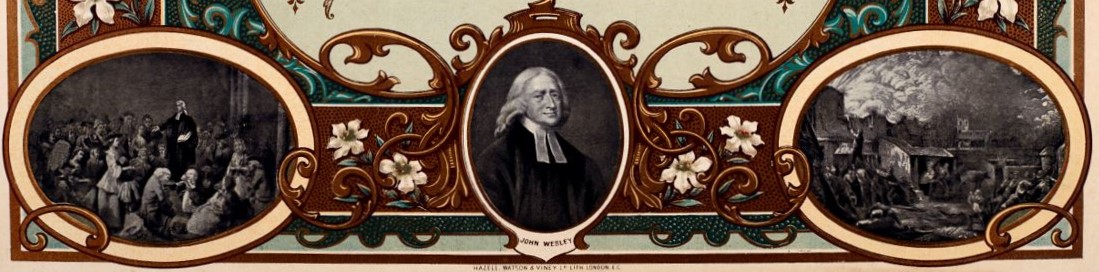
John Wesley (1703-1791), the best known and most prominent founder of Methodism, was a minister in the Church of England, however, his ‘non-conformist’ beliefs and his travelling and pioneering preaching caused rifts with the Church of England.
Wesley travelled widely and began outdoor preaching in 1739 to crowds of thousands of working-class men and women. He formed local societies and encouraged groups to meet on a weekly basis. Although John Wesley wished for Methodists to remain within the Church of England and encouraged them to attend their local parish church, the established Church was keen to distance itself from him and his followers.
Despite Wesley’s wish to remain within the Church of England, the popularity and strength of Methodism resulted in a separate Methodist Church. In 1784 John Wesley set up the Yearly Conference of the People called Methodists to ensure the continuation of the Methodist movement after his death. From 1795, Methodists were permitted to perform the sacraments and to conduct marriages.
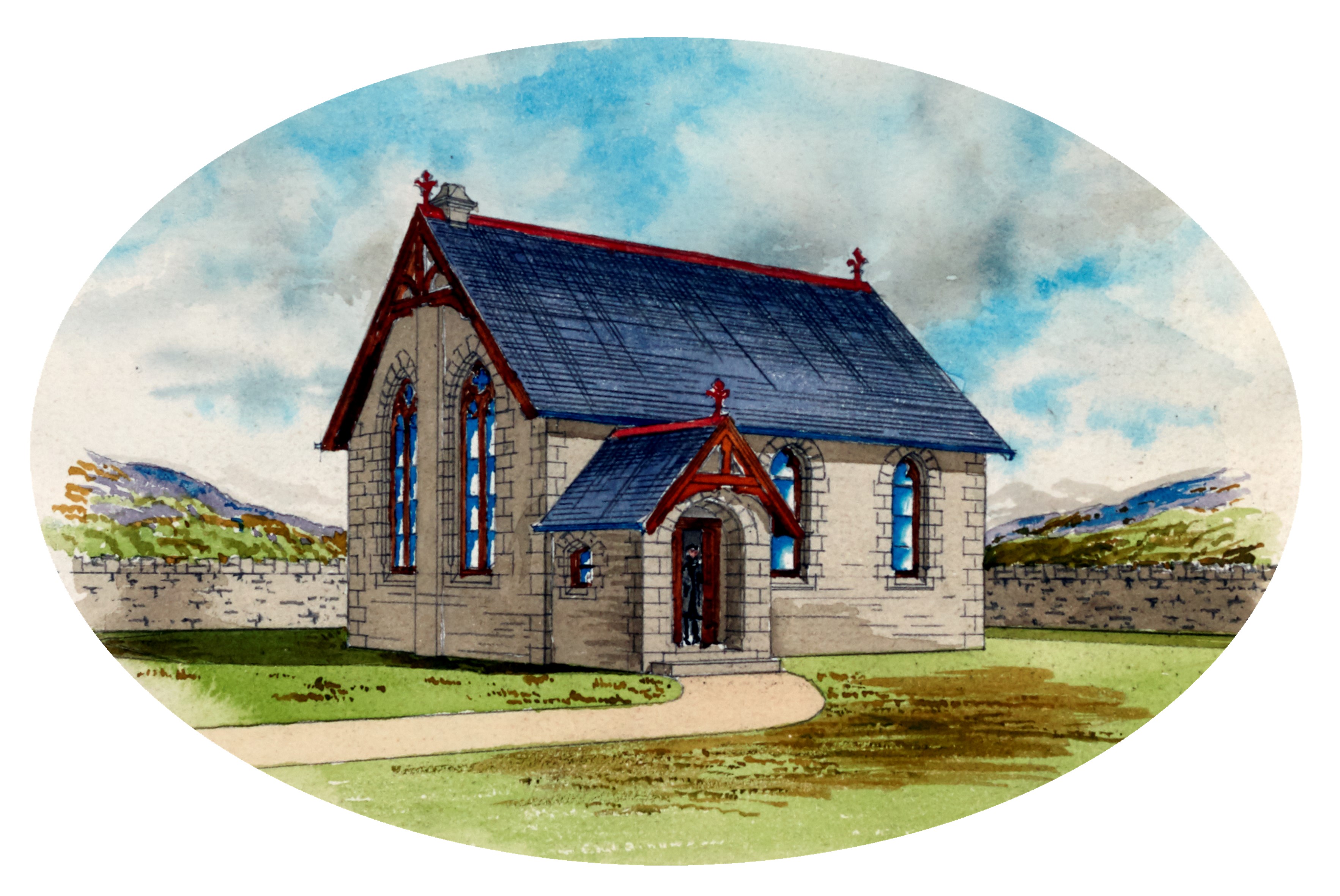
Design for a proposed Wesleyan Chapel, Snilesworth, 1906 [R/M/NO 5/5]
Methodists held works as well as faith as important aspects of Christian life. Methodism was involved in many welfare projects, and also had links to the formation of reformist groups, trade union movements, and the Labour movement. Wesley was also concerned with personal morality, encouraging hard work, saving for the future and charitable giving. The Methodist Church was involved in the Temperance Movement, with ministers having to pledge not to drink and to encourage their congregations to do the same. You can read more about ‘Temperance versus the demon drink‘ in our related blog.
After the death of John Wesley (1791), disagreements over leadership and identity caused the formation of separate Methodist groups. The established Methodist church became known as ‘Wesleyan Methodists’, with other groups including Methodist New Connexion (1797), Primitive Methodists (1810), and the Bible Christians (1815) being formed. In 1932 the Wesleyan Methodists, Primitive Methodists, and the Methodist New Connexion united to form the Methodist Church of Great Britain, which continues today with around 170,000 members and over 60 million Methodists worldwide according to The Methodist Church website.
“Do all the good you can, By all the means you can, In all the ways you can, In all the places you can, At all the times you can, To all the people you can, As long as ever you can.” John Wesley
Registration of Non-conformists
Under the 1689 Act of Toleration, protestant dissenting congregations were permitted freedom of worship but were required to register their meeting places with the Clerk of the Peace at Quarter Sessions, or with Bishops or Archdeacons.
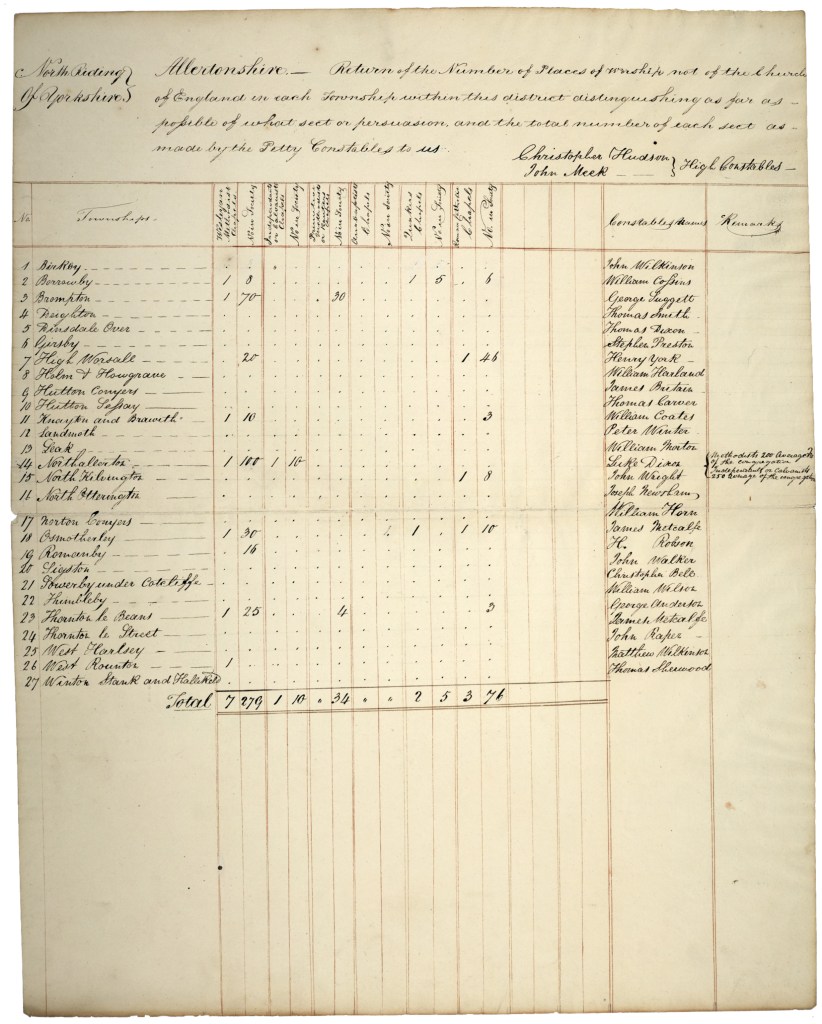
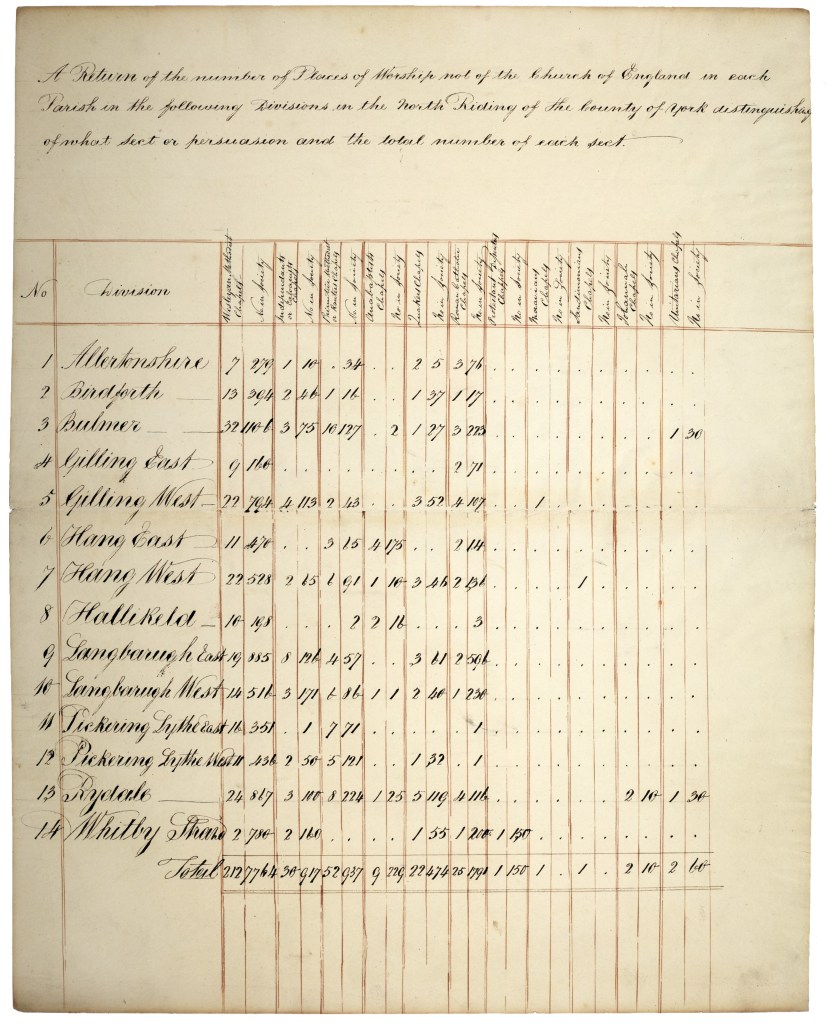
In 1829, the Government required returns to be made of all dissenting congregations “distinguishing as far as possible of what Sect or Persuasion and the total number of each Sect”.
Petty Constables of each township made returns to Quarter Sessions. These returns were compiled at Quarter Sessions and sent to the Government. However, the returns were lost due to a fire at the Houses of Parliament in 1834. Fortunately, copies have been kept in the Quarter Sessions records and give an insight into the growth of Methodism and other congregations across the North Riding of Yorkshire.
Return of dissenting congregations in Northallerton, Allertonshire and the North Riding of Yorkshire, 1829 [QDN]
“I Give you Notice… to compel you to quit it”
Non-conformity was not universally welcomed. Charles Brudenell-Bruce (born 1773, died 1856), was Earl of Ailesbury from 1814 and 1st Marquess of Ailesbury from 1821, and owner of the Jervaulx estates. The Earl did not approve of non-conformity and placed restrictions within his estates.
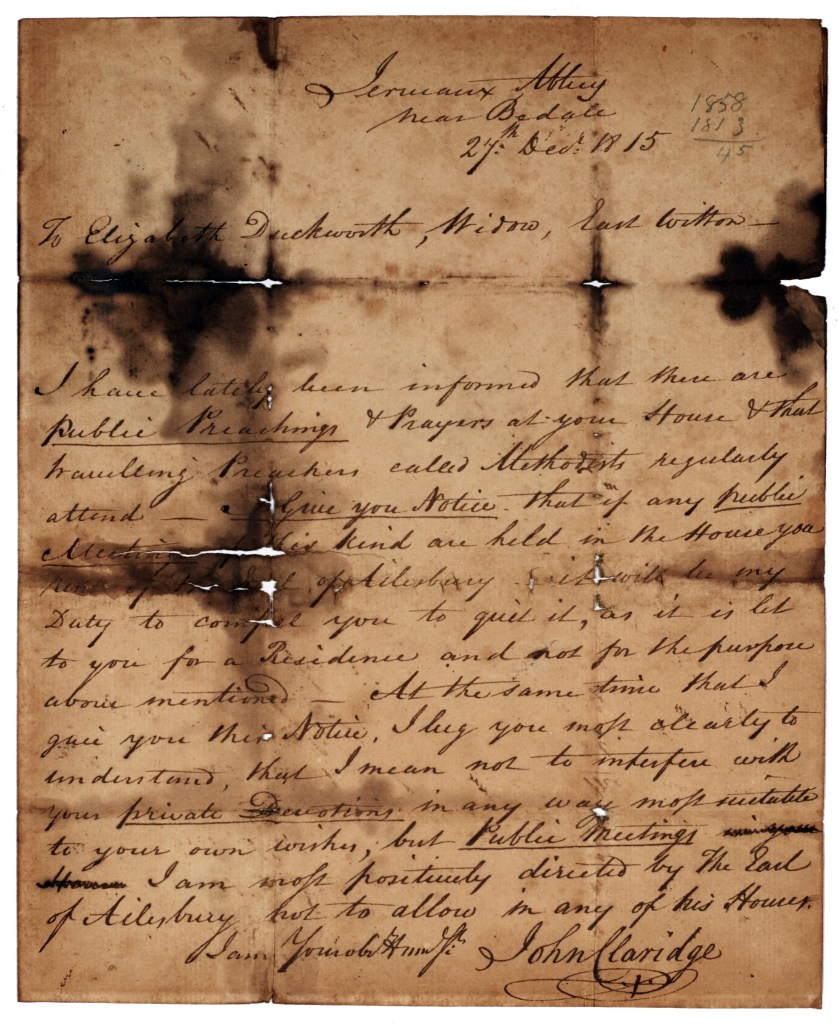
In 1815 his estate agent, John Claridge, wrote to Elizabeth Duckworth, a widow in East Witton, telling her to quit the holding of public meetings in the house she rented from the Earl.
“I have lately been informed that there are PublicPreachings and Prayers at your House and thattravelling Preachers called Methodist regularlyattend…”
“I give you Notice… it will be my Duty to compel youto quit it…”
“…Public Meetings I am most positively directed bythe Earl of Ailesbury not to allow in any of hisHouses.”
Letter from John Claridge, Jervaulx estate agent, to Elizabeth Duckworth, widow, East Witton, relating Methodist meetings in East Witton, 27 Dec 1815 [R/M/W 4/2]
In East Witton, Methodists would have to meet outside the village beyond the Jervaulx estate boundary due to these restrictions placed on holding public meetings in houses rented from the estate.
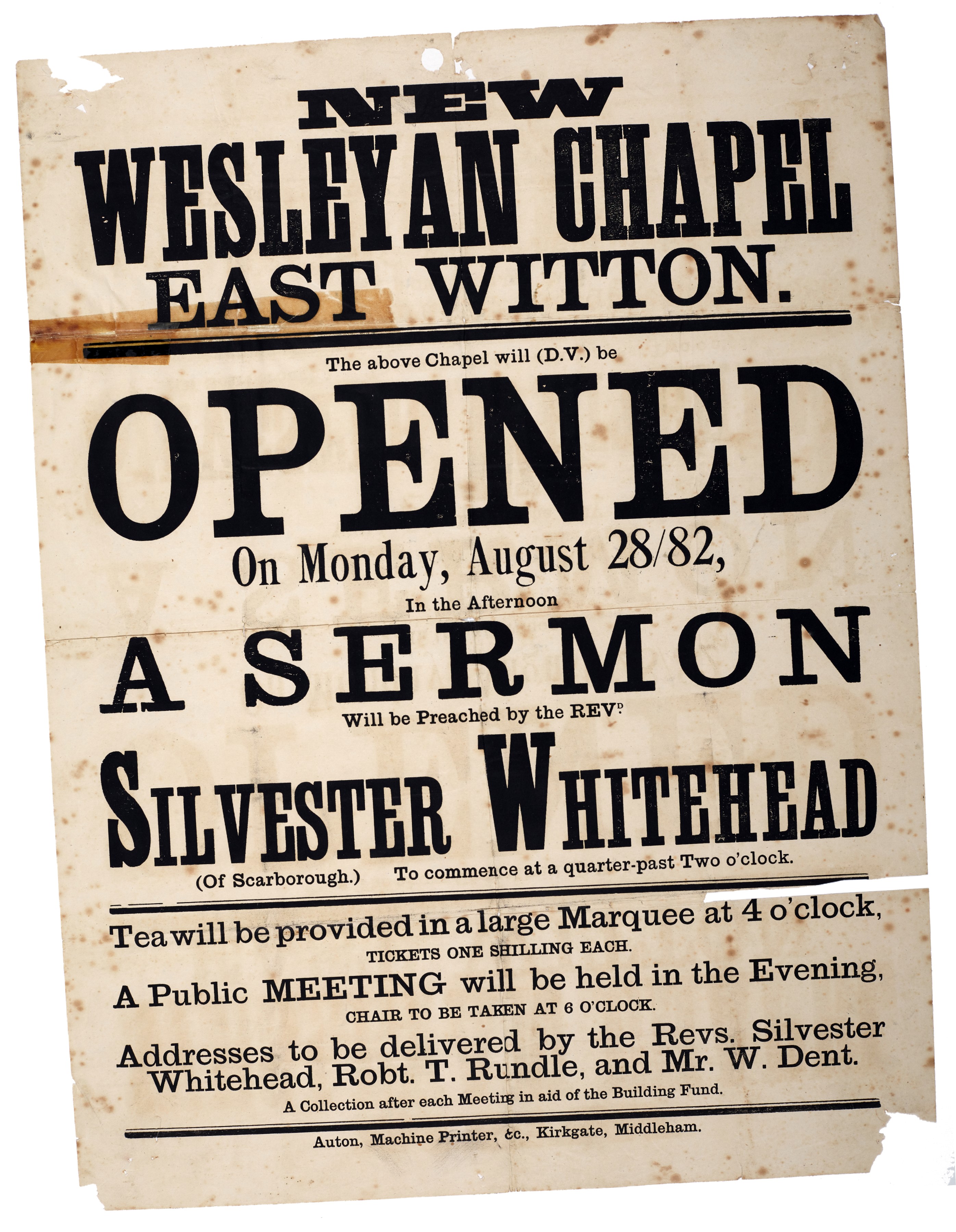
It was not until 1881 that George Brudenell-Bruce, 4th Marquess of Ailesbury, granted a lease of a piece of ground in East Witton for a Wesleyan Methodist chapel. The foundation stones were laid on 20 April 1882 and the new chapel was opened on 28 August 1882.
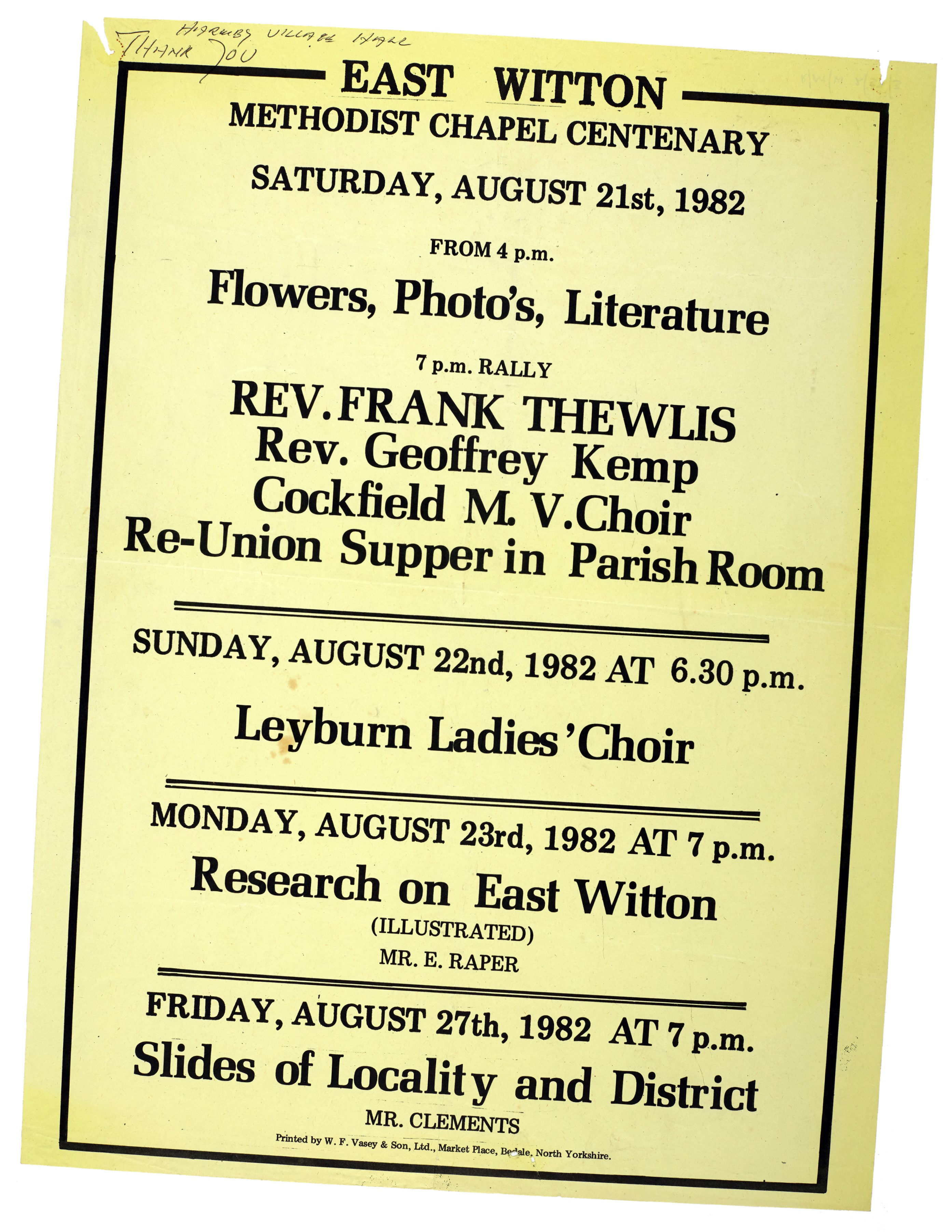
Poster for the opening of the new Wesleyan Chapel, East Witton, 1882 [R/M/W 2/33/2] and East Witton Methodist Chapel centenary celebrations poster, 1982 [R/M/W 2/33/3]
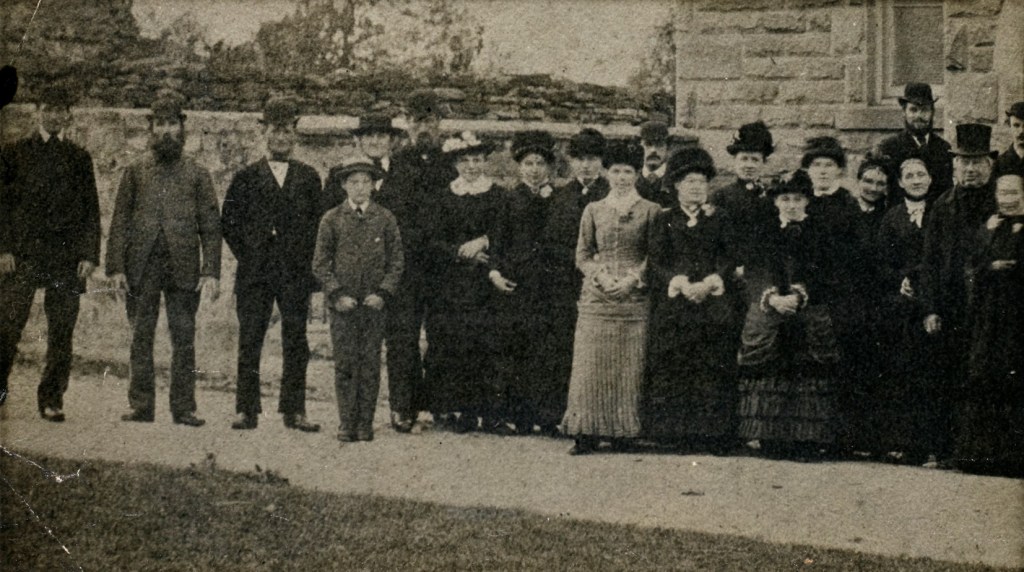
New Wesleyan Chapel, East Witton, 1882 [R/M/W 2/33/2]
Glasshouses: A Methodist model village
Glasshouses is a village close to Pateley Bridge in the Nidderdale Area of Outstanding Natural Beauty.
In 1835, the Flax Mill in the scattered settlement known as Glasshouses was bought by brothers John and George Metcalfe. As Glasshouses Mill was developed and enlarged through the mid-19th century, there was an increase in demand for workers, with numbers increasing from 78 in 1838 to 264 in 1851. To address this need, the Metcalfe family built houses and cottages for their workers and created a community in Glasshouses.
As Methodists of high standing within the community, George Metcalfe junior, who took over the Mill in 1865, built a Wesleyan Methodist Chapel at Glasshouses a year later, as a memorial to his father and uncle.
Minutes of meeting where George Metcalfe proposed to fund the building of a chapel at Glasshouses, 7t July 1866 [R/M/PAT II 9/1]
Elevations, plans and stained glass window design for the proposed new Wesleyan Chapel, 1866 [R/M/PAT II 9]
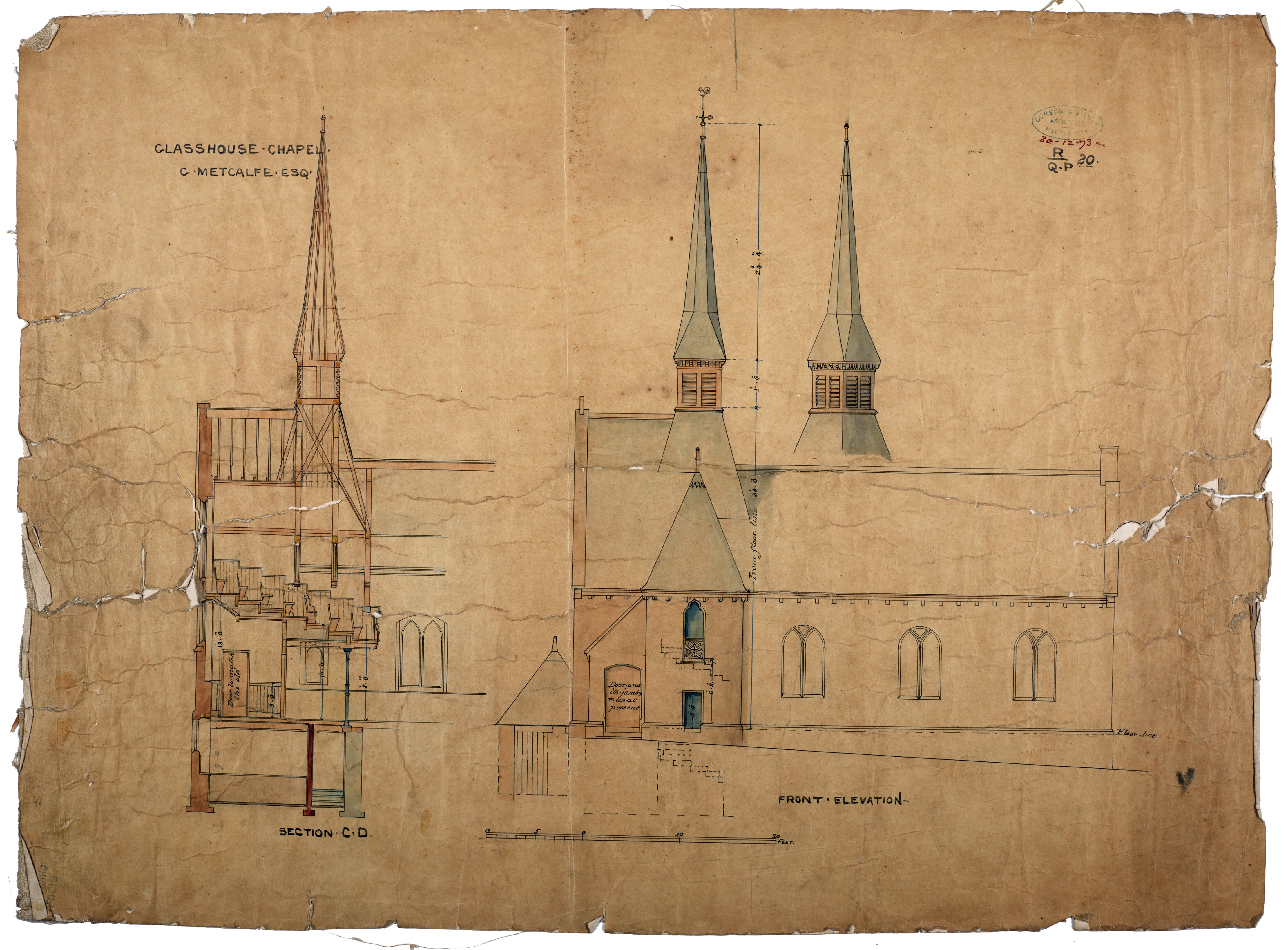
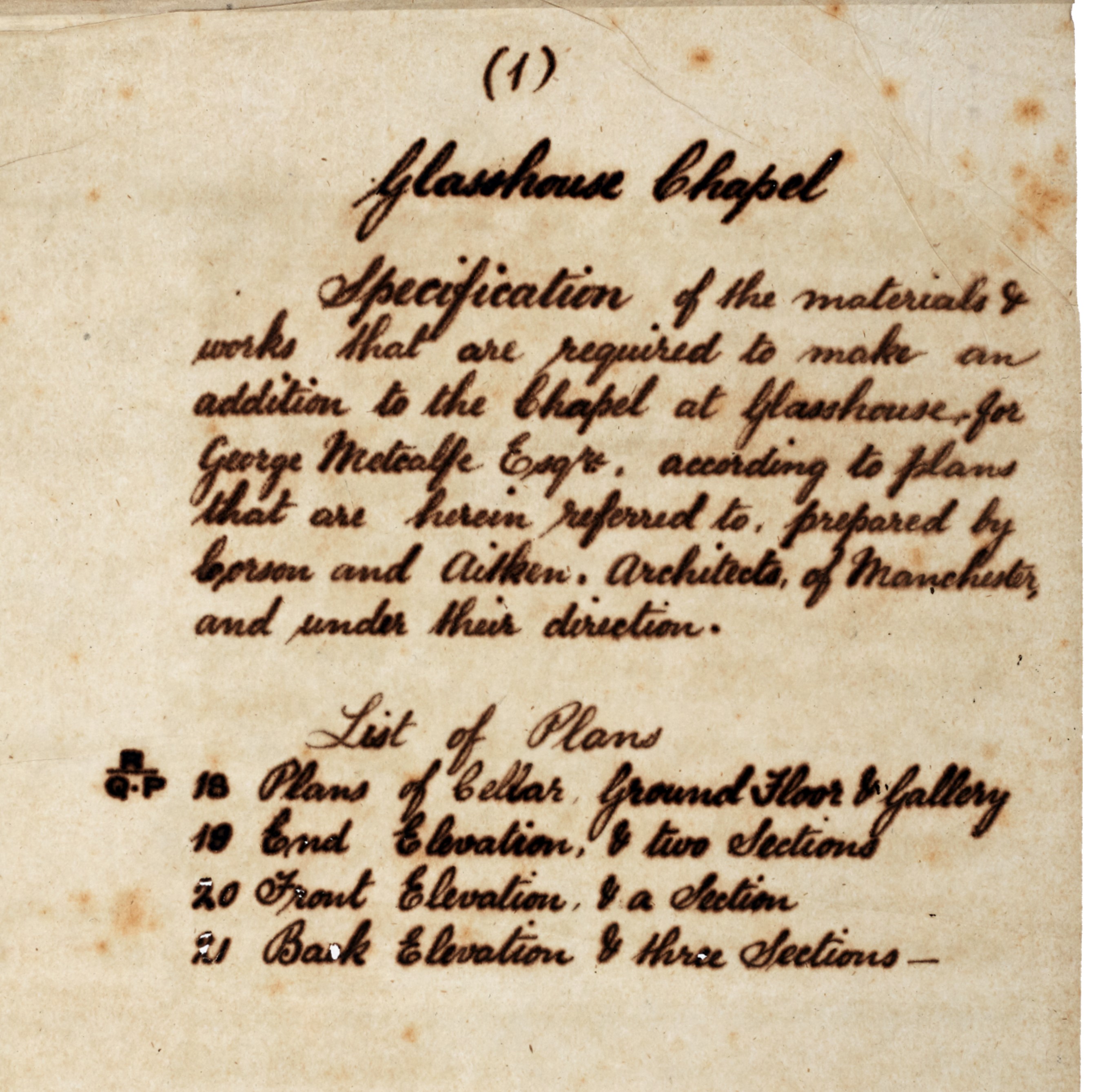
George Metcalfe junior also paid for the expansion of the chapel in 1876, with designs by architects Corson and Aitkin of Manchester.
A plan of the extension to Glasshouses Chapel designed for George Metcalfe, 1873 [R/M/PAT II 9]
George Metcalfe junior continued to run the Mill until his death in 1898, when competition from abroad had made the Glasshouses Mill unprofitable and the company was wound up later that year.
In 1931, 65 years after the opening of the Chapel, a new Sunday School was opened on the site. Fundraising was undertaken within the community to meet the cost of building the Sunday School. By this time, Mr Herbert Metcalfe, son of the late George Metcalfe junior, was living in North Sydney, New South Wales but he sent the gift of a clock for the Sunday School. The Nidd Herald noted “The continued and practical interest of the Metcalfe family is very much appreciated by the village folk”.
Notices from a scrapbook relating to fundraising for the Sunday School [R/M/PAT II 9/10]
Methodists and the 1835 General Election
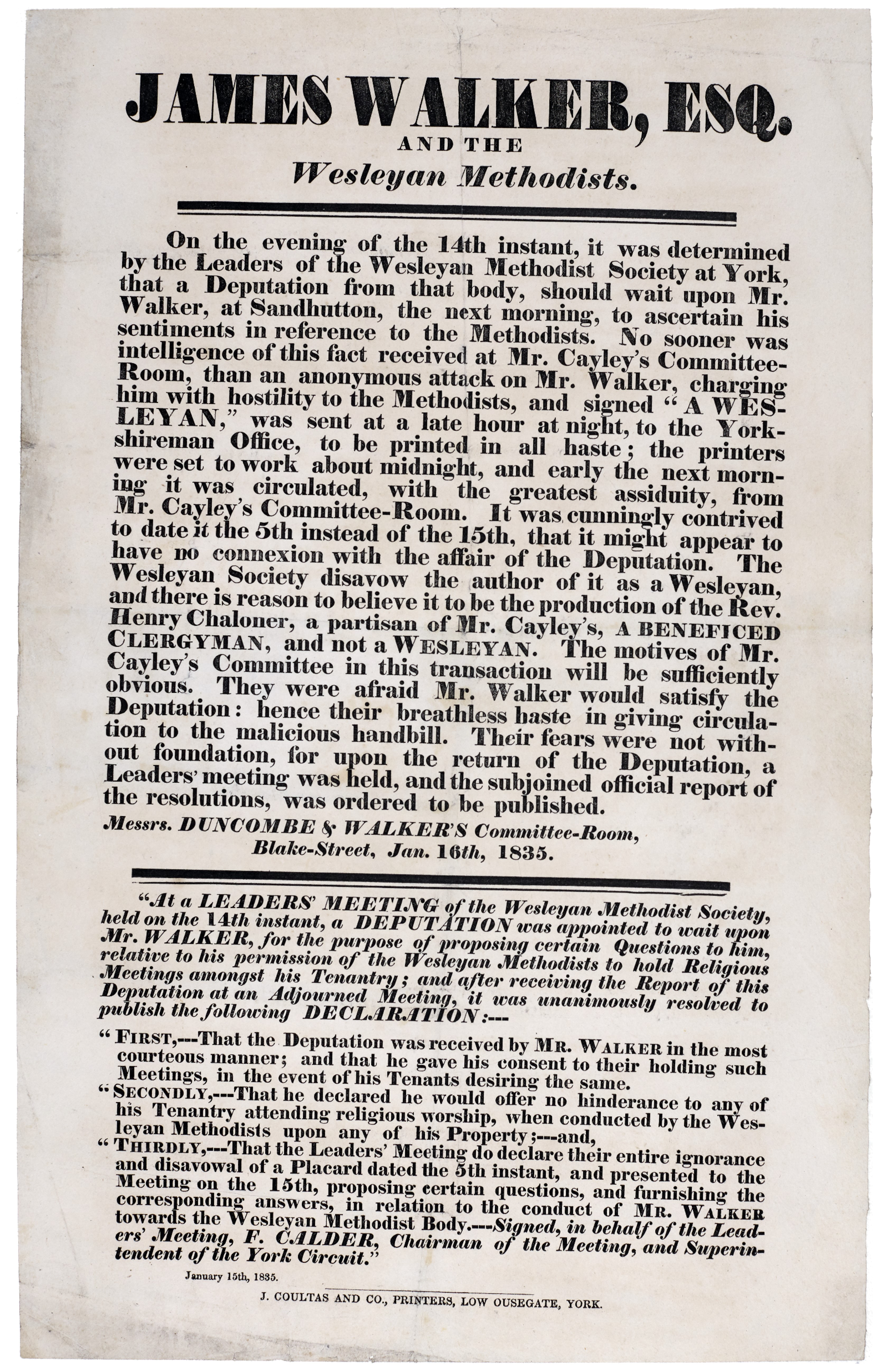
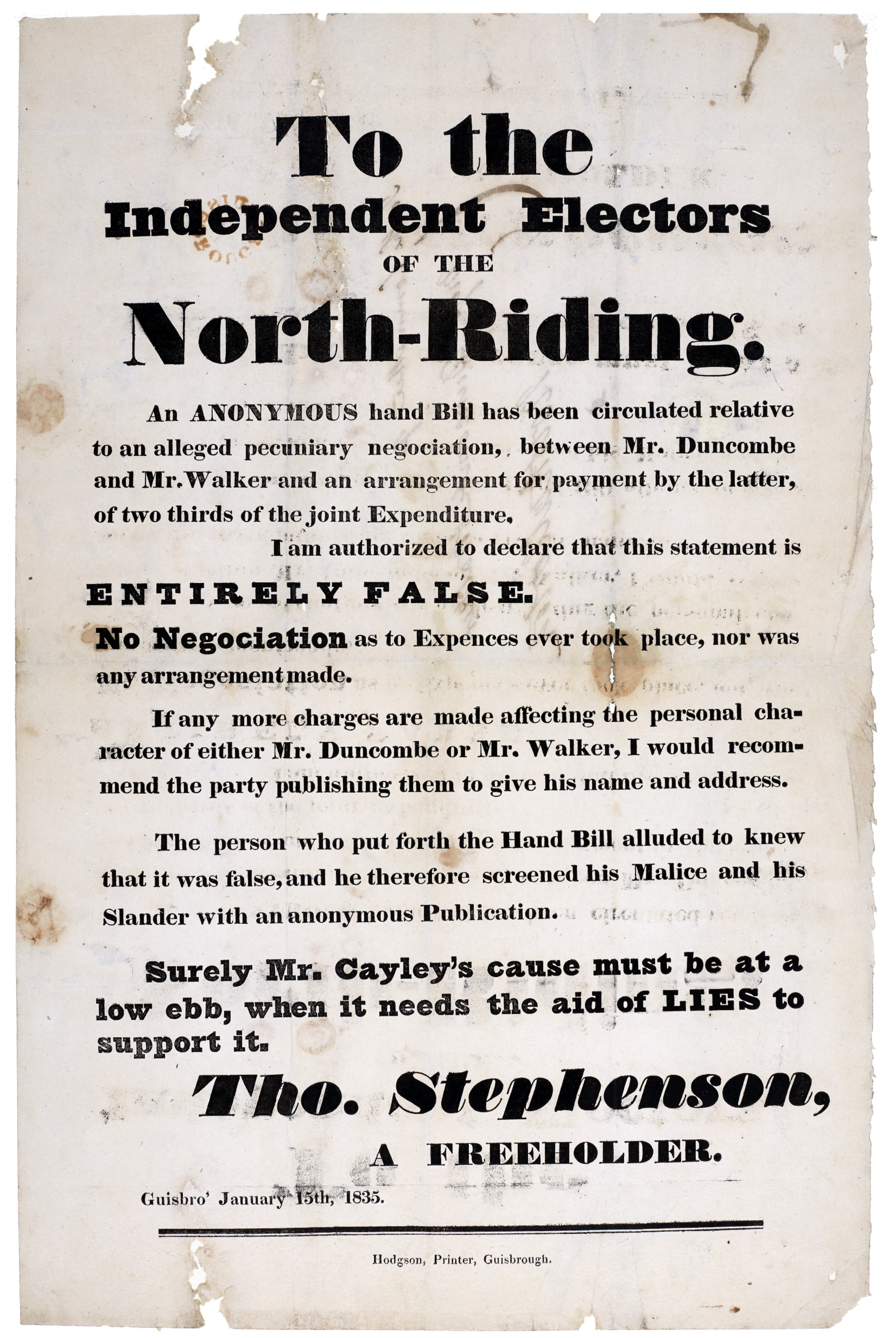
During the 1835 campaign to elect the Members of Parliament for the North Riding of Yorkshire, a series of election posters aimed at Methodists were produced. The campaign involved William Duncombe (Sitting Conservative MP), Edward Cayley (Sitting Whig MP), and James Walker (Conservative). William Duncombe and Edward Cayley were re-elected.
General election notices relating to Methodists, 1835 [ZLD 1/16-19]






 North Yorkshire Archives Blog