By Jo Faulkner, Record Assistant
In May, 1949 the residents of Sutton in Craven received a printed letter and envelope from the Parish Council, inviting them to contribute to the addition of a bronze plate to their existing war memorial, which would record the 15 names of the fallen from the Second World War.
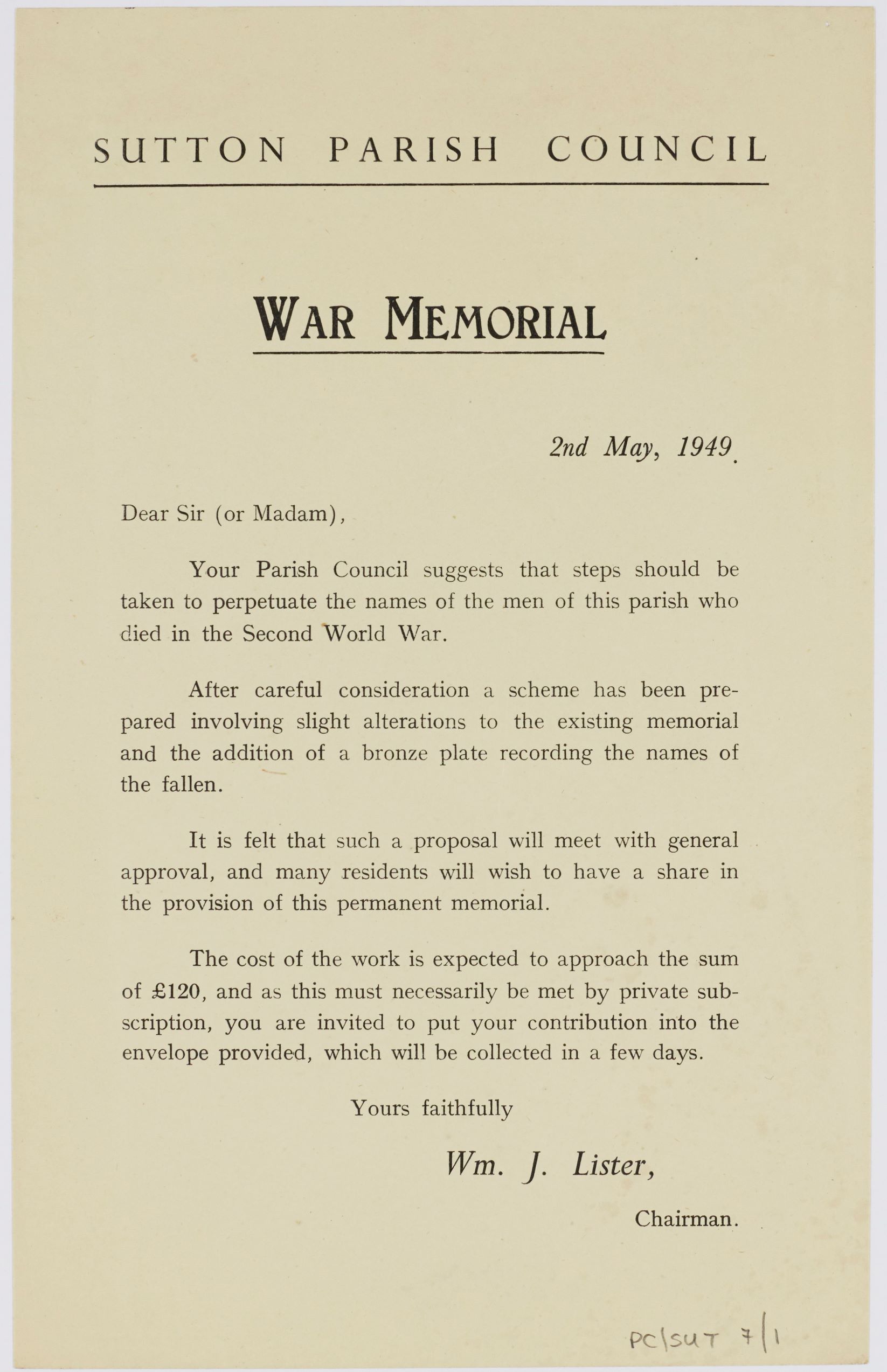
PC/SUT 7/1 Appeal letter for Sutton in Craven Parish Council
We don’t have details of the ‘careful consideration’ and preparation for the scheme, but records show the very organised approach the committee took in collecting funds for the project.
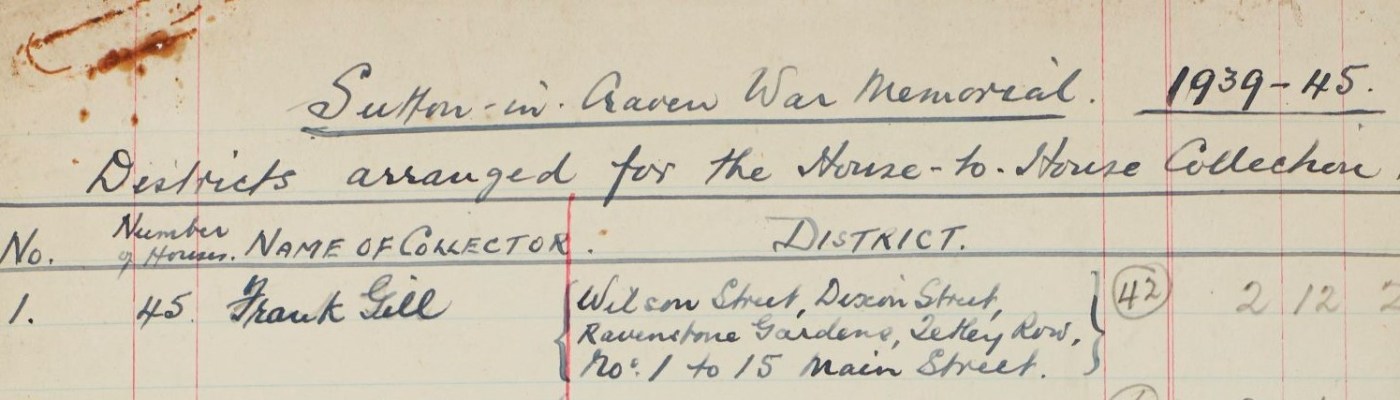
Records of Parish Councils are often useful for researching village events. A minute book of the Sutton in Craven Parish Council (PC/SUT 1/4) shows that from 1949, meetings to discuss the proposed war memorial plaque were chaired by Richard M Bateman of Lyndhurst, whose father Lieutenant Colonel C.M. Bateman DSO, 6th Battalion West Riding Regiment, had unveiled the original memorial in 1921. A meeting of the Parish Council agreed that a house-to-house appeal for subscriptions for a memorial tablet should be launched. A surviving hand-written document shows that the village was divided into districts, to which collectors were assigned. Most districts included between 40 and 50 properties, though collectors who covered the more remote outlying areas covered fewer properties. The team aimed to visit a total of 821 houses. The total amounts collected from each district have been noted in pencil. The total collected by this house-to-house collection was £73-4-5.
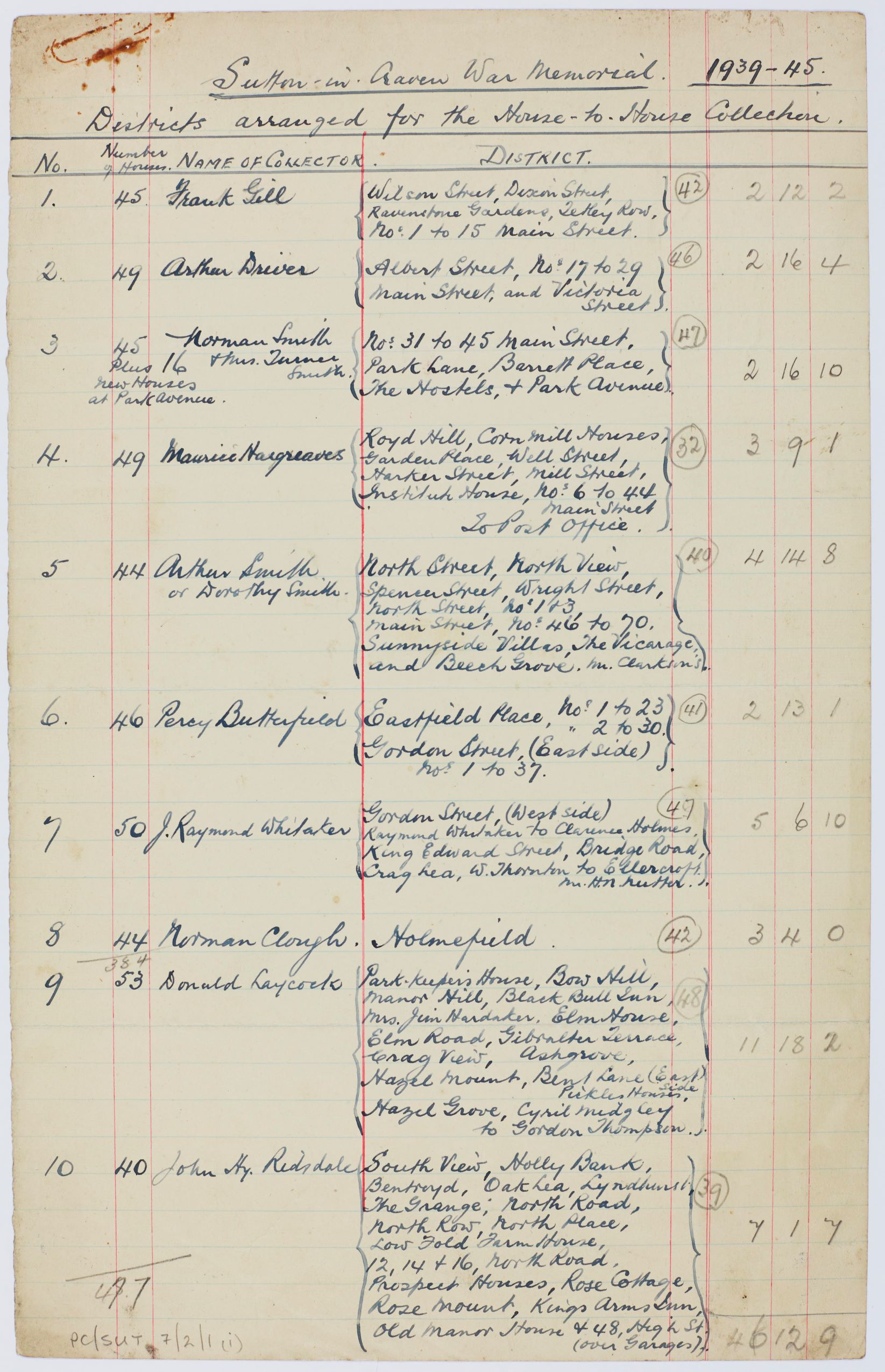
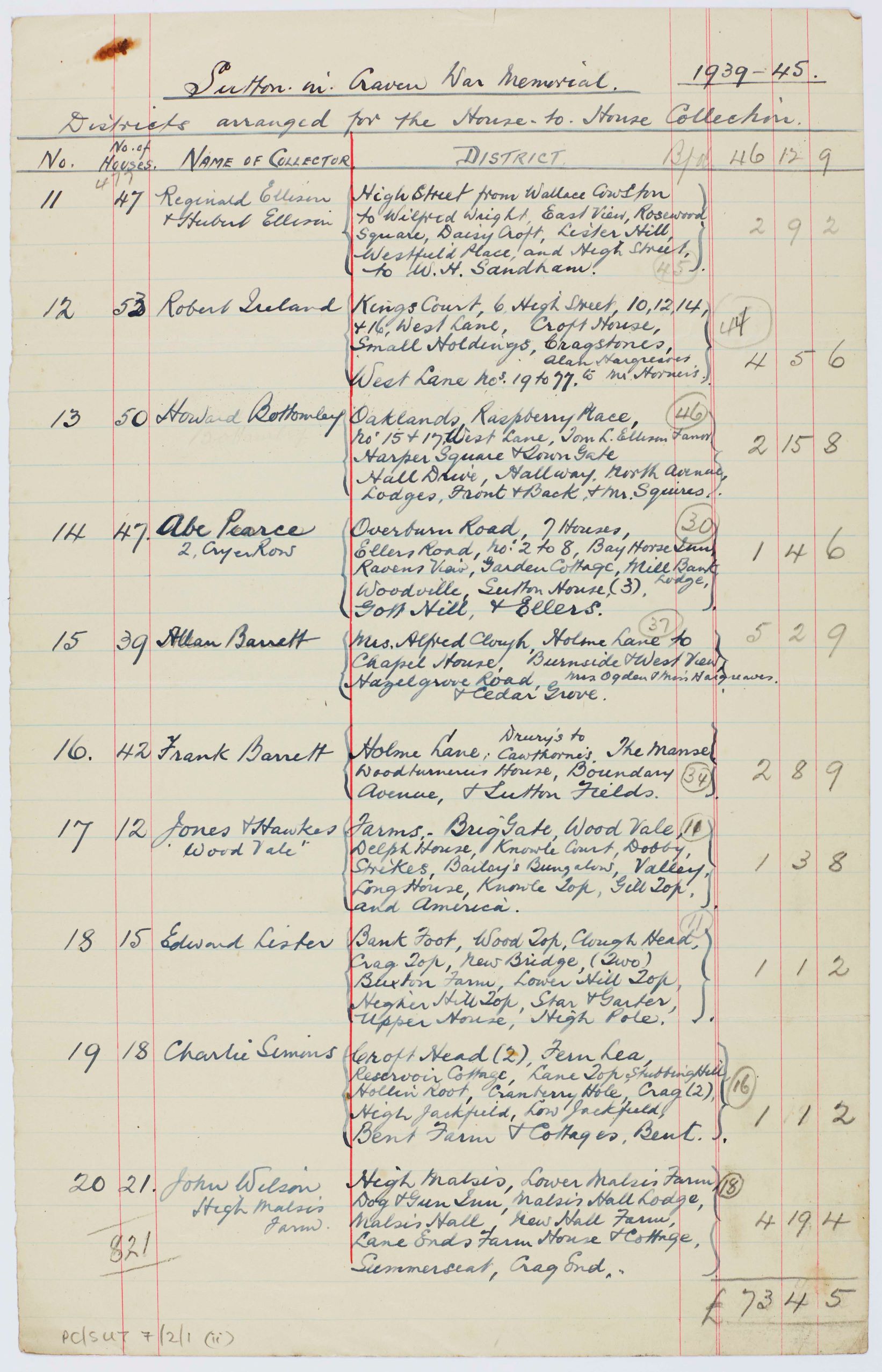
PC 7/2/1 Names of collectors and districts for the collection
This detailed description of the areas that each collector covered provides the names of prominent houses and farms and, in some instances, gives the number of houses in particular streets. It creates an outline of the extent of the village at this time.
Records from Sutton-in-Craven Parish Council contain correspondence from monumental mason and builder John Barritt of Cross Hills. The Council minutes record that his quote for the work at £103-1-0 was accepted. Receipts show that an initial payment of £70-0-0 was made on 8th December 1949, which seems to have been covered by the house-to-house collection. The balance of £33-10-0 was paid in May 1950. The total cost roughly equates to around £3200 today.
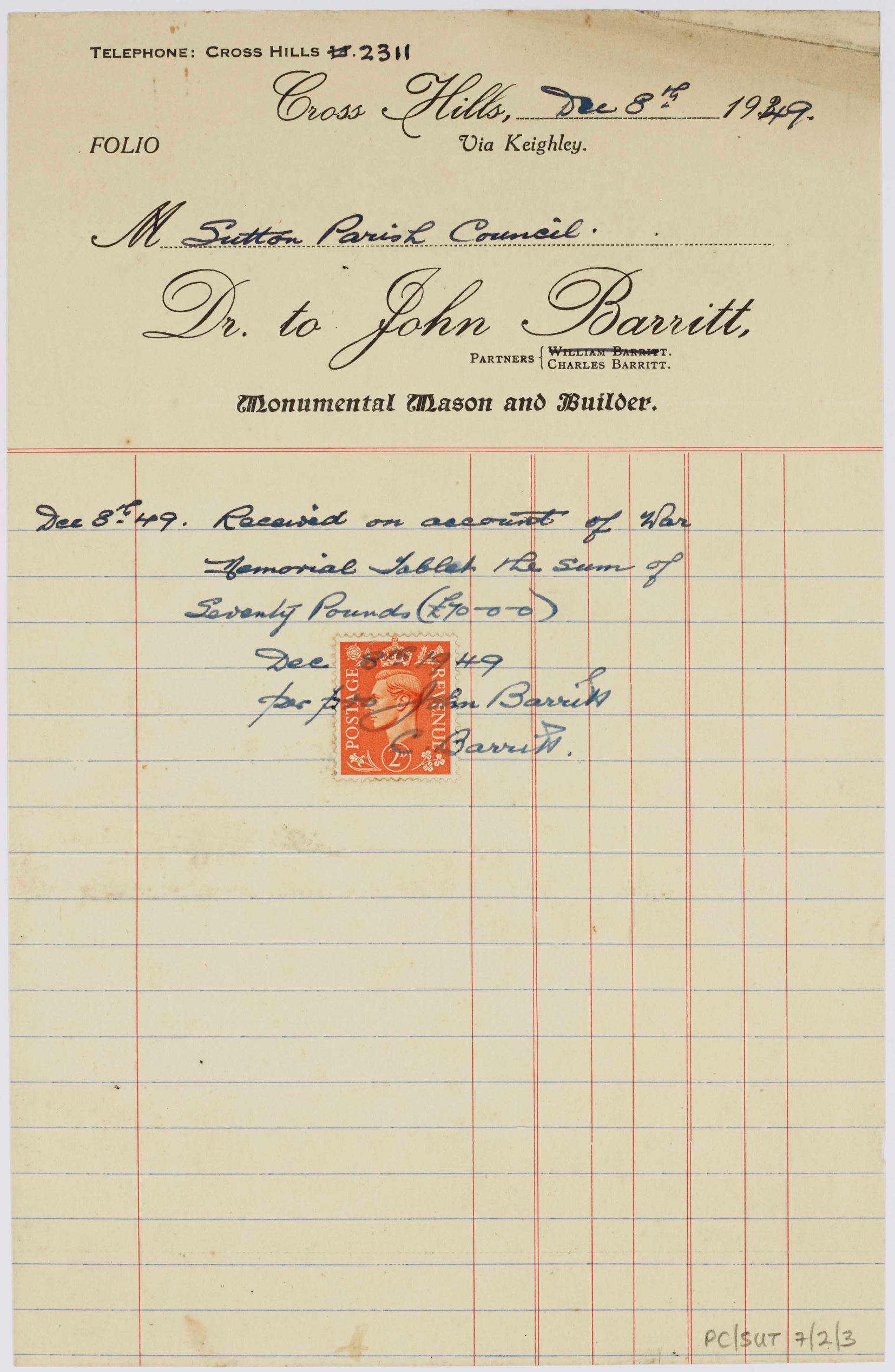
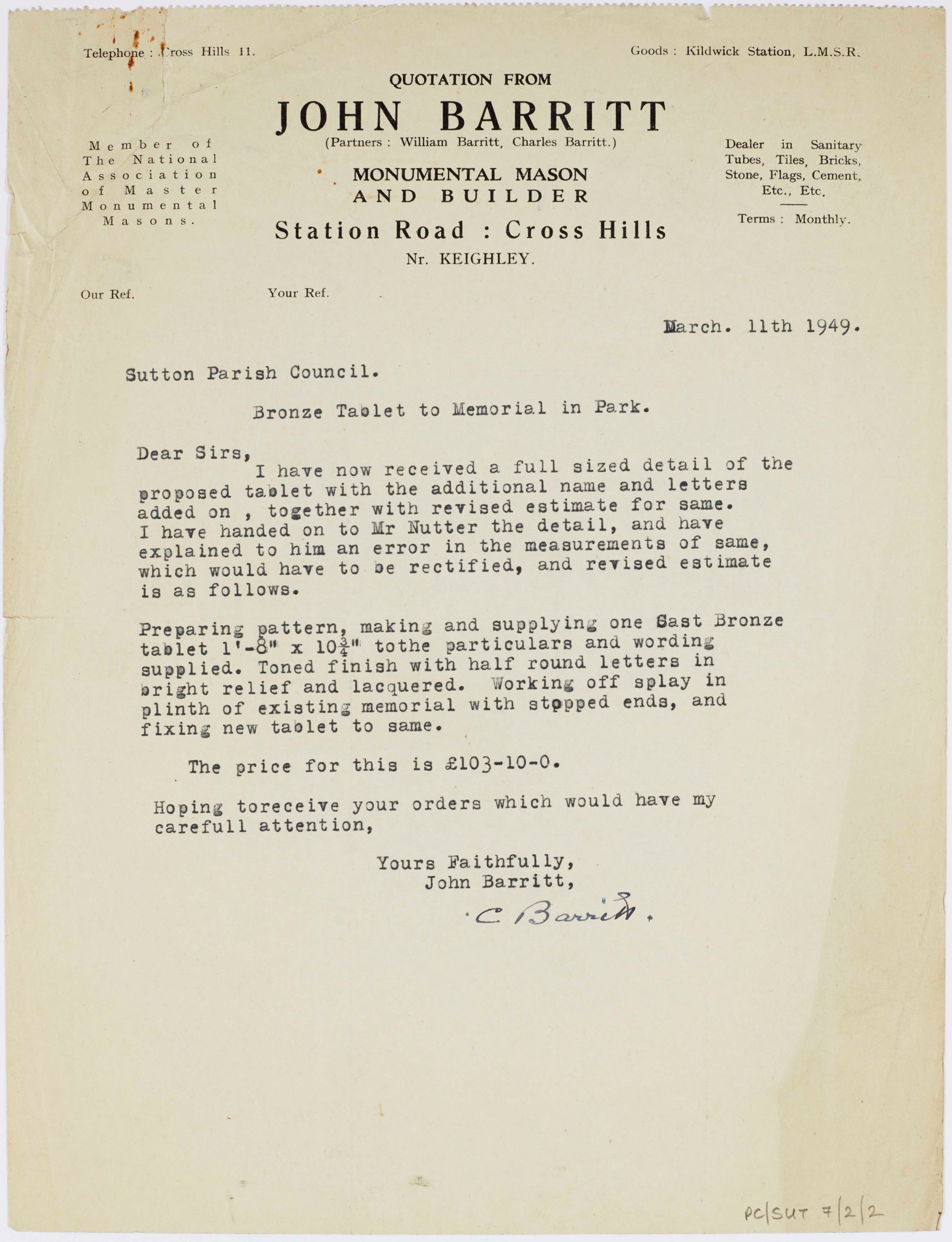
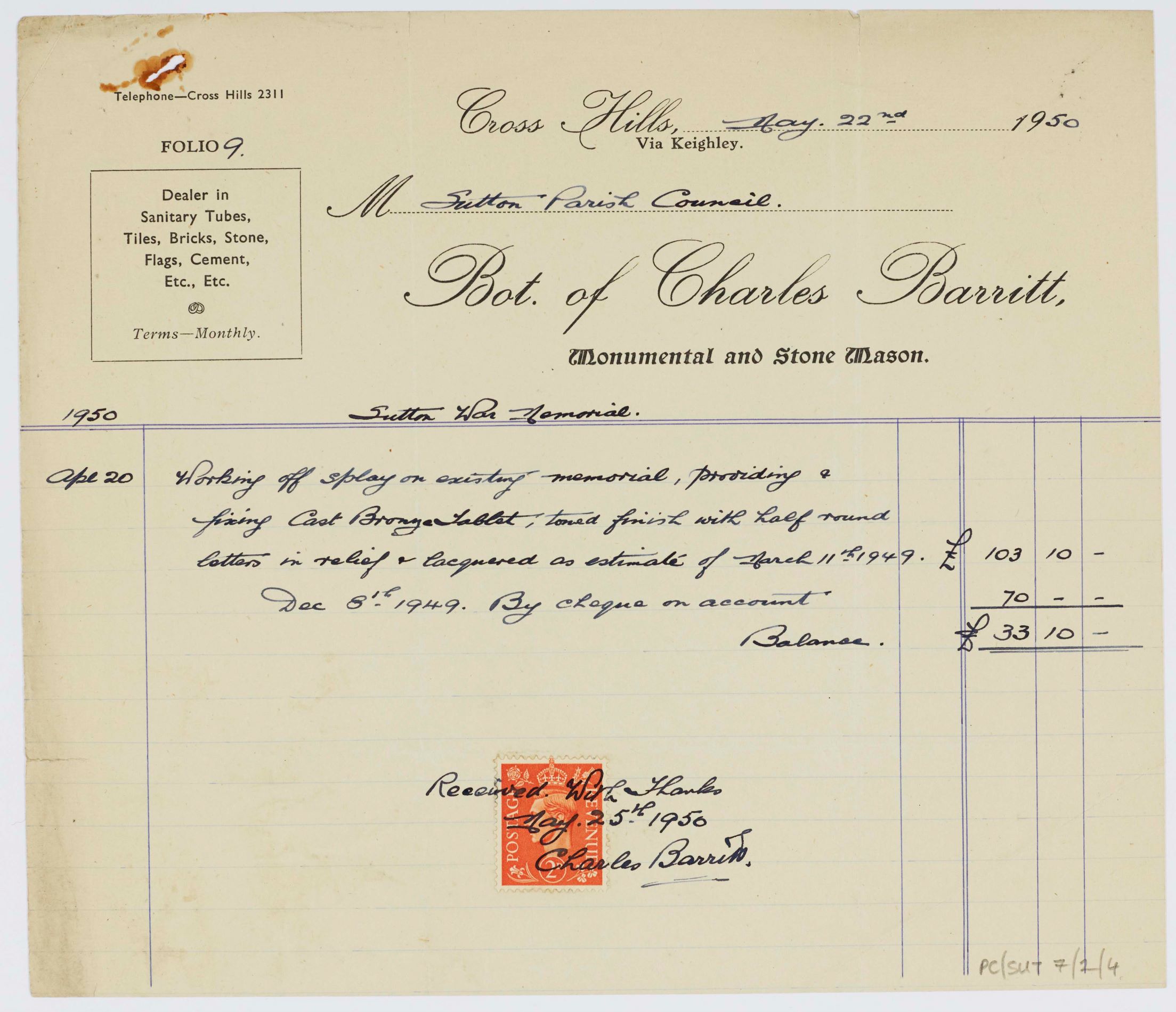
PC/SUT 7/2/2-4 Quote and receipts of monumental mason and builders, John and Charles Barritt
The memorial was built on land given by mill owner Mr James Bairstow JP, who had previously donated land for recreational use. Bairstow was known for his sense of responsibility for the community and benevolence. A booklet describing his mill and the workers institute in 1920, states that ‘’everything is provided for the comfort and welfare of workers after their labour”. Lieut. Colonel C.M. Bateman DSO, was a nephew of James Bairstow and became a junior partner in the mill.
The original list of names included on the memorial consisted of those who had been resident in the village when they enlisted and lost their lives during the conflict. The addition of the names of the 15 fallen from the Second World War were not the last to be added to the memorial. In 2014, following research by a former resident of the village, a bronze plaque commemorating a further 11 men who had died during the First World War was added to the memorial. This includes men who had been born in the village but may not have been residents at the outbreak of war. Improvements around this time also include the addition of a post and chain fence by Sutton Parish Council, who continue to care for this memorial, which is listed Grade II.
Images of the memorial can be seen on the War Memorials Online website.
 North Yorkshire Archives Blog
very interesting piece of research, nice to see such important records of what a small village did to remember their local heroes who gave their lives for others to live in freedom